 ultimate-guide
Advanced Multi Ball Techniques for Competitive Players
Table of Contents
- Why Advanced Multi Ball Techniques Separate Competitive Players
- Table Tennis Multiball Drills That Build Real Match Skills
- How Long Should a Table Tennis Multiball Session Length Be?
- Building a Table Tennis Training Plan for Competitive Players
- Feeder Skill and Feed Consistency: The Hidden Variable
- Table Tennis Ball Collection Tools That Keep Sessions Moving
- Common Multi Ball Mistakes and How to Fix Them
- Frequently Asked Questions
Last Updated: October 17, 2026
Why Advanced Multi Ball Techniques Separate Competitive Players
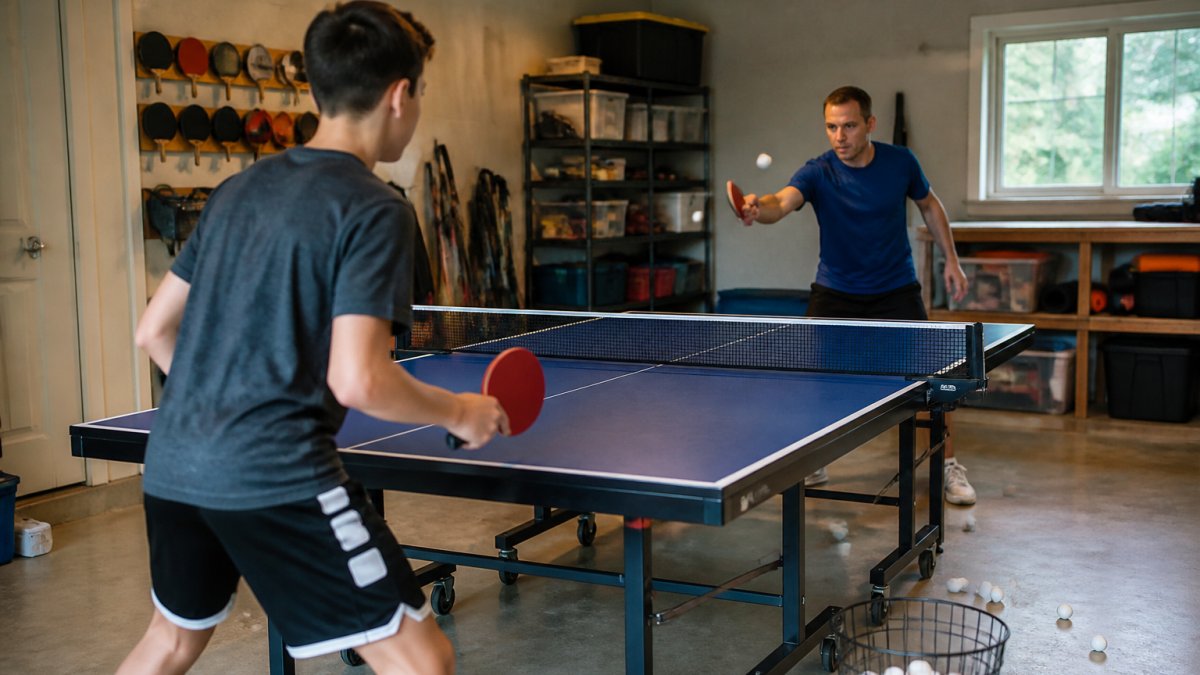
Advanced multi ball techniques are structured feeding patterns that isolate specific strokes, movement patterns and decisions under controlled repetition, packing hundreds of quality contacts into a session.
The gap between club and tournament players rarely comes down to talent; it comes down to how deliberately they practice. A partner rally produces maybe 15 to 25 contacts per minute, with long pauses for retrieving balls.
Table Tennis Multiball Drills That Build Real Match Skills
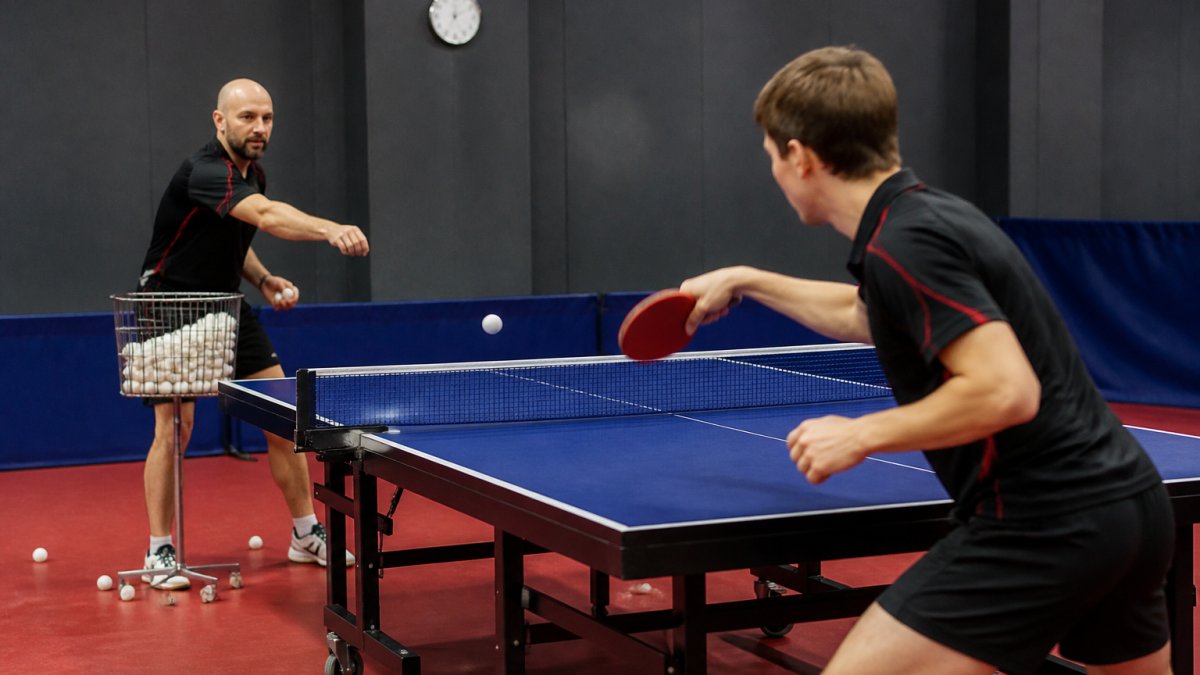
Table tennis multiball drills build match skills when they replicate the pace, placement variety and recovery demands of a real point. The drills below form a level-based progression, each with a measurable success target so you know when to advance.
Level 1: Controlled Patterns and Stroke Grooving
Level 1 drills use regular placement to lock in mechanics: the feeder sends balls to one location with consistent spin, depth and tempo so the player can focus on stroke shape.
- Forehand topspin ladder: Feed 20 balls to the forehand corner at a moderate tempo. Success target: 16 of 20 balls land on the table with topspin and the player recovers to a neutral ready position between each stroke. Repeat for three sets.
- Backhand drive and block: Feed 20 balls to the backhand side, alternating one drive and one block. Success target: 15 of 20 balls land with the intended stroke type and the paddle returns to the ready position before the next feed.
- Forehand/backhand transition: Alternate feeds between the forehand and backhand corners at a tempo slightly faster than the player can comfortably handle. Success target: 12 of 20 balls land with a visible footwork adjustment between strokes. If the player is never late, the drill is too slow.
Advance to Level 2 only when the player hits the success target in two consecutive sets. Entire sessions in Level 1 feel productive, but matches are irregular by definition.
Level 2: Irregular Placement and Movement Reading
Level 2 introduces deliberate variation in placement, depth, spin and tempo, forcing the player to read, move and adjust. Vary one variable at a time before combining them.
- Random forehand/backhand: Feed balls randomly to either corner with no pattern. Success target: 14 of 20 balls land with the player arriving in balance and recovering before the next feed. Track how many balls the player reaches late versus early.
- Depth variation: Alternate short and long feeds to the same wing. Success target: 12 of 20 balls land with the player adjusting their contact point rather than reaching or cramping.
- Spin variation: Mix topspin and backspin feeds to the backhand. Success target: 12 of 20 balls land with the player reading the spin and choosing the correct response rather than blocking everything.
Level 3: Tactical Decision-Making and Point-Like Sequences
Level 3 translates drills into competitive points: the feeder creates a live-ball situation and the player chooses shot selection, placement and recovery based on the feed.
- Serve, receive, opening attack: The player serves, the feeder returns in a realistic way, and the player executes an opening attack. Success target: 10 of 15 sequences end with the player's opening attack landing on the table and the player recovering to a ready position. Vary the receive quality so the player practices against good and poor returns.
- Third-ball and fifth-ball patterns: Feed a return that sets up a third-ball attack, then feed a block or counter that requires a fifth-ball decision. Success target: 8 of 12 sequences end with the player making a deliberate placement choice rather than a default shot.
- Transition to defense: Feed an attack that the player must block or counter, then feed a follow-up ball. Success target: 10 of 15 sequences end with the player transitioning from offense to defense without losing balance.
Measurable Training Targets
Every drill should have a success criterion before the first ball is fed. Track these five metrics weekly:
- Feed rate: Balls per minute the feeder delivers. Most competitive drills run 40 to 60 balls per minute; tactical sequences run slower, around 20 to 30, to allow decision time.
- Successful-ball percentage: The share of fed balls that land on the table with the intended stroke and placement. A common target for Level 1 is 80 percent, Level 2 is 70 percent, and Level 3 is 60 percent because the difficulty rises.
- Error rate by type: Count unforced errors separately from forced errors. A rising unforced-error rate mid-session signals fatigue or a drill that is too hard.
Forehand and Backhand Repetition Sets
Forehand and backhand repetition sets isolate one wing at a time and are the backbone of stroke development. The progression that matters is the transition set: alternating forehand and backhand feeds that force a footwork adjustment between every stroke, turning corner work into real movement training rather than isolated arm swinging.
Solo and Equipment-Based Alternatives
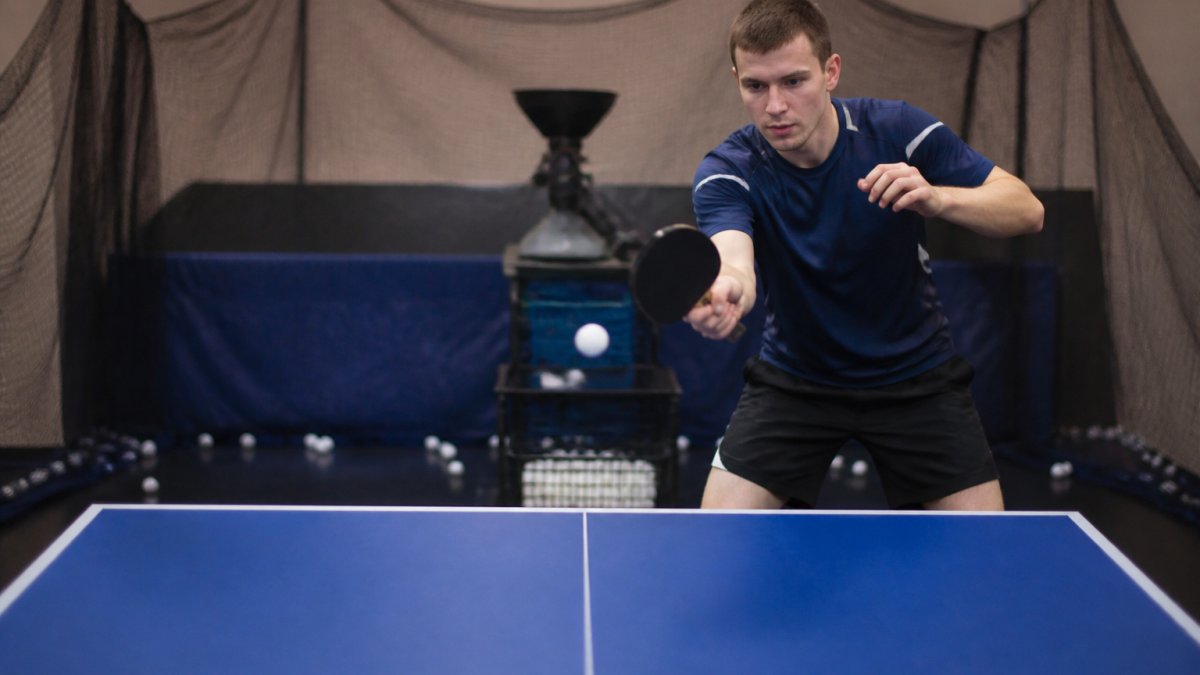
Not every competitive player has a coach or partner for every session. A robot can replicate many Level 1 and Level 2 drills if feed settings are treated with the same precision as a human feeder: consistent placement first, then deliberate variation. Robots struggle with Level 3 decision-making, so use them for volume and mechanics and save tactical sequences for a human feeder or match play.
How Long Should a Table Tennis Multiball Session Length Be?
A table tennis multiball session length of 20 to 40 minutes of actual feeding is the practical range for most competitive players, split into blocks of 4 to 8 minutes per drill with short rests between. Quality of contact collapses well before fatigue sets in, so shorter, sharper blocks beat long grinding sessions. A 30-minute session might look like this:
| Block | Duration | Focus | Rest After |
|---|---|---|---|
| Warm-up | 4 min | Regular forehand, light tempo | 60 sec |
| Stroke set | 6 min | Forehand topspin consistency | 90 sec |
| Stroke set | 6 min | Backhand drive and block | 90 sec |
| Movement set | 6 min | FH/BH transition footwork | 2 min |
| Tactical set | 6 min | Serve, receive, opening attack | 2 min |
Beginners and players returning from injury should start shorter and build. Coaches running group sessions often cap individual feeding blocks tighter to keep everyone moving. The session length should be set by the point at which the player's footwork and stroke mechanics start to degrade, not by the clock alone.
Building a Table Tennis Training Plan for Competitive Players
A table tennis training plan for competitive players should periodize multiball work across the season, raising volume and intensity in the preparation phase and tapering toward competition. Random hard sessions week after week produce plateaus and overuse problems; planned progression produces steady gains:
- Preparation phase: higher volume, more regular placement, focus on stroke mechanics and building the physical base.
- Competition phase: lower volume, more irregular placement and point-like practice, focus on decision-making and tactical sequences.
- Recovery phase: reduced multiball volume, more technical maintenance and light movement work.
Session Frequency, Set Length, and Intensity
Competitive players typically run two to four multiball sessions per week, depending on match schedule and recovery capacity. More is not automatically better. Use this as a starting framework and adjust to the individual:
| Phase | Multiball Sessions per Week | Block Length | Rest Between Blocks | Intensity Focus |
|---|---|---|---|---|
| Preparation | 3 to 4 | 6 to 8 min | 90 sec to 2 min | Volume and mechanics, mostly regular placement |
| Competition | 2 to 3 | 4 to 6 min | 2 min | Irregular placement and point-like sequences |
| Recovery | 1 to 2 | 3 to 4 min | 2 to 3 min | Light technical maintenance |
A 30-minute session might look like this:
| Block | Duration | Focus | Rest After |
|---|---|---|---|
| Warm-up | 4 min | Regular forehand, light tempo | 60 sec |
| Stroke set | 6 min | Forehand topspin consistency | 90 sec |
| Stroke set | 6 min | Backhand drive and block | 90 sec |
| Movement set | 6 min | FH/BH transition footwork | 2 min |
| Tactical set | 6 min | Serve, receive, opening attack | 2 min |
Beginners and players returning from injury should start shorter and build. Coaches running group sessions often cap individual feeding blocks tighter to keep everyone moving. The session length should be set by the point at which the player's footwork and stroke mechanics start to degrade, not by the clock alone.
Periodization, Workload, and Recovery
Workload management determines whether a season ends in improvement or a nagging shoulder or back problem. Track weekly feeding time and total contacts, and increase weekly multiball volume by no more than about 10 percent at a time, holding steady for a week before increasing again. Build in at least one full rest day per week and a lighter week every three to four weeks.
Tapering Toward Competition
In the one to two weeks before a tournament, reduce multiball volume while keeping intensity and decision-making sharp. Cut total feeding time by roughly a third, keep the tactical sequences, and drop the high-volume stroke sets. Arrive fresh with timing intact, not worn down from one more hard week.
Tracking Progress Week to Week
Keep a simple log for each session: total feeding time, balls fed, successful-ball percentage by drill, unforced-error count, and a 1-to-3 recovery-quality rating. Review it weekly and adjust volume and drill mix. Players who track these five metrics can see whether a plateau is a workload, drill-design or recovery problem, and fix the right one.
Feeder Skill and Feed Consistency: The Hidden Variable
Feeder skill is the single most underrated variable in multiball training. A consistent feeder delivers repeatable placement, spin and tempo, letting the player build reliable mechanics; an inconsistent feeder forces compensations that get grooved instead of the intended stroke. Good feeders vary tempo deliberately, place balls where the drill requires, and read the player's recovery to keep intensity on target.
Table Tennis Ball Collection Tools That Keep Sessions Moving
Table tennis ball collection tools determine how much of a session is spent training versus bent over picking balls off the floor, a difference that compounds across a week of training.
This is where MyPingPongBuddy comes in. Our handmade ball collector scoops up balls with ease, eliminating the need to bend over after every feeding block.
The practical case is strongest for anyone with chronic lower back pain from years of competitive play: repeated bending to collect hundreds of balls aggravates a bad back, and a scoop-style collector removes that motion entirely.
Common Multi Ball Mistakes and How to Fix Them
The most common multiball mistakes are feeding too fast too early, training without a target, ignoring recovery, and letting ball collection eat the session. Each has a straightforward fix.
| Mistake | Why It Hurts | Fix |
|---|---|---|
| Feeding at maximum speed from ball one | Mechanics break down before they are grooved | Start at 60-70% tempo, build over the block |
| No stated target per drill | Player practices vaguely, improves vaguely | Name the target and success criterion before feeding |
| All regular placement, no irregular work | Player looks sharp in practice, struggles in matches | Shift ratio toward irregular as competition nears |
| Skipping rest between blocks | Stroke quality drops, bad mechanics get grooved | 60-90 second rests between blocks minimum |
| Long ball-picking pauses | Session rhythm and focus collapse | Use a collector so feeding resumes quickly |
| Ignoring back and shoulder fatigue | Cumulative strain turns into injury | Track weekly volume, cut before adding |
A common mistake is treating multiball as a fitness exercise. Every drill needs a target, a success criterion and a clear place in the weekly plan, that is what advanced multi ball techniques actually means in practice.
Frequently Asked Questions
What is multiball training in table tennis?
Multiball training is a practice method where a coach or feeder continuously feeds balls into play so the player hits many strokes in a short window without stopping to retrieve balls. Instead of a single rally, you get a steady stream of forehands, backhands, and movement patterns. For competitive players, this builds stroke mechanics, footwork, and pace tolerance far faster than rally practice alone, because the ball keeps coming and the player stays in a hitting rhythm.
How long should a table tennis multiball session last?
Most competitive players get the best results from short, intense blocks rather than long grinds. A common structure is 8-12 minutes per drill at high intensity, with 2-3 minutes of rest between blocks, totaling 30-45 minutes of actual feeding in a session. Session length also depends on your training plan and recovery. If stroke quality drops or footwork gets sloppy, end the block early. Quality reps beat tired reps every time.
How many balls do you need for table tennis multiball training?
A practical minimum is 60-100 balls, which lets a feeder run a continuous drill without stopping to collect. Coaches running multiple players or high-volume sessions often keep 150 or more per table. The tradeoff is cleanup time: more balls means more scattered on the floor. Having a fast ball collection tool on hand keeps the session moving and reduces the bending and stooping that wears on your back during long training days.
How do you collect table tennis balls quickly after practice?
The fastest approach is to collect in bulk rather than one at a time. A scoop-style collector lets you gather balls while standing, so you avoid repeated bending that strains your lower back. Many coaches and club owners use a portable scoop that breaks down for transport, which matters when you move between tables or venues. Pair bulk collection with a consistent routine, such as sweeping the floor at the end of each block, so balls never pile up mid-session.
How can coaches make multiball drills more match-like?
Move from predictable feeds to irregular placement and varying pace, then add decision points: feed a short ball the player must attack, or a deep ball they must push and reset. Randomize the FH and BH corners so the player reads and reacts instead of anticipating. Finish blocks with point-like sequences where the feeder simulates serve, receive, and opening attack. This tactical transfer is what separates drills that look good in practice from skills that hold up in competition.
What are the best multiball drills for improving footwork?
Two drills do most of the work. First, the two-point drill: alternate feeds to the FH and BH corners so the player shuffles side to side and recovers to a neutral stance. Second, the short-long drill: feed a short ball followed by a deep ball, forcing a step in and a push back out. Progress by increasing feed speed and reducing the predictability of placement. Keep sets short, around 8-10 reps per pattern, so footwork stays sharp rather than sloppy.