 listicle
Best Ball Collector for Table Tennis: 2026 Guide
Table of Contents
- Why You Need a Purpose-Built Ball Collector
- Quick Comparison: Top Ball Collectors at a Glance
- 1. MyPingPongBuddy: The Handmade Ergonomic Favorite
- 2. PONGBOT Ball Picker: The Lightweight Daily Trainer
- 3. JOOLA iPong Telescoping Net: For Hard-to-Reach Spots
- 4. GEWO Robot Net Pro: The Robot Training Partner
- 5. Kollectaball K-Max: High-Volume Rolling Collector
- How to Speed Up Table Tennis Ball Cleanup
- Frequently Asked Questions
Last Updated: September 6, 2026
Why You Need a Purpose-Built Ball Collector
A good best ball collector for table tennis review starts with a simple question: how much time do you lose bending over? For players with back pain, coaches running multi-ball drills, or families cleaning up after casual games, the answer is usually "too much." The right ball collector is a training accessory that turns five minutes of stooping into seconds of scooping.
The repetitive strain of picking up 50 to 100 balls after every session is a real problem, especially for older players or those with mobility issues (the CDC). A purpose-built tool eliminates the need to bend over entirely, protecting your back and keeping your focus on training efficiency.
Below, we break down the top options, explain what each does best, and help you match a ball collector to your situation, plus the maintenance habits that keep these tools working for years.
Quick Comparison: Top Ball Collectors at a Glance
The table below summarizes key differences, but the real differentiator is longevity. Material choice, plastic versus metal versus wood, is the single biggest predictor of whether a collector lasts six months or six years.
| Product | Best For | Key Strength | Collection Style | Primary Material | Likely Failure Point After 12 Months of Club Use |
|---|---|---|---|---|---|
| MyPingPongBuddy | Players with back pain, coaches | Handmade durability, ergonomic | Hand-held scoop | Hardwood frame with metal hinge | Wood can dry out if stored in a hot car; hinge may need a drop of oil |
| PONGBOT Ball Picker | Daily training, budget buyers | Lightweight, affordable | Hand-held scoop | Injection-molded ABS plastic | Plastic tabs on the pickup head can crack if stepped on |
| JOOLA iPong Telescoping Net | Hard-to-reach spots | Adjustable reach | Telescoping net | Aluminum shaft, nylon net | Net seam tears at the rim attachment point |
| GEWO Robot Net Pro | Robot training setups | Automatic collection | Full-width net | Steel frame, polyester net | Frame bolts loosen from vibration; net sagging at the corners |
| Kollectaball K-Max | High-volume club use | Rolling speed | Rolling cage | Steel wire frame, plastic wheels | Spring tension loss in the pickup mechanism |
Plastic vs. Metal vs. Wood: What Actually Lasts
Injection-molded plastic is lightweight and cheap, but brittle; dropped or stepped on, it cracks at a stress point, and those cracks are rarely repairable. Metal frames, like the steel in the Kollectaball and GEWO, are heavier but forgiving, a steel frame can take a knock and bend slightly without breaking, and you can often bend it back. The aluminum shaft on the JOOLA is a good middle ground.
The wood construction of the MyPingPongBuddy is the outlier. A hardwood frame is not as impact-resistant as steel, but it is repairable, a crack can be glued and clamped, while a bent steel frame is harder to straighten. For a home player with reasonable care, the wood frame will last indefinitely; for a club environment where equipment is abused, the steel frame of the Kollectaball is the safer bet.
The Hidden Cost of Cheap Materials
The cheapest collectors use a thinner plastic that flexes under load, misaligning the pickup mechanism so balls slip out. A budget collector often works perfectly for the first month, then gradually loses its grip; the fix is replacement, not repair. The $20 budget collector versus the $48 PONGBOT, the price difference is often the cost of the thicker, more rigid plastic that holds its shape.
What to Inspect Before You Buy
A quick physical inspection tells you more than any spec sheet. Flex the pickup head gently, if it bends more than a quarter-inch under light pressure, the plastic is too thin. Check the hinge: a metal pin through a reinforced plastic boss is a good sign; a plastic clip that snaps into place is a future failure point. Look at the netting, a tight weave with reinforced corner stitching outlasts a loose weave. Finally, consider weight, a collector that feels too light is often using thin materials.
1. MyPingPongBuddy: The Handmade Ergonomic Favorite
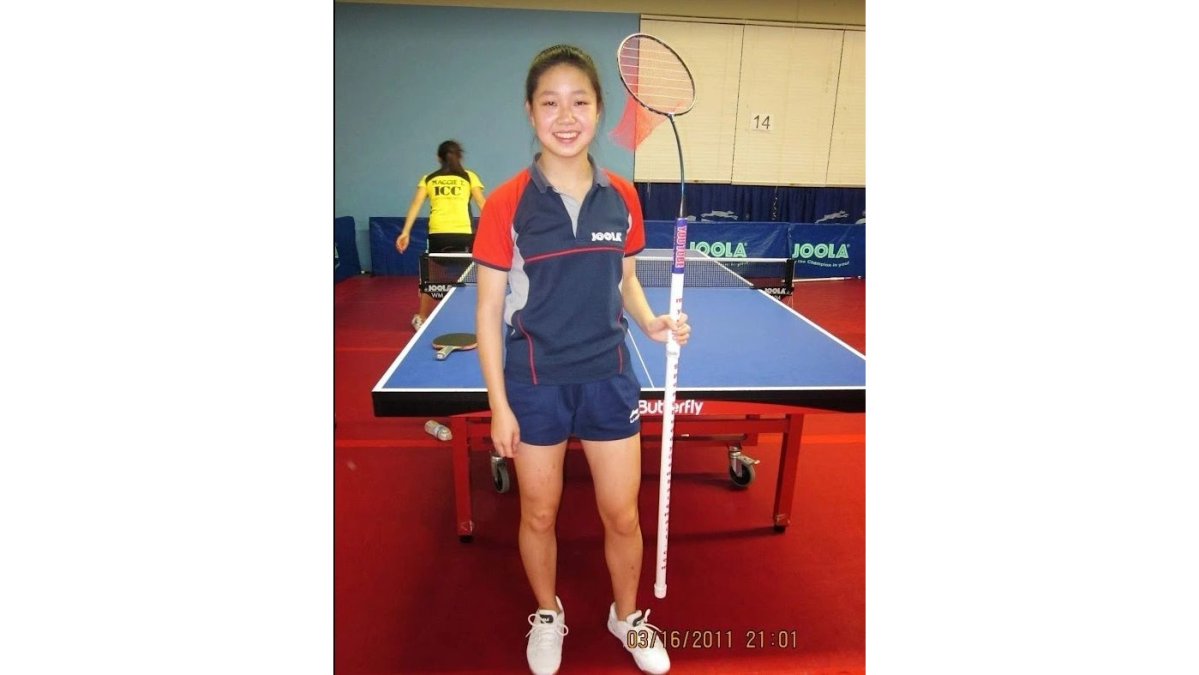
MyPingPongBuddy offers a clever, handmade tool designed to revolutionize your table tennis training by making ball cleanup effortless and fun. This durable, portable device allows players, coaches, and students to scoop up balls with ease, eliminating the need to bend over and saving valuable time during cleanup.

The device breaks down in half for easy transport, storing in a gym bag or tight area, key for coaches who travel and players with limited space. It is used by clubs and SPIN locations in New York, Milwaukee, and Los Angeles, and was issued as a prize at the 2012 Huntsman World Senior Games.
Customer feedback reinforces the ergonomic benefit. One coach noted students pick up balls faster than with the net scoopers they had used for years; another buyer with severe lower back pain found it genuinely usable. The 90-day full refund return policy removes the risk.
2. PONGBOT Ball Picker: The Lightweight Daily Trainer
For a dependable ball collector for daily practice without spending a lot, the PONGBOT Ball Picker is a strong contender. Its lightweight frame reduces fatigue during extended use, and durable materials survive regular training. Pricing depends on quantity, dates, and delivery. Please visit the manufacturer's website for current prices or a quote.
You press the head over the ball and it pops inside, letting you gather dozens without changing position, practical for recreational play and club settings.
The tradeoff is that it is manual only, so you still do the physical work of moving across the floor. For players with significant back problems, the upright posture is better than bending, but the repetitive pressing motion could cause strain over a long session. Best for players who want speed and value.
3. JOOLA iPong Telescoping Net: For Hard-to-Reach Spots
Not every ball lands in open floor space. Many roll under tables, into corners, or against walls where standard scoops cannot reach. The JOOLA iPong Telescoping Pickup Net solves this with an adjustable handle that extends your reach significantly, making it the best ball collector for table tennis when retrieval from awkward positions is the priority.
The telescoping handle adjusts to different lengths, so you can access balls deep under a table without getting on your hands and knees. The integrated net captures the ball securely as you pull it back, and the compact storage profile takes up minimal space.
The drawback is collection speed, targeting individual balls is slower than a tube collector or rolling cage for clearing a large floor area. It is a specialist tool, best paired with a primary collector for general cleanup.
4. GEWO Robot Net Pro: The Robot Training Partner
For players who train with a robot, the GEWO Robot Net Pro changes the equation. Instead of collecting after a drill, this net funnels balls into a collection area automatically as they bounce back, enabling continuous practice. Pricing depends on quantity, dates, and delivery. Please visit the manufacturer's website for current prices or a quote.
Full-width table coverage ensures most balls hit the net and roll into the collection zone rather than scattering. The heavy-duty frame is designed for professional facilities. For coaches running multi-ball practice with a robot, this tool automates collection, freeing time to focus on player technique.
The limitations are clear: it is stationary and requires a robot to feed balls toward it. It will not help clean up a floor full of balls after a casual game, nor replace a manual collector for general tidying. This is a specialized purchase for serious training environments.
5. Kollectaball K-Max: High-Volume Rolling Collector
Club managers and coaches handling hundreds of balls daily need speed above all else. The Kollectaball K-Max is a high-capacity rolling collector designed for exactly that scenario. Instead of picking up balls one by one, you roll the cage over them, and they pop inside through the spring-loaded mechanism.
The rolling cage delivers the fastest collection speed in its class. You can clear a large practice area in a fraction of the time of a hand-held scoop, critical for back-to-back sessions across multiple tables. The lightweight, durable frame keeps the unit manageable even when full.
The main caveat is that it requires assembly and needs floor space to operate effectively, making it less useful in tight home environments with furniture obstacles. For facility owners managing high-volume collection, this is the most efficient tool on the list; for a home player with a single table, it is likely overkill.
How to Speed Up Table Tennis Ball Cleanup
Beyond scooping technique, the single biggest factor in long-term speed is keeping your collector in working order. A broken spring or torn net turns a 30-second cleanup into a 10-minute frustration. Here is the maintenance and repair guide no product listing will give you.
The Most Common Failure Points
Across hand-held scoop, rolling cage, and telescoping net designs, nearly all failures happen in one of three places: the spring mechanism, the pickup head's netting, or the handle joint. A common pattern is the spring losing tension after roughly 6 to 12 months of daily club use, causing balls to slip back out (peer-reviewed research). Netting on telescoping tools tends to tear at the seam where it attaches to the rim.
How to Fix a Weak or Broken Spring
For rolling cage collectors like the Kollectaball K-Max, the spring-loaded mechanism is the heart. If balls stop popping in cleanly, the spring has likely stretched. You can restore tension by carefully removing the spring and re-bending the last coil inward with needle-nose pliers, shortening it by a quarter-inch to bring back the snap. If the spring is visibly kinked or rusted, do not attempt a field repair. Replacement springs are often available from the manufacturer or a local hardware store if you match the diameter and wire gauge, usually under $5.
Patching a Torn Net
The net on a telescoping collector like the JOOLA iPong is its most vulnerable part; a small tear can quickly widen. Use a heavy-duty nylon repair patch, the kind sold for camping gear or outdoor furniture (rei.com). Cut the patch to overlap the tear by at least half an inch on each side, apply a strong fabric adhesive, and let it cure for 24 hours. For a more permanent repair, some users stitch a zigzag pattern across the tear with upholstery thread.
Preventing Damage in the First Place
Maintenance is mostly about prevention. The most common cause of spring failure is overloading the collector beyond its rated capacity, if balls are packed so tightly the mechanism cannot close, you are stressing the spring. Empty the collector when it is about three-quarters full. For net-based tools, the biggest risk is dragging the net across the floor while full; the weight stretches the netting and pulls at the seams. Lift the tool slightly when moving between clusters.
The 60-Second Post-Session Routine
A simple habit will prevent most issues. After each session, do a quick visual inspection of the pickup head, removing any debris like paper clips or broken plastic that might have wedged into the mechanism. Wipe down the handle and frame with a dry cloth to remove sweat and dust, which can corrode metal parts over time. Store the collector disassembled or hanging, never leaning against a wall with the pickup head bearing the weight. This takes less than a minute.
Frequently Asked Questions
What is the best ball collector for table tennis?
The best ball collector depends on your needs. For players with back pain, a hand-held scoop like MyPingPongBuddy can help eliminate bending. For high-volume training, a rolling collector like the Kollectaball K-Max is faster. For robot users, a net system like the GEWO Robot Net Pro automates collection. Assess your training volume and physical needs to find the best fit.
Are manual or automatic table tennis ball collectors better?
Manual collectors, such as hand scoops or rolling cages, are generally more portable and affordable. They are better for players who want a lightweight tool for occasional practice or easy transport. Automatic or integrated net systems are better for players using robots or coaches running high-volume multi-ball drills, as they collect balls without interrupting the session, but they cost more and are often stationary.
Can you use a tennis ball hopper for table tennis balls?
You can, but it is not recommended. Tennis ball hoppers have wider gaps and a larger cage designed for balls that are 2.7 inches in diameter. Table tennis balls are only 1.6 inches, so they can slip through the hopper's wire gaps. A dedicated table tennis ball picker ensures reliable collection and protects the balls from damage.
How do I choose a table tennis ball picker for multi-ball training equipment?
Focus on capacity and speed. For multi-ball drills, you need a collector that can handle dozens of balls quickly. Look for a tool with a wide pickup head or a high-volume rolling cage. If you use a robot, consider a net that attaches to the table's end to funnel balls into a bin, which is the most efficient setup for continuous practice.