 how-to
How to Speed Up Multi Ball Practice: 7 Drills & Tips
Table of Contents
- Why Multi Ball Practice Speed Matters (And What Slows You Down)
- Set Up Your Training Space for Faster Multi Ball Practice
- Table Tennis Multi-Ball Drill Structure That Keeps You Moving
- How to Organize Table Tennis Training Sessions for Maximum Intensity
- Best Ball Collector for Table Tennis: Cut Downtime Between Drills
- Solo Multi Ball Practice: How to Train Without a Partner
- Injury Prevention and Recovery During High-Speed Multi Ball Drills
- Conclusion: Build Speed Gradually and Track Your Progress
- Frequently Asked Questions
Last Updated: September 18, 2026
Why Multi Ball Practice Speed Matters (And What Slows You Down)
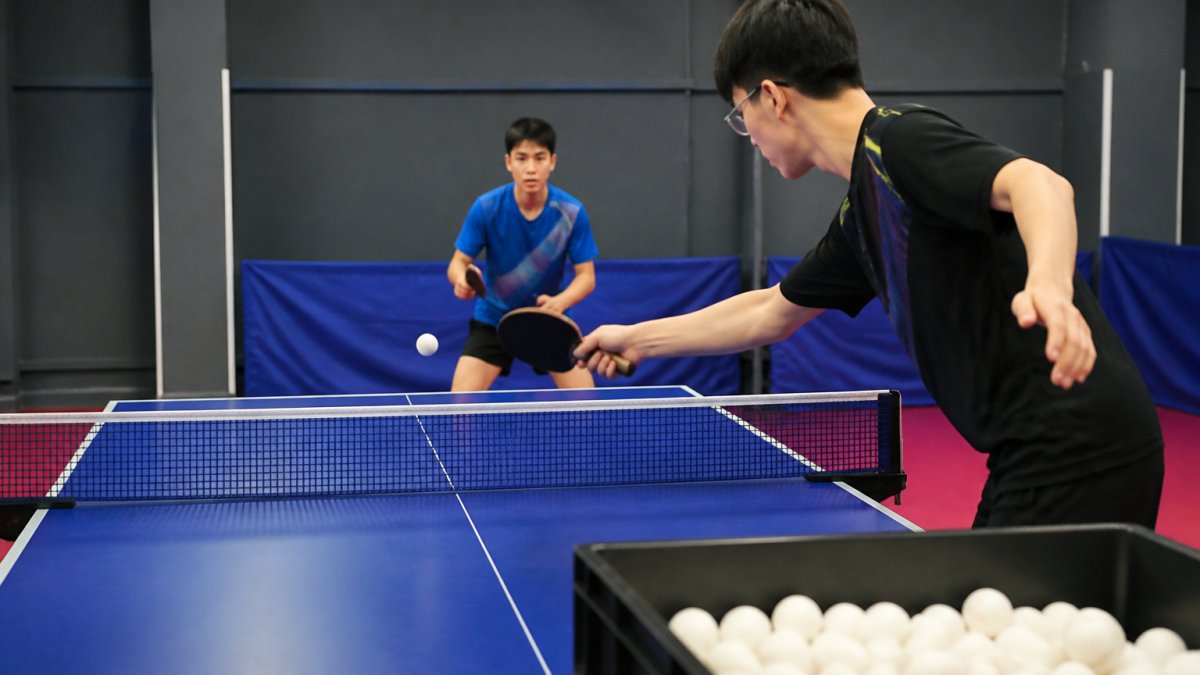
Multi ball practice is a table tennis training method where a coach or robot feeds a continuous stream of balls so you hit more shots in less time. Speed matters because your brain builds stroke mechanics through repetition, and slow drills waste your training window. The problem is that most sessions stall for three reasons: balls scatter everywhere, feeding rhythm breaks down, and players rest too long between reps.
- Scattered balls force constant stops
- Inconsistent feed rate breaks your rhythm
- Long rest gaps let muscle memory fade
Set Up Your Training Space for Faster Multi Ball Practice
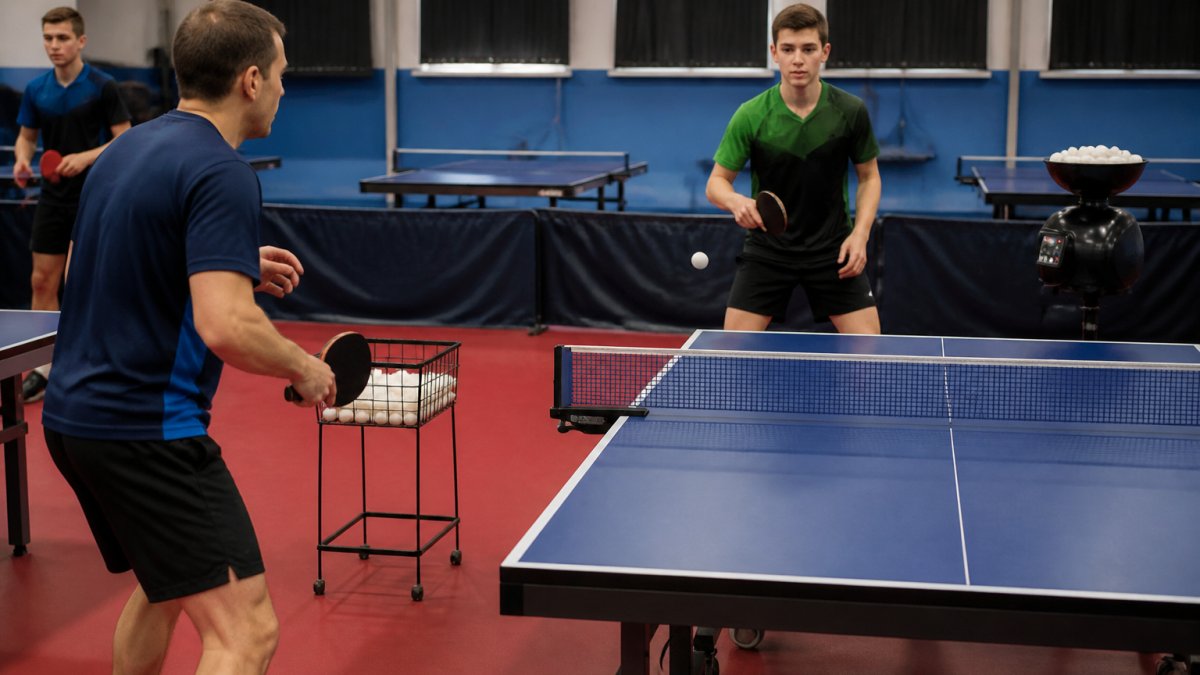
A fast multi ball practice starts before the first ball is fed. Set up your training hall so nothing interrupts the flow. Place your ball basket within arm's reach of the feeder. Position a collector at the far end so balls gather in one zone.
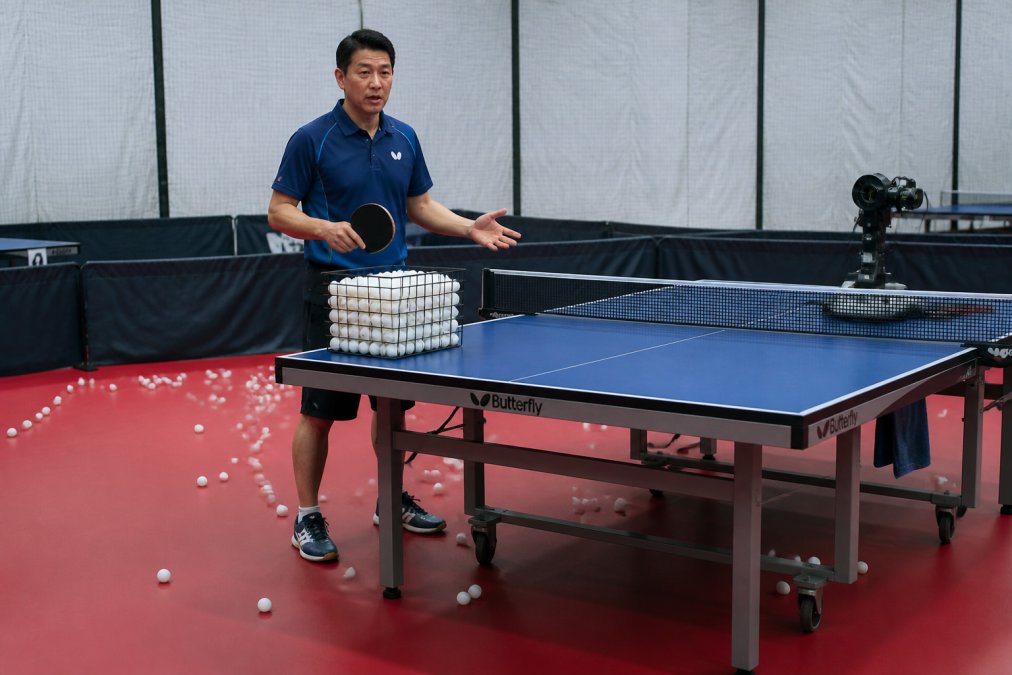
Here's what a clean setup includes:
- Ball basket: holds 100+ balls near the feeder
- Robot or feeder: set to a steady feed rate
- Collector: catches balls without bending
- Clear floor: no chairs or bags in the way
Table Tennis Multi-Ball Drill Structure That Keeps You Moving
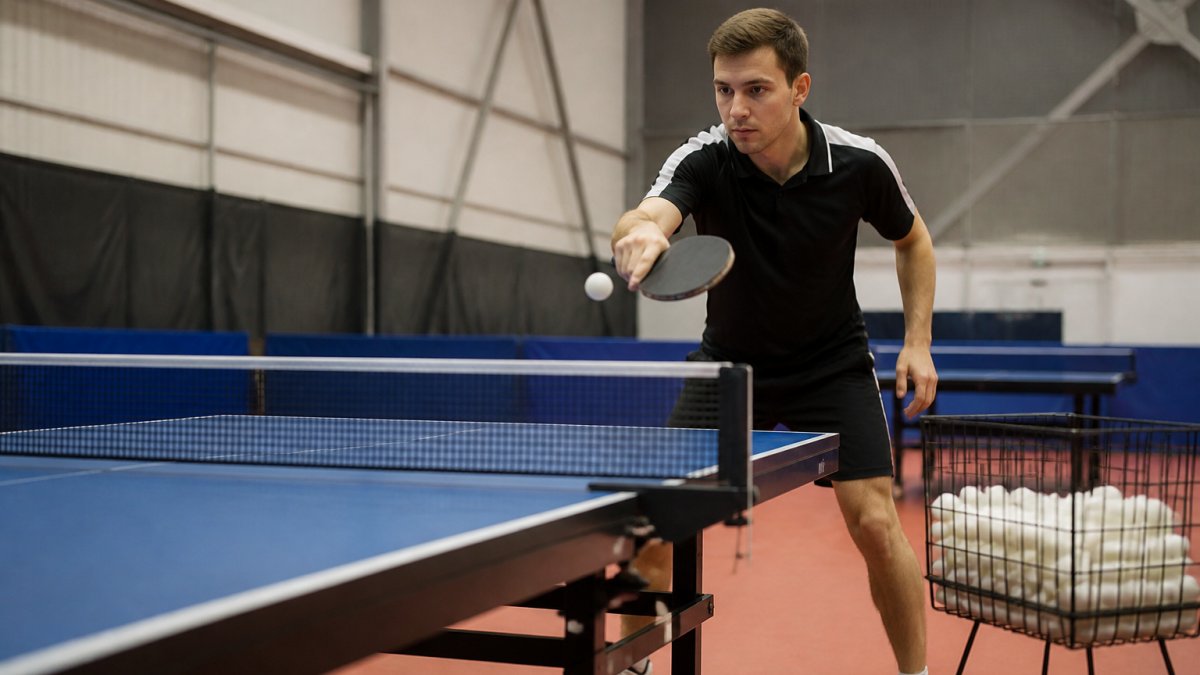
A good table tennis multi-ball drill structure follows a simple rule: short bursts, short rests. Feed for 30-60 seconds, rest for 15-20 seconds, repeat. This keeps your heart rate up and your footwork sharp. Build each drill around one skill so your body learns the pattern.
| Drill | Focus | Feed Time | Rest |
|---|---|---|---|
| Two-point alternation | Footwork | 45 sec | 15 sec |
| Random placement | Reaction time | 30 sec | 20 sec |
| Interval sprints | Stamina | 60 sec | 30 sec |
Drill 1: Two-Point Forehand/Backhand Alternation
Feed one ball to your forehand, then one to your backhand. Keep the tempo steady. This drill trains court coverage and quick recovery between shots. Start slow, then raise the feed rate as your footwork improves.
Drill 2: Random Placement with Reaction Cues
The feeder calls "left" or "right" as the ball leaves the hand. You react and move. This builds reaction time and shot selection under pressure. Random placement is harder than fixed drills, so expect a slower start.
Drill 3: Interval Sprints with Ball Feeding
Combine sprinting with feeding. After each 20-ball burst, sprint to the net and back. This raises stamina and mimics match fatigue. Keep rest periods short to hold the intensity.
How to Organize Table Tennis Training Sessions for Maximum Intensity
To organize table tennis training sessions well, plan the whole hour before you start. Group drills by energy level. Warm up with light footwork, move to fast reaction drills, then finish with cool-down strokes. Write the plan down so you don't waste time deciding what's next.
A simple session plan:
- Warm-up footwork (5 min)
- Consistency drills at low speed (10 min)
- Two-point and random drills (15 min)
- Interval sprints with feeding (10 min)
- Cool-down and stretch (10 min)
The Work-to-Rest Ratio That Actually Drives Speed
Most players organize sessions by drill name and ignore the clock. That is the mistake. Speed in multiball comes from density, the number of quality reps per minute, not from how hard any single drill feels. A useful rule is to keep work-to-rest ratios between 2:1 and 3:1 during the technical block, then widen to 1:1 during the conditioning block.
| Block | Work | Rest | Ratio | Purpose |
|---|---|---|---|---|
| Technical | 45 sec | 15 sec | 3:1 | Groove stroke mechanics under mild fatigue |
| Reaction | 30 sec | 20 sec | 1.5:1 | Train first-step quickness |
| Conditioning | 60 sec | 30 sec | 2:1 | Build match-specific stamina |
| Cool-down | 5 min | , | , | Lower heart rate, restore range of motion |
Count Reps, Not Minutes
A 60-minute session with 400 quality reps beats a 90-minute session with 250. Track three numbers every session:
- Balls fed, total feeds from the basket or robot
- Quality reps, balls you struck with balance and intent
- Dead time, seconds lost to ball chasing, water breaks, or setup
Sequence for Speed, Not Just Fatigue
Order matters. Put the drill you most want to improve at the front of the technical block, while you are fresh. Reaction drills go next, because they demand a sharp nervous system. Conditioning goes last, when form degradation is acceptable. If you flip this order, you will train reaction time on tired legs and wonder why your first step is slow in matches.
Write the session plan on an index card and tape it to the table. Deciding what to do next mid-session is the most common source of dead time.
Best Ball Collector for Table Tennis: Cut Downtime Between Drills
The best ball collector for table tennis is one that lets you gather balls without bending over. Bending down dozens of times per session slows you down and strains your back. A scoop-style collector picks up multiple balls in one pass, so you spend your time training, not crawling on the floor.
- Scoops up balls with ease
- Removes the need to bend over
- Saves time during cleanup
- Comes with a 90-day full refund return policy
Solo Multi Ball Practice: How to Train Without a Partner
Solo multiball is the most underserved topic in table tennis training content, and it is also where most players actually live. If you do not have a coach feeding balls three times a week, you can still build the same repetition volume with a robot or a wall, you just have to engineer the setup more carefully.
Robot Feeder Setup: The Settings That Matter
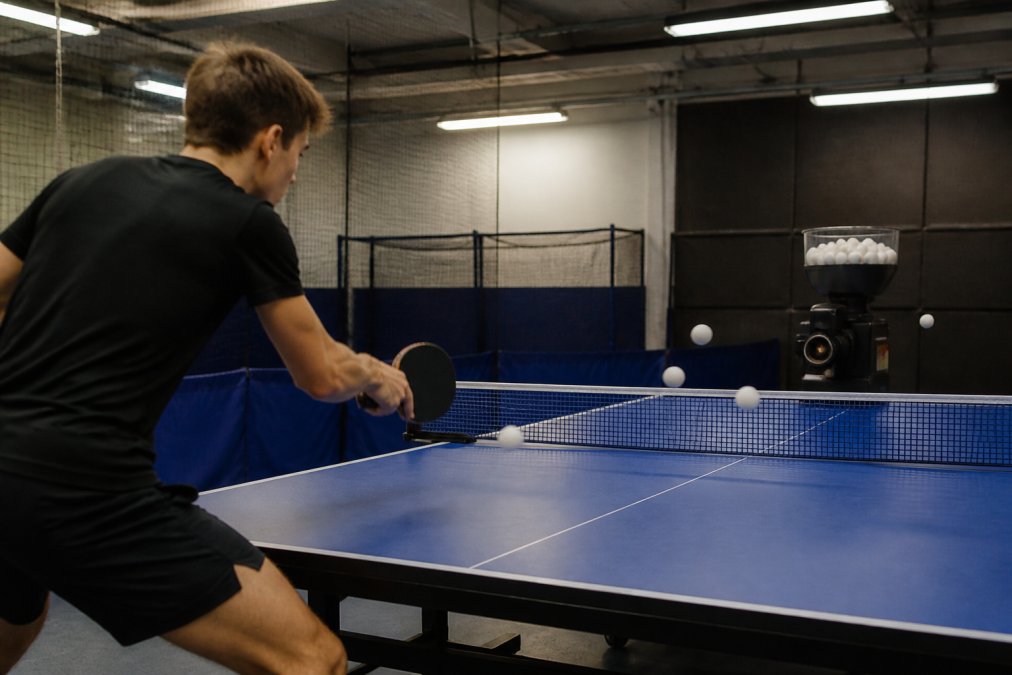
A robot replaces a coach's hand, but only if you configure it deliberately. Four settings control almost everything:
- Frequency (balls per minute): Start at 30-40 balls per minute. Most players can hold form at that rate. Push to 50-60 only after your footwork stays clean for a full 60-second burst.
- Oscillation: Begin with one placement. Add two-point oscillation once you can recover to neutral between balls. Random oscillation is the last step, not the first.
- Speed and spin: Keep ball speed moderate and spin low while you build tempo. High spin plus high frequency is the fastest way to lose your stroke shape.
- Trajectory: Set the arc so the ball lands in your strike zone without you reaching. If you are lunging, the robot is feeding too deep.
Wall Drills That Actually Transfer
A wall is not a robot, but it is not useless either. The rebound forces you to recover quickly because the ball comes back on its own schedule. Three wall drills that hold up:
- Continuous forehand topspin against the wall, stand two to three feet back, hit topspin into the wall, and take the rebound on the bounce. Aim for 30 consecutive balls without a miss before increasing pace.
- Alternating forehand/backhand, hit one forehand, one backhand, off the same rebound pattern. This trains the pivot and recovery that multiball demands.
- Serve-and-rebound, serve into the wall, take the rebound as your third ball. This is the closest wall drill to match-like sequencing.
A Solo Progression Framework You Can Measure
Data-driven progression is where solo training pulls ahead of coached training, because you control every variable. Log four numbers each session:
| Metric | What It Measures | Level-Up Trigger |
|---|---|---|
| Balls per minute | Feed density | Hold current rate for 3 sessions with <10% quality drop |
| Consecutive quality reps | Consistency under tempo | 20 clean reps at current rate before adding speed |
| Recovery time | Footwork reset speed | Return to neutral before the next feed 8 of 10 times |
| Session dead time | Setup and cleanup efficiency | Under 10% of total session time |
Solo Setup Tips
- Set the robot to one placement, then add variation
- Track reps per minute to measure progress
- Keep a collector at the far end for quick resets
- Film a set to check your stroke mechanics
Data-driven tracking sets serious solo players apart. Log your feed rate, reps, and rest time each session. Over weeks, you'll see your tempo climb.
Injury Prevention and Recovery During High-Speed Multi Ball Drills
Recovery habits that help:
- Cool down with slow strokes for five minutes
- Stretch after every session
- Take one full rest day per week
- Raise intensity in small steps, not jumps
Equipment optimization also helps. A comfortable grip, supportive shoes, and a collector that saves bending all reduce strain. Small gear choices add up over a long season.
Conclusion: Build Speed Gradually and Track Your Progress
The urge to sprint before you can jog is the biggest trap in multi ball training. Add speed in small steps, log your reps, and protect your body. Fix your setup, cut the downtime, and the tempo takes care of itself. MyPingPongBuddy makes a handmade collector that clears balls fast, saves your back, and keeps your session moving.
Frequently Asked Questions
What is the primary benefit of multi-ball training in table tennis?
Multi-ball training packs more repetitions into a shorter window than partner drills. Because the feeder controls pace, placement, and spin, you can isolate one stroke and repeat it 50 or 60 times in a few minutes. That volume builds muscle memory faster, improves footwork and reaction time, and lets you practice at a higher intensity than a rally would allow. Speed matters because more quality reps per session means faster technical development.
How can I reduce downtime during multi-ball drills?
Downtime usually comes from three places: collecting balls, resetting the feeder, and resetting your own position. Use a large hopper or basket so the feeder does not stop, place a ball collector near the table so balls are scooped in one pass, and set a fixed number of balls per set so the drill ends on a predictable count. Keeping a spare basket of balls within arm's reach also removes the pause between sets.
What equipment is essential for efficient multi-ball practice?
You need a large supply of quality balls (at least 60 to 100 for serious drills), a feeding basket or hopper, and a fast collection tool. A ball collector that picks up multiple balls per scoop, like a handheld roller or scoop, saves the most time. A robot feeder helps for solo sessions. Non-slip shoes and a water bottle within reach also keep the session moving without unnecessary breaks.
How do you organize a multi-ball session for maximum intensity?
Start with a clear plan: warm up with slow, high-consistency feeds, then move to moderate pace, and finish with short, high-intensity bursts. Use timed sets, for example 45 seconds of work followed by 15 seconds of rest, to keep the heart rate up without sacrificing technique. Rotate through three or four drills per session so you cover footwork, stroke mechanics, and reaction time. End with a cool-down and light stretching.