 how-to
How to Setup Efficient Multi-Ball Drills (2026 Guide)
Table of Contents
- What You Need Before Your First Multi-Ball Session
- Step 1: Set Up Your Training Environment for Multi-Ball Drills
- Step 2: How to Feed Multi-Ball for Beginners
- Step 3: Table Tennis Multi-Ball Drill Examples by Skill Level
- How to Build a Drill Progression Framework That Actually Works
- Feeder Ergonomics, Injury Prevention, and Ball Management
- Choosing the Best Ball Collector for Table Tennis Training
- Tracking Performance Metrics and Troubleshooting Common Feeding Errors
- Frequently Asked Questions
Last Updated: September 25, 2026
What You Need Before Your First Multi-Ball Session
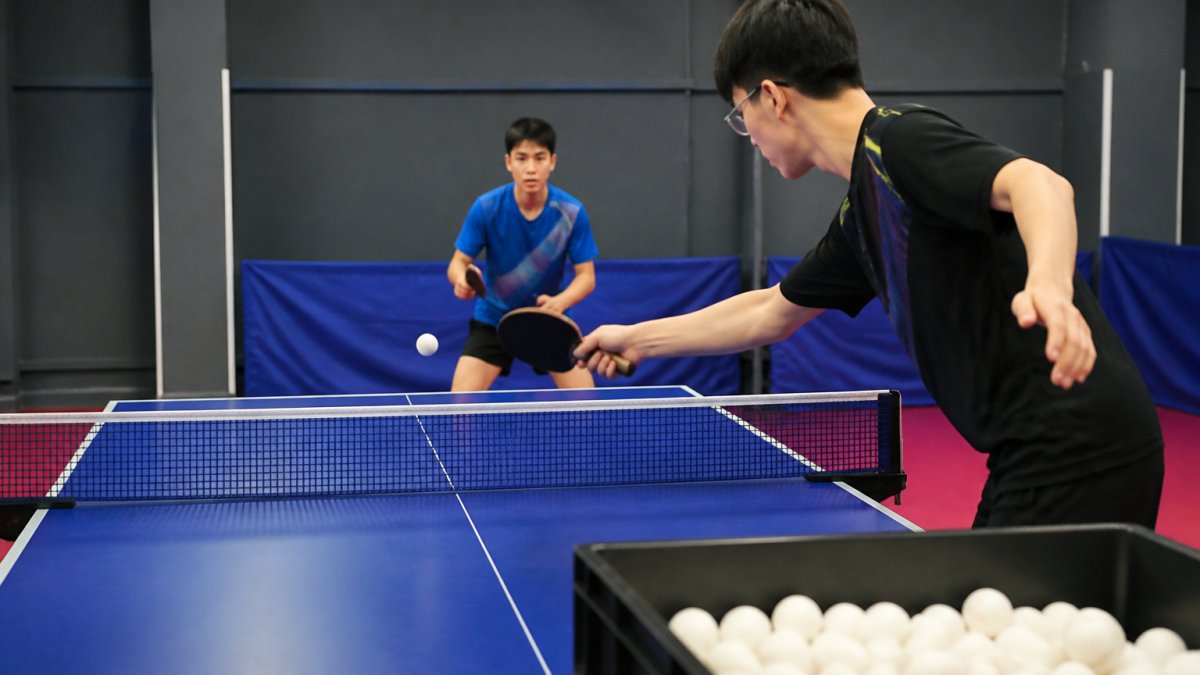
Efficient multi-ball drills start with preparation, not speed. Coaches who skip setup spend half their session chasing balls instead of feeding them. At MyPingPongBuddy, the best sessions have everything in place before the first ball is fed.
Before you feed a single ball, gather these essentials:
- A ball cart or hopper with at least 100 balls (150+ for advanced sessions)
- A feeder position marked on the floor behind the table
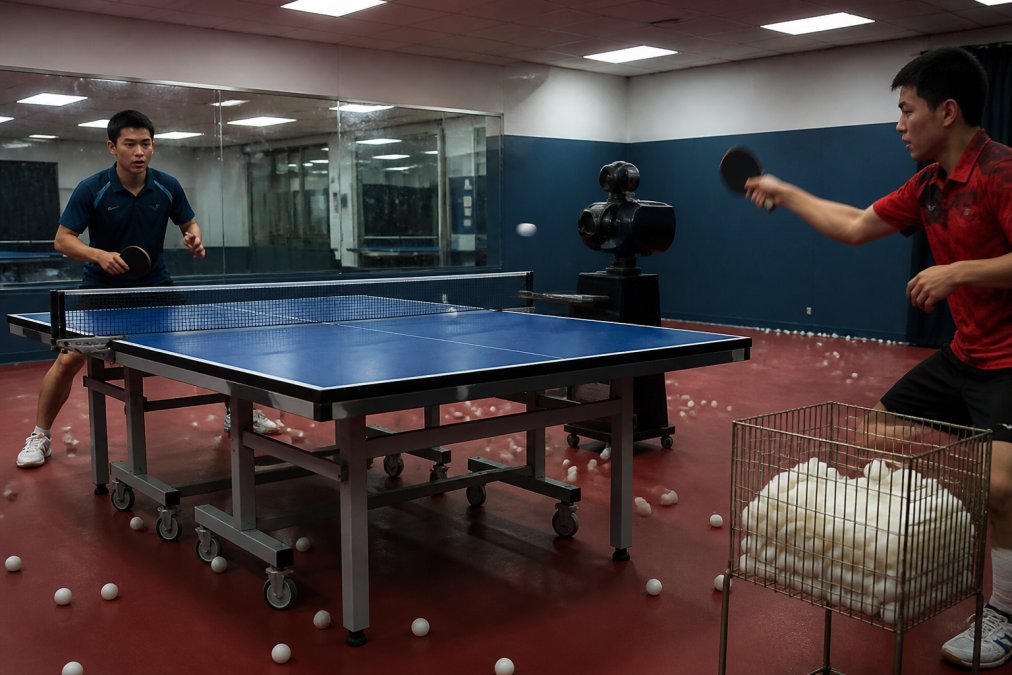
- A collection zone where balls land and stay contained
- A ball collector that lets you gather balls without bending
- A training plan with specific drills and rep counts
Step 1: Set Up Your Training Environment for Multi-Ball Drills
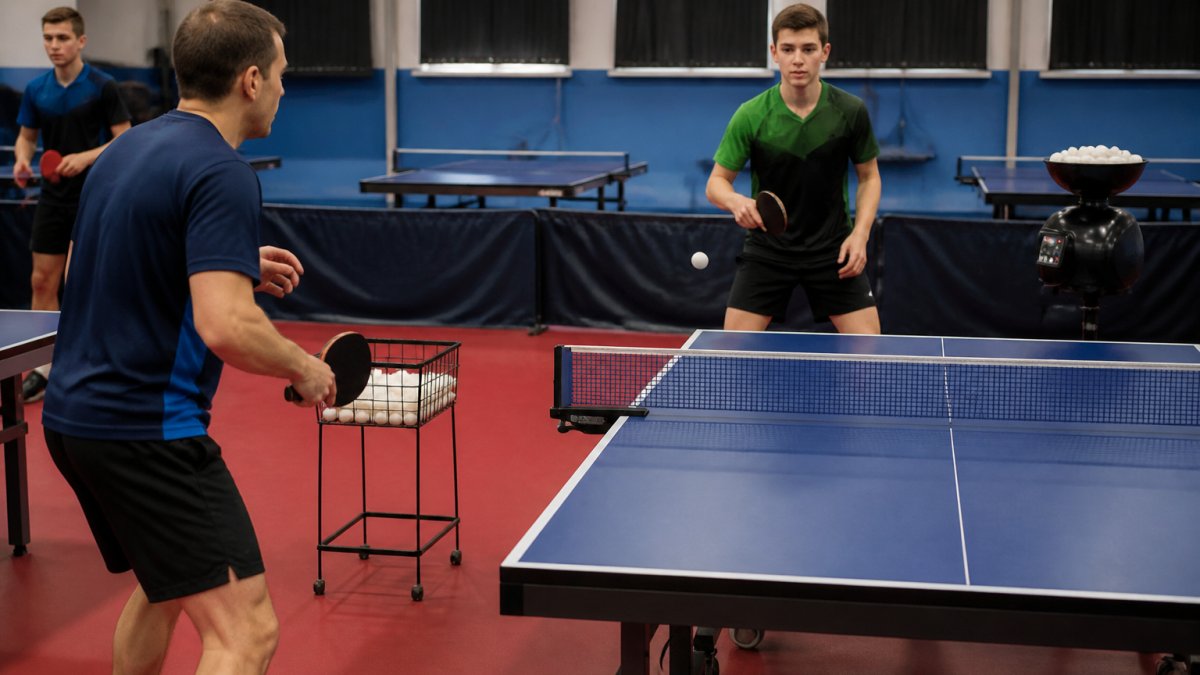
A proper training environment has three zones, feeding, hitting, and collection, each with clear boundaries so balls don't scatter and interrupt the session.
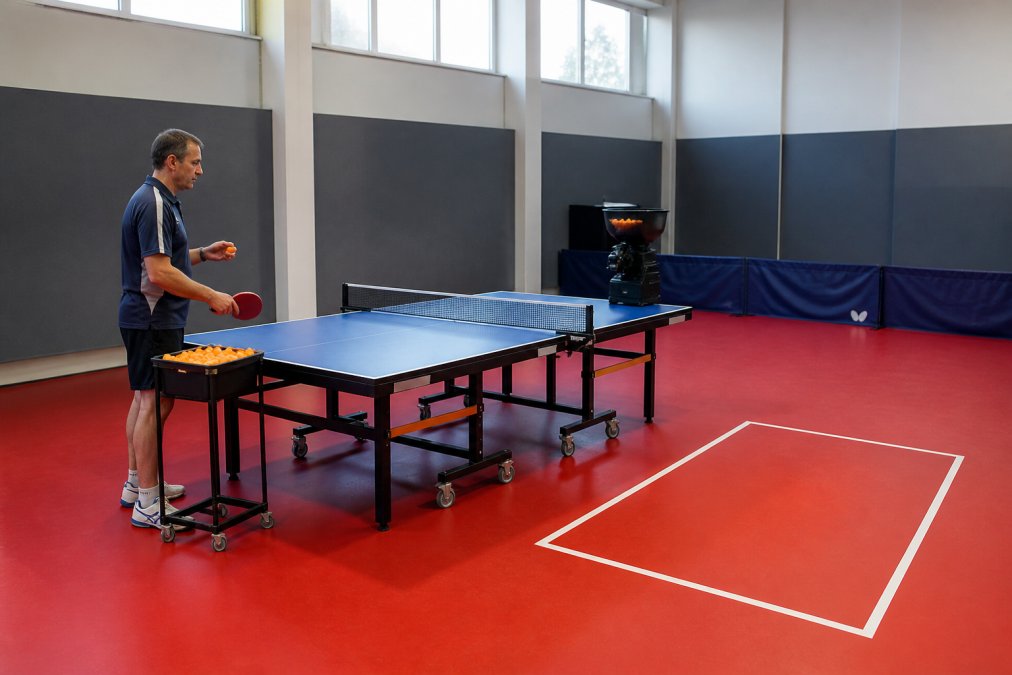
Positioning Your Ball Cart, Robot, and Collection Zone
Place your ball cart or robot at one end of the table, 1-2 feet back from the edge, so you can reach balls without stepping into the playing area. Mark your collection zone with cones or tape behind the table so balls stay contained. For robot training, adjust the angle and speed before your player steps up. A common mistake is placing the cart too close to the table, you'll trip over it during feeds.
Step 2: How to Feed Multi-Ball for Beginners
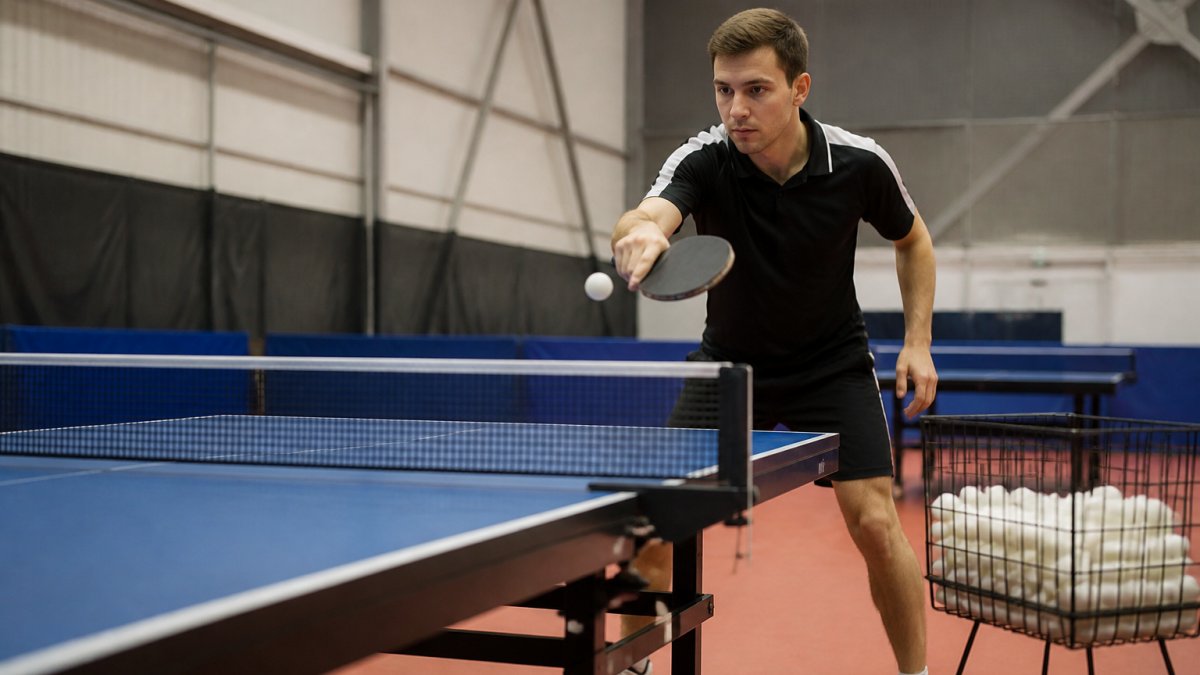
Feeding rhythm matters more than feed speed when you're starting out. New feeders often rush, but consistent timing gives the player time to reset and prepare.
Feeding Rhythm, Ball Placement, and Feed Frequency Basics
Start with a steady rhythm: one ball every 2-3 seconds, giving beginners time to complete their stroke and recover. Vary placement gradually, same spot first, then alternate forehand and backhand. Directional control comes after consistency.
Feed frequency depends on the drill:
| Skill Level | Feed Interval | Balls Per Set | Rest Between Sets |
|---|---|---|---|
| Beginner | 3-4 seconds | 20-30 | 60-90 seconds |
| Intermediate | 2-3 seconds | 30-50 | 45-60 seconds |
| Advanced | 1-2 seconds | 50-80 | 30-45 seconds |
Step 3: Table Tennis Multi-Ball Drill Examples by Skill Level
Drill selection should match the player's current skill level, not their aspirations. Treat each drill as a slot in a progression, every drill below has a defined target, rep scheme, and cue the feeder watches for.
Beginner Drills: Consistency and Footwork Efficiency
These drills build the foundation. Feed at 3-4 second intervals within a 12-inch target zone so the player can groove the stroke before adding movement.
- Forehand consistency: 30 balls to the forehand corner. Target: 24 clean contacts (80%). Cue: watch the player's elbow, if it drifts behind the body, the stroke is arm-only.
- Backhand consistency: 30 balls to the backhand corner. Same 80% target. Cue: contact point should be in front of the torso, not beside it.
- Alternating drill: Feed forehand, then backhand, repeat for 40 balls. Target: 30 clean contacts. Cue: the player's feet should reset between every ball.
- Footwork shuffle: Feed wide forehand, then wide backhand, forcing lateral movement. 20 balls per set, 3 sets. Cue: the player should arrive before the ball bounces, not as it bounces.
- Random placement block: Feed to any of four corners in random order for 30 balls. Target: 22 clean contacts. This is the bridge drill before moving to intermediate work.
Intermediate and Advanced Drills: 3rd Ball Attack and Pressure Training
Once basics are solid, add complexity: feed intervals drop to 2-3 seconds for intermediate and 1-2 seconds for advanced, with varied spin and placement.
- 3rd ball attack: Feed a serve-like ball (short, low, with backspin), player attacks the return, then plays out the point. 15-20 reps per set, 4 sets. Target: 70% attack success with the ball landing past the mid-table line.
- 5th ball attack: Extend the pattern, serve-like feed, attack, transition shot, then finish. 12-15 reps per set, 4 sets. Target: 60% completion. This drill exposes whether the player can recover after the first attack.
- Pressure training: Feed faster with less recovery time, simulating match intensity. 40-60 balls per set at 1-2 second intervals. Target: hold 65% success rate across the full set. If success drops below 50%, the feed is too fast, back off before continuing.
- Random 3rd ball: Feed serve-like balls to random locations (short forehand, short backhand, half-long middle). Player must decide attack or push. 20 reps. Target: correct decision on 16 of 20 balls.
- Fatigue set: 80 balls at 1.5 second intervals with no rest. Target: 55% success. This is the closest multiball gets to match-end conditions.
How to Progress Between Drill Tiers
Do not move a player up a tier just because they completed the reps. Move them up when they hit the target success rate twice in a row on the same drill:
- Player hits 80% on forehand consistency in two consecutive sets.
- Add the alternating drill at the same feed interval.
- Once alternating hits 75%, introduce random placement.
- Only then drop the feed interval by one second.
How to Build a Drill Progression Framework That Actually Works
A progression framework moves players from simple to complex skills in logical order. Most coaches do this instinctively, but writing it down makes it intentional.
Use this four-stage framework:
- Isolation: One stroke, one placement, slow feeds
- Combination: Two strokes linked together
- Pressure: Same combination with faster feeds and less recovery
- Integration: Drill flows into live play scenarios
Feeder Ergonomics, Injury Prevention, and Ball Management
Feeding hundreds of balls per session takes a physical toll, lower back pain, shoulder strain, and wrist issues are common among daily feeders.
Here's how to protect yourself:
- Stand with feet shoulder-width apart to distribute weight evenly
- Bend at the knees, not the waist, when reaching for balls
- Keep the ball basket at waist height to avoid repeated bending
- Alternate feeding arms if your technique allows
- Take breaks every 10-15 minutes during long sessions
Choosing the Best Ball Collector for Table Tennis Training
The best ball collector for table tennis training eliminates bending, handles high volume, and fits your storage space. Most collectors require you to bend or squat, which defeats the purpose.
What sets it apart:
- No bending required: scoop while standing
- Portable design: breaks in half for easy transport
- Handmade durability: built to handle daily club use
- 90-day return policy: full refund if it doesn't work for you
Tracking Performance Metrics and Troubleshooting Common Feeding Errors
You can't improve what you don't measure, but you also can't measure anything if tracking is too complicated to use while feeding. Track four numbers per set and diagnose feeding errors with a short decision tree. This is where efficient sessions separate from busy ones.
The Four Metrics Worth Tracking
- Balls fed per set: total volume. Count in groups of 10 so you don't lose track mid-feed.
- Player success rate: clean hits divided by balls fed. A clean hit is a ball that lands on the table with the intended stroke, not a lucky edge or a scramble.
- Recovery time: how quickly the player resets to ready position after each stroke. Watch the feet, not the paddle.
- Session duration: total training time, including rest. If duration creeps up while volume stays flat, rest periods are stretching.
A paper tally works better than an app during a live session. Write the drill name, set number, and success count, then review weekly, patterns show up across sessions that are invisible within one.
A Decision Tree for Diagnosing Feeding Errors
When a drill breaks down, the instinct is to blame the player. Run this check first, in order:
- Is the rhythm consistent? If the player is rushing or waiting, the feed interval is drifting. Count beats in your head, a steady 1-2-3 cadence at 2 seconds per ball is easier to hold than an internal sense of "fast enough."
- Is the placement repeating? If balls cluster in one spot, you are feeding from muscle memory, not aim. Pick a target on the table (a specific corner, a piece of tape) and feed to it deliberately for the next 10 balls.
- Is the height right? Balls should arrive between the player's waist and chest. If the player is reaching up or crouching, the feed height is off, adjust your release point, not the player's stance.
- Is the pace matching the drill? If errors spike, slow down until success rate recovers, then rebuild. If the player looks bored or late on every ball, increase pace by half a second.
- Is the spin doing what you intended? A feed that was supposed to be backspin but arrives flat changes the entire drill. Check by feeding five balls to a stationary player and asking what they felt.
| Error | What It Looks Like | The Fix |
|---|---|---|
| Inconsistent rhythm | Player rushing or waiting | Count beats in your head; use a metronome app at low volume if needed |
| Poor ball placement | Balls clustering in one spot | Aim for a taped target on the table for the next 10 feeds |
| Feed too fast | Player errors increase | Slow down until success rate recovers, then rebuild pace gradually |
| Feed too slow | Player loses focus or over-thinks | Increase pace by half a second per interval |
| Wrong ball height | Player reaching or crouching | Adjust your release point to waist-to-chest height |
| Wrong spin | Player mis-hits or ball floats | Reset with five stationary feeds and confirm the feel |
| Feeder fatigue | Rhythm drifts late in the session | Take a 60-second break every 10-15 minutes |
Turning Metrics Into the Next Session Plan
Review metrics weekly and let them write the next session. If success rates drop across multiple drills, check your feeding before blaming the player. If one drill consistently underperforms while others hold steady, change its target, feed interval, or placement pattern.
Frequently Asked Questions
How many balls do you need for effective multi-ball training?
For a productive session, plan on 60 to 100 balls. That range lets you run rapid-fire sequences without stopping to collect every few feeds, which keeps your feeding rhythm steady and your heart rate up. Beginners can start with 50 to 60 balls and add more as drill intensity increases. Having a dedicated ball collector nearby means you can reset the entire batch in under a minute and get straight back to training.
What is the best ball collector for table tennis?
The best ball collector for table tennis depends on your training volume and whether you deal with back pain. A handheld scoop-style collector, like the MyPingPongBuddy, lets you gather balls without bending over, which matters if you feed hundreds of balls per session. It breaks down in half for transport and storage. Coaches running club sessions often keep one per table so players can reset quickly between multi-ball drills.
How do you organize a multi-ball drill session for beginners?
Start with a clear training session plan: 10 minutes of warm-up, then three to four drills focused on one skill, like footwork or consistency. Feed at a slower rhythm so beginners can track ball placement and recover between shots. Use 50 to 60 balls per drill, and build in a reset drill where players collect and return balls to the cart. This structure teaches feeding rhythm and keeps the session moving.
How can I improve my footwork using multi-ball drills?
Set up drills that force lateral movement: alternate feeds to the backhand and forehand corners, then add a middle ball to test recovery. Keep feed frequency high enough that players must reset their stance between shots. Shadow swinging before the drill helps players rehearse the movement pattern. Track how many balls they reach in a set time to measure footwork efficiency and court coverage over weeks.
Running efficient multi-ball drills comes down to preparation, rhythm, and the right tools. The physical toll of feeding and collecting hundreds of balls adds up, and that's where MyPingPongBuddy makes a real difference. Our handmade collector lets you scoop balls while standing, breaks down for easy transport, and comes with a 90-day full refund policy. Get started with MyPingPongBuddy and spend less time bending, more time coaching.