 how-to
Table Tennis Training Drills for Speed and Agility
Table of Contents
- Set Your Training Goal and Session Structure
- Warm-Up: Off-Table and On-Table Preparation
- Table Tennis Footwork Drills to Build Speed
- Table Tennis Solo Practice Drills for Consistency
- Table Tennis Agility Drills for Quick Responses
- Build a Complete Table Tennis Training Routine
- Simplify Your Practice With Efficient Ball Management
- Frequently Asked Questions
Last Updated: October 12, 2026
Set Your Training Goal and Session Structure
Your table tennis training drills won't deliver results if you're not clear about what you're trying to improve. Before you step up to the table, decide what matters most for your game right now.
Are you chasing speed? Agility? Consistency? The answer shapes everything that follows. A player focused on footwork needs different drills than someone working on serve accuracy.
Choosing the Right Session Length
Session length depends on your schedule and recovery capacity. Short sessions beat long, unfocused ones every time.
- 30-45 minutes: Perfect for beginners or players with limited time. Focus on one or two drill types.
- 60-minute session: The sweet spot for most players. Enough time for warm-up, technical work, and match play.
- 90-120 minutes: Best for serious competitors or coaches running group training. Allows for multiple drill sequences and rest breaks.
Longer isn't better. A focused 60-minute session with clear goals beats a wandering 120-minute session. Your body needs recovery time between intense drills anyway.
Matching Drills to Your Skill Level
Your table tennis training drills should match where you actually are, not where you want to be.
Beginners need consistency work and basic footwork. Intermediate players benefit from attack and counterattack drills. Advanced players should focus on match-specific scenarios and pressure situations. Trying to run advanced footwork drills when you haven't mastered basic movement patterns wastes time and builds bad habits.
Warm-Up: Off-Table and On-Table Preparation
Every session starts the same way: prepare your body and your mind. Skip this and you're asking for injury and poor performance.
Off-Table Warm-Up Routine
Get your heart rate up and your muscles ready before you touch a paddle.
- Light cardio: 2-3 minutes of jogging, jumping jacks, or cycling. You should feel warm, not exhausted.
- Dynamic stretching: Arm circles, leg swings, torso rotations. Move through your full range of motion.
- Footwork activation: Small shuffle steps side to side. Get your feet thinking about movement.
- Shoulder and wrist mobility: Gentle rotations in both directions. Table tennis demands shoulder and wrist stability.
This takes 5 minutes total. It's not optional.
On-Table Light Rallies and Stroking
Now step to the table for easy rallies. This is where your body learns the specific movements it needs.
Start with slow, controlled rallies from close to the net. Focus on smooth stroking, not power. Keep the ball in play for 10-15 exchanges.
Light rallies do two things: they warm up your strokes and they let you feel the ball. You're not training yet. You're preparing.
Table Tennis Footwork Drills to Build Speed
Speed without footwork is wasted energy. Your feet move the paddle to where the ball is. Master your feet and your speed multiplies.
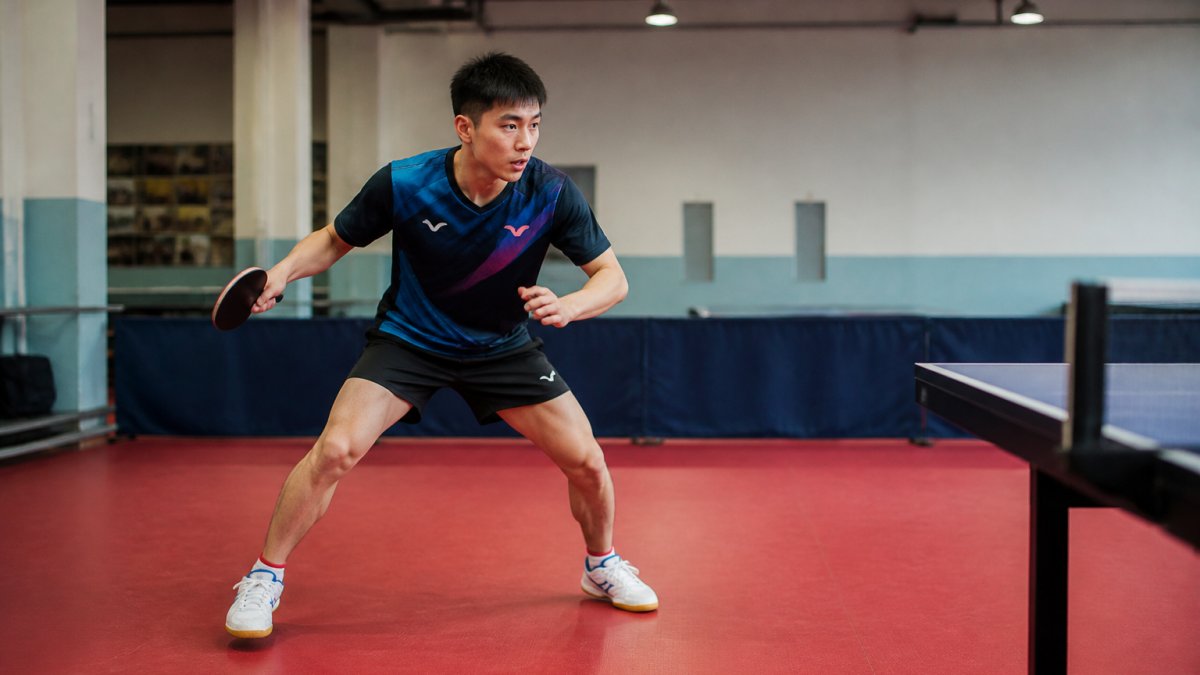
The Falkenberg Drill for Lateral Movement
The Falkenberg drill builds the lateral speed you need to cover the table fast.
Here's how it works: stand at the baseline in ready position.
Start slow. Make 10 touches on each side. Then increase speed. The goal is fast feet and consistent contact. After 2-3 minutes of work, rest for 1 minute.
This drill builds the muscle memory your legs need for match play. You're teaching your feet to react instantly.
Crossover Steps and Transition Patterns
Crossover steps let you cover distance fast without losing balance. They're essential for aggressive players who need to attack wide balls.
From center position, have your partner feed a ball wide to your forehand. Cross your right foot over your left, take two quick adjustment steps, and hit.
Do 20 crossover touches on each wing. Rest. Repeat twice more. This drill teaches your legs how to move explosively while staying balanced.
Table Tennis Solo Practice Drills for Consistency
You won't always have a partner. Solo drills build consistency and let you focus entirely on your technique.
Multiball Drills for Technical Refinement
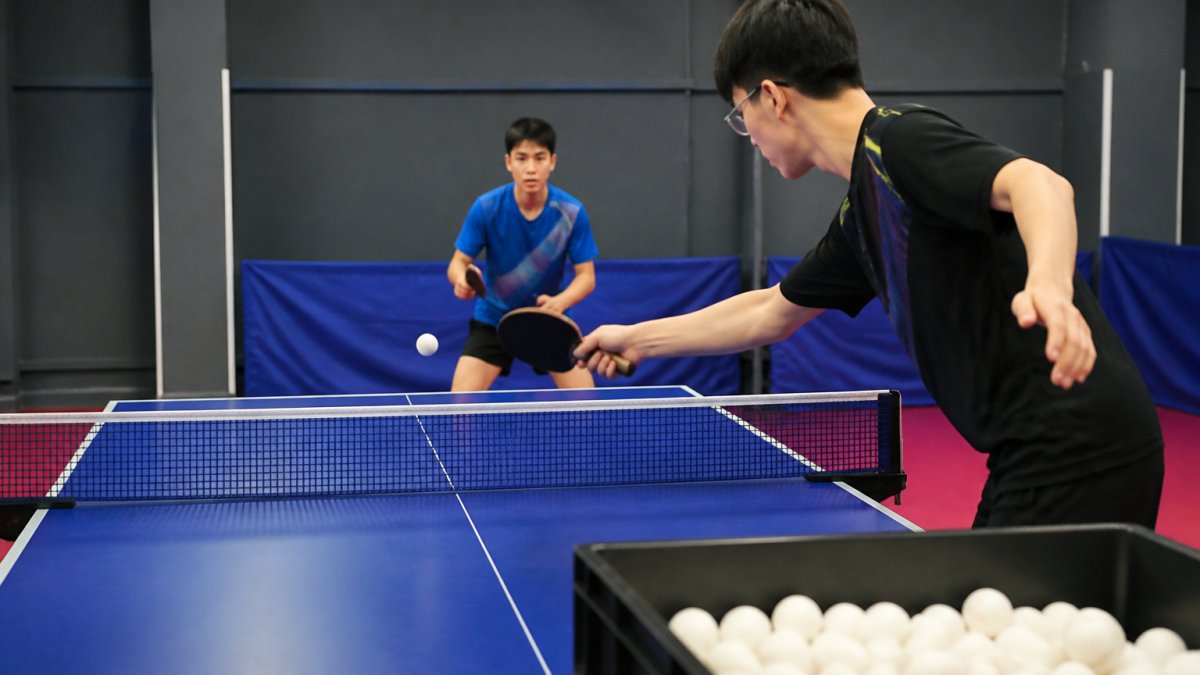
Multiball training is where precision happens.
Here's a simple sequence:
- Forehand consistency: Feed 10 balls to your forehand. Hit each one to the same corner. Rest 30 seconds.
- Backhand consistency: Repeat on the backhand side.
- Crossover: Feed 5 forehands, then 5 backhands alternating. You move side to side.
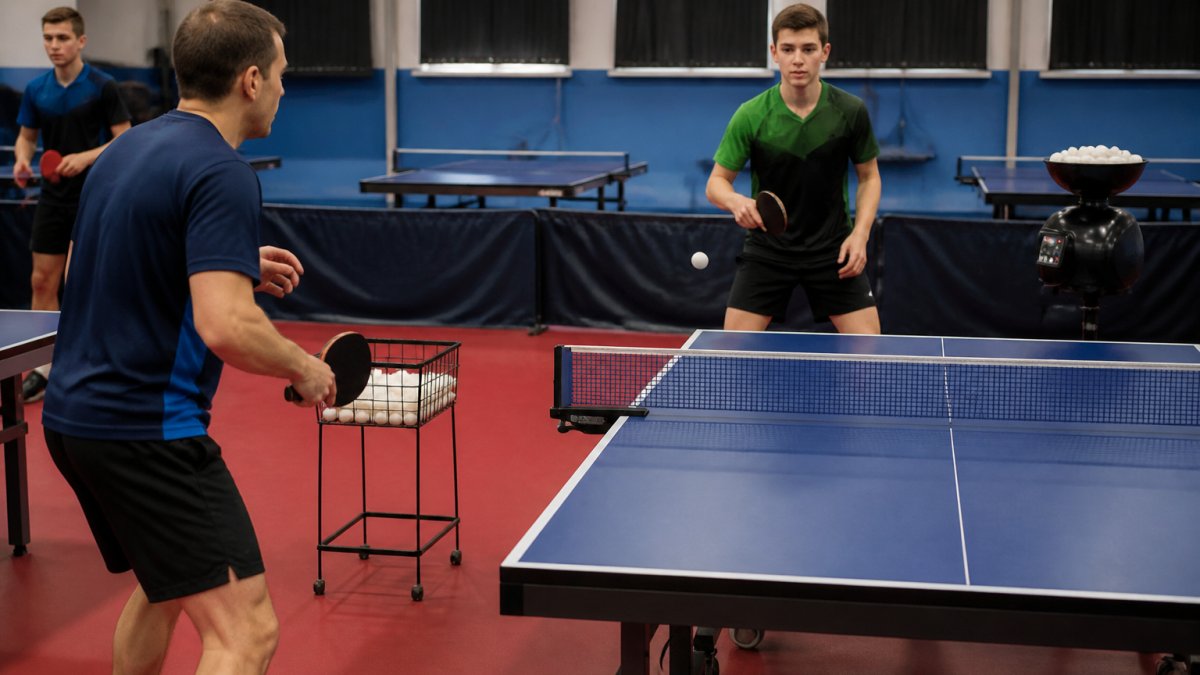
- Attack drill: Feed slower balls that you can attack aggressively. Focus on finishing the point.
Do 3-4 rounds of this sequence. Each round takes 5-7 minutes. The repetition builds muscle memory. Your body learns what good stroking feels like.
Multiball training is intense. Your legs work hard and your mind stays sharp because the ball comes fast. This is why serious players use it.
Solo Rally Drills Against the Wall
No partner available? Use a wall.
Stand 6-8 feet from a wall and rally against it. Keep the ball in play for as many touches as possible. Start slow and build pace. This drill builds consistency and lets you practice footwork in a low-pressure setting.
Track your longest rally. Try to beat it each session. This gives you a measurable goal and keeps solo practice engaging.
Table Tennis Agility Drills for Quick Responses
Agility is your ability to change direction fast and stay balanced. It's what separates reactive players from proactive ones.
Attack and Counterattack Drill Sequences
Attack drills teach you to finish points. Counterattack drills teach you to handle aggressive balls.
Attack sequence:
- Your partner feeds a slower ball to your forehand.
- You step in and attack it hard to the corner.
- Your partner feeds a backhand ball.
- You attack that corner.
- Repeat 10 times. Rest 1 minute. Do 3 rounds.
Counterattack sequence:
- Your partner hits an aggressive ball at you.
- You block or counterattack it back to their forehand.
- They hit again. You respond.
- Keep this exchange going for 5-10 touches.
- Rest 1 minute. Do 4 rounds.
These drills teach your body to react under pressure. In matches, you won't have time to think. These drills train your instincts.
Short Serve and Receive Combinations
Short serves demand quick feet and sharp reactions. This drill sharpens both.
Serve short to your partner's forehand side. They attack or push it back. You block or counterattack. Keep the rally going for 3-5 touches. Then switch sides.
Do 20 short serve exchanges total. Rest 1 minute. Repeat twice.
This drill builds the short-game skills that win tight matches. It also teaches you to read your opponent's intentions fast.
Build a Complete Table Tennis Training Routine
Now put it all together. Here's how to structure sessions that build speed, agility, and consistency.
60-Minute Session Template
This is the standard session for most players.
| Phase | Duration | Focus |
|---|---|---|
| Off-table warm-up | 5 min | Heart rate, mobility |
| On-table rallies | 5 min | Feel and stroking |
| Footwork drill (Falkenberg) | 10 min | Lateral speed |
| Multiball sequence | 15 min | Consistency and technique |
| Attack/counterattack drills | 15 min | Agility and decision-making |
| Cool-down and stretch | 5 min | Recovery |
This structure hits all the pieces. You warm up, work on footwork, refine technique, practice match scenarios, and recover.
90-Minute and Extended Session Plans
Add 30 minutes? Use it for deeper work.
After the 60-minute base, add:
- Solo drill work (10 minutes): Wall rallies or multiball against a robot if you have one.
- Serve practice (10 minutes): Work on serve variety, placement, and spin.
- Match play simulation (10 minutes): Play out full points against a partner, keeping score.
This gives you time to specialize. Maybe one session focuses on footwork. The next focuses on serve-and-receive. The pattern prevents boredom and builds well-rounded skills.
Tracking Progress and Adjusting Intensity
You can't improve what you don't measure. Track three things:
- Successful rallies: How many times did you keep the ball in play during multiball drills?
- Serve accuracy: How many serves landed in the target zone?
- Match points won: In simulated matches, how many points did you win?
Keep a simple practice log. Write down the date, the drills you did, and your results. After 4 weeks, look back. You should see improvement. If not, something's wrong with your plan or your effort.
Adjust intensity based on how you feel. Some days you'll have energy for hard drills. Other days you need lighter work. Listen to your body.
Simplify Your Practice With Efficient Ball Management
Ball cleanup eats time. Wasted time means less training.
Why Cleanup Matters to Your Training Focus
Every minute you spend chasing balls is a minute you're not training. It breaks your focus. It interrupts your rhythm.
Efficient cleanup keeps your session flowing. You stay warm. Your mind stays sharp. You get more quality reps in the same amount of time.
This is why tools that speed up ball collection matter. When you're running multiball drills or group sessions, balls scatter everywhere.
Organizing Multiball and Group Sessions
For coaches and facility managers, ball management is a real operational challenge. Hundreds of balls need to be collected, sorted, and stored.
Here's what works:
- Use a ball collection tool: Something like MyPingPongBuddy that lets you scoop multiple balls at once saves hours every week. One player or coach can collect balls much faster than bending over repeatedly.
- Organize by zones: Assign different people to collect balls from different areas of the table. This speeds up the process and prevents people from getting in each other's way.
- Have a staging area: Keep collected balls in a basket or cart near the table. This keeps them organized and ready for the next drill sequence.
- Schedule cleanup time: Don't try to clean up during drills. Set aside 5-10 minutes at the end of each session. Your players stay focused on training, not cleanup.
For clubs with 10-15 tables, efficient ball management is the difference between smooth operations and chaos.
Building speed and agility in table tennis demands a clear plan.
But structure alone isn't enough. You need focus during training. That means efficient cleanup that doesn't interrupt your flow.
Frequently Asked Questions
How can I improve my footwork speed in table tennis?
Build footwork speed through targeted drills like the Falkenberg drill and crossover steps performed 3-4 times per week. Start with slow, controlled movements to nail proper technique, then increase tempo. Practice for 10-15 minute blocks during your training routine, focusing on explosive starts and smooth transitions. Consistency beats intensity, small daily improvements compound over weeks.
What are the best table tennis drills for agility?
Attack and counterattack drill sequences build reactive agility by forcing quick directional changes. Pair these with short serve-and-receive combinations to sharpen your ability to respond to varied ball placement. Solo practice drills using multiball training or wall rallies also develop agility by requiring you to adjust positioning rapidly. Spend 15-20 minutes per session on agility work to see measurable improvement.
Can I practice table tennis footwork alone?
Yes. Solo practice drills like the Falkenberg drill, crossover step patterns, and wall rallies let you refine footwork without a partner. Multiball drills with a robot or coach feeding balls also work well for solo sessions. Solo practice builds consistency and lets you focus on technique without match pressure, though pairing solo work with match play ensures your drills transfer to real competition.
How long should a table tennis training session be?
A complete table tennis training routine works best at 60-90 minutes. A 60-minute session includes 10 minutes warm-up, 35-40 minutes technical and footwork drills, 10-15 minutes serve practice, and 5 minutes cool-down. Extend to 90 minutes by adding 15-20 minutes of match play or game-based practice. Track your session duration and progress in a practice log to identify which lengths and drill sequences improve your speed and agility most.