 how-to
Table Tennis Training for Seniors: A Step-by-Step Guide
Table of Contents
- Why Table Tennis Training Matters for Seniors
- Table Tennis Injury Prevention for Seniors
- How to Pick Up Ping Pong Balls Without Bending
- Essential Table Tennis Drills for Older Adults
- Building Your Weekly Training Routine
- Common Mistakes to Avoid in Senior Training
- Frequently Asked Questions
Last Updated: September 29, 2026
Why Table Tennis Training Matters for Seniors
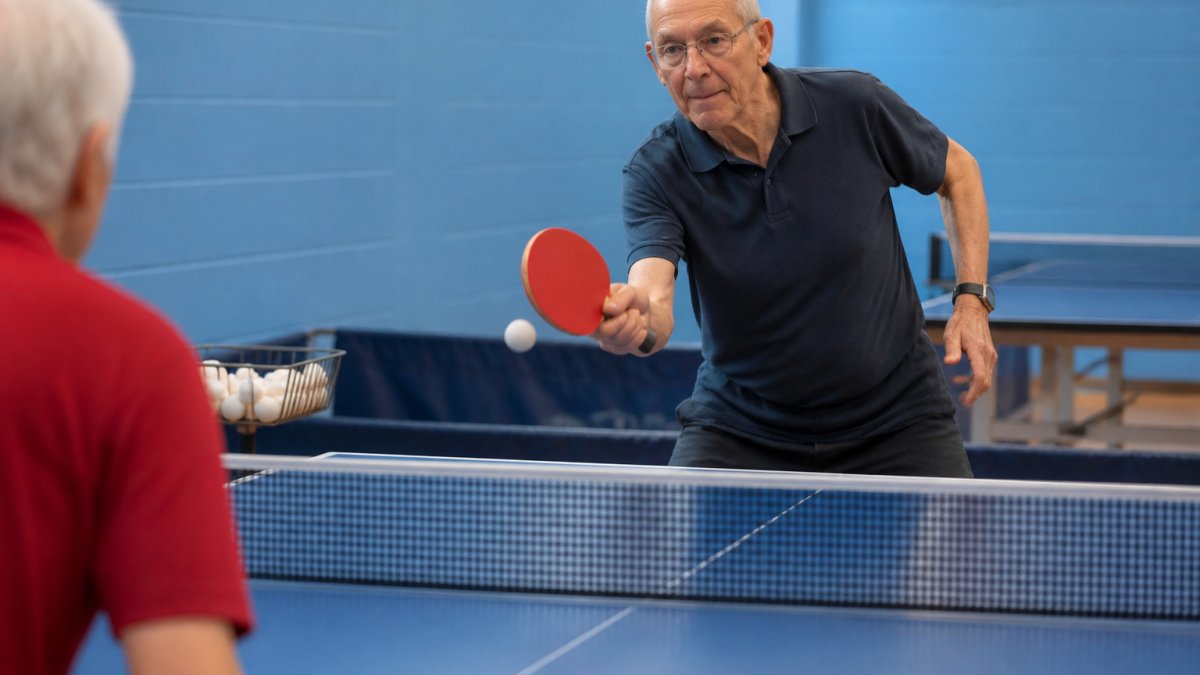
Table tennis training seniors isn't just about recreation. It's one of the most effective ways to maintain hand-eye coordination, reaction time, and cardiovascular health as you age. The sport demands focus, quick movements, and strategic thinking, all things that keep your mind and body sharp.
Many seniors discover that regular table tennis practice improves their balance and agility. These benefits extend far beyond the game itself. Better balance means fewer falls at home. Sharper reaction time means safer driving. Stronger legs mean easier daily activities like climbing stairs or carrying groceries.
The beauty of table tennis for older adults is that it's low-impact. Unlike running or high-impact sports, the game doesn't pound your joints. Your feet stay mostly planted. Your movements are controlled. This makes it ideal for people with arthritis, previous injuries, or general wear-and-tear from decades of living.
The key is starting with the right approach, one that respects your body while building real strength and coordination.
Table Tennis Injury Prevention for Seniors
Seniors face distinct injury risks in table tennis because of age-related changes in muscle elasticity, bone density, and proprioception. Rotator cuff injuries, lower back strain, and knee tendinitis are the most common complaints among players over 55. Prevention requires understanding how your body changes with age and adapting your training structure accordingly.
Why seniors are more vulnerable:
Muscle elasticity declines approximately 10% per decade after age 30. This means your muscles take longer to warm up and are more prone to micro-tears if you skip preparation. Bone density peaks in your 30s and declines steadily afterward, making impact-related injuries more serious. Proprioception, your body's sense of where it is in space, also declines, which increases fall risk and joint-stress injuries from awkward positioning.
Pre-session warm-up protocol (10-15 minutes):
Do not start with table tennis movements. Begin with general cardiovascular activation: 3-5 minutes of light walking or stationary cycling to elevate core temperature and increase blood flow to muscles. Then perform dynamic stretching targeting the shoulders, hips, and lower back:
- Arm circles: 10 forward, 10 backward (each arm)
- Leg swings: 10 forward-backward, 10 side-to-side (each leg)
- Torso rotations: 15 slow rotations, holding each side for 1 second
- Bodyweight squats: 10 reps, focusing on controlled descent
Only after this preparation should you begin hitting balls. Start with 5 minutes of easy, slow-paced rallies at the table. This allows your nervous system to calibrate movement patterns before intensity increases.
Load progression and recovery:
The 10% rule mentioned in general fitness applies here: increase training volume (total shots, session duration, or intensity) by no more than 10% per week. If you hit 500 balls in week one, aim for no more than 550 in week two. This gradual progression allows connective tissue, tendons and ligaments, to adapt. Connective tissue adapts more slowly than muscle, and seniors' connective tissue adapts even more slowly, typically requiring 6-8 weeks to fully remodel to new demands.
Rest between intense sessions is non-negotiable. A minimum of 48 hours should separate high-intensity training days. On recovery days, light practice (easy rallies, no power shots) is acceptable and can actually accelerate recovery by promoting blood flow without creating new micro-damage.
Recognizing injury warning signs:
Muscle soreness 24-48 hours after training is normal and expected. Joint pain during or immediately after training is not. Sharp, localized pain in your shoulder, knee, or lower back during a specific movement is your body signaling tissue damage. Stop that movement immediately. Swelling, warmth, or bruising around a joint indicates inflammation and requires 2-3 days of rest plus ice (15 minutes, 3-4 times daily) before returning to training.
If pain persists beyond 3 days of rest, or if you cannot perform a movement without discomfort, consult a physician or physical therapist before resuming training. Seniors often delay medical evaluation, hoping pain will resolve on its own. Early intervention prevents minor injuries from becoming chronic problems that sideline you for months.
Footwork as injury prevention:
Proper footwork is your primary injury-prevention tool. When you move your feet to position yourself for a shot, your larger leg muscles absorb force and control movement. When you reach with your arm instead, you place stress on smaller shoulder and rotator cuff muscles that are not designed for repetitive loading. Practice moving to the ball rather than reaching for it. This habit, reinforced through footwork drills, reduces stress on smaller shoulder and elbow muscles compared to players who rely on arm reach.
How to Pick Up Ping Pong Balls Without Bending
This single issue stops many seniors from training consistently. Bending repeatedly to grab balls strains your lower back. After 50 balls, your back aches. After 100, you're done for the day.
The solution is simple: use a ball picker tool designed for table tennis. A proper picker lets you scoop balls while standing upright. Your spine stays neutral. Your knees do the work instead of your back.
MyPingPongBuddy offers a clever, handmade tool designed to revolutionize your table tennis training by making ball cleanup effortless and fun. This durable, portable device, which breaks down in half for easy transport, allows players, coaches, and students to scoop up balls with ease, eliminating the need to bend over and saving valuable time during cleanup. Experience improved training focus and a more efficient practice environment with a reliable solution that stands out for its simple yet effective design.
Why this matters for your training:
- You can collect 100+ balls without back pain
- Cleanup takes 5 minutes instead of 15
- You spend more time on actual drills
- You're not exhausted before training even starts
Essential Table Tennis Drills for Older Adults
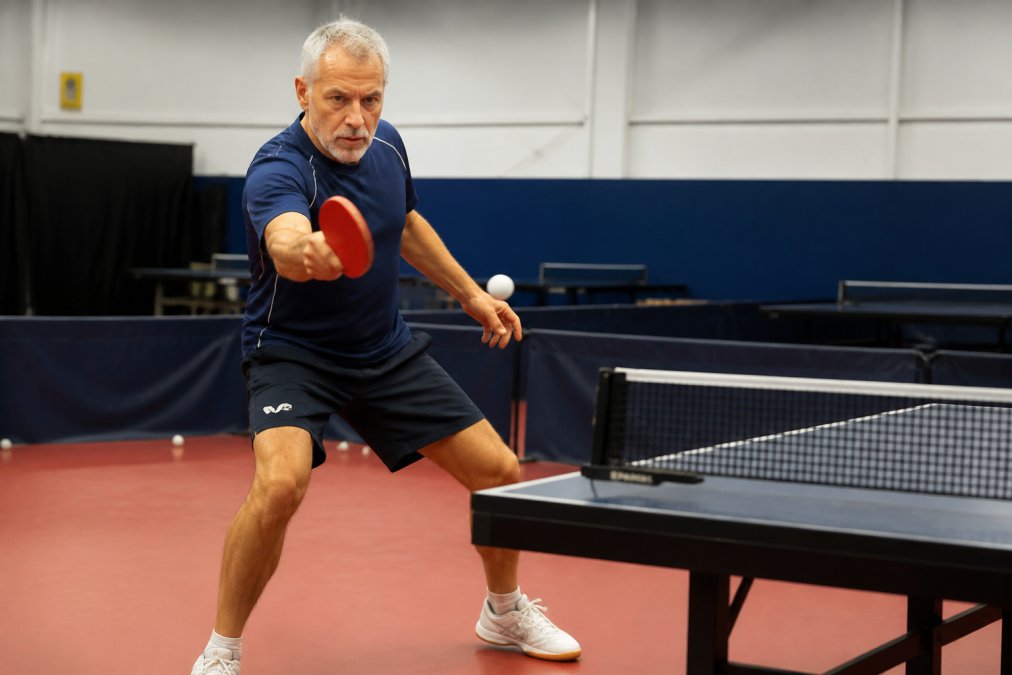
Effective table tennis training seniors focuses on three core skills: stroke mechanics, footwork, and consistency. These drills build real ability while staying safe for aging joints.
Forehand and Backhand Stroke Drills
Your forehand and backhand are the foundation of every point. Clean strokes mean you control the ball instead of the ball controlling you.
The wall drill: Stand 8 feet from a wall. Hit the ball against the wall and catch it after the bounce. Start with 20 consecutive hits. Rest. Repeat 3 times. This builds muscle memory without needing an opponent.
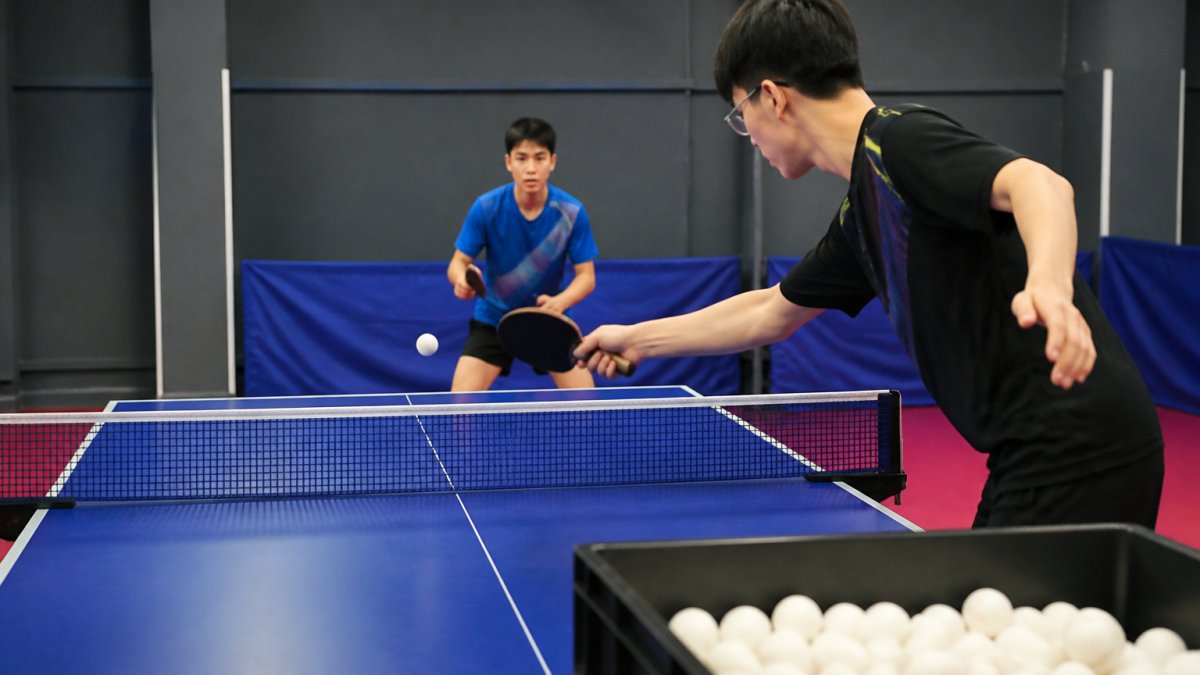
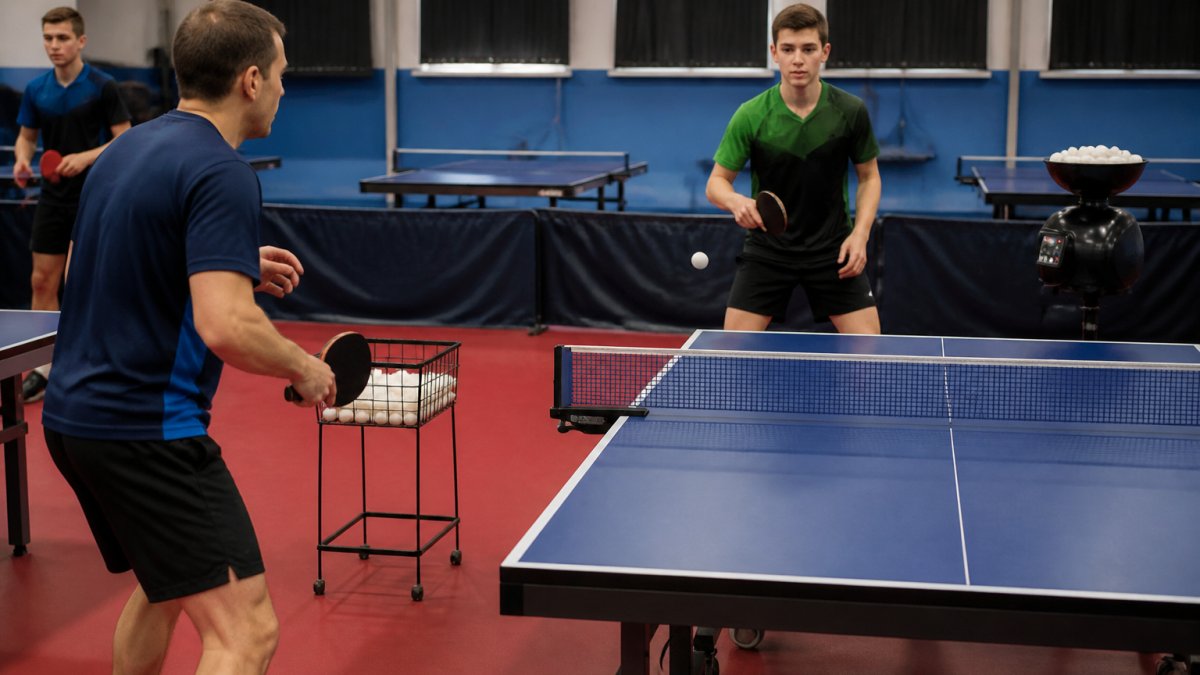
The multiball drill: Have a partner (or coach) feed you balls from a bucket. You hit 10 forehands in a row, then 10 backhands. Focus on the same spot on the table each time. This trains consistency and footwork together.
The rally drill: Play points with a partner, but keep them short. First to 5 points, then rest 30 seconds. Do 5 rounds. This teaches you how to finish points rather than just hit balls.
The key with stroke drills is repetition. Your muscles learn through doing, not thinking. After 100 forehands, the stroke becomes automatic. That's when you can focus on tactics instead of mechanics.
Footwork and Balance Exercises
Footwork prevents injuries and makes you faster. Better footwork means you reach the ball earlier and with better positioning.
Side-to-side shuffle: Stand at the baseline. Shuffle left 5 steps, then right 5 steps. Keep your feet moving for 30 seconds straight. Rest 30 seconds. Repeat 5 times. This builds lateral strength without impact.
Single-leg stance drill: Stand on one leg while tossing a ball up and catching it.
Spin and Ball Control Practice
Spin is the advanced skill that makes table tennis fun. It also teaches you ball control, which is the real secret to winning points.
Building Your Weekly Training Routine
Consistency beats intensity. A senior who trains 3 times per week for 45 minutes will improve faster than someone who trains once per week for 2 hours.
A solid weekly schedule:
- Monday: Stroke drills (forehands and backhands)
- Wednesday: Footwork and balance work
- Friday: Game play and consistency drills
- Saturday or Sunday: Light practice or rest day
Each session should follow this structure:
- Warm-up (10 minutes): light stretching and easy hits
- Main drills (25-30 minutes): focus on one skill
- Game time (10 minutes): play actual points
- Cool-down (5 minutes): stretching and recovery
Common Mistakes to Avoid in Senior Training
Most seniors make the same mistakes when starting table tennis training. Knowing these pitfalls helps you skip years of frustration.
Frequently Asked Questions
What is a good training routine for table tennis for seniors?
A balanced routine combines three elements: stroke drills (forehand, backhand, and spin), footwork and balance exercises, and low-intensity rallies. Train 2-3 times per week for 45-60 minutes per session. Start with 10-15 minutes of warm-up, spend 20-30 minutes on technique drills, and finish with 15-20 minutes of match-play practice. This structure builds skills without overloading joints and muscles.
How can seniors prevent injury while playing table tennis?
Injury prevention for seniors involves several strategies: warm up thoroughly before play, use proper stroke mechanics to avoid shoulder and elbow strain, strengthen core muscles through targeted exercises, and take rest days between sessions. Wear supportive footwear for stability, stay hydrated, and listen to your body, stop if you feel sharp pain. Using tools that reduce bending, like a ball picker, also minimizes strain on the lower back during cleanup.
What equipment helps seniors train more efficiently?
Key equipment includes a quality racket with a comfortable grip, non-slip shoes for court traction, and a ball collection tool that eliminates bending. A ball collection tool is especially valuable for seniors with back pain or mobility issues, as it lets you gather balls without stooping. This keeps your focus on training rather than physical strain during cleanup, and allows you to extend practice sessions without fatigue.
Can table tennis improve cognitive function in older adults?
Yes. Table tennis demands rapid decision-making, hand-eye coordination, and reaction time, all of which engage cognitive function. Regular play strengthens neural pathways, improves focus, and may help maintain mental sharpness. The tactical elements of the game, such as reading spin and adjusting positioning, keep your mind active while you exercise. Combined with cardiovascular benefits, table tennis offers a complete workout for both body and brain.