 how-to
Table Tennis Ball Management Tips That Work
Table of Contents
- Ball Control and Feel: The Foundation of Every Rally
- Footwork, Stroke Fluidity, and Offensive Pressure
- Recovery Drills, Reset Habits, and Psychological Ball Pressure
- Table Tennis Ball Management Tips for Practice Sessions
- Table Tennis Ball Collection Tools That Save Time
- How to Clean Table Tennis Balls the Right Way
- Table Tennis Training Equipment for Small Spaces
- Frequently Asked Questions
Last Updated: August 31, 2026
Ball Control and Feel: The Foundation of Every Rally
Good ball management tips start with feel. Ball control is the ability to predict, redirect, and absorb spin on demand, and it separates players who survive rallies from players who dictate them. The fix comes back to fundamentals of ball feel and contact point. Ball feel isn't a talent, it's a trained sensitivity built through repetition with intention.
Racket Angle and Contact Point
Racket angle is the variable most beginners ignore. A closed racket face generates topspin and keeps the ball low over the net. An open face creates backspin or lift. A neutral vertical angle works for flat drives. Contact point is equally critical. For a forehand topspin, brush the ball at roughly the 2 o'clock position. For a backhand, contact at the 10 o'clock position produces the same result. Most players struggling with consistency contact the ball dead center, producing flat shots that either fly long or clip the net.
Practice tip: place a strip of tape on your racket rubber and check where it wears after a session. If wear is concentrated in the center, you're hitting flat. Shift your contact point to the upper half of the rubber.
Visual Tracking and Reaction Time
Visual tracking is the skill players need most but discuss least. Tracking the ball from your opponent's racket through the bounce to your contact point gives your brain the trajectory data needed to set up the stroke correctly. Watch the ball the moment it leaves the opposing racket, not the table or your opponent's body. This improves reaction time because you're reading the ball early, not waiting to confirm where it's going.
Reaction time can be trained. Multi-ball drills with irregular intervals force your visual system to stay active. According to USA Table Tennis's coaching resources, developing active visual habits early is one of the highest-use investments a developing player can make.
Footwork, Stroke Fluidity, and Offensive Pressure
Footwork and stroke fluidity are a single system. If your feet aren't in position, your stroke will compensate, and compensated strokes break down under pressure.
Side-to-Side and In-and-Out Movement
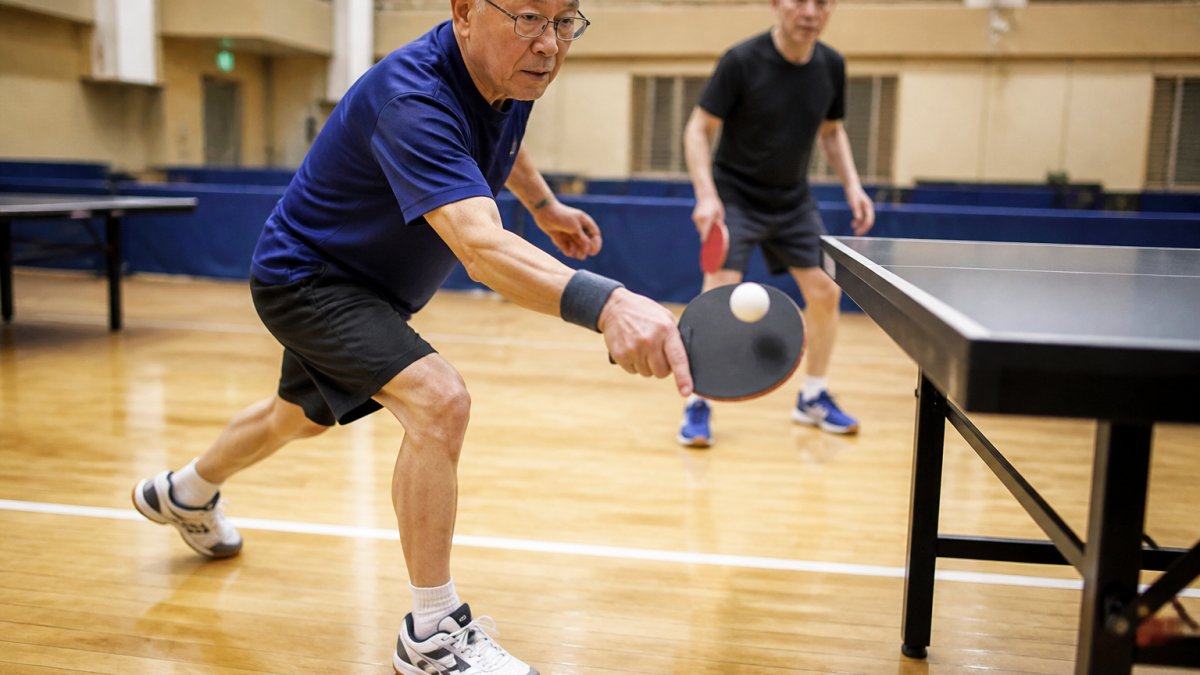
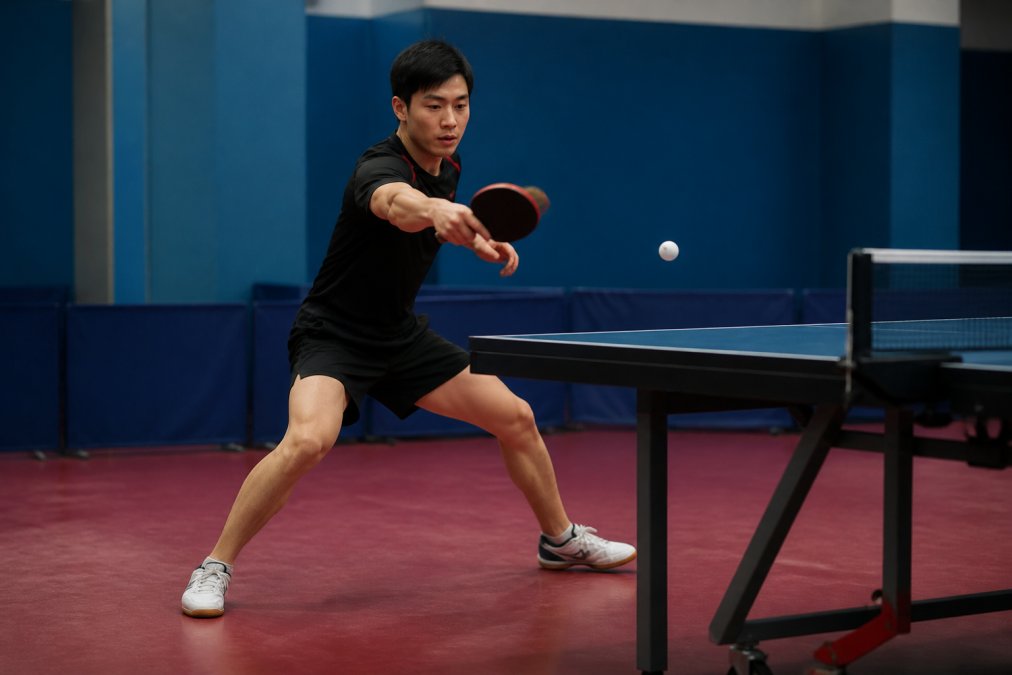
Side-to-side movement is the most practiced footwork pattern, but in-and-out movement wins points. When your opponent drops a short ball, you need to step in, attack, and recover. The two-step shuffle is the foundation: lead with the foot closest to the direction of movement, follow with the other. Keep your weight low and centered. Never cross your feet during a rally.
For in-and-out movement, practice the "step-in, step-back" drill: step forward with your dominant foot to attack a short ball, then push back immediately to reset. Doing this 50 times per session builds automatic muscle memory. Weight transfer converts good footwork into offensive pressure. As you step into a forehand, shift your weight from your back foot to your front foot through the stroke. This adds acceleration without requiring more arm speed, maintaining stroke fluidity at higher pace.
Third-Ball Attack and Serve Length Strategy
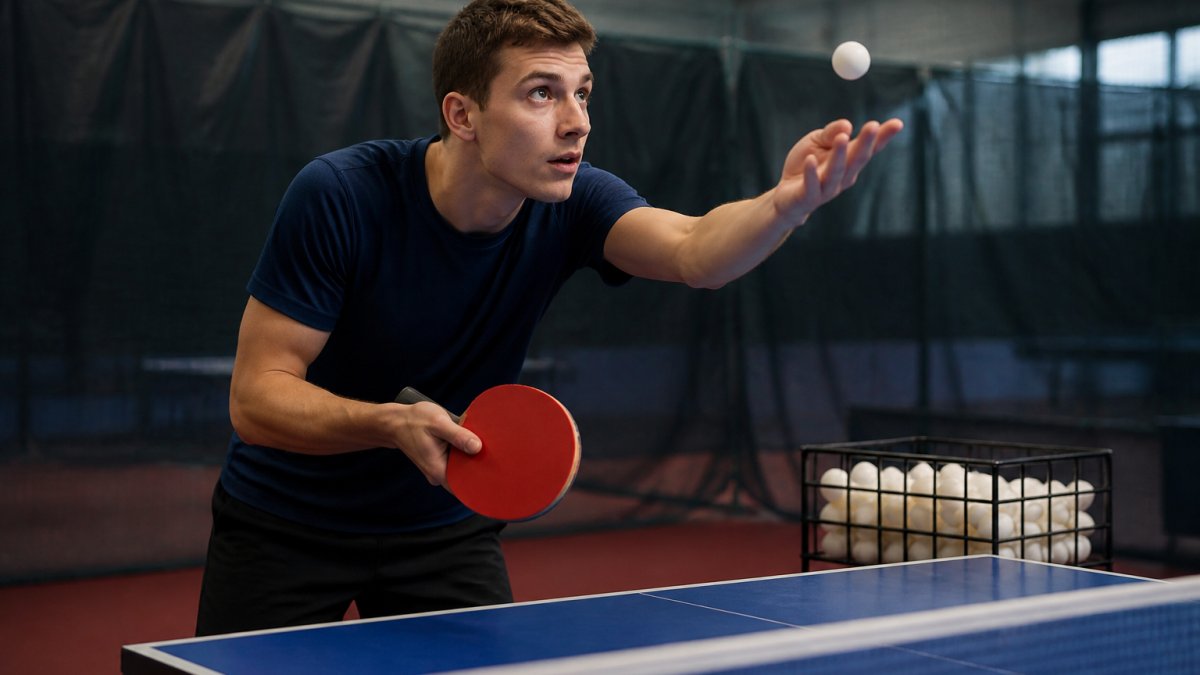
Third-ball attack is the most efficient way to take control of a rally before it starts. Serve to force a weak return, then attack that return aggressively. Serve length is the key variable. A short serve keeps the ball low and forces your opponent to lift it, creating a predictable return you can attack. A long serve to the backhand corner can jam a player who favors their forehand.
The third-ball attack requires you to be ready to move before your opponent contacts the ball. Watch their racket angle on the return. If they're opening up, expect topspin. If they're chopping down, expect backspin. Reading that angle early lets you set up the mid-distance drive that ends the point. According to ITTF's technical coaching guidelines, third-ball attack patterns account for a significant proportion of point-winning sequences at club and regional competitive levels.
Recovery Drills, Reset Habits, and Psychological Ball Pressure
Recovery and reset drills determine whether your technique holds up under pressure. A recovery drill is simple: after every attacking shot, reset to your ready position before the next ball arrives. In multi-ball training, coaches can feed the next ball immediately after your attack to force the reset habit. After four to six weeks of consistent practice, the reset becomes automatic.
Ball pressure is the mental state that occurs when you feel rushed, uncertain, or overpowered by an opponent's pace or spin. It causes players to shorten their backswing, tighten their grip, and contact the ball late, all of which reduce control. Managing ball pressure requires a pre-point routine. Before each serve or return, take one slow breath and reset your grip pressure to relaxed. This interrupts the tension-grip-error cycle. Many competitive players use a physical cue like bouncing the ball twice before serving to anchor this habit.
The real difference between a player who handles pressure and one who doesn't often comes down to whether they've trained under simulated pressure conditions. Ask your coach to introduce random ball feeds, time pressure, and score pressure into your multi-ball sessions.
Table Tennis Ball Management Tips for Practice Sessions
Structured ball management tips for practice sessions cover how many balls you need, how you organize your training space, and how you recover balls efficiently to maintain session momentum.
| Practice Type | Balls Needed | Collection Frequency | Key Focus |
|---|---|---|---|
| Solo robot training | 60-100 | Every 15-20 minutes | Consistency, footwork |
| Multi-ball with coach | 100-200 | Every 10-15 minutes | Attack patterns, drills |
| Club group sessions | 200+ | Every 10 minutes | Volume, efficiency |
| Home casual practice | 30-60 | As needed | Ball feel, serve practice |
How Many Balls You Actually Need
For solo robot training, 60 to 100 balls is a practical minimum. Fewer than that and you're spending more time collecting than training. For multi-ball sessions with a coach, 100 to 200 balls keeps the drill flowing. Club environments need 200 or more. Ball quality matters too. Training balls degrade faster than match balls under robot use. Many coaches run a rotation: new balls for match practice, older balls for robot and multi-ball drills.
Equipment-Specific Management for Robot Training
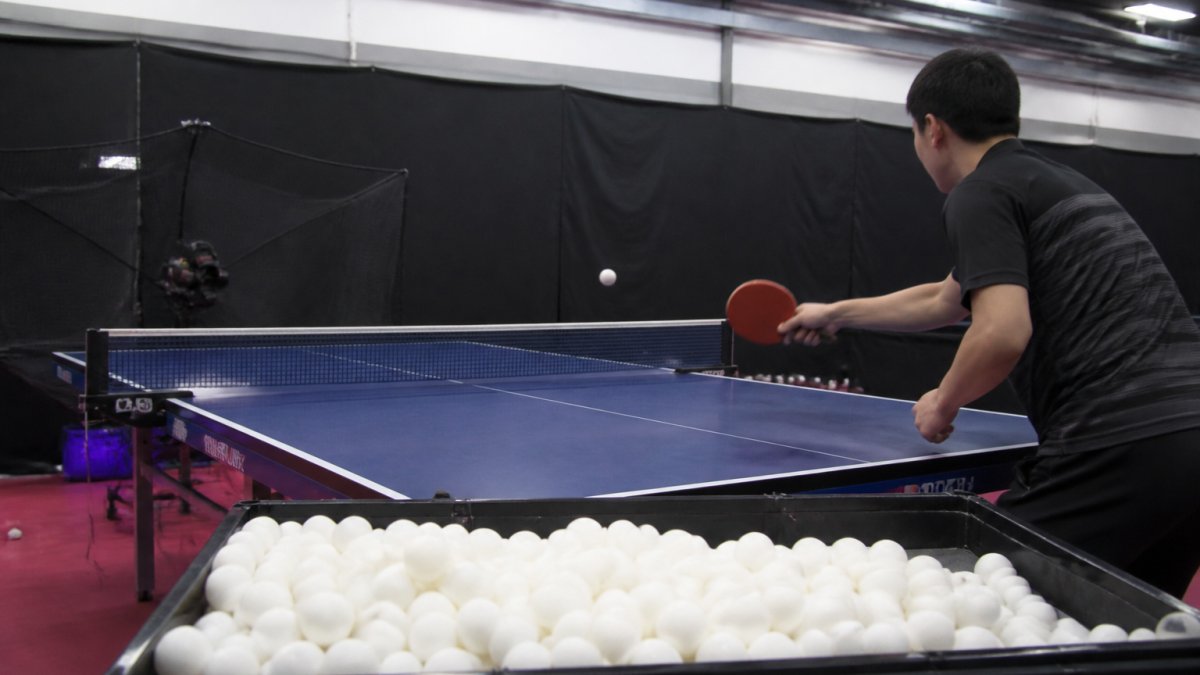
Robot training introduces specific ball management challenges. Balls scatter across a wider area than in standard practice, and the volume of balls fed per session is higher. A robot set to medium speed can fire through 100 balls in under 10 minutes. Position your ball basket directly adjacent to your recovery zone, not behind the robot. This cuts your average collection walk by more than half. Check your robot's catch net regularly. A worn or misaligned catch net is the single biggest source of ball scatter. Tightening or replacing it takes five minutes and saves significant time per session.
Table Tennis Ball Collection Tools That Save Time
Ball collection is the part of training that nobody enjoys and everybody needs to get right. Spending five minutes collecting balls after every drill breaks concentration and wastes session time. For players with back pain or mobility limitations, it can be genuinely painful.
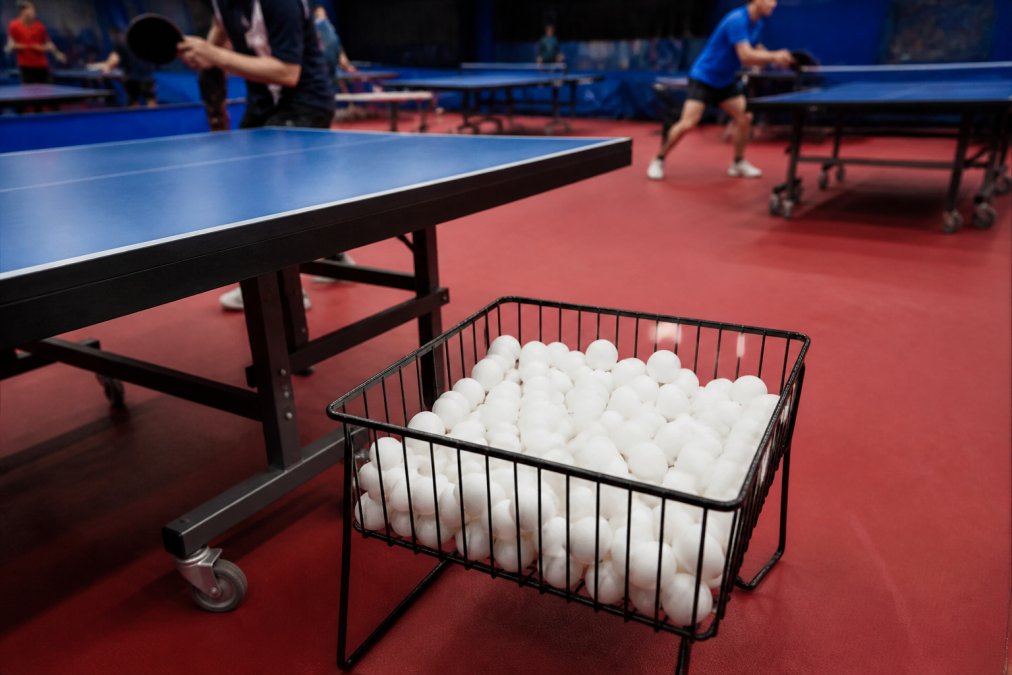
Generic net-style collectors work, but they require bending and are slow with scattered balls. The MyPingPongBuddy ball collector is a handmade, portable tool designed to solve this. It lets you scoop balls without bending over, which matters most for anyone with back issues or running back-to-back sessions. The tool breaks down in half for easy transport and storage, making it practical for coaches who move between facilities. It's backed by a 90-day full refund policy. MyPingPongBuddy tools have been used by clubs and SPIN locations and were issued as prizes at the 2012 Huntsman World Senior Games, signaling durability and real-world performance at volume.
How to Clean Table Tennis Balls the Right Way
Cleaning table tennis balls properly extends their usable life and keeps your robot and catch net functioning correctly. Dirty balls cause inconsistent robot feeds and degrade rubber faster.
The process is straightforward:
- Fill a basin with warm (not hot) water and a small amount of mild dish soap.
- Add the balls and agitate gently for 30 to 60 seconds.
- Rinse thoroughly with clean water.
- Dry completely before returning to storage or the robot hopper.
Avoid abrasive cleaners, solvents, or anything that could damage the ball's surface finish. Celluloid balls are more sensitive to heat and chemicals than modern poly balls. Wipe balls down with a damp cloth after every session and do a full wash weekly for robot balls, or whenever you notice visible dust or oil buildup. As documented in ITTF's equipment regulations and care guidelines, ball surface integrity directly affects spin consistency and bounce behavior.
Table Tennis Training Equipment for Small Spaces
Training space constraints affect equipment choices significantly. Equipment for small spaces needs to be compact, multi-purpose, and easy to store.
A full-size folding table folds to roughly 60 inches by 60 inches and 6 inches deep, fitting against most garage or basement walls. For solo practice, a playback position lets you practice serves and returns in half the footprint. For robot training in small spaces, compact robots that mount to the table edge save significant floor space. Position the ball basket on the same side as your dominant hand to minimize movement between drills.
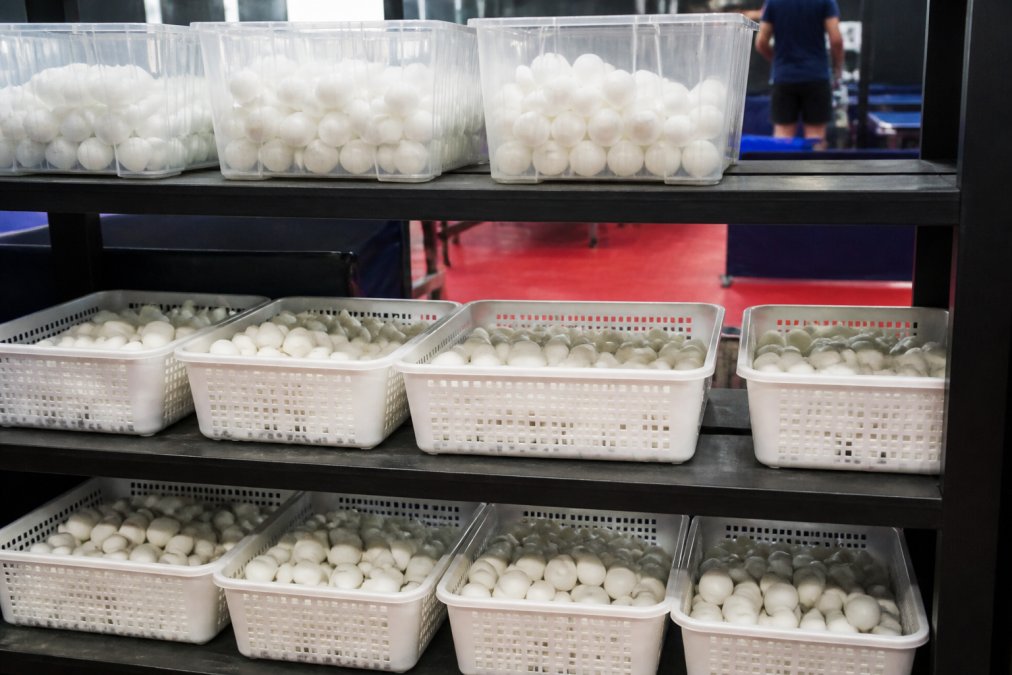
Ball storage is an underrated part of small-space setup. A mesh bag or open-top basket keeps balls accessible without taking up counter space. The MyPingPongBuddy collector's ability to break down in half means it stores flat against a wall or in a narrow cabinet. Every piece of equipment should serve at least two functions or store flat. If it can't do either, it will eventually disrupt your training routine. For further guidance, USA Table Tennis's home training resources offers practical layout recommendations for players at all levels.
Managing ball volume, maintaining your equipment, and building consistent technique all take time, but they don't have to take more time than necessary. The real bottleneck in most training sessions is cleanup and reset, not the practice itself. MyPingPongBuddy's handmade ball collector eliminates the bending, speeds up collection, and makes the whole process genuinely less frustrating. With a 90-day full refund policy and proven use in club environments, it's a practical upgrade for players and coaches. Get started with MyPingPongBuddy and reclaim the time you're losing between drills.
Frequently Asked Questions
Q: How do you keep track of table tennis balls during practice?
A: Use a consistent ball zone system: designate one area under or beside each end of the table where balls collect naturally. Running practice with 50 to 100 balls before stopping to collect reduces interruptions. A dedicated ball collection tool speeds up retrieval significantly, especially during multi-ball drills. Color-coded balls can also help separate training sets when multiple players share a space. These table tennis ball management tips cut the time spent chasing stray balls by a wide margin.
Q: What is the best way to store table tennis balls to prevent damage?
A: Store balls in a mesh bag or ventilated container at room temperature, away from direct sunlight and heat sources. Plastic balls, including 40+ poly balls, warp when exposed to sustained heat above roughly 140°F. Avoid storing them loose in a drawer where they roll and crack against hard edges. A dedicated ball basket or tube keeps them organized and undamaged between sessions.
Q: Should I clean my table tennis balls, and if so, how?
A: Yes, especially if you train on dusty floors or outdoor surfaces. Dirty balls affect spin consistency and can scratch your rubber over time. Wipe them with a damp cloth and mild soap, then dry thoroughly before storing. Avoid alcohol-based cleaners, which can degrade the plastic shell. A quick wipe-down after every session keeps ball feel consistent and extends the life of both your balls and your racket rubber.
Q: What are the benefits of using a ball collection tool for training?
A: A ball collection tool eliminates the need to bend down repeatedly, which matters most for players with lower back pain or mobility limitations and for coaches running high-volume multi-ball sessions. It speeds up cleanup so you spend more time on actual practice. Clubs with 15 or more tables especially benefit, since hundreds of balls accumulate quickly. Tools that break down for storage are also practical for small training spaces where floor area is limited.