 listicle
Best Table Tennis Training Aids for Back Pain
Table of Contents
- Why Table Tennis Wreaks Havoc on Your Lower Back
- The 5 Best Training Aids to Protect Your Spine
- How to Pick Up Ping Pong Balls Without Bending: A Step-by-Step Guide
- Table Tennis Back Pain Prevention Exercises to Build Resilience
- Choosing the Right Aid for Your Specific Back Pain
- Final Word: Play Smart, Train Longer
- Frequently Asked Questions
Last Updated: September 5, 2026
Why Table Tennis Wreaks Havoc on Your Lower Back
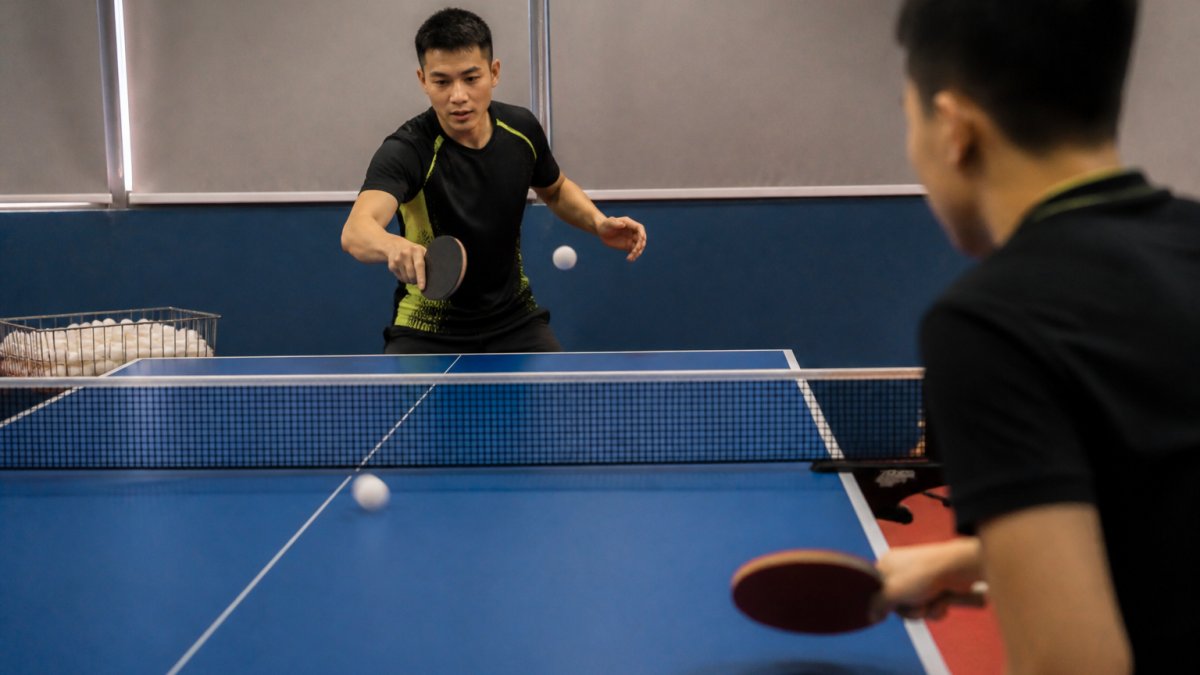
Table tennis looks gentle, but its repetitive lunges, topspin mechanics, and twisting stress the lumbar spine. The most damaging movement isn't the forehand loop; it's the hundreds of bends to scoop balls off the floor during a session.
Each bend combines spinal flexion with rotation, putting maximum pressure on the intervertebral discs. Over a year, that adds up to thousands of uncontrolled bending motions your back wasn't designed to handle.

You don't have to quit the sport. The solution combines smarter training aids with targeted prevention exercises.
The 5 Best Training Aids to Protect Your Spine
The right equipment removes the movements that aggravate lumbar strain.
1. MyPingPongBuddy: The Ergonomic Ball Collector
Our top pick is MyPingPongBuddy, a handmade tool that eliminates bending. Its design lets you scoop balls with a natural standing posture, keeping your spine neutral. It breaks down in half for easy transport.
Players with severe back pain report it transforms practice, saving energy for training rather than cleanup. It's backed by a 90-day full refund return policy.
2. PongBot Robot: Automation for High-Volume Drills
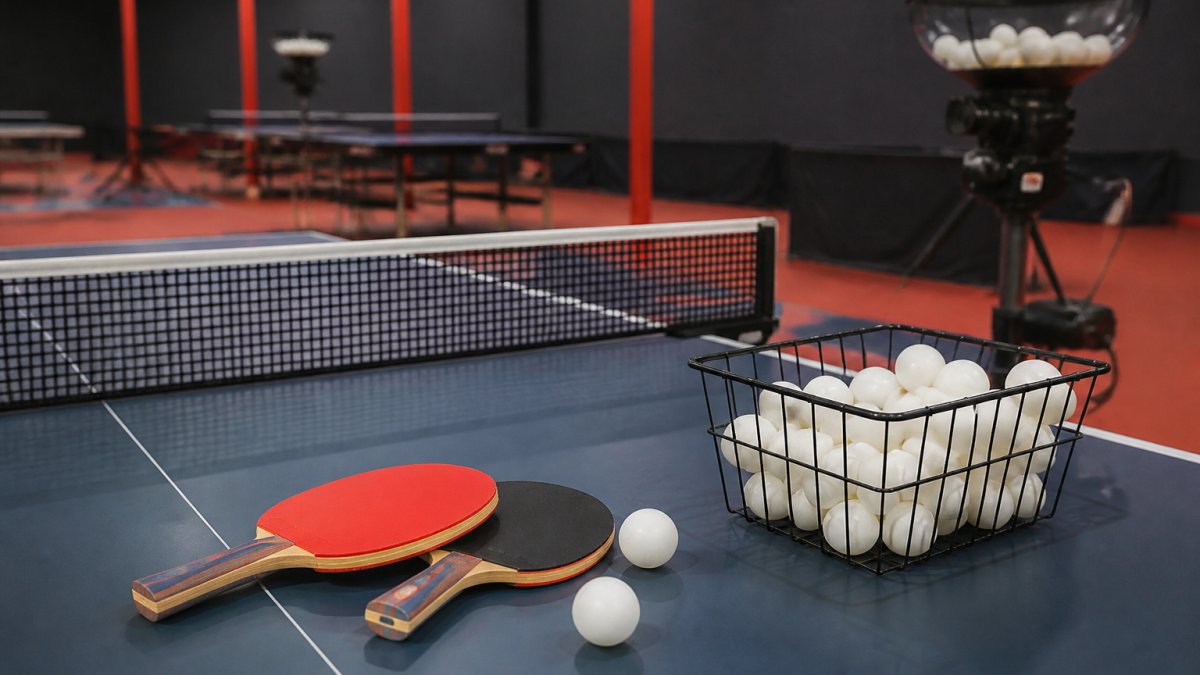
For solo players or coaches running multi-ball drills, the PongBot Robot removes the strain of manual ball feeding. It delivers consistent shots to specific zones, letting you focus on stroke mechanics.
The higher investment is serious, but for players logging multiple hours weekly, eliminating manual feeding's bending can be transformative.
3. Teeter FitSpine: Post-Match Spinal Decompression
Recovery matters as much as prevention. The Teeter FitSpine inversion table offers post-match decompression, stretching the spine after hours of compression. As an FDA-registered 510(k) device, it carries clinical recognition most training equipment lacks.
Best for serious players managing chronic pain, the tradeoff is floor space and a premium price. For those without relief from stretching, inversion offers a different mechanical approach.
4. HURRISE Trainer: Solo Practice Without the Chase
The HURRISE Trainer solves practicing strokes without a partner or constant retrieval. Its elastic shaft returns the ball, while the weighted steel base keeps things stable.
It includes two paddles and six balls. The limitation is the elastic shaft restricts stroke types, making it less useful for advanced footwork drills.
5. Telescopic Ball Picker: A Budget-Friendly Option
If cost is primary, a telescopic ball picker offers a straightforward solution. The adjustable handle extends to your height, and lightweight aluminum holds multiple balls per scoop.
Durability won't match premium alternatives, and scooping requires some wrist and shoulder effort. But as an entry point, it beats bending hundreds of times.
How to Pick Up Ping Pong Balls Without Bending: A Step-by-Step Guide
Learning to pick up balls without bending is the most impactful change for your lower back. Here's the technique for any scoop-style collector:
- Stand upright with your feet shoulder-width apart, knees soft
- Hold the collector handle at waist height with both hands
- Lower the scoop head to the floor by bending your knees, not your spine
- Slide the scoop forward until the ball enters the opening
- Lift by straightening your legs, keeping your back neutral
- Deposit the ball into a bucket or basket at waist level
The key is maintaining spinal alignment. Your legs do the work; your back stays straight.
Table Tennis Back Pain Prevention Exercises to Build Resilience
Equipment alone won't solve the problem. Prevention exercises build the muscular support your spine needs. The goal is a body that absorbs twisting and explosive movements without injury.
Phase 1: Core Stability and Glute Activation (Weeks 1-4)
A weak core forces your lower back to compensate on every shot. The goal is endurance in the deep stabilizers, muscles that fire correctly for a 2-hour session.
Core Circuit (3 times per week, on non-consecutive days):
- Dead Bug: 3 sets of 10 reps per side. Focus on pressing your lower back into the floor. If you feel your back arching, reduce your range of motion.
- Bird Dog: 3 sets of 12 reps per side. Move slowly and deliberately. The goal is to prevent your hips from rotating as you extend your arm and opposite leg.
- Side Plank: 3 sets of 20-30 seconds per side. If this is too easy, add a leg lift. If it's too hard, drop to your knee.
- Pallof Press: 3 sets of 10 reps per side. This anti-rotation exercise is critical for table tennis, where your core must resist the rotational force of your torso during a forehand loop. Use a resistance band anchored at chest height.
Glute Activation (Before every practice session):
- Glute Bridge: 2 sets of 15 reps. Squeeze your glutes hard at the top for a 2-second hold.
- Clamshell: 2 sets of 15 reps per side. This targets the gluteus medius, which stabilizes your pelvis during the single-leg stance common in your ready position.
Incorporate these three times weekly. They wake up the posterior chain, reducing lumbar load during play.
Phase 2: Mobility Work for the Table Tennis Athlete (Daily)
Tight hamstrings pull your pelvis into a posterior tilt, flattening your lower back's curve, common in players who sit at desks. Regular hamstring and quadriceps stretching restores pelvic alignment. Hip mobility matters because stiff hips force your lumbar spine to provide rotation.
The 10-Minute Pre-Match Mobility Routine:
- World's Greatest Stretch: 5 reps per side. This addresses hip, hamstring, and thoracic mobility in one compound movement.
- 90/90 Hip Stretch: 60 seconds per side. This opens up the deep rotators of the hip, which are often tight from the crouched ready position.
- Kneeling Hip Flexor Stretch: 60 seconds per side. Tight hip flexors are a primary culprit in lower back pain for athletes who are constantly in a forward-leaning stance.
- Thoracic Spine Rotation (Open Book): 8 slow reps per side. Your upper back needs to rotate freely so your lower back doesn't over-rotate during topspin mechanics. This is the most neglected piece of the mobility puzzle.
Phase 3: Sport-Specific Strength for the Lumbar Spine (Weeks 5+)
Once you've built stability and mobility, train your body to handle table tennis's specific loads.
The Rotational Chop: Using a cable machine or resistance band anchored at shoulder height, pull the handle diagonally across your body toward your opposite hip. This mimics the core engagement of a forehand loop. Do 3 sets of 10 reps per side. Control the movement on the way back.
Single-Leg Romanian Deadlift: This exercise builds hamstring and glute strength while challenging your balance, which is crucial for the explosive lunges in table tennis. Hold a light dumbbell in one hand and hinge at your hips, keeping your back flat. Do 3 sets of 8 reps per side.
A dynamic warm-up before matches, including leg swings and torso rotations, prepares these areas for the demands of play. The key is consistency.
Choosing the Right Aid for Your Specific Back Pain
The right aids depend on where your pain originates and when it flares. Different spinal structures fail in different ways.
Pain Type 1: Muscular Pain (Paraspinal Muscle Strain)
Symptoms: A dull ache on one or both sides of your spine, often worse after play or the next morning. Pain is usually localized and doesn't radiate down your legs. You might feel specific tender "knots" when you press on the area.
Mechanism: Your erector spinae muscles are overworking to compensate for a weak core or poor posture. They fatigue and develop trigger points.
Best Aids:
- MyPingPongBuddy or Telescopic Ball Picker: Eliminating the repetitive bending that keeps these muscles in a shortened, contracted state is your first priority.
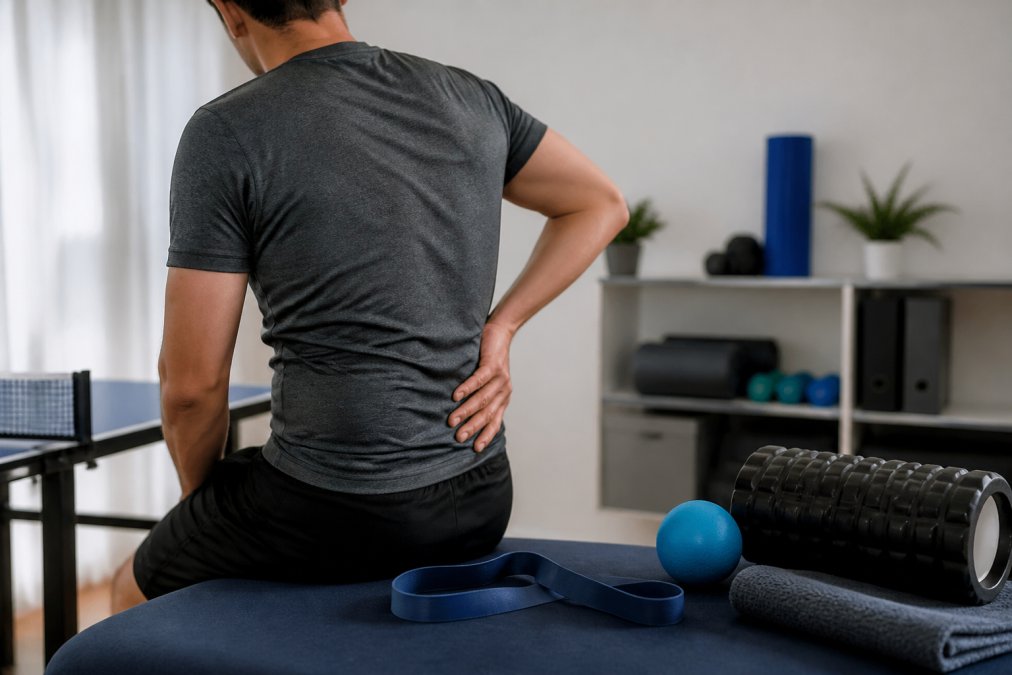
- Foam Roller (not listed above but essential): A medium-density foam roller used on your thoracic spine, not your lower back, helps improve mobility so your lumbar muscles don't have to work as hard. Avoid rolling directly on your lower back; instead, roll your glutes and hamstrings to reduce tension on the lumbar fascia.
- HURRISE Trainer: This allows you to practice high-repetition strokes without the constant bending to pick up balls, which is a primary driver of muscular fatigue.
Pain Type 2: Discogenic Pain (Disc Bulge or Herniation)
Symptoms: Central lower back pain that may radiate into one buttock or down one leg. Bending forward, sitting for long periods, or coughing often worsens it. This is the "sharp" pain that makes you catch your breath.
Mechanism: The intervertebral disc is being compressed and irritated. Forward flexion (bending) increases intradiscal pressure, which can push the disc further against a nerve root.
Best Aids:
- Teeter FitSpine: Inversion therapy is specifically designed to reduce compressive load on the discs. The FDA-registered 510(k) status means it has clinical recognition for this purpose. Use it at low angles (20-30 degrees) initially, not full inversion.
- MyPingPongBuddy: This is non-negotiable for this pain type. Any forward bending motion is potentially aggravating the disc. You must eliminate it from your routine entirely.
- PongBot Robot: Automation removes the need to bend for ball retrieval between drills, allowing you to maintain a neutral spine throughout your entire practice session.
Pain Type 3: Facet Joint Pain (Arthritis or Irritation)
Symptoms: Pain that is worse when you arch backward (extension), twist to one side, or stand for long periods. The pain is typically central and does not radiate. You might feel stiffness in the morning that eases with movement.
Mechanism: The small joints at the back of your vertebrae become inflamed. The rotational loading of a forehand loop or backhand flick can irritate these joints.
Best Aids:
- Telescopic Ball Picker: The twisting motion of a forehand loop is unavoidable, but you can reduce additional rotational stress by avoiding the twist-and-bend of ball collection.
- HURRISE Trainer: This allows you to practice strokes in a controlled environment where you can focus on rotating through your hips and thoracic spine rather than your lumbar segments.
- Avoid the Teeter FitSpine: Inversion with extension can aggravate facet joint pain. Instead, look for a lumbar support cushion that maintains the natural curve of your spine during seated rest.
The 2-Week Pain Log Protocol
Keep a two-week log noting when your pain flares during training. Most players find their pain correlates with specific activities, telling you which aid will deliver the most relief. Track these three variables:
- What movement triggered it? (Bending, twisting, reaching, standing)
- What did the pain feel like? (Dull ache, sharp stab, burning, radiating)
- When did it occur? (During play, immediately after, next morning)
Ergonomic modifications extend beyond ball collection. Adjusting your stance, using a higher table where allowed, and ensuring cushioned shoes reduce spinal impact. Match the mechanical solution to your specific dysfunction, not the most popular product.
Final Word: Play Smart, Train Longer
Lower back pain doesn't have to end your career. Ergonomic aids, prevention exercises, and smarter habits let you continue playing while protecting your spine. Start with the equipment addressing your most frequent trigger, then build strength and mobility into your routine.
For most players, eliminating the constant bending during ball collection is the highest-impact change. A guide on proper lifting mechanics from the American Chiropractic Association emphasizes that avoiding repetitive bending is critical for those with lumbar strain. Pair that with core stability recommendations from the American Council on Exercise and research on spinal health from the National Institutes of Health to build a comprehensive approach.
MyPingPongBuddy offers the most direct solution for the bending problem, with a handmade design built for daily use and a 90-day full refund return policy that removes the risk of trying it. Get started with MyPingPongBuddy and keep your back healthy for years of table tennis ahead.
Frequently Asked Questions
Does repetitive bending in table tennis cause chronic back pain?
Yes. The constant bending to pick up balls during practice creates repetitive strain on the lumbar spine. Over a season, this can lead to muscle fatigue and chronic pain. Using an ergonomic tool like MyPingPongBuddy eliminates the need to bend over, significantly reducing the strain on your lower back during training sessions.
What is the number one exercise for lower back pain in table tennis players?
The dead bug is a top choice for building core stability safely. Lie on your back with arms extended and knees bent at 90 degrees. Slowly lower your right arm and left leg toward the floor, keeping your lower back pressed down. Return to center and switch sides. This teaches your core to stabilize your spine against rotation, which is key for table tennis.
How do I pick up ping pong balls without bending over?
The most effective way is to use a ball collector like MyPingPongBuddy. This handheld tool lets you scoop up balls while standing upright. Simply glide the wide mouth over the balls, and they slide into the tube. This removes the need to bend multiple times per practice session, protecting your lower back from repetitive strain.
Are there specific training aids that help with posture during table tennis?
Yes. Inversion tables like the Teeter FitSpine help decompress the spine after long practice sessions, which can improve spinal alignment. For during play, focusing on your stance is key. Equipment that reduces bending, like a ball pickup tool, lets you maintain a neutral spine between points, preventing the forward hunch that contributes to poor posture and back pain.
Frequently Asked Questions
Q: Does repetitive bending in table tennis cause chronic back pain?
A: Yes. The constant bending to pick up balls during practice creates repetitive strain on the lumbar spine. Over a season, this can lead to muscle fatigue and chronic pain. Using an ergonomic tool like MyPingPongBuddy eliminates the need to bend over, significantly reducing the strain on your lower back during training sessions.
Q: What is the number one exercise for lower back pain in table tennis players?
A: The dead bug is a top choice for building core stability safely. Lie on your back with arms extended and knees bent at 90 degrees. Slowly lower your right arm and left leg toward the floor, keeping your lower back pressed down. Return to center and switch sides. This teaches your core to stabilize your spine against rotation, which is key for table tennis.
Q: How do I pick up ping pong balls without bending over?
A: The most effective way is to use a ball collector like MyPingPongBuddy. This handheld tool lets you scoop up balls while standing upright. Simply glide the wide mouth over the balls, and they slide into the tube. This removes the need to bend multiple times per practice session, protecting your lower back from repetitive strain.
Q: Are there specific training aids that help with posture during table tennis?
A: Yes. Inversion tables like the Teeter FitSpine help decompress the spine after long practice sessions, which can improve spinal alignment. For during play, focusing on your stance is key. Equipment that reduces bending, like a ball pickup tool, lets you maintain a neutral spine between points, preventing the forward hunch that contributes to poor posture and back pain.