 how-to
How to Structure a Table Tennis Practice Session
Table of Contents
- Set Your Practice Goal and Session Duration
- Warm Up Off the Table
- Begin On-Table Warm-Up and Light Rallies
- Table Tennis Drills for Beginners and Progression
- Build a Table Tennis Practice Routine You Can Do Alone
- Add Attack, Counterattack, and Match Play
- Track Progress and Adjust Your Session Structure
- Efficient Ball Cleanup and Recovery
- Frequently Asked Questions
Last Updated: October 12, 2026
Set Your Practice Goal and Session Duration
Before you pick up a paddle, decide what you want to accomplish and how long you have to work, understanding how to structure a table tennis practice session starts with these two decisions. Your goal, technical mastery, consistency, match preparation, or overall improvement, demands a different structure. Shorter sessions demand intensity; longer ones allow deeper skill development but need strategic breaks to prevent fatigue and injury.
Pick Your Primary Goal First
Choose one primary goal per session. Trying to fix your serve, footwork, and backhand in the same hour usually means none improve. Coaches assign a single "theme" per session and let everything else support it.
- Technique goal: Refine one stroke (for example, backhand loop against backspin).
- Footwork goal: Improve movement patterns and recovery to a ready position.
- Match preparation goal: Practice serve-and-receive patterns and point construction.
Write the goal down before you start. "Land 15 of 20 backhand loops against backspin" is a goal. "Get better at backhand" is a wish.
Ready-to-Use Schedules by Session Length
Use these as templates to learn how to structure a table tennis practice session, then adjust block lengths to fit your goal. Times are in minutes.
30-minute session (short, high-focus)
| Block | Time | Purpose |
|---|---|---|
| Off-table warm-up | 4 | Raise heart rate, mobilize shoulders, hips, ankles |
| On-table light rally | 4 | Groove timing and contact |
| Primary drill | 12 | One stroke or footwork pattern, tracked |
| Serve practice | 5 | Accuracy to targets |
| Pressure points | 5 | Play 5-7 points with score kept |
60-minute session (standard)
| Block | Time | Purpose |
|---|---|---|
| Off-table warm-up | 6 | Dynamic mobility |
| On-table light rally | 6 | Rhythm and feel |
| Technical drill | 15 | Primary stroke, tracked reps |
| Footwork drill | 12 | Movement pattern |
| Serve and receive | 10 | Serve accuracy plus return patterns |
| Match play | 11 | Scored points |
90-minute session (development)
| Block | Time | Purpose |
|---|---|---|
| Off-table warm-up | 8 | Mobility and activation |
| On-table light rally | 7 | Timing |
| Technical drill | 20 | Primary stroke |
| Footwork drill | 15 | Movement |
| Serve practice | 10 | Targets and spin variation |
| Attack and counterattack | 15 | Transition from drill to rally |
| Match play | 15 | Scored points |
120-minute session (deep work)
| Block | Time | Purpose |
|---|---|---|
| Off-table warm-up | 10 | Full mobility |
| On-table light rally | 8 | Timing |
| Technical drill | 25 | Primary stroke |
| Footwork drill | 20 | Movement |
| Serve practice | 15 | Targets and variation |
| Attack sequences | 20 | Transition and finishing |
| Match play | 22 | Scored points |
Tailor the Plan to Your Skill Level
- Beginner: Favor technique and consistency; skip complex attack sequences until basic strokes hold up under light pressure. A 60-minute session might be 30 minutes stroke work, 15 minutes serves, 15 minutes scored points.
- Intermediate: Balance technique and match play. A 90-minute session might be 30 minutes technique, 20 footwork, 15 serve and receive, 25 match play.
- Advanced: Shift toward variable drills, decision-making, and pressure points. A 120-minute session might be 30 minutes technical refinement, 25 footwork under fatigue, 20 serve and receive, 45 scored situational play.
Adjust for Your Training Goal
- Technique focus: Add 5-10 minutes to the technical drill block; cut match play by the same.
- Footwork focus: Increase the footwork block and add a short footwork circuit between drills.
- Match preparation: Increase serve-and-receive and scored points; keep technical drills short and match-specific.
A Simple Planning Rule
Default split: roughly 20 percent warm-up, 50 percent drills, 30 percent match play. Bend it toward your goal, and write the goal and block times down before you start so you can compare plan against reality.
Warm Up Off the Table
Don't rush straight to the table. Off-table warm-up prepares your body and reduces injury risk. Spend 5-10 minutes on general movement, light jogging, jumping jacks, or dynamic stretching, then table tennis-specific movements:
- Arm circles and shoulder rotations (10 reps each direction)
- Wrist circles and flexion drills (10 reps each direction)
- Hip rotations and leg swings (10 reps each leg)
The goal is mobility and activation, not exhaustion: heart elevated, muscles ready. If you have chronic back pain or mobility issues, this warm-up is even more critical, light movement prevents stiffness and reduces the risk of aggravating existing problems. Tools like a ball collector also make post-session cleanup easier, so you can focus your energy on training rather than bending over repeatedly.
Begin On-Table Warm-Up and Light Rallies
Now move to the table. Start with easy, controlled rallies, no hard hitting, no aggressive placement, just rhythm and consistency.
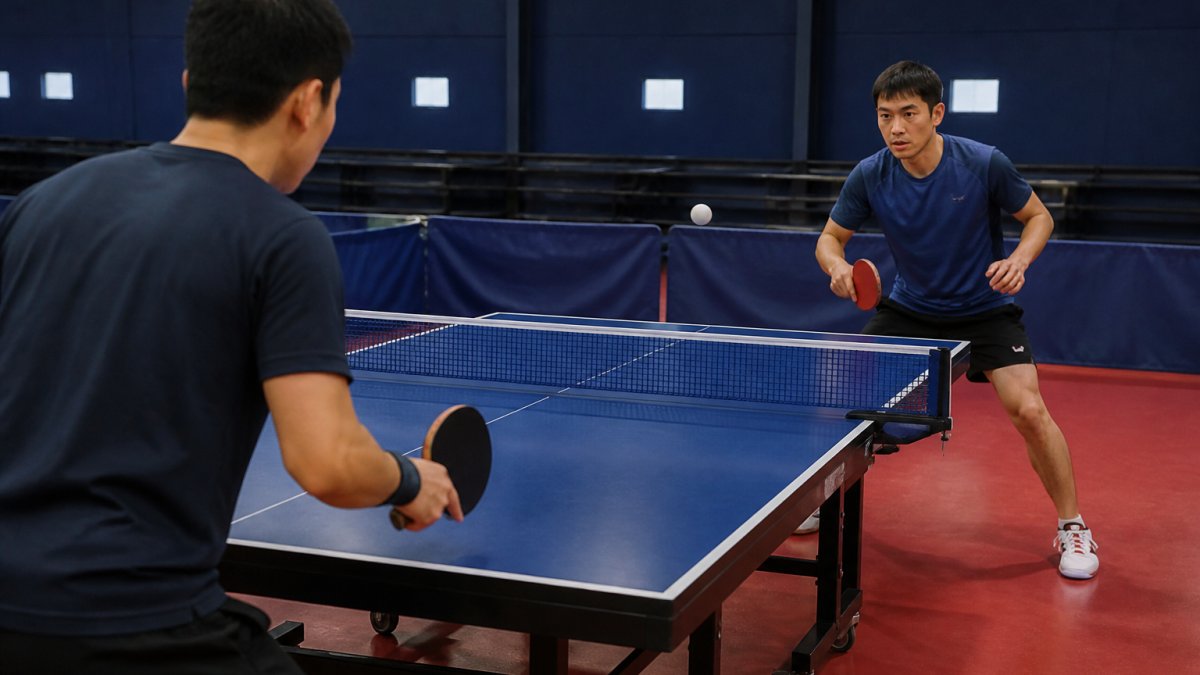
Light rallies also reveal what's working: a forehand that feels off or sluggish footwork shows up now, and that feedback informs the rest of your session.
Table Tennis Drills for Beginners and Progression
Drills develop technique by isolating specific skills and building them through repetition. The right sequence depends on your level and goals.
Footwork and Stroking Drills
Footwork wins matches. Poor footwork means poor positioning, and poor positioning means weak shots. The Falkenberg drill is a classic: stand at the baseline, move forward and backward in a controlled pattern, touching the line with your foot each time. This builds explosive movement and court awareness.
For stroking, focus on one shot at a time:
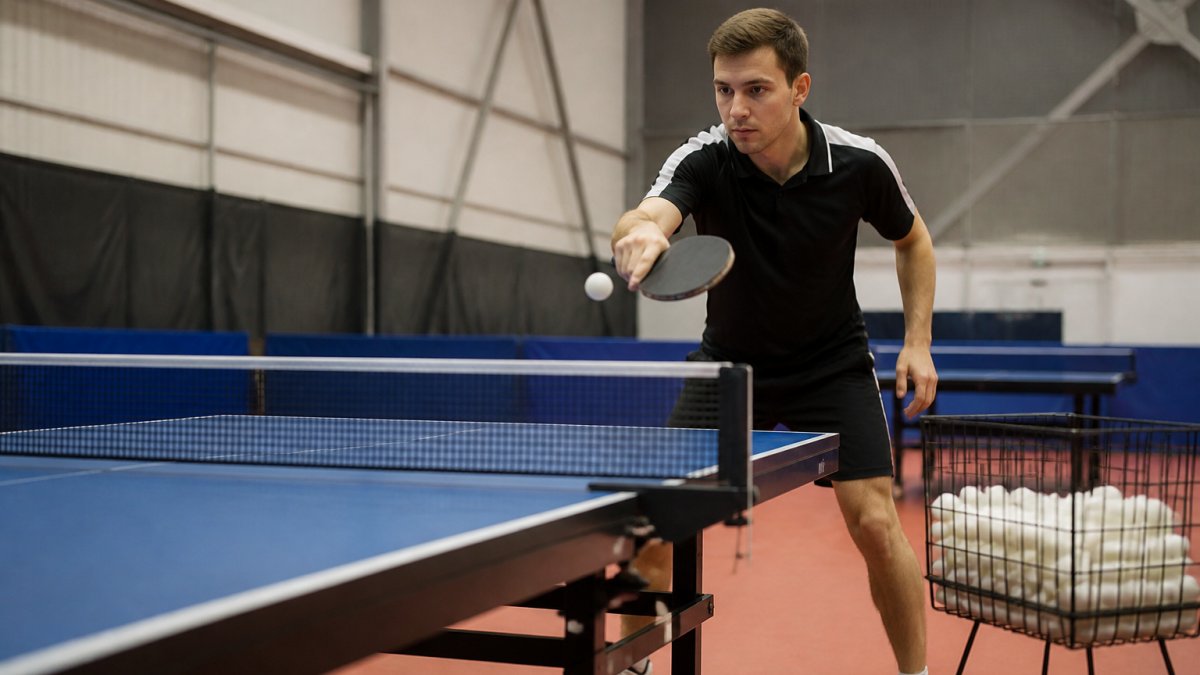
- Forehand consistency drill: Partner feeds balls to your forehand. You hit 20 in a row into the court. Count your successful shots.
- Backhand building drill: Same structure, but backhand. Beginners often neglect backhand. Don't. Spend equal time here.
- Cross-court rally drill: Rally cross-court only. This forces you to move laterally and builds court sense.
Do 3-5 sets of each drill, resting 30 seconds between sets, and track successful shots as your progress metric.
Serve Practice and Serve-and-Receive Work
Serve practice deserves dedicated time. Your serve is the one shot you fully control.
Serve 10 balls to each target. Count successes. Do this for 10-15 minutes.
Then move to serve-and-receive work: with a partner, they return your serve and you play out the point; alone, practice returns against a robot or wall.
These drills build match-readiness, staying aggressive after serving and learning how opponents react to your serves.
Build a Table Tennis Practice Routine You Can Do Alone
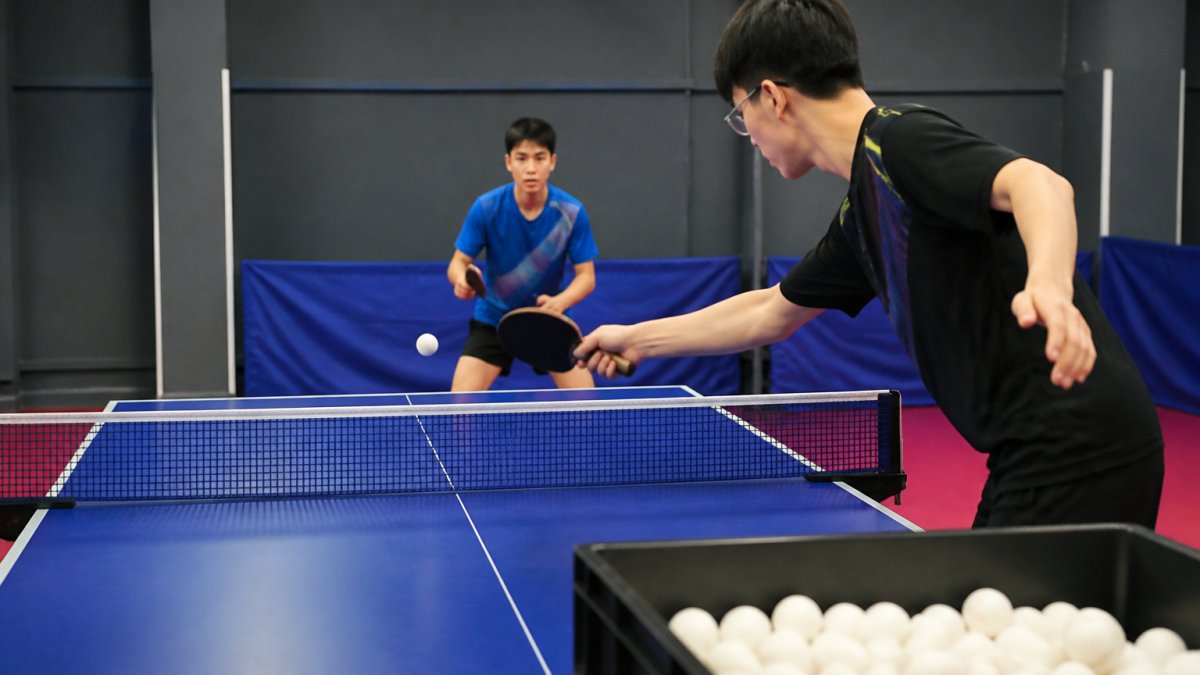
Solo practice is common. Use a multiball setup if possible, feeding balls consistently from one side so you can focus on stroke execution without constant retrieval.
Solo practice structure:
- Warm-up (5-10 min)
- Footwork drills (15-20 min)
- Stroking drills (15-20 min)
- Serve practice (10 min)
- Solo match simulation (10-15 min)
For solo match simulation, set targets: hit 10 forehands in a row, then 10 backhands, then attack a short ball and finish with a winner.
Track everything in a practice log, drills completed, successful shots, how you felt. Over weeks, patterns emerge and you'll see which drills improve your game most.
Add Attack, Counterattack, and Match Play
Drills build technique; match play builds competitive skill. The bridge is a progression: predictable repetitions, then variability, then pressure. Skipping straight from a clean drill to a scored match is why so many players look sharp in practice and hesitant in competition.
Stage 1: Predictable Repetitions
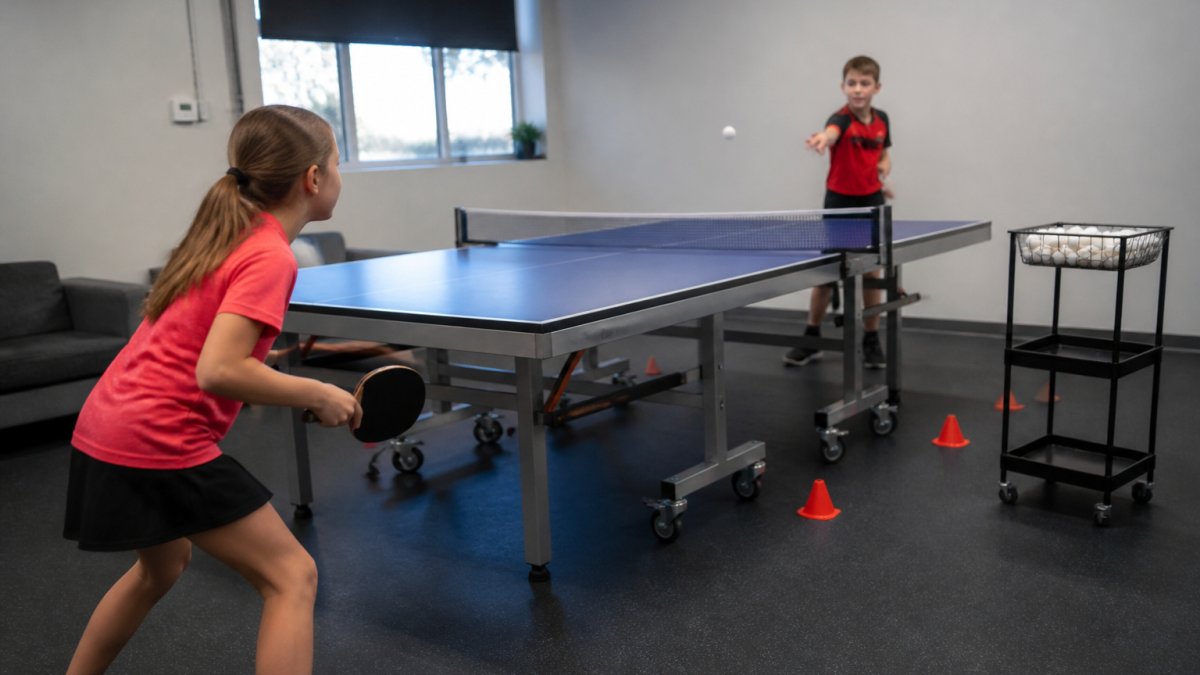
Here the pattern is fixed: your partner feeds the same ball to the same spot at the same speed and spin, and you execute the same response.
- Partner feeds a short backspin ball to your forehand. You loop it cross-court. Repeat 20 times.
- Partner feeds a long ball to your backhand. You drive it down the line. Repeat 20 times.
- Track your success count. If you're below roughly 70 percent, stay here longer.
Predictable reps build the motor pattern. They aren't match-realistic, and aren't supposed to be.
Stage 2: Variable Repetitions
Now the pattern changes, but you still know the general shape of what's coming. Your partner varies placement, spin, or speed within a defined range.
- Partner feeds randomly to forehand or backhand. You attack whatever comes.
- Partner alternates heavy backspin and light backspin. You adjust your loop.
- Partner feeds short or long. You decide whether to attack or push.
This stage teaches you to read the ball and adjust, the first place decision-making enters the session.
Stage 3: Attack and Counterattack Sequences
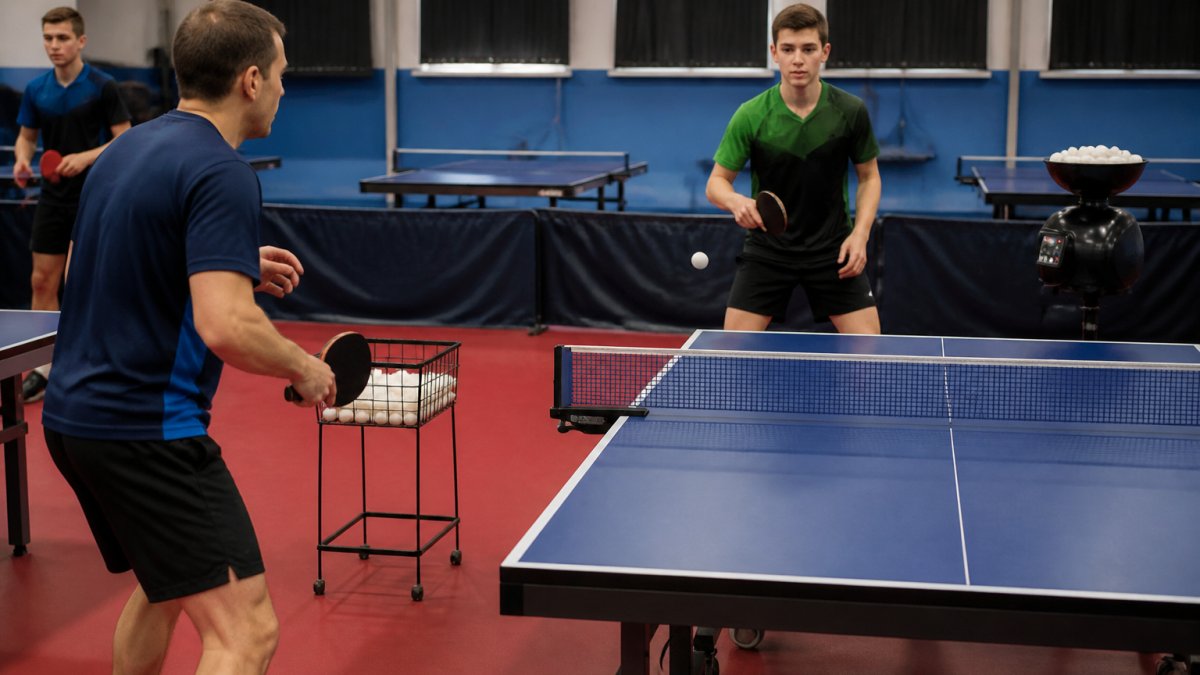
This transition drill has your partner feed short, you attack, they counterattack, and you rally out the point, forcing you to recover after your own attack and stay balanced for the next ball.
- Feed, attack, counter: Partner feeds short, you loop, partner blocks or counter-loops, you rally.
- Third-ball attack: You serve, partner returns, you attack the return. This is one of the most common point patterns in the sport.
- Fifth-ball attack: You serve, partner returns, you push or loop, partner attacks, you counter. This trains the defensive-to-offensive transition.
Do 3-5 sets of 10 reps per pattern. Rest 30-45 seconds between sets.
Stage 4: Pressure Points
Now you keep score. Pressure is what makes match play different from drills, and most players never train it deliberately.
- Serve-and-play points: You serve, play out the point, keep score. First to 5, then first to 10.
- Down-points: Start each point down 8-10. You have to win it to stay alive.
- Match points: Play 5-10 points as if it's a real match. Keep score. Keep intensity high.
Turning Drills Into Match Performance
The goal is transfer. A stroke you can hit 20 times in a predictable drill isn't yet a match weapon; it becomes one when you can hit it after reading an unpredictable ball, recovering from a previous shot, and playing with the score on the line.
To check transfer, play 10 scored points at session's end and count how often you used the pattern you drilled. If the number is low, the drill was too predictable or isolated, next session, move it one stage closer to match conditions.
Track Progress and Adjust Your Session Structure
Progress tracking transforms random practice into purposeful training. Without measurement, you can't know if you're improving.
Keep a practice log. Record:
- Date and session duration
- Drills completed and successful shot counts
- Match play results (points won, errors made)
Review your log monthly for trends, then adjust your structure: more backhand drills if it's weak, more serve practice if serves are inconsistent, more footwork drills if match play reveals poor movement.
| Metric | How to Track | Frequency |
|---|---|---|
| Forehand consistency | Successful shots in 20-ball drill | Every session |
| Backhand consistency | Successful shots in 20-ball drill | Every session |
| Serve accuracy | Successful serves out of 20 | 2x weekly |
| Match point wins | Points won in match play | Every session |
| Unforced errors | Mistakes during match play | Every session |
This table is your feedback loop, keeping you accountable and showing where improvement happens.
Efficient Ball Cleanup and Recovery
Efficient cleanup saves time, reduces physical strain, and lets you recover properly instead of exhausting yourself picking up balls.
Here's the efficient approach:
- Use a ball collector during the session. Tools like MyPingPongBuddy make this effortless, scoop balls without bending, no repetitive strain, no wasted energy.
- Collect in batches, not one by one: sweep a section, collect, move on.
- At a multi-table club, organize collection by table and assign sections if working as a team.
Recovery matters as much as cleanup. After intense practice:
- Cool down 5-10 minutes with light walking and easy stretching to let your heart rate drop.
- Hydrate before, during, and after your session.
- Eat a light protein-and-carb snack if your session exceeded 90 minutes.
Cleanup and recovery complete the cycle: practice builds skill, recovery builds durability, and together they compound into real improvement.
Structuring a table tennis practice session isn't complicated, it's intentional. Set a goal, warm up, drill specific skills, play match scenarios, track what works, recover, repeat.
Get started with a clear practice structure this week. Set one goal. Track one metric. See what happens over the next month.
Frequently Asked Questions
How long should a table tennis practice session be?
Session length depends on your skill level and goals. Beginners benefit from 45-60 minute sessions to build fundamentals without fatigue. Intermediate players typically practice 60-90 minutes, splitting time between drills and match play. Advanced players often train 90-120 minutes or longer. Shorter, focused 30-minute sessions work if you target specific weaknesses. Consistency matters more than length, three focused 60-minute sessions beat one unfocused 3-hour marathon.
What should you include in a table tennis practice routine?
A complete practice routine includes: off-table warm-up (5-10 minutes), on-table warm-up with light rallies (10-15 minutes), technical stroking drills (15-25 minutes), footwork drills like the Falkenberg drill (10-15 minutes), serve practice and serve-and-receive work (10-15 minutes), and match-play or game-based practice (15-30 minutes). This structure builds consistency, placement, and ball control before applying skills under match conditions. Adjust time allocations based on your weaknesses.
How do you practice table tennis alone?
Solo practice focuses on technical repetition and consistency. Use a robot or wall to rally for stroking drills, aim for 20+ consecutive successful rallies to build consistency. Practice serve placement by targeting zones on the table. Perform footwork drills without a partner, moving between attack and defensive positions. Shadow practice (mimicking strokes without a ball) reinforces technique. Multiball drills work if you have a partner feed balls, but solo, focus on high-repetition drills that improve ball control and footwork rather than match play.
What drills should beginners focus on in table tennis practice?
Beginners should prioritize forehand and backhand stroking drills for consistency, footwork drills to improve positioning, and serve practice to build accuracy. Start with simple rally drills, feed balls to the same spot and return them consistently. Add short serve and long serve practice to develop placement. Use the Falkenberg drill (moving side-to-side between two zones) to build footwork. Keep drills simple with high repetition; focus on successful rallies and unforced error reduction rather than attacking. Progress to serve-and-receive work and light match play only after building solid fundamentals.