 how-to
How Do Coaches Run Advanced Multi-Ball Feeding Drills?
Last Updated: October 25, 2026
Quick Summary
Advanced multi-ball feeding is the practice of delivering a controlled stream of balls so a player repeats a stroke under realistic rally pressure. Great feeding rests on three controls: bounce, pace, and contact point, and coaches should slow down because a player who returns 20 controlled balls learns more than one who scrambles through 40.
- The bounce feed is the backbone of feeding techniques: drop or toss so the ball bounces once on your side first.
- Set your racket angle before contact, not during it, to control whether the feed is flat or topspin.
- The four-stage ladder runs rhythm, stroke repeat, controlled variation, and decision, moving up only when set criteria are met.
- Structure sessions as a 5-minute warm-up, 10 minutes block drills, 10 minutes random drills, and a 5-minute cool-down.
- Cap each set at 20 to 40 balls, then rest, and watch for dropped shoulders and slow feet as signs to stop.
Table of Contents
- Why Advanced Multi-Ball Feeding Separates Good Coaches From Great Ones
- Core Table Tennis Ball Feeding Techniques Every Coach Should Master
- Adding Spin, Placement, and Variation to Your Feeds
- Progressive Table Tennis Multiball Drills by Skill Level
- How to Structure a Multiball Practice Session
- Troubleshooting Feed Mechanics and Measuring Feed Quality
- Choosing a Table Tennis Ball Collector That Keeps Sessions Moving
- Managing Fatigue, Safety, and Session Volume for Coaches and Players
- Frequently Asked Questions
Why Advanced Multi-Ball Feeding Separates Good Coaches From Great Ones
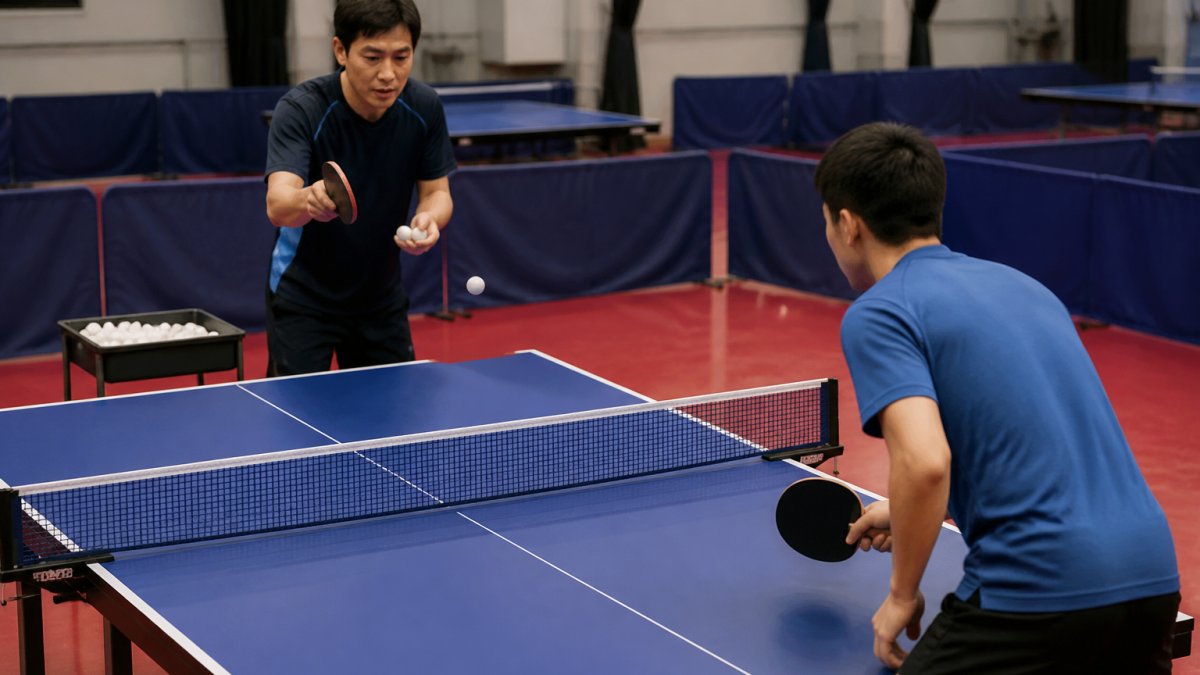
Advanced multi-ball feeding is the practice of delivering a controlled stream of balls so a player repeats a stroke under realistic rally pressure.
A great feed puts the ball where the player needs it, at the pace the training goal demands.
Below, we break down the feeding techniques that matter, drill progressions by level, and how to run a session without wrecking your back or your players' legs.
Core Table Tennis Ball Feeding Techniques Every Coach Should Master
Great feeding rests on three controls: bounce, pace, and contact point. Master those and every drill in this guide becomes easier to run.
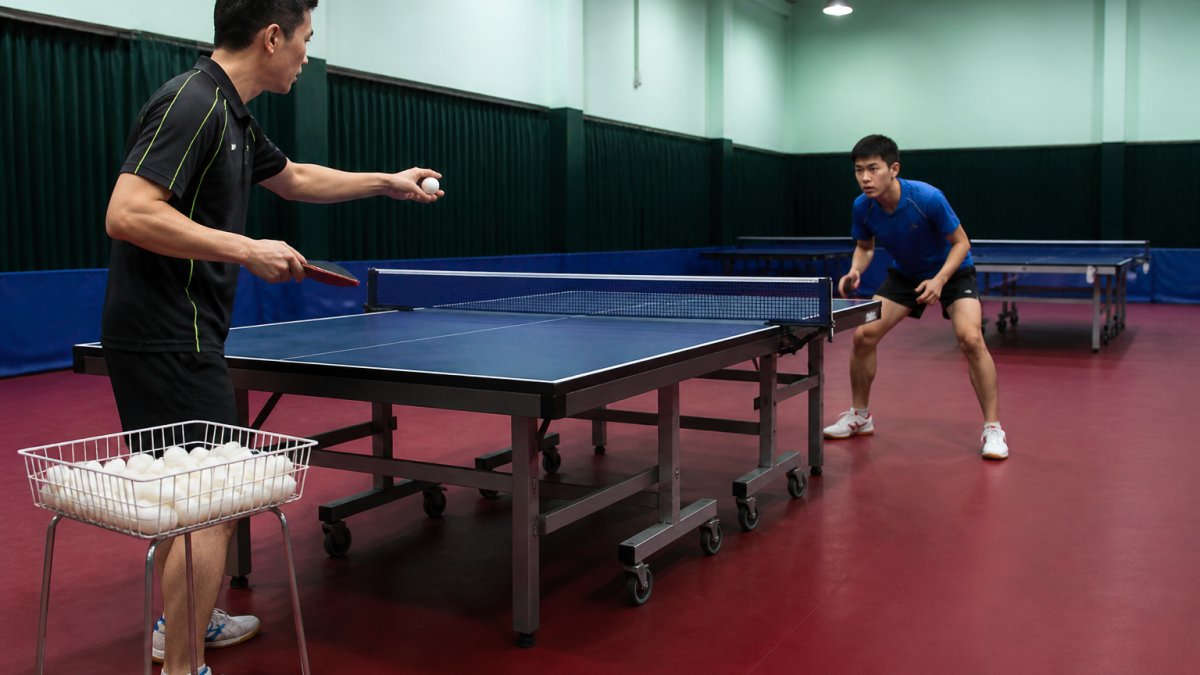
The Bounce Feed: Your Consistency Foundation
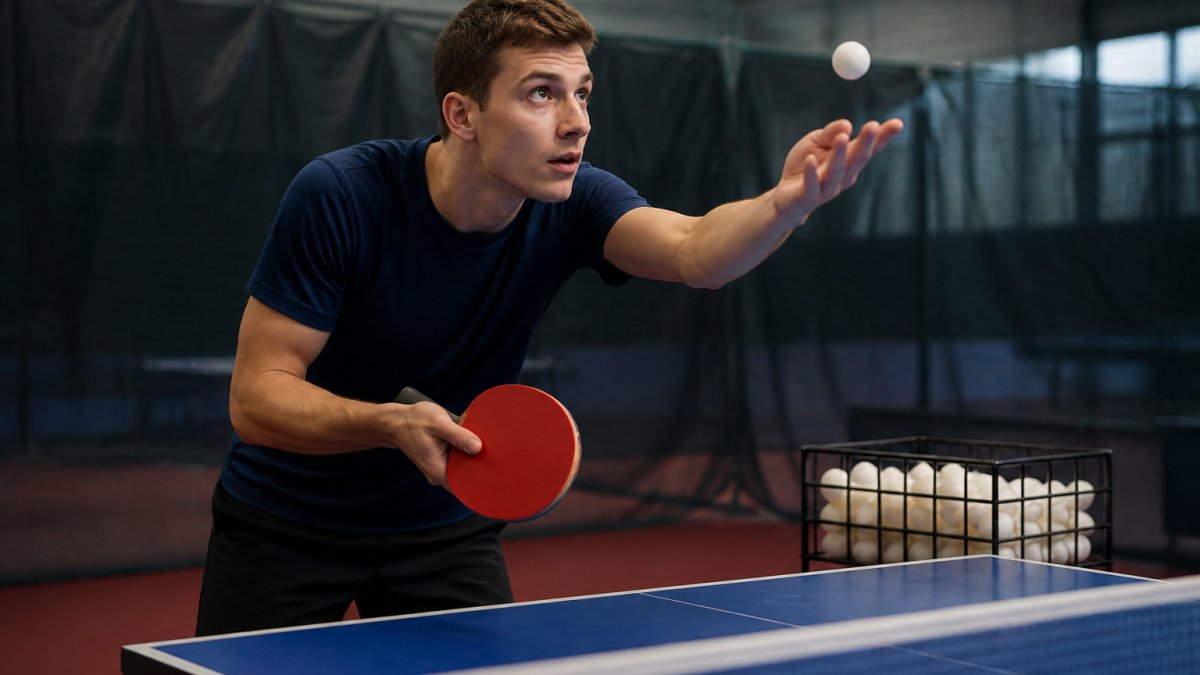
The bounce feed is the backbone of table tennis ball feeding techniques. You drop or toss the ball so it bounces once on your side, then strike it softly onto the player's side.
Why bother with the bounce? It gives you a repeatable contact point. A common mistake is feeding straight out of the hand.
Start with a low toss and a soft, flat contact. Aim for the same spot on the table every time. Consistency first, speed later.
Controlling Pace, Height, and Contact Point
Three dials control every feed:
- Pace: slow feeds build technique, faster feeds build reaction time
- Height: a low feed forces early contact, a higher feed gives recovery time
- Contact point: where you strike the ball decides its trajectory
Set your racket angle before contact, not during it. For a flat feed, keep the face open and push through the ball. For topspin, close the angle slightly and brush up the back of the ball.
The thing nobody tells you about feed pace is that most coaches start too fast. Slow down. A player who returns 20 controlled balls learns more than one who scrambles through 40.
Adding Spin, Placement, and Variation to Your Feeds
Spin and placement turn a simple repetition drill into real match preparation. A flat feed trains the stroke.
Here is how to layer each element:
- Topspin feeds: brush up the back of the ball to simulate a looped rally ball
- Backspin and underspin: chop under the ball so it sits low and forces the player to lift
- Placement: alternate wide forehand, middle, and wide backhand to move the player's feet
A realistic feed mimics rally conditions. If your player struggles against heavy backspin in matches, feed heavy backspin in practice.
If you want to push competitive players further, advanced multi ball techniques for competitive players covers randomization and decision drills in depth.
Progressive Table Tennis Multiball Drills by Skill Level
Most multiball advice stops at "start slow, add spin later." That is not a progression; it is a slogan. A real progression gives the coach a starting drill, a measurable exit criterion, and the next drill to run once the player clears it. Here is a four-stage ladder you can run in a single session or across a month, with explicit criteria for moving up.
| Stage | Drill | Feed Type | Set Size | Move Up When |
|---|---|---|---|---|
| 1. Rhythm | One-spot forehand, slow bounce feed | Flat, low toss, same contact height | 20 balls | 16 of 20 land on the table with a repeatable stroke |
| 2. Stroke repeat | Forehand-to-backhand block, two placements | Medium pace, flat then light topspin | 30 balls | 22 of 30 with feet resetting between balls |
| 3. Controlled variation | Random placement, fixed spin | Medium-fast, topspin only | 40 balls | 28 of 40 with the player calling the placement before contact |
| 4. Decision | Random placement and random spin | Fast, mixed topspin and backspin | 40-60 balls | 30 of 50 returns landing deep with recovery to ready position |
Stage 1: Rhythm and Repeatable Contact
Beginners do not need variety; they need the same ball in the same place until the stroke stops changing shape. Feed from a low toss with a flat racket face to one spot on the forehand side. Count returns out loud so the player hears the target. The exit criterion is not speed; it is repeatability. If the player's elbow drifts or the backswing changes length between reps, stay on Stage 1 even if the ball count is high.
Stage 2: Stroke Repetition With Footwork
Once the stroke is stable, alternate two placements: wide forehand, then wide backhand. The point is not the stroke anymore; it is the reset. Feed at a pace that forces one recovery step between balls, not two. A common error is jumping to random placement here. Two known placements teach the feet; random placement teaches guessing before the player has a movement pattern to guess with.
Stage 3: Controlled Variation
Hold spin constant and vary placement. This isolates the reading skill: the player must identify where the ball is going without also decoding what spin is on it. Feed topspin only, and have the player call the placement out loud before contact. That call is your measurement. If the call is wrong, the feed was too fast or the player is ball-watching instead of reading the feeder's racket.
Stage 4: Randomization and Decision-Making
Now vary both spin and placement, and pick them at the last moment. This is the stage most coaches rush into. The exit criterion is not just returns; it is returns that land deep with a recovery to ready position. A player who returns 30 of 50 but is flat-footed after each ball has not passed Stage 4. Slow the feed by roughly a quarter and rebuild the recovery habit before adding pace back.
Adapting the Ladder to the Player
Age, ability, and handedness change the feed, not the ladder. For younger players, shorten sets to 15-20 balls and keep the ball height higher so contact is comfortable. For left-handed players, mirror the placement pattern so the wide ball still pulls them off the table. For players returning from injury, cap Stage 3 and 4 at half the set size and stop at the first sign of sloppy contact.
How to Structure a Multiball Practice Session
A good multiball practice session structure has four parts: warm-up, block drills, random drills, and cool-down. Skip any part and the session suffers.
Here is a structure we recommend:
- Warm-up (5 minutes): slow feeds to one spot, building rhythm
- Block drills (10 minutes): repeated stroke work with mixed spin
- Random drills (10 minutes): varied placement and pace
- Cool-down (5 minutes): easy feeds and light stretching
For a deeper look at organizing drills from start to finish, see how to organize table tennis multi ball drills. If you are setting up a session for the first time, how to setup efficient multi-ball drills walks through the arrangement step by step.
Troubleshooting Feed Mechanics and Measuring Feed Quality
Most feed problems are mechanical, not tactical. Before you blame the drill, check four things in order: grip, racket angle, contact point, and toss height. Each one produces a signature error you can diagnose in a few feeds.
The Four Mechanics to Check First
- Grip: hold the racket loosely enough that the wrist can guide the ball. A death grip locks the wrist and turns every feed into an arm swing, which is the root cause of wild placement.
- Racket angle: set the face before contact, not during it. An open face pushes the ball flat and long; a closed face brushes up for topspin. Changing the angle mid-swing is what produces unintended spin.
- Contact point: strike the ball at the same height every rep. If you contact high on one feed and low on the next, the ball arrives at different heights and the player's timing breaks.
Signature Errors and Fixes
| Symptom | Likely Cause | Fix |
|---|---|---|
| Ball bounces too high or too low | Toss height changing | Mark a height with your free hand and drop from it every rep |
| Placement drifts wide | Arm swinging instead of wrist guiding | Slow the feed by half and aim with the wrist |
| Unintended topspin or backspin | Racket angle changing during contact | Freeze the angle before the swing and push through |
| Player late on every ball | Feed pace above the player's level | Cut pace by roughly a quarter and rebuild timing |
| Ball sits up for an easy attack | Contact point too high and face too open | Lower the contact point and close the face slightly |
Measuring Feed Quality
You cannot improve a feed you do not measure. Track four numbers per set; they take a partner or a phone to record and turn vague impressions into a coaching decision.
- Feed accuracy: how many of 20 feeds land within a target zone roughly the size of a sheet of paper. Below about 15 of 20, the feed is too loose for advanced drills.
- Balls per minute: count feeds in a timed minute. A steady rhythm is more valuable than a fast one; a coach who feeds 40 per minute but scatters them is less useful than one feeding 25 on target.
- Successful returns: the player's clean returns per set, measured against the stage target in the progression ladder.
A Quick Video Check
Film 20 feeds from the side. Watch the ball height at contact and at the player's strike zone. If either varies by more than a few inches, your contact point or toss height is drifting. Fix that before touching spin. A second camera angle from behind the feeder shows whether the arm or the wrist is doing the aiming.
Choosing a Table Tennis Ball Collector That Keeps Sessions Moving
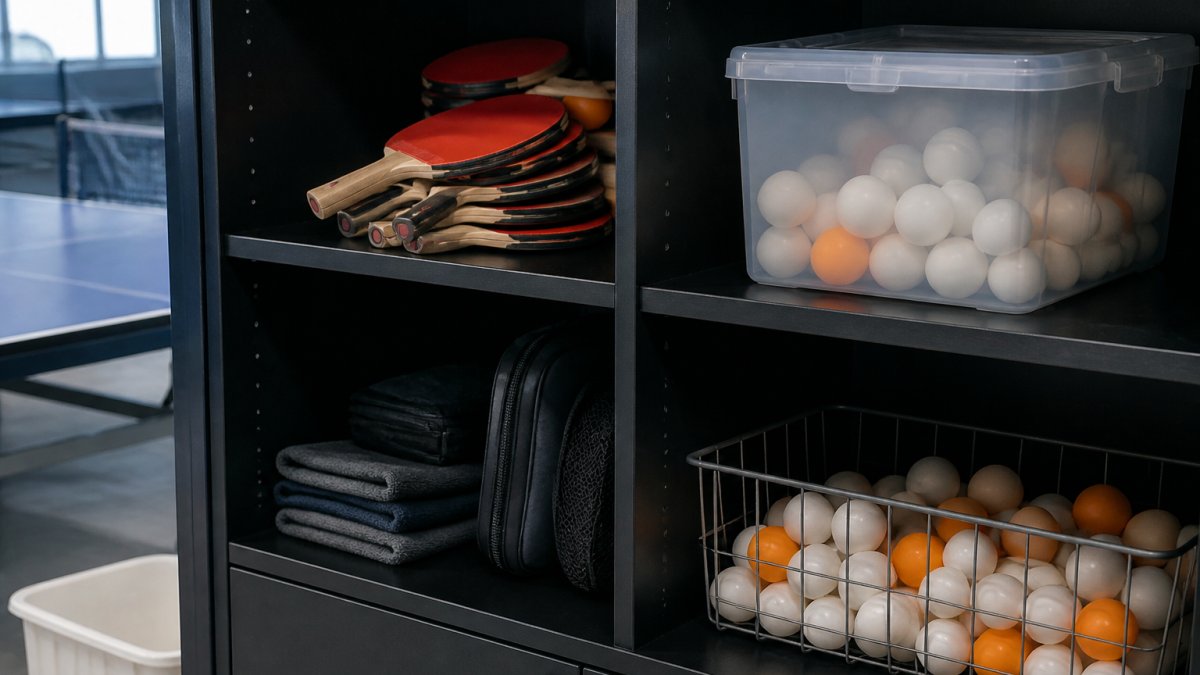
A table tennis ball collector decides how much of your session you spend feeding versus picking up.
Bending over to gather balls wrecks your back and eats practice time. A good collector lets you scoop a full basket in one pass.
For a current comparison of the best options, read our guide to the best ball collector for table tennis. Here is what to weigh:
- Capacity: how many balls it holds per pass
- Scoop design: does it pick up without bending
- Portability: does it break down for travel
Watch out: cheap net collectors tear at the seams under heavy daily use. If you run a club with many tables, check capacity before you buy.
Managing Fatigue, Safety, and Session Volume for Coaches and Players
Fatigue is the hidden risk in multiball training. Fast feeds and long sets load the legs and lower back, and tired players learn sloppy technique.
Keep sessions short and focused. Cap each set at 20 to 40 balls, then rest. Watch for dropped shoulders, slow feet, and sloppy contact.
For coaches, protect your own back. For more on avoiding overtraining, read avoiding fatigue in table tennis training.
Frequently Asked Questions
How do you feed multiball consistently in table tennis?
Consistency starts with a repeatable bounce feed: same stance, same racket angle, same contact point every time. Stand close to the table, hold the ball at a consistent height, and let it bounce once before contact. Aim for a steady rhythm of roughly 40 to 60 balls per minute so the player can groove the stroke. Film a short sequence and count how many feeds land in the target zone; that number tells you more about your control than how the drill feels.
How many balls should a coach feed in one multiball sequence?
Most sequences work best at 10 to 20 balls, which is enough repetition to build a pattern without pushing the player into fatigue. Beginners may do better with 8 to 12 slower feeds, while advanced players handling randomized drills can go longer. Stop a sequence when form breaks down, not when the basket empties. Short, focused sequences with brief rests keep quality high and reduce injury risk across a long session.
How can coaches make multiball practice more match-like?
Move beyond predictable feeds by adding random placement, mixed spin, and decision points. Feed a ball to the forehand, then unexpectedly to the backhand or short, and require the player to choose the right stroke. Vary the pace between fast and slow balls, and occasionally feed a ball that forces a recovery step. This trains reaction and footwork under rally conditions, which transfers far better to competition than a fixed feed pattern.
What equipment helps coaches collect balls efficiently after multiball training?
A dedicated table tennis ball collector saves time and spares your back. A scoop-style picker such as the MyPingPongBuddy lets you gather balls without bending over, and it breaks in half for transport between courts. Coaches running large sessions benefit most, since hundreds of balls end up scattered after each drill. Pair a collector with a large basket and a simple routine of sweeping the floor between sequences so the next drill starts on time.
Running advanced multi-ball feeding drills takes planning, a steady hand, and the right setup. The feeding is on you. The cleanup does not have to be. MyPingPongBuddy makes ball pickup fast and easy, so you spend your energy on coaching, not bending. Our handmade collector breaks down for transport, scoops balls with ease, and comes with a 90-day full refund return policy. Get started with MyPingPongBuddy and keep every session moving.