 how-to
How to Organize Table Tennis Multi Ball Drills
Table of Contents
- Setting Up Your Multi-Ball Training Environment
- How to Feed Multi-Ball in Table Tennis
- Table Tennis Multi-Ball Drill Examples for Beginners
- Advanced Multi-Ball Drills for Stroke Consistency
- Multi-Ball Training Duration and Session Structure
- Best Ball Collector for Table Tennis and Cleanup Management
- Managing Different Skill Levels in One Session
- Frequently Asked Questions
Last Updated: September 26, 2026
Setting Up Your Multi-Ball Training Environment
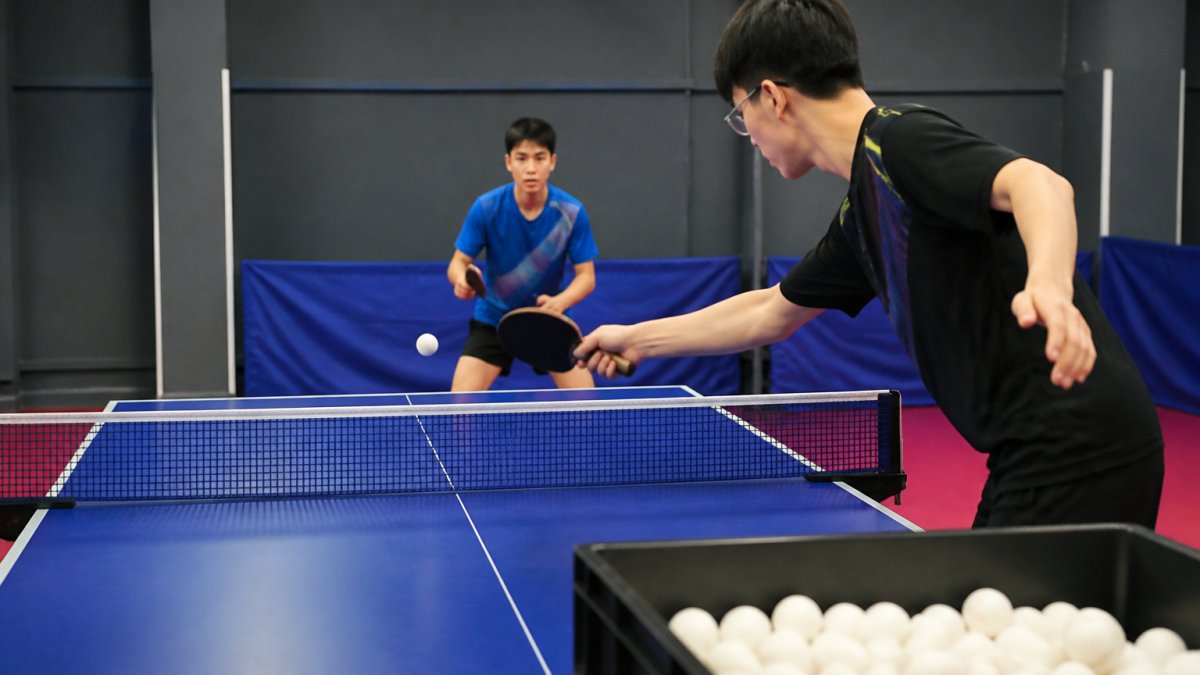
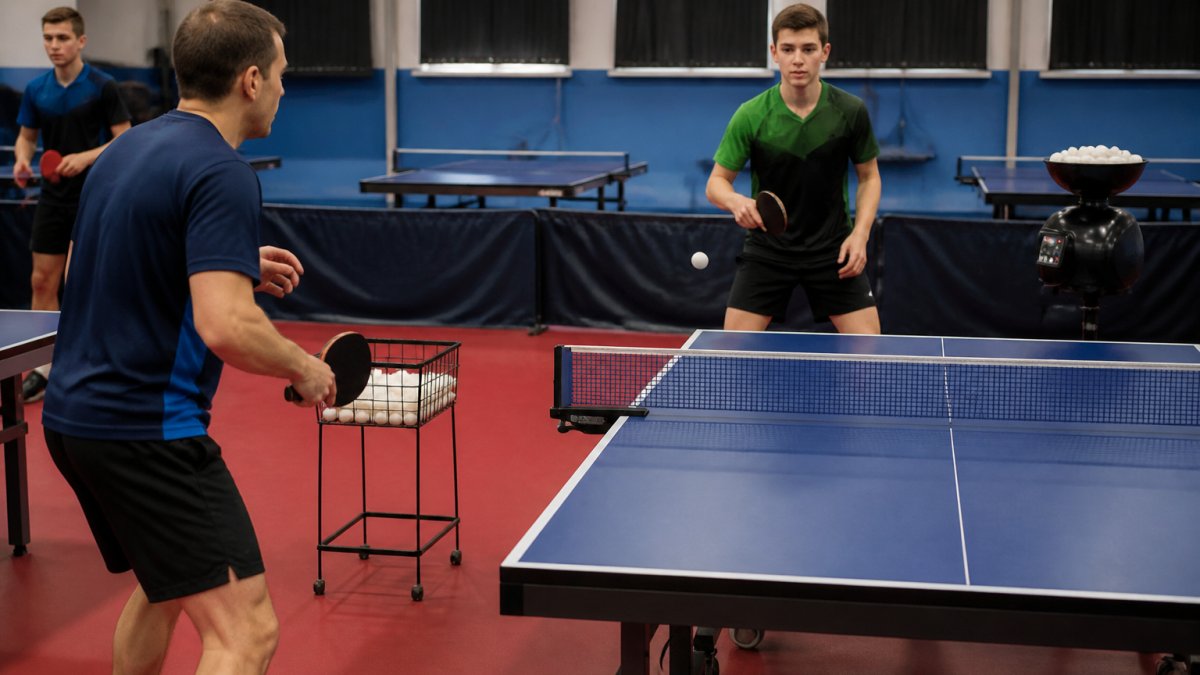
Organizing table tennis multi ball drills starts with one simple rule: set up your space for multi ball drills so the balls come back to you, not away from you. A clean, contained training area keeps the session moving and cuts the time you spend chasing stray balls.
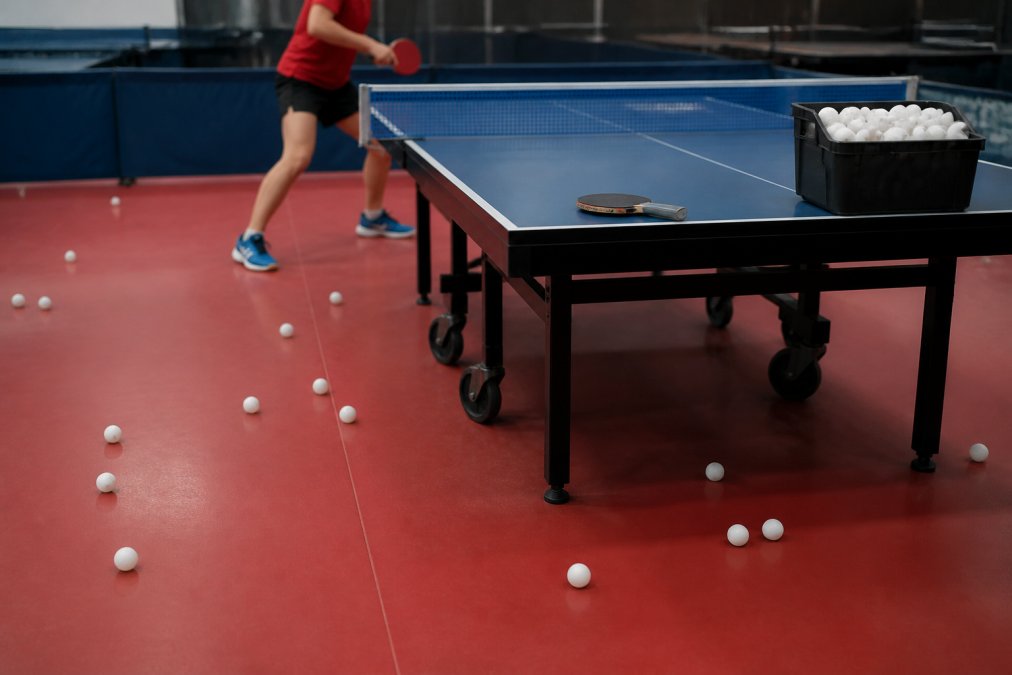
Here's what a workable setup looks like:
- Place a ball bucket within arm's reach of the feeder
- Set up a catch net or barrier behind the player
- Clear the floor of chairs, bags, and loose gear
- Mark a feeding zone so the feeder stays in one spot
Essential Equipment for Multi-Ball Drills
You need four things to run a multi-ball session: a supply of balls, a bucket or box to hold them, a net or barrier to catch them, and a collector to gather them fast. That's it.
Solo Multi-Ball Setup Options
Training alone is possible, and most guides skip it. You can feed yourself by tossing balls from a bucket, using a robot, or bouncing balls off a wall or table.
How to Feed Multi-Ball in Table Tennis
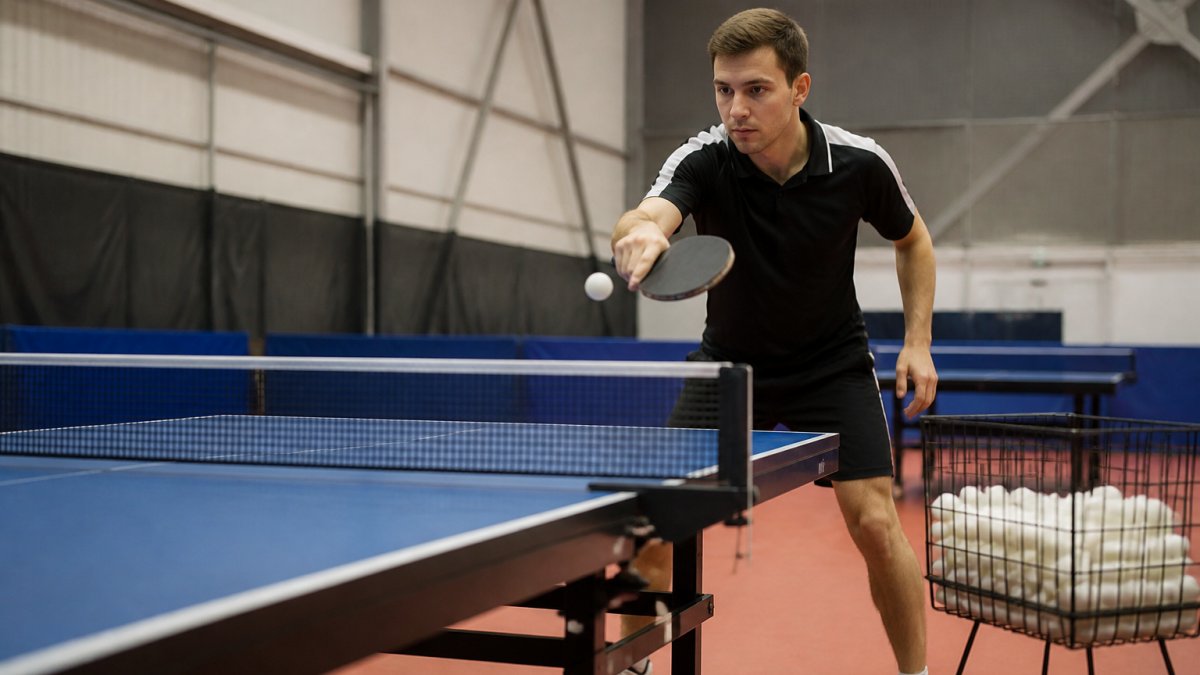
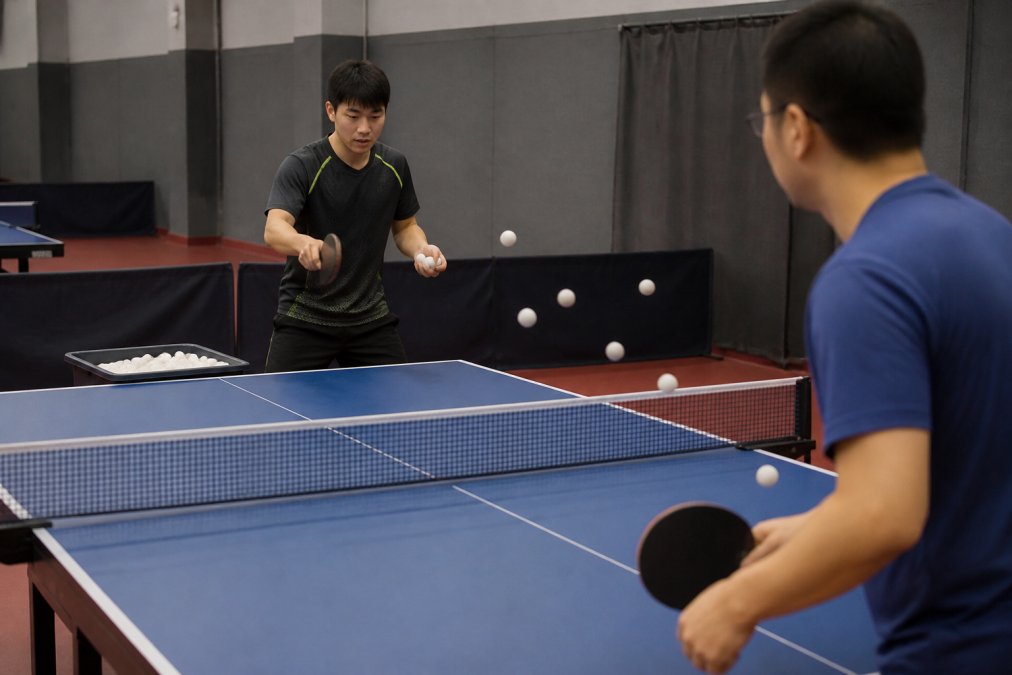
Feeding is the skill most coaches never practice, and it's the one that decides whether a drill works. A good feed is consistent, repeatable, and matched to the player's level.
Key feeding habits:
- Hold two or three balls in your non-dominant hand
- Drop the ball low and hit it with a light, compact motion
- Aim for the same bounce point every rep
- Feed at a steady tempo so the player finds a rhythm
Feeding Techniques for Different Skill Levels
Beginners need slow, high, predictable feeds to one spot. Feed to the forehand, then the backhand, then alternate. Keep the ball high so they have time to move.
Table Tennis Multi-Ball Drill Examples for Beginners
Beginners should start with one stroke, one spot, and a slow feed. Simple repetition builds muscle memory faster than complex patterns. The goal in the first few weeks is not variety, it is a repeatable swing path the player can trust under pressure.
Rep-to-rest ratios for beginners
Beginners tire fast, and tired strokes build bad habits. A workable pattern is 20 to 30 reps, then 60 to 90 seconds of rest. That gives the player time to reset the feet, catch the breath, and hear one coaching cue before the next set. Total beginner multi-ball volume should stay under 300 reps per session in the first month.
Common beginner errors and the fix
- Reaching instead of moving. The player lunges because the feed is too wide. Narrow the placement until the feet do the work.
- Swinging too big. The backswing drifts behind the body. Shorten the feed tempo and cue a compact motion.
- Standing flat-footed. Add a split-step cue before every feed and slow the tempo until the habit sticks.
- Gripping tighter as they tire. Watch the forearm; if it locks up, cut the set short and rest.
Footwork and Movement Patterns
Footwork is the part beginners ignore, and it's the part that wins points. A player with great hands and slow feet loses to a player who moves early.
Drill these patterns:
- Side-step to forehand, return, reset to center
- Pivot on the backhand corner, then recover
- Two-step shuffle to cover a wide ball
- Split-step before every feed
Advanced Multi-Ball Drills for Stroke Consistency
Stroke consistency comes from repetition under pressure, not from perfect feeds. Advanced drills should push tempo, spin, and placement until the stroke breaks, then rebuild it.
Set up drills that force decisions:
- Random topspin and backspin feeds to test reading spin
- Wide forehand to wide backhand, full-table movement
- Fast tempo feeds to shrink reaction time
- Serve variation followed by a live counter-attack ball
Counter-Attack and Shot Selection Drills
Counter-attack drills train you to turn defense into offense. Feed a strong loop, then have the player block or counter with a compact backswing.
Multi-Ball Training Duration and Session Structure
A full multi-ball session should run 45 to 60 minutes, including warmup and recovery. More is not better. Quality reps beat long, sloppy sessions. Multi-ball is more physically taxing than match play because the player never gets the natural pause between points, so the structure has to build rest in on purpose.
A simple structure:
| Phase | Time | Focus |
|---|---|---|
| Warmup | 10 min | Footwork, light strokes |
| Main drill block | 25 min | One or two skills |
| Pressure block | 10 min | Game-speed reps |
| Cooldown | 5 min | Stretching, easy hits |
Recovery and fatigue management
Most guides treat recovery as an afterthought. It is the part that decides whether the next session is productive or wasted. Multi-ball spikes heart rate and loads the lower back, hips, and shoulders through repeated split-steps and rotations.
A practical recovery protocol:
- Between sets: 60 to 90 seconds. Stand, breathe, and reset the feet. Do not sit, sitting lets the hips tighten.
- Between drill blocks: 3 to 5 minutes. Walk, sip water, and stretch the lower back and hip flexors.
- After the session: 5 to 10 minutes of easy movement and static stretching for the back, hips, and shoulders.
- Next-day rule: if the player is still sore in the lower back or shoulder, cut the next session's volume by roughly a third and keep the tempo slow.
Reading fatigue during a session
Fatigue shows up before injury does. Watch for these signals and adjust:
- Footwork slows first. When the split-step disappears, the player is tired. Shorten the set or end the drill.
- Contact point drifts back. The player starts hitting the ball beside or behind the body. That is a fatigue tell, not a technique problem.
- Grip tightens. A locked forearm and white knuckles mean the set should end.
- Breathing goes shallow. Cue a longer exhale and extend the rest interval.
Intensity tiers by player level
Match the volume and rest to the player, not to a fixed clock:
- Beginner: 20 to 30 reps per set, 90 seconds rest, total under 300 reps.
- Intermediate: 30 to 50 reps per set, 60 to 90 seconds rest, total 400 to 600 reps.
- Advanced: 50 to 80 reps per set, 45 to 60 seconds rest, total 700 to 1,000 reps, with one full recovery block mid-session.
Weekly load and rest days
Multi-ball is high-impact. A common pattern among coaches is two to three multi-ball sessions per week, with at least one full rest day between heavy sessions. Stacking four or five multi-ball days in a row is how overuse shoulder and lower-back issues start.
Best Ball Collector for Table Tennis and Cleanup Management
The best ball collector for table tennis is one that lets you gather balls without bending to the floor. That single feature protects your back and keeps the session moving.
What sets it apart:
- Scoops up balls with ease, no bending required
- Handmade for durability through daily use
- Breaks in half for easy transport and storage
- Backed by a 90-day full refund return policy
Managing Different Skill Levels in One Session
Mixed-level sessions work when you split the court and the clock. Pair players of similar level for drills, then rotate.
A simple plan:
- Group by level: beginner, intermediate, advanced
- Give each group its own drill and its own corner
- Rotate the feeder every 10 minutes
- Use one collector per group so cleanup stays fast
Frequently Asked Questions
What is multiball training in table tennis?
Multiball training is a practice method where a coach or robot feeds a continuous stream of balls to a player without stopping for retrieval. This builds stroke consistency, footwork, and reaction time through high-repetition drills. Sessions typically use 50 to 100 balls per bucket so the player can focus on technique without interruption. It is one of the most efficient ways to improve shot cycle and muscle memory in a short time.
How many balls do you need for an effective multi-ball session?
Most coaches recommend 50 to 100 balls per bucket for a productive multi-ball session. Having at least 60 balls lets you run a full drill cycle without stopping to collect, which keeps the player in rhythm. If you are training solo with a robot, 80 to 100 balls reduces downtime between feeds. A larger supply also means you can organize separate buckets for different drills.
How long should a typical multi-ball drill session last?
A focused multi-ball training duration is usually 20 to 40 minutes total, split into 4 to 6 drill blocks of 3 to 5 minutes each. Beginners should keep blocks shorter, around 2 to 3 minutes, to avoid fatigue that hurts technique. Advanced players can extend blocks to 5 minutes with 60 to 90 seconds of rest between them. Always include a warmup and a cooldown to manage recovery.
How do you organize multi-ball drills for players of different skill levels?
Group players by similar skill level and assign each group a specific drill station with its own ball bucket. Beginners focus on basic forehand and backhand consistency with slower feeds, while advanced players work on counter-attack and shot selection with faster, varied placement. Rotate stations every 10 to 15 minutes. This keeps everyone engaged and lets coaches adjust feed speed and ball placement for each group without disrupting the session.
Running multi ball drills well comes down to setup, tempo, and cleanup. Most coaches nail the first two and lose the third, which is why sessions feel rushed and backs feel sore by the end. MyPingPongBuddy built a handmade collector that scoops balls without bending, breaks in half for easy transport, and stands up to daily club use. It's backed by a 90-day full refund return policy, so you can try it risk-free. Get started with MyPingPongBuddy and spend your energy on reps, not retrieval.