 how-to
Table Tennis Training Equipment for Small Spaces
Table of Contents
- What You'll Need: Essential Gear for Small-Space Training
- Step 1: Choose Space-Saving Table Tennis Training Equipment
- Step 2: Set Up a Compact Training Zone
- Step 3: Master Solo Table Tennis Training Drills
- Step 4: Organize and Store Your Gear Efficiently
- Step 5: Simplify Cleanup with a Table Tennis Ball Collector
- Common Mistakes to Avoid in Small-Space Training
- Frequently Asked Questions
Last Updated: September 12, 2026
What You'll Need: Essential Gear for Small-Space Training
Table tennis training equipment for small spaces is any gear that lets you practice strokes, footwork, and consistency in small spaces without a full-size room, a live partner, or a permanently dedicated table. Players in apartments and crowded clubs build complete practice setups in rooms barely wider than the table itself. The trick isn't buying less gear, it's buying the right gear: a compact robot or return board, a paddle you can control, and a way to gather balls that doesn't wreck your back.
Below, we'll show you exactly how to choose, set up, and drill with a small-space kit, plus the storage and noise fixes most guides skip.
Step 1: Choose Space-Saving Table Tennis Training Equipment
Space-saving table tennis training equipment solves one problem: getting quality repetitions in a room that won't fit a full training hall. The best choices are training robots, return boards, and a paddle setup matched to your level. Here's how the main options compare.
| Option | Space Needed | Best For | Solo Practice |
|---|---|---|---|
| Training robot | 1-2 m behind table | Spin, reaction time, multi-ball | Yes |
| Return board | Table-length only | Consistency, swing mechanics | Yes |
| Shadow play | Anywhere | Footwork, movement patterns | Yes |
| Ball collector | Storage corner | Fast cleanup, back protection | N/A |
Training Robots and Return Boards
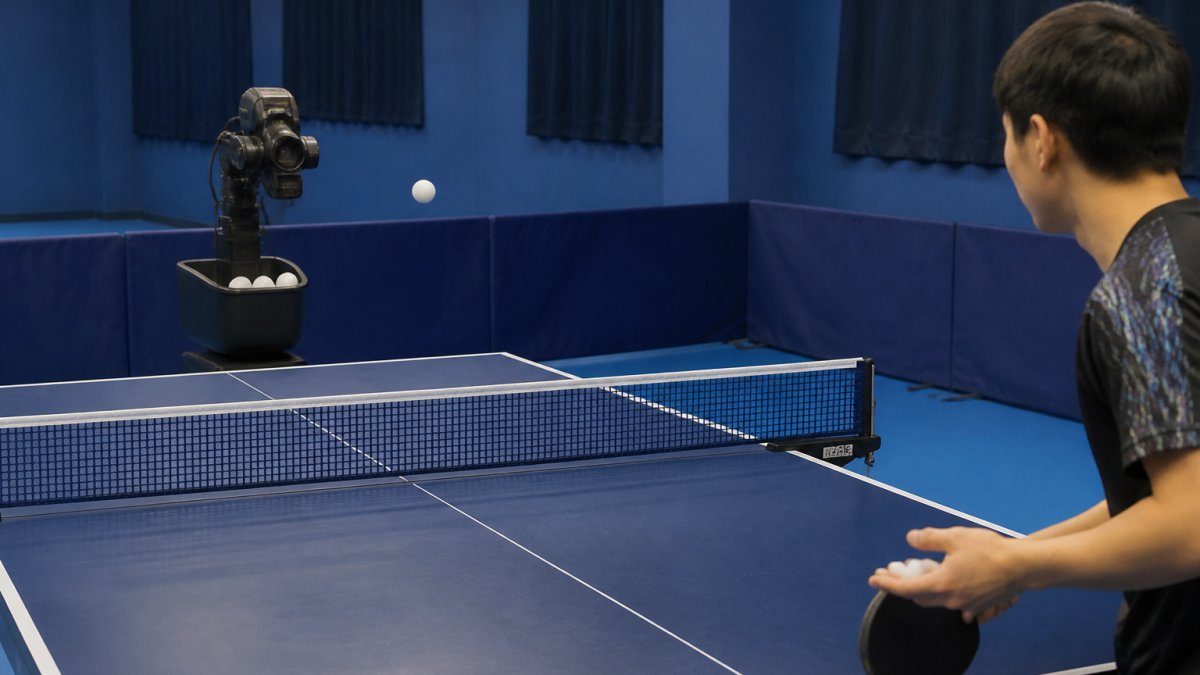
A table tennis robot is a ball-feeding machine that launches balls at adjustable speed, spin, and placement, making it the closest thing to a live training partner. A return board is a tilted surface that bounces your shots straight back, so you can groove a stroke without chasing balls across the room.
For tight spaces, prioritize a robot with a compact footprint and a ball collection net that catches returns. Return boards win on price and simplicity, but they don't simulate spin variation the way a robot does. If your room is narrow, mount the board directly on the table rather than on a separate stand.

Paddles, Rubbers, and Maintenance Tools
Paddle grip and rubber condition decide how much control you get from every drill. A worn, glossy rubber can't generate spin, so your training reps teach the wrong feel (usatt.org).
- Replace rubber every few months with regular play; sooner if it looks shiny
- Store paddles in a case to protect the sponge and edge tape
- Wipe the blade and grip tape regularly to keep the handle tacky
- Keep a spare paddle so a worn sheet never stalls a session
Rubber maintenance isn't glamorous, but it's the difference between training racket control and training sloppy habits. As the USA Table Tennis equipment guidance notes, equipment condition directly affects stroke development.
Step 2: Set Up a Compact Training Zone
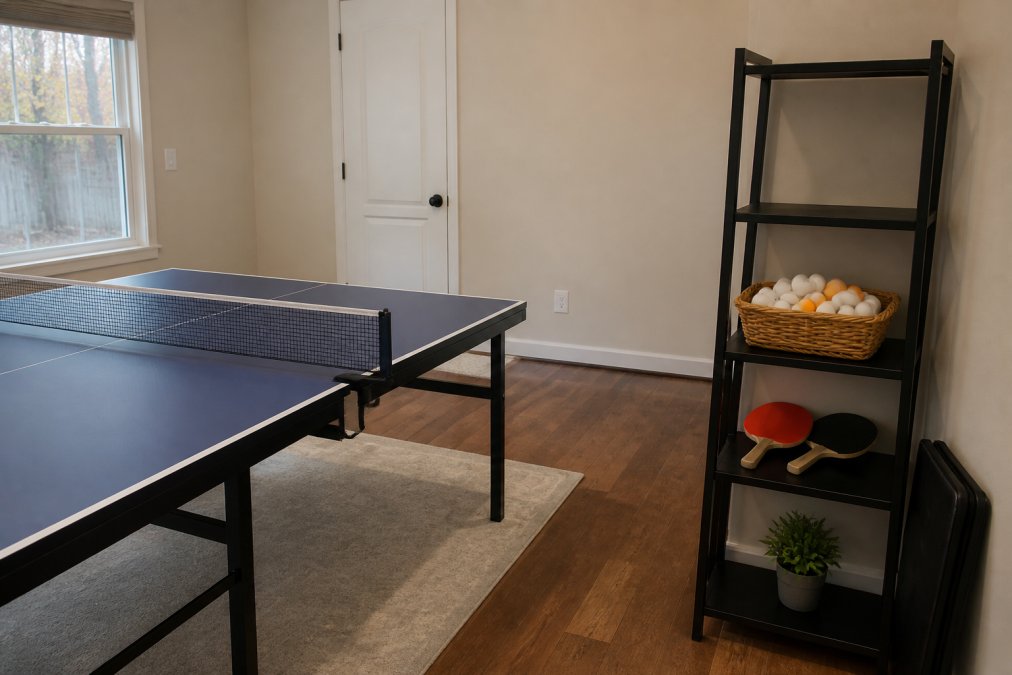
Setting up a compact training zone means arranging your table, robot, and ball supply so you can move freely in a limited footprint. The goal is a repeatable setup you can build and tear down quickly.
Apartment-Friendly Noise Reduction
Noise is the number one complaint for apartment players, and it's the angle most guides ignore. Ball impact and footwork both carry through floors.
- Place a thick rug or foam mat under the table to absorb impact
- Use a ball collection net to stop balls rolling into walls
- Practice footwork drills in socks or soft-soled shoes
- Schedule multi-ball sessions during daylight hours out of courtesy
These small changes cut noise dramatically without killing your training quality. A mat also protects your floor and your table legs.
DIY Training Equipment Hacks
You don't need a full budget to build a functional setup. A few practical hacks go a long way.
- A laundry basket lined with a towel makes a cheap ball supply bin
- Tape a line on the floor to mark your ready position for shadow play
- Use a wall-mounted return board instead of a floor stand to save space
- Clip a phone to a tripod to film swing mechanics and check your form
Combine these with a proper ball collector and you've built a setup that rivals a small club corner.
Step 3: Master Solo Table Tennis Training Drills
Solo table tennis training drills build technical proficiency when you have no partner, and they work in even the smallest room. Structure each session around one skill.
- Warm up with two minutes of shadow play, focusing on movement patterns
- Run multi-ball training against the robot, 20 balls per placement
- Switch to return board reps for consistency and swing mechanics
- Finish with footwork drills: side-to-side and in-and-out patterns
- Cool down with slow, deliberate spin control reps
Alternate these across the week so you're not repeating the same movement. Reaction time and agility improve fastest when you vary the stimulus. According to ITTF's coaching resources, structured repetition beats random practice for skill retention.
Step 4: Organize and Store Your Gear Efficiently
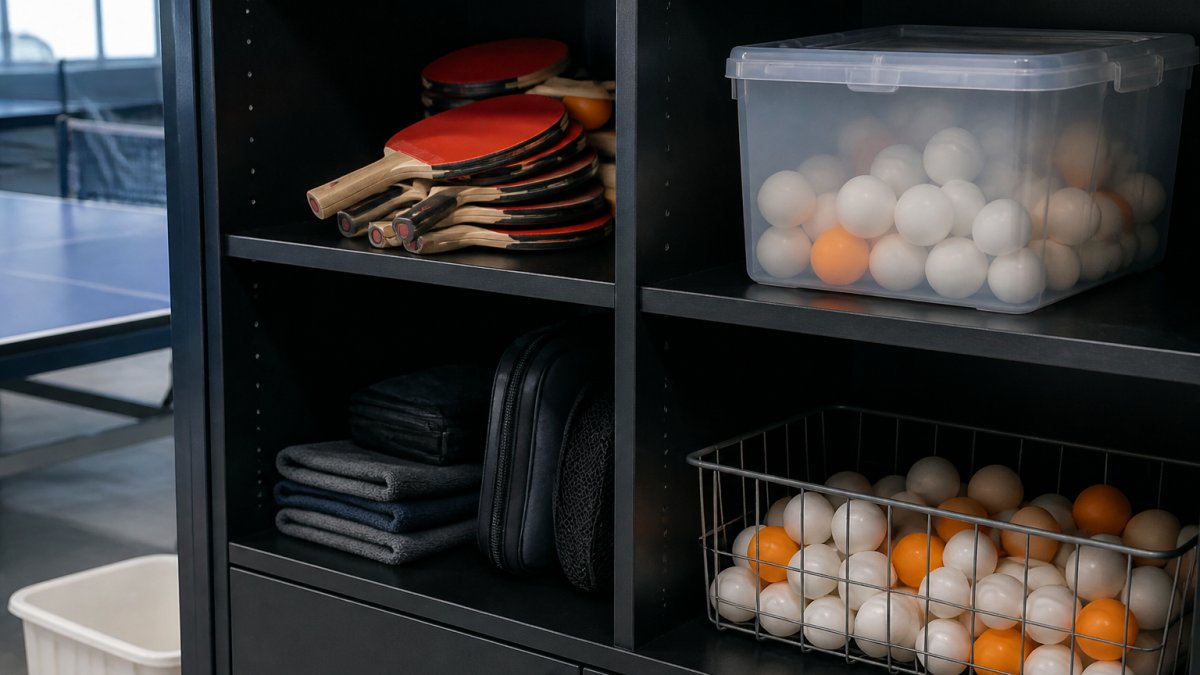
Efficient storage keeps a small training space usable, and it protects your equipment between sessions. A cluttered room kills the habit faster than a lack of skill does.
- Use a rolling bin for balls, paddles, and towels
- Hang return boards flat against a wall or behind a door
- Store the robot in a closet with the net folded
- Keep a labeled drawer for rubbers, edge tape, and grip tape
Compact storage also makes setup faster, which matters when you only have 30 minutes to train.
Step 5: Simplify Cleanup with a Table Tennis Ball Collector
A table tennis ball collector is a tool that gathers scattered balls without requiring you to bend over, and it's the single biggest quality-of-life upgrade for small-space training. When you're running hundreds of balls per session, cleanup time adds up fast, and repeated bending is exactly what aggravates back pain.
This is where MyPingPongBuddy earns its place in the kit. Our handmade scoop is built to pick up balls with ease, eliminating the need to bend over and cutting cleanup time so you can spend more of your session training and less of it crawling under the table. It breaks down in half for transport, so it fits in the same closet as your robot, and it's backed by a 90-day return policy with a full refund.
Coaches and students notice the difference immediately. One customer put it simply: "This makes cleanup SO INCREDIBLY EASY and actually kind of fun!" For players managing lower back pain, that's not a small thing.
Common Mistakes to Avoid in Small-Space Training
The biggest mistake in small-space training is buying gear before you've defined the space it has to fit. Measure your room, then buy.
- Choosing a robot too large for the room, then never setting it up
- Neglecting rubber maintenance until strokes feel dead
- Practicing only one drill and stalling skill development
- Ignoring noise until a neighbor complains
- Leaving balls scattered, which slows the next session
Avoid these and your compact setup will outlast most full-size home rigs.
Frequently Asked Questions
What are some good table tennis training tools for small spaces?
For small spaces, focus on compact tools like table tennis robots, return boards, and a table tennis ball collector. Robots offer adjustable ball feeds, return boards provide consistent rebounds, and a ball collector like MyPingPongBuddy saves time and reduces bending. These tools fit in tight areas and support solo practice. Prioritize space-saving design and portability to make the most of limited room.
How do I practice table tennis alone in a small room?
Practice solo table tennis training drills such as shadow play, ball bouncing on the paddle, and multi-ball serves against a return board. Use a robot for varied feeds if space allows. Focus on footwork drills and coordination exercises within a small area. Set up a compact table and clear nearby obstacles. Consistent solo practice builds technical proficiency and movement patterns without a partner.
Do table tennis rebound boards actually work for skill development?
Yes, return boards are effective for solo practice. They provide consistent ball return, helping you work on swing mechanics, spin control, and reaction time. Use them for multi-ball training or repetitive strokes. They are especially useful in small spaces because they mount on the table and require no extra room. Combine with shadow play and footwork drills for well-rounded skill development.
How can I organize my training gear to save space?
Organize gear with wall-mounted racks, stackable bins, and compact storage solutions. Store paddles in cases, keep balls in a ball collection net or collector, and fold away robots and return boards when not in use. Use vertical space for shelves. A table tennis ball collector like MyPingPongBuddy breaks down for easy storage. Label bins for quick access and maintain a clutter-free training zone.
Small-space training only works when the setup supports the habit. If cleanup takes longer than the drill, you'll stop. MyPingPongBuddy makes that part effortless with a handmade scoop that breaks in half for storage, spares your back, and speeds up every session, all backed by a 90-day full refund. Get started with MyPingPongBuddy and keep your training focused on the table, not the floor.