 how-to
How to Store Table Tennis Training Gear (2026 Guide)
Table of Contents
- Why Proper Storage Matters for Your Training Gear
- What You'll Need: The Essential Storage Checklist
- Step 1: Clean and Dry Equipment Before Storing
- Step 2: How to Clean Table Tennis Rubber Properly
- Step 3: Choose the Right Table Tennis Paddle Storage Case
- Step 4: Organize Balls, Nets, and Training Aids
- Step 5: Table Tennis Training Equipment for Small Spaces
- Common Storage Mistakes to Avoid
- Frequently Asked Questions
Last Updated: September 4, 2026
Proper storage is the difference between gear that lasts for years and equipment that degrades after a few months. How to store table tennis training gear comes down to controlling moisture, temperature, and physical pressure, yet most players overlook at least one of these factors. This guide from MyPingPongBuddy walks through a practical, room-by-room system for keeping paddles, balls, and training aids in peak condition, whether you practice at home or run a club.
The core principle is simple: table tennis equipment is made of synthetic materials that react to their environment. Rubber oxidizes when exposed to air and light, wooden blades warp with humidity changes, and training balls lose their bounce in extreme temperatures. Getting storage right protects your investment and keeps your practice consistent.
Why Proper Storage Matters for Your Training Gear
The biggest mistake players make is treating storage as an afterthought. They leave paddles on the table, toss balls into a gym bag, and wonder why their rubber loses tackiness within months. Rubber oxidation is the primary culprit: the surface degrades when exposed to oxygen, UV light, and dust, which directly reduces spin and control (peer-reviewed research).
Moisture prevention matters just as much. Humidity causes wooden blades to swell and warp, altering the paddle's feel and performance. A climate-controlled environment at room temperature, ideally between 60-75°F, protects both the wood and the rubber's adhesive properties (usatt.org). Equipment longevity depends on consistent conditions, not occasional cleaning.
What You'll Need: The Essential Storage Checklist
Gathering the right supplies before you start makes the process straightforward. You likely own most of these already, and the few you don't are inexpensive.
- Paddle storage case or protective film for each blade
- Microfiber cloth for cleaning rubber surfaces
- Table tennis rubber cleaner or mild soap and water
- Sealed container or mesh bag for training balls
- Wall rack or shelf for organizing multiple rackets and paddles
- Silica gel packets for humidity control in storage bags
- Carry bag for travel-specific storage and transport
USA Table Tennis equipment care guidelines recommend storing equipment away from direct heat sources and radiators, which can dry out rubber faster than normal room conditions.
Step 1: Clean and Dry Equipment Before Storing
Never store dirty equipment. Sweat, dust, and oils from your hands accelerate rubber oxidation and leave residue that hardens over time. Wipe down your paddle after every session, not just when you remember to.
Start with a dry microfiber cloth to remove surface dust and moisture. For deeper cleaning, use a dedicated rubber cleaner or a damp cloth with mild soap. Avoid alcohol-based solutions, which can strip the rubber's protective layer and reduce tackiness. Allow the surface to dry completely before placing the paddle in its case, since trapped moisture encourages mold and surface degradation.
This preventative maintenance routine takes under two minutes per paddle and extends the life of your rubber noticeably. Players who clean after every session typically replace rubber less frequently than those who clean weekly.
Step 2: How to Clean Table Tennis Rubber Properly
How to clean table tennis rubber is a question every serious player asks, and the answer is gentler than most expect. You only need three things: a soft cloth, water or dedicated cleaner, and a dry surface.
Apply the cleaner to the cloth, never directly to the rubber. Wipe in straight lines from handle to tip, avoiding circular motions that can push debris into the pores. For stubborn marks, let the cleaner sit for ten seconds before wiping. Finish with a dry pass to remove any residue, then apply protective sheets if you have them. These thin plastic films prevent dust from settling and slow the oxidation process between sessions.
Step 3: Choose the Right Table Tennis Paddle Storage Case
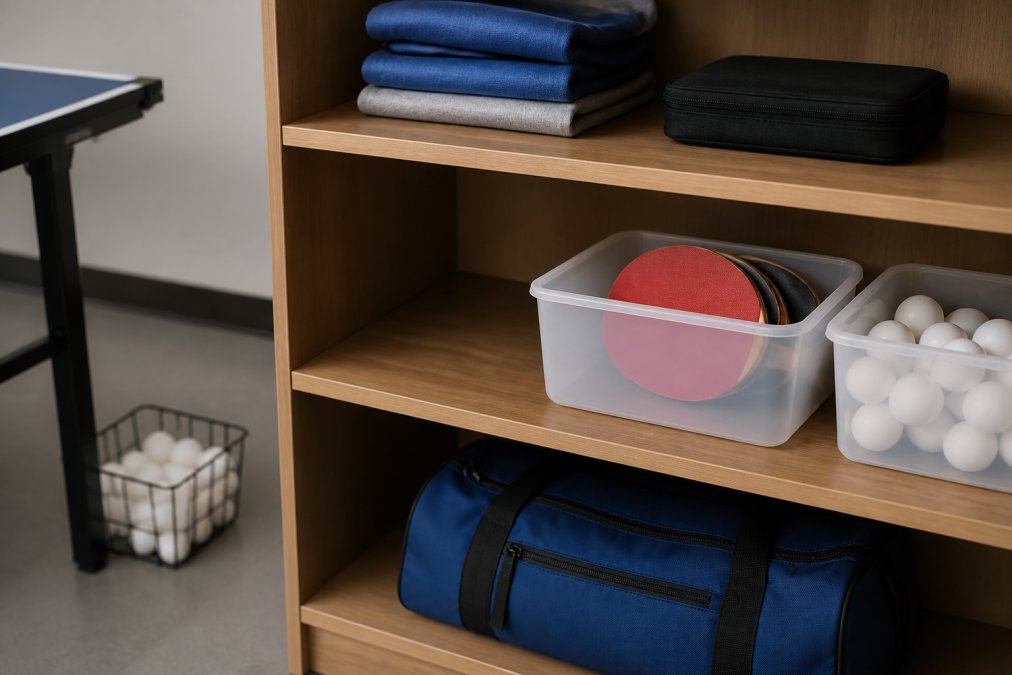
A quality table tennis paddle storage case is non-negotiable for protecting your equipment. Hard cases offer the best protection against pressure and impact, while soft cases prioritize portability and weight. For players who transport gear regularly, a hard case with a padded interior is the safest choice.
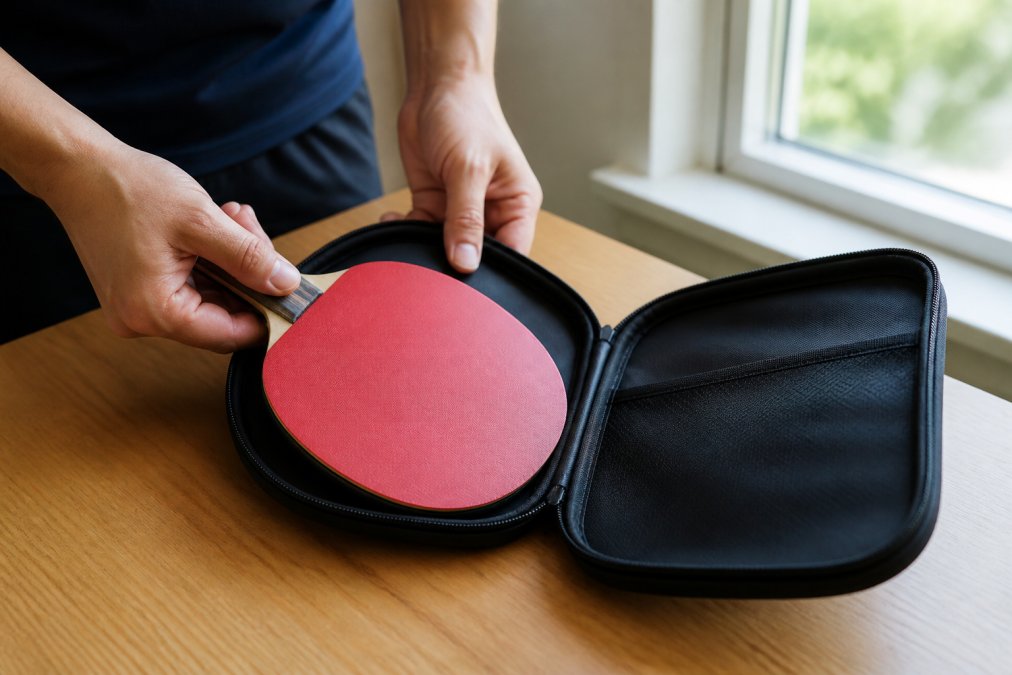
When selecting a case, check that it accommodates your paddle's thickness. Modern paddles with thicker sponge layers may not fit snugly in older cases, and a loose fit allows the paddle to shift and rub against the interior. Look for cases with a moisture-resistant lining and a secure closure that keeps dust out. For players with multiple paddles, a case holding two to three blades keeps your racket storage organized in one place.
Step 4: Organize Balls, Nets, and Training Aids
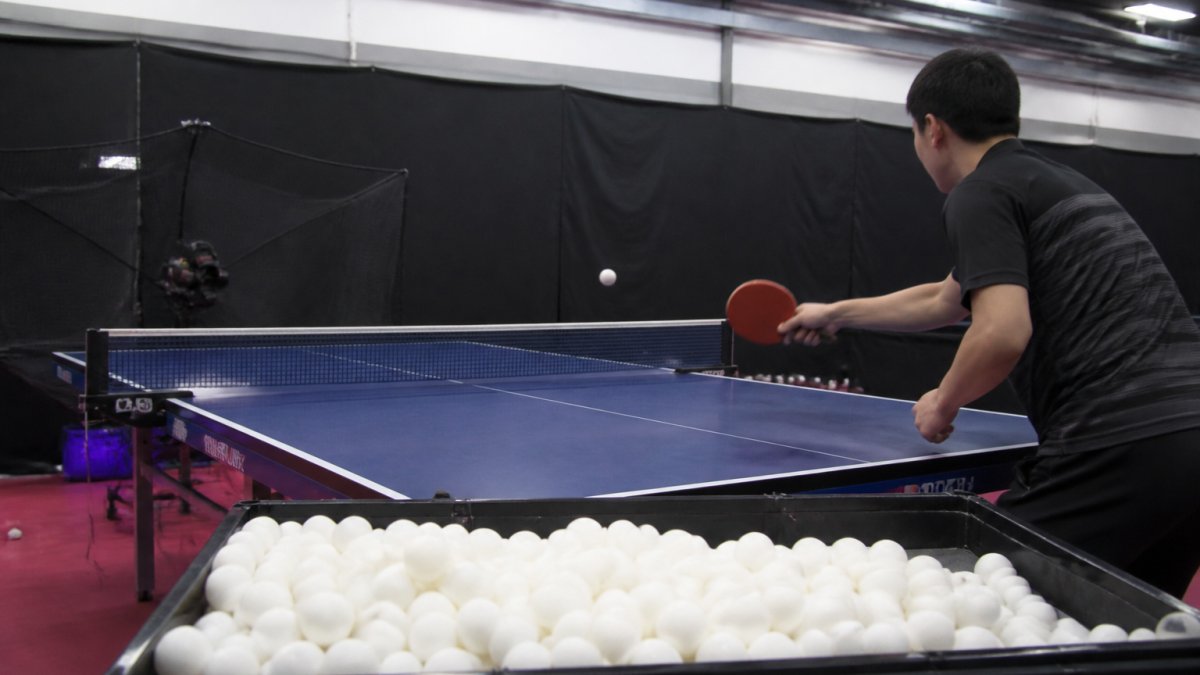
Training balls lose their roundness and bounce when crushed under heavier equipment. Store them in a rigid container or a mesh bag that allows air circulation while protecting them from pressure. A ball collection net solves the dual problem of storage and retrieval, letting you scoop up loose balls and keep them contained in one step.
Nets and barriers fold down for storage but should hang rather than sit crumpled in a bag. Folding creases weaken the mesh over time. Use wall hooks or a dedicated storage rack to keep nets flat and accessible. Training aids like robot attachments and multi-ball feeders should be wiped down and stored in their original boxes when possible, protecting them from dust and accidental damage.
Step 5: Table Tennis Training Equipment for Small Spaces
Table tennis training equipment for small spaces demands a dual strategy: permanent organization for your home practice area and a separate, dedicated system for travel. Most guides stop at wall racks, but the real challenge for players in apartments or shared spaces is protecting gear during transit to clubs and tournaments without letting it clutter your living area.
Permanent Storage: The Wall-Mounted System
Wall-mounted racks remain the single best investment for tight areas, but the execution matters more than the purchase. Install a rack that holds paddles vertically by the handle, not flat, to avoid pressure on the rubber face. Position it at least three feet away from any radiator, baseboard heater, or south-facing window. In a typical 10x10-foot room, this usually means the wall opposite the window or the interior side of a closet door.
For balls, a mesh ball bag hung on a hook is superior to a rigid box because it allows air circulation and lets you see the condition of the balls at a glance. Adhesive hooks rated for 5 pounds are sufficient for nets and barriers. Use a small, wall-mounted shelf (8 inches deep is enough) for cleaning supplies and protective sheets, keeping them off your playing surface.
The Travel Kit: A Separate, Grab-and-Go System
Travel-specific storage is the gap most storage guides ignore, yet it is the most common way gear gets damaged. A paddle tossed into a gym bag with a water bottle or keys is a paddle that will need replacing. The solution is a dedicated travel kit that lives by your front door, not in your practice area.
Start with a hard-shell paddle case, not a soft sleeve. Hard cases protect against compression from other bag contents and sudden impacts during transit. Inside the case, always keep the paddle in a plastic bag with a silica gel packet if you are traveling between climates, such as from an air-conditioned home to a humid club. The temperature shift causes condensation; the silica gel absorbs that moisture before it reaches the rubber.
For balls, use a dedicated cylindrical ball tube that holds exactly three balls. This prevents them from rattling around and getting scuffed. For multi-ball training, a separate mesh bag is fine, but it should be the outermost layer of your bag, never at the bottom under your paddle case.
DIY Travel Hacks That Work
Budget-conscious players can build an effective travel system without retail racks. A hard-shell sunglasses case is the perfect size for a single paddle and fits into a backpack's side pocket. For a full training kit, a small plastic toolbox with a foam insert (cut to fit your paddle and ball tube) provides rigid, crush-proof storage for under $15. The foam prevents shifting, and the latch keeps dust out.
A common pattern among club players is to repurpose a hanging toiletry kit for travel. The clear pockets let you see your cleaning cloth, spare rubber, and protective sheets without unpacking everything. The hook lets you hang it on a locker door at the club, keeping gear off dirty floors.
The goal is a system where your home storage stays organized and your travel kit is self-contained. When every item has a designated home, both at home and on the road, you eliminate the chaos that leads to lost or damaged gear.
Common Storage Mistakes to Avoid
Several habits quietly damage equipment despite good intentions, but the most destructive mistakes happen during the off-season, when gear sits unused for weeks or months. Most storage advice focuses on daily use, leaving players without a clear protocol for preserving rubber tackiness and blade integrity during periods of inactivity.
The Off-Season Preservation Protocol
Long-term storage for off-season requires a different mindset than daily care. The goal shifts from quick access to maximum preservation. Here is a step-by-step protocol that protects your gear through months of inactivity:
-
Deep clean every paddle. Remove all dust and sweat with a dedicated rubber cleaner. Allow the surface to dry completely for 30 minutes. Trapped moisture is the enemy of long-term storage.
-
Apply protective sheets immediately after cleaning. These thin plastic films create a barrier against oxygen, which is the primary driver of rubber oxidation. Without them, rubber loses tackiness noticeably within two weeks of inactivity.
-
Store paddles in a sealed hard case, not a soft sleeve. Hard cases provide a stable environment and protect against accidental pressure from other stored items. Add one silica gel packet per case to absorb any residual humidity.
-
Remove batteries from electronic training aids. Robot attachments and ball feeders with batteries left inside can corrode over months of inactivity, ruining the contacts. Store batteries separately in a dry container.
-
Store balls in a rigid, sealed container. Mesh bags allow air circulation, which is fine for daily use, but for off-season storage, a sealed container prevents dust accumulation and maintains ball roundness. Do not stack anything on top of the container.
-
Loosen nets and barriers. Do not store them tightly rolled or folded. Hang them flat or drape them over a wide hanger to prevent creases from weakening the mesh fibers.
The Monthly Check-In
Off-season storage is not "set and forget." Mark a calendar reminder for the first of each month to perform a five-minute inspection. Open each paddle case, check the rubber surface for any signs of cracking or discoloration, and rotate the balls in their container so the same ones are not always at the bottom. This routine catches problems early, before they become permanent.
The Climate Factor
The single most common off-season mistake is storing gear in a garage, attic, or basement. These spaces experience dramatic temperature and humidity swings that accelerate rubber oxidation and warp wooden blades. A common pattern among players who lose gear to the off-season is storing paddles in a garage during summer months, where temperatures can exceed 90°F. At that heat, the glue bond between rubber and wood weakens, and the rubber itself hardens permanently.
If you have no climate-controlled space, bring your gear indoors. A closet shelf in a bedroom or hallway is far safer than any garage. The ideal environment is a consistent 60-75°F with moderate humidity, which is what most homes maintain in their living areas.
| Off-Season Task | Frequency | Key Action |
|---|---|---|
| Deep clean and seal paddles | Once, at season end | Clean rubber, apply protective sheets, seal in hard case |
| Remove batteries from electronics | Once, at season end | Store batteries separately in dry container |
| Monthly gear inspection | Monthly | Check rubber for cracks, rotate balls, verify cases are sealed |
| Climate check | Monthly | Confirm storage area stays within 60-75°F range |
Frequently Asked Questions
How long can you store table tennis rubber?
Unused table tennis rubber stored in a cool, dark place with its protective film can last several years before the adhesive degrades. Once mounted on a blade, the rubber's performance life is shorter, often 50 to 100 hours of play. Proper storage, including cleaning and using protective sheets, prevents oxidation and extends the tackiness of the surface. Avoid leaving paddles in a hot car or direct sunlight, as heat accelerates rubber degradation and reduces the lifespan of your equipment.
Does temperature affect table tennis equipment storage?
Yes. Extreme temperatures damage table tennis gear. High heat can warp blades and speed up rubber oxidation, while freezing temperatures can make rubber brittle and crack the wood. Store your equipment in a climate-controlled room, ideally between 60°F and 75°F. Avoid attics, garages, or cars where temperatures fluctuate dramatically. Humidity control also matters; aim for a dry environment below 50% humidity to prevent moisture damage to paddles and rust on training equipment.
What is the best way to store table tennis balls?
Keep table tennis balls in their original tube or a dedicated ball collection net to maintain their roundness. Avoid stacking heavy objects on top of them, as this can deform the balls. For training sessions, a ball collection net or bucket keeps hundreds of balls organized and off the floor. Store balls away from direct sunlight and heat sources, which can cause yellowing and affect their bounce. A sealed container also prevents dust from dulling the surface.
How can I organize table tennis gear in a small home gym?
Use wall-mounted racks to store paddles, bats, and nets vertically, freeing up floor space. A small over-door organizer can hold balls, spare rubbers, and cleaning supplies. For training robots and ball pickers, look for equipment that breaks down or folds flat for easy storage in a closet or under a table. Consider a rolling cart with bins to keep gear accessible but out of the way when not in use. Prioritize gear accessibility by grouping items you use together.
Frequently Asked Questions
Q: How long can you store table tennis rubber?
A: Unused table tennis rubber stored in a cool, dark place with its protective film can last several years before the adhesive degrades. Once mounted on a blade, the rubber's performance life is shorter, often 50 to 100 hours of play. Proper storage, including cleaning and using protective sheets, prevents oxidation and extends the tackiness of the surface. Avoid leaving paddles in a hot car or direct sunlight, as heat accelerates rubber degradation and reduces the lifespan of your equipment.
Q: Does temperature affect table tennis equipment storage?
A: Yes. Extreme temperatures damage table tennis gear. High heat can warp blades and speed up rubber oxidation, while freezing temperatures can make rubber brittle and crack the wood. Store your equipment in a climate-controlled room, ideally between 60°F and 75°F. Avoid attics, garages, or cars where temperatures fluctuate dramatically. Humidity control also matters; aim for a dry environment below 50% humidity to prevent moisture damage to paddles and rust on training equipment.
Q: What is the best way to store table tennis balls?
A: Keep table tennis balls in their original tube or a dedicated ball collection net to maintain their roundness. Avoid stacking heavy objects on top of them, as this can deform the balls. For training sessions, a ball collection net or bucket keeps hundreds of balls organized and off the floor. Store balls away from direct sunlight and heat sources, which can cause yellowing and affect their bounce. A sealed container also prevents dust from dulling the surface.
Q: How can I organize table tennis gear in a small home gym?
A: Use wall-mounted racks to store paddles, bats, and nets vertically, freeing up floor space. A small over-door organizer can hold balls, spare rubbers, and cleaning supplies. For training robots and ball pickers, look for equipment that breaks down or folds flat for easy storage in a closet or under a table. Consider a rolling cart with bins to keep gear accessible but out of the way when not in use. Prioritize gear accessibility by grouping items you use together.