 listicle
Best Ping Pong Training Equipment 2026
Table of Contents
- Best Ping Pong Training Equipment at a Glance
- Table Tennis Robots: From Budget to Pro
- Ping Pong Ball Collection Tools That Save Your Back
- How to Practice Table Tennis Alone and Actually Improve
- Table Tennis Serve Practice Drills for Beginners
- Essential Accessories: Balls, Rubber Care, and Racket Gear
- Mental Training and Wearable Tech: The Edges Competitors Miss
- Which Ping Pong Training Equipment Should You Buy?
- Frequently Asked Questions
Last Updated: August 30, 2026
Choosing the right ping pong training equipment in 2026 is harder than it looks. The market is flooded with robots, accessories, and gadgets that promise to transform your game, but most guides bury practical details under feature lists. At MyPingPongBuddy, we've worked with players, coaches, and club managers to understand what actually improves training. Below, we cut through the noise with honest picks across every category, from sub-$200 robots to pro-grade machines, plus the accessories most guides ignore.
The throughline: equipment only improves your game when it reduces friction in your practice routine. A robot you don't set up because it's complicated, or balls you leave scattered because cleanup is a chore, don't work.
Best Ping Pong Training Equipment at a Glance
Quick Picks:
- Best Ball Collector: MyPingPongBuddy Ball Collector - a handmade design that eliminates bending entirely
- Best Budget Robot: JOOLA iPong V300 or iPong Trainer Motion - solid entry point for beginners under $200
- Best Mid-Range Robot: PongBot Nova S Pro - real spin, app control, 80+ drills at $299.99
- Best Advanced Robot: Power Pong Omega - three-wheel head, 60 pre-saved drills, $1,945
- Best Club/Pro Robot: Butterfly Amicus Prime - 120 balls per minute, Android tablet, $2,395
- Best Training Balls: Double Fish V40+ ABS 1-star balls in bulk
| Equipment | Price | Best For |
|---|---|---|
| MyPingPongBuddy Ball Collector | Visit mypingpongbuddy.com for current pricing | All players, coaches, clubs |
| JOOLA iPong V300 | $199.95 | Beginners, casual players |
| iPong Trainer Motion | $199.95 | Beginners learning stroke mechanics |
| PongBot Nova S Pro | $299.99 | Beginners to intermediate |
| Power Pong Omega | $1,945 | Advanced players, coaches |
| Butterfly Amicus Prime | $2,395 | Clubs, serious competitors |
| Double Fish V40+ (box of 100) | Varies | Multi-ball and robot training |
Table Tennis Robots: From Budget to Pro
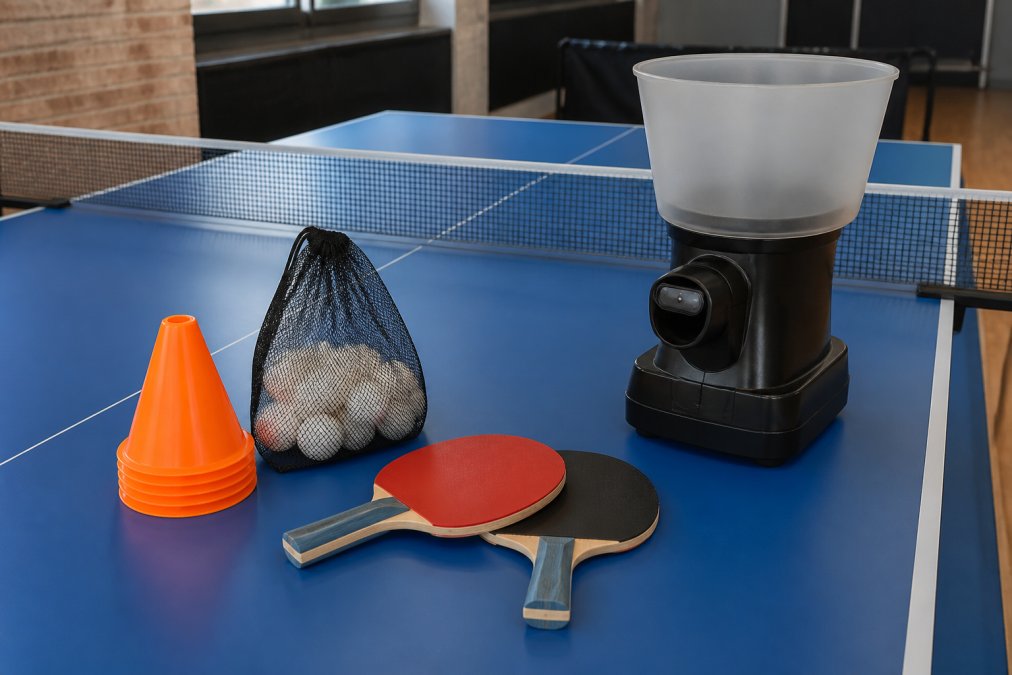
A table tennis robot is the single most impactful investment a solo player can make. Robots deliver consistent ball trajectory, adjustable spin variation, and programmable oscillation that no human partner can replicate for extended periods.
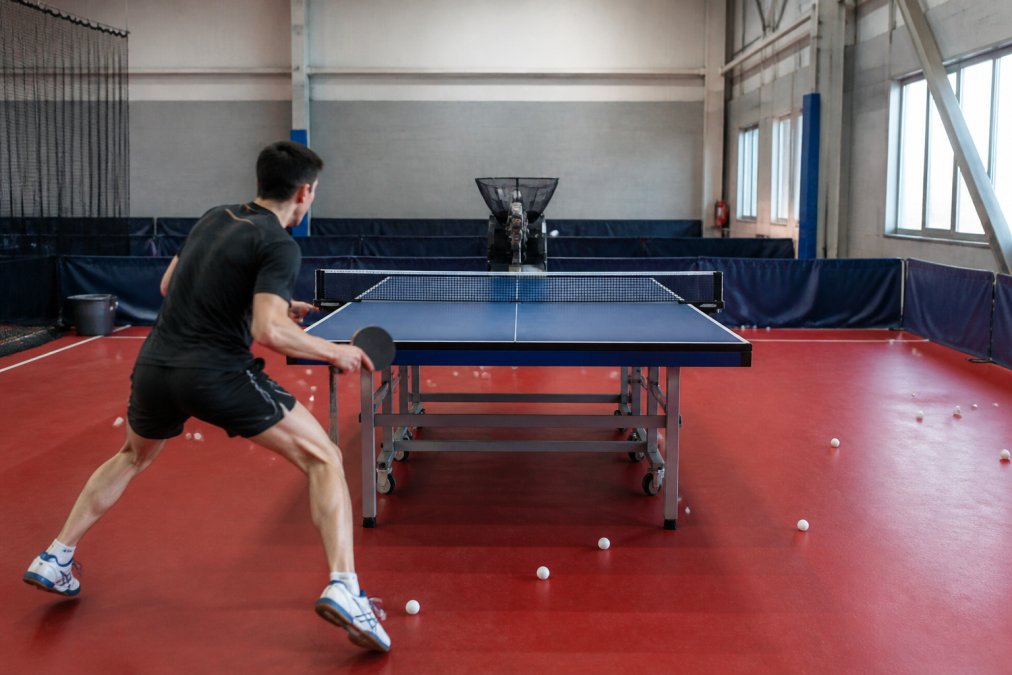
According to USA Table Tennis official training resources, consistent solo practice with structured drills is foundational to developing stroke mechanics at every level. The biggest mistake is buying a robot that plateaus faster than you do.
iPong V300 and PongBot Nova S Pro: Entry to Mid-Range
The JOOLA iPong V300 at $199.95 is the right call for players building basic stroke mechanics without significant financial commitment. It holds over 100 balls, offers side-to-side oscillation, and comes with a wireless remote. Ball frequency runs from 12 to 70 balls per minute.
The iPong Trainer Motion (also $199.95) is the better beginner pick if you want real topspin and backspin capabilities, plus it includes balls and a pick-up net.
The PongBot Nova S Pro at $299.99 is where robot training becomes serious. Spin speed reaches 8,000 RPM with authentic topspin and backspin, six speed levels, six spin levels, and app control with 80+ programmable drills. It clips onto any standard table in seconds and holds 150+ balls. For most players from beginner to intermediate, this is the sweet spot: real spin for proper technique, genuine portability, and enough drill variety to stay challenged for years.
Power Pong Omega and Butterfly Amicus Prime: Advanced and Club-Level
The Power Pong Omega ($1,945) uses a three-wheel head design that independently controls speed and spin, producing heavy topspin and underspin balls that replicate match conditions. It comes with an Android tablet, 60 pre-saved drills, and the ability to create custom sequences with up to eight balls varying spin, speed, trajectory, and placement. The three-year parts and labor warranty with live customer support is a meaningful differentiator.
The Butterfly Amicus Prime ($2,395) is the club and coach standard. Its three-wheel design delivers all spin types without rotating the robot head, ball frequency reaches 120 balls per minute, and the included Android tablet comes loaded with 21 professional drills and instructional videos.
Ping Pong Ball Collection Tools That Save Your Back
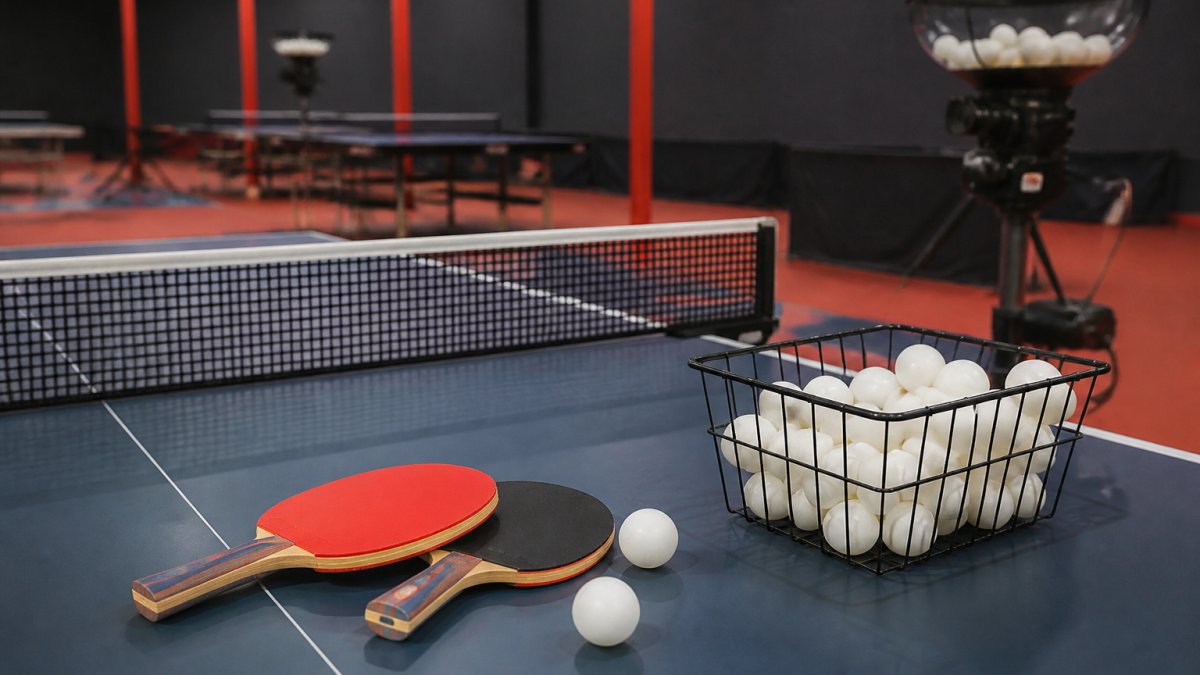
Ball collection is the most underrated part of a training setup. Multi-ball training and robot sessions scatter dozens of balls across the floor in minutes, and bending over repeatedly isn't just tedious, for players with back issues, it's unsustainable.
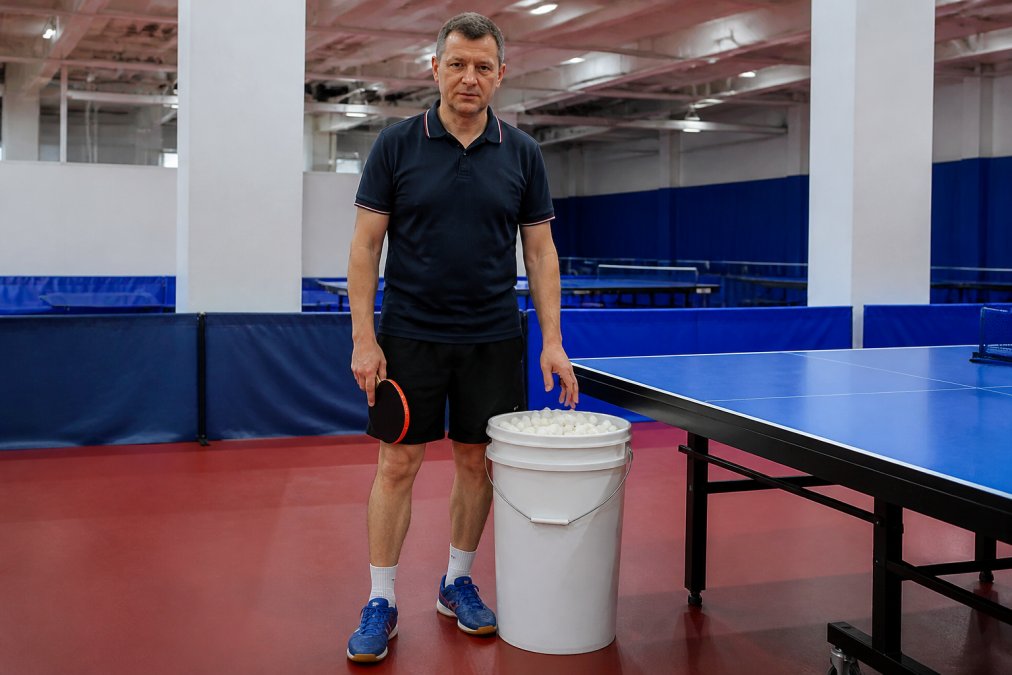
The MyPingPongBuddy Ball Collector is a handmade tool designed to make ball cleanup effortless. Press the collector on top of a ball and it pops into the high-density mesh net without bending. The telescoping arm adjusts to your height, and the unit breaks down in half for easy transport and storage. It's handmade for durability.
Customer John Hardin noted: "I own this and love it. My students like this better than the net scoopers we have used for years, they pick up the ball faster." The tool has been used at clubs and SPIN locations and was issued as a prize at the 2012 Huntsman World Senior Games.
How to Practice Table Tennis Alone and Actually Improve
Solo practice is where most players plateau, not because they lack discipline, but because they lack a structured approach. Knowing how to practice table tennis alone effectively means building sessions around specific skill targets, not just hitting balls until they run out.
Multi-Ball Training Without a Partner
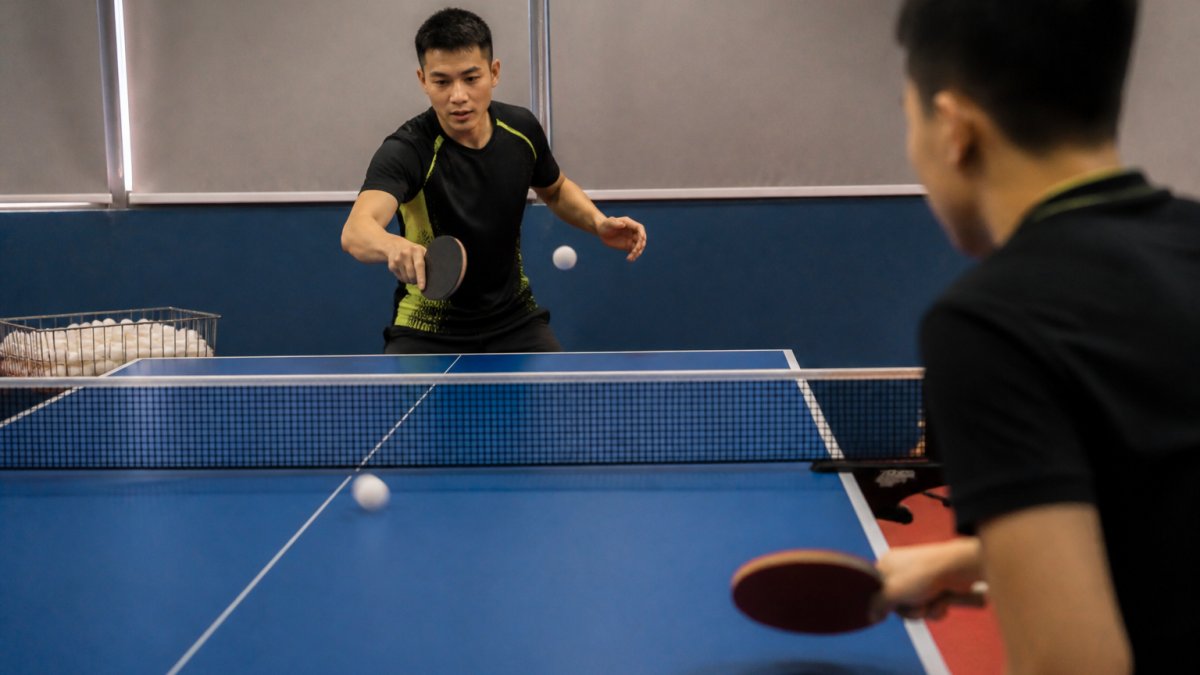
Multi-ball training is the most efficient method for improving specific strokes. A coach or feeder delivers balls rapidly in a fixed pattern while the player focuses on one stroke or footwork pattern. With a robot, you replicate this structure solo.
A practical multi-ball training session structure:
- Warm up with 50-60 balls at low speed, focusing on consistent contact point
- Set the robot to a fixed placement and drill one stroke for 100 balls
- Add oscillation to force lateral movement for the next 100 balls
- Increase spin variation to challenge your read on ball trajectory
- Finish with a random setting to simulate match conditions
- Collect all balls using a telescoping collector, reset, repeat
According to International Table Tennis Federation coaching resources, structured repetition in isolated skill blocks produces faster technique gains than unstructured rallying.
Space-Saving Setups for Home Training
A common obstacle for home players is space. Practical approaches include half-table solo practice by folding one end up as a backboard, compact robot placement like the PongBot Nova S Pro that clips directly onto the table, and retractable net systems for quick conversion. Ball management determines whether you actually practice consistently. If cleanup takes 15 minutes after a 20-minute session, you'll skip sessions.
Table Tennis Serve Practice Drills for Beginners
Table tennis serve practice drills for beginners focus on three fundamentals: contact point, racket angle, and wrist snap. The serve is the only shot in table tennis you control completely, making it the highest-use place to invest practice time.
According to USA Table Tennis coaching certification guidelines, serve variation is one of the primary differentiators between beginner and intermediate players in competitive play.
Five beginner serve drills to build in sequence:
- Flat serve consistency: Serve 20 balls to the same spot on the opposite side. Focus on consistent toss height and contact point before adding spin.
- Backspin introduction: Brush under the ball at contact to generate backspin. Aim for the ball to bounce low and stay short. Practice 20 repetitions.
- Topspin serve basics: Contact the top of the ball with a forward wrist snap. The ball should bounce and kick forward. Alternate with backspin serves to build variation.
- Side-spin practice: Brush the side of the ball to create side-spin that curves after the bounce. This serve catches beginners off guard most often in match play.
- Placement targeting: Place a target on the table and practice landing serves within 30 centimeters of it. Accuracy matters more than spin at the beginner stage.
Essential Accessories: Balls, Rubber Care, and Racket Gear
The gap between a well-maintained racket setup and a neglected one is larger than most players realize. Rubber degrades, blades accumulate oils, and worn grip tape changes your feel on every shot.
Training balls: The Double Fish V40+ 1-star ABS training balls are the standard for multi-ball drills and robot training. Made from seamed ABS polymer, they offer consistent bounce and durability across high-volume sessions. Buying in boxes of 100 is cost-effective for anyone running regular sessions.
Rubber care: Rubber cleaner and a foam applicator are essential if you're training regularly. Clean your rubbers after every session and store them with the protective sheet on.
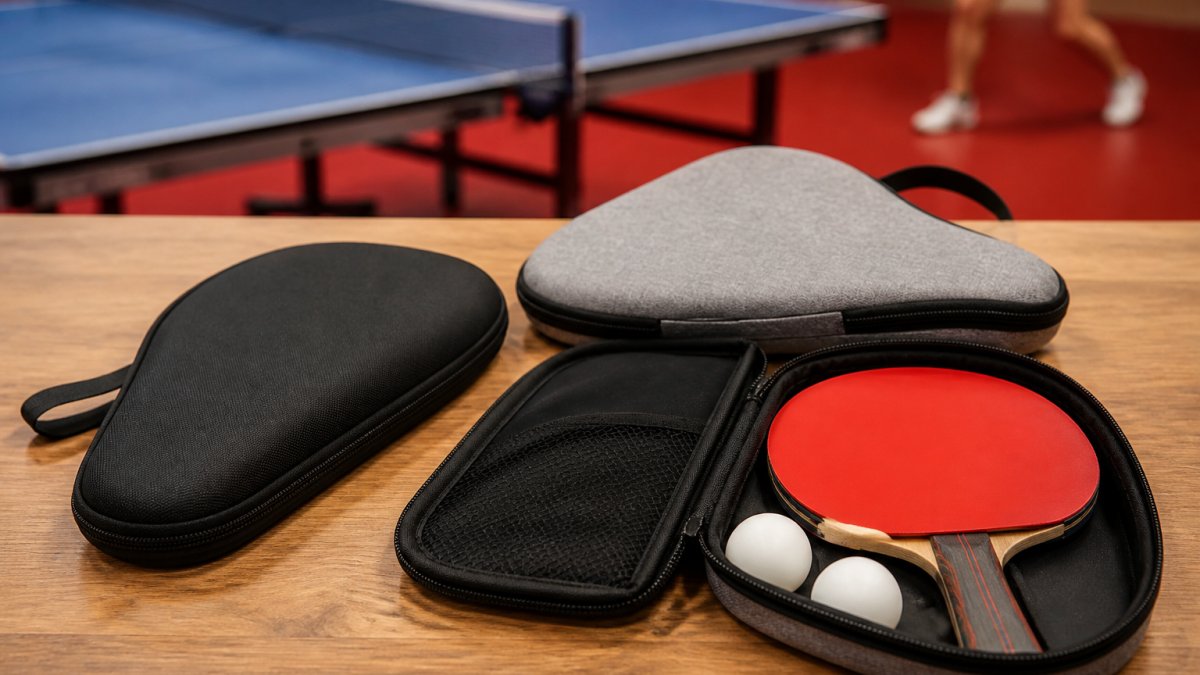
Racket case: A hard-shell racket case protects your blade and rubber from humidity, pressure, and accidental damage.
Edge tape and grip tape: Edge tape protects the blade from chips during play and cleanup. Worn grip tape reduces control and should be replaced when it loses tackiness.
As documented in ITTF equipment regulations and approved products list, rubber quality and maintenance directly affect the spin and speed characteristics that competitive play depends on.
Mental Training and Wearable Tech: The Edges Competitors Miss
Most ping pong training equipment guides stop at hardware. The mental side of table tennis is where many players stall after reaching intermediate level.
Psychological training in table tennis centers on pre-point routines and pressure management. A pre-point routine is a consistent sequence of actions before each serve or receive, such as bouncing the ball twice, taking a breath, and visualizing placement. Research in sport psychology shows that pre-performance routines reduce anxiety and improve consistency under pressure.
Wearable tech is an emerging category for serious players. Wrist-worn sensors can track swing speed, contact angle, and stroke repetition counts during solo practice, identifying inconsistencies you can't feel in real time.
DIY training equipment is worth mentioning for players on a tight budget. A homemade shadow practice setup using a mirror to check stroke form costs nothing and catches posture and contact point errors.
The real difference between players who plateau at intermediate and those who continue improving often comes down to whether they train their attention and decision-making alongside their physical strokes.
Which Ping Pong Training Equipment Should You Buy?
The right answer depends on where you are in your development and what's actually limiting your progress.
| Player Type | Priority Equipment | Why |
|---|---|---|
| Complete beginner | iPong Trainer Motion + ball collector | Learn stroke mechanics, manage cleanup |
| Developing player | PongBot Nova S Pro + training balls | Real spin, drill variety, sustainable investment |
| Intermediate club player | Power Pong Omega + rubber care kit | Match-realistic training, advanced footwork drills |
| Coach or club manager | Butterfly Amicus Prime + MyPingPongBuddy | High-volume sessions, efficient ball management |
| Home player, limited space | PongBot Nova S Pro + retractable net | Portable robot, space-efficient setup |
| Player with back issues | MyPingPongBuddy ball collector | Eliminate bending during multi-ball cleanup |
A common mistake is buying the most advanced robot before developing the footwork and stroke consistency to use it well. Start with the equipment that removes the biggest friction point in your current practice. For most players, that's either a robot that delivers consistent ball trajectory for solo drilling, or a ball collector that makes cleanup fast enough that you actually finish your sessions.
For coaches and clubs running daily sessions with multiple students, the MyPingPongBuddy ball collector pays for itself fastest. The handmade construction and 90-day full refund policy mean there's no real risk in trying it. Visit mypingpongbuddy.com to see current pricing and order.
Building a complete ping pong training setup takes more thought than most players expect. The best equipment is the equipment you actually use consistently, and that means solving the friction points in your routine alongside choosing the right robot or racket gear. MyPingPongBuddy exists specifically to solve one of the most overlooked friction points in table tennis training: ball cleanup. With a handmade design that eliminates bending and breaks down for easy storage, it's the accessory that coaches and players come back to session after session. Buy it now at mypingpongbuddy.com and experience what a simplified practice environment actually feels like.
Frequently Asked Questions
Q: What is the best table tennis trainer machine for most players?
A: For most players, a mid-range robot like the PongBot Nova S Pro ($299.99) hits the sweet spot between price and performance. It delivers real topspin and backspin at up to 8,000 RPM, holds 150+ balls, and connects to an app with over 80 programmable drills. Beginners can start with the JOOLA iPong V300 at around $199.95. Serious competitors or club coaches who need realistic match simulation and high ball frequency should look at the Butterfly Amicus Prime or Power Pong Omega.
Q: How can I improve my table tennis serve at home?
A: Set up a mirror beside the table to check your stance and wrist snap. Focus on three serve types: heavy backspin, topspin, and side-spin. Use a bucket of training balls and repeat each serve 50 times in a session, aiming for consistent ball trajectory and placement. A robot with a serve-detection mode can feed you return balls so you practice the full serve-and-third-ball sequence. Keeping a small notebook to log what worked each session accelerates improvement faster than random repetition.
Q: What are some good table tennis training tools for players without a partner?
A: A training robot is the most effective solo tool, covering stroke mechanics, footwork drills, and spin variation. Pair it with a quality ping pong ball collection tool so cleanup doesn't eat into practice time. A retractable net and a rebounder board can also simulate basic returns for serve practice. For mental training, a metronome app helps build stroke rhythm and reaction time. Bulk training balls (100-ball packs) keep sessions uninterrupted and are essential for any multi-ball training setup.
Q: Will a ball collector really help if I have back pain from playing table tennis?
A: Yes, significantly. Bending over hundreds of times per session to pick up balls is a major source of cumulative lower-back strain for players and coaches. A telescoping ball collector like the MyPingPongBuddy lets you scoop balls upright by pressing the collector head down over each ball, which pops it into the mesh net. Customers with chronic back issues report it makes cleanup noticeably easier. The MyPingPongBuddy also comes with a 90-day full refund policy, so there's no financial risk in trying it.
Q: What ping pong training equipment is best for a tight budget?
A: Start with a 100-ball pack of 1-star ABS training balls and an entry-level robot like the iPong Trainer Motion or JOOLA iPong V300 (both around $199.95). Add a DIY ball-return net made from PVC pipe and mesh fabric to keep sessions continuous without buying a full recycling system. A handmade ball collector handles cleanup without an automated system. This setup covers stroke mechanics, basic spin variation, and footwork drills for well under $400 total.