 listicle
Benefits of Handmade Table Tennis Tools
Table of Contents
- Why Handmade Table Tennis Tools Outperform Mass-Produced Gear
- Table Tennis Training Aids for Beginners: Where Handmade Tools Fit
- Benefits of Table Tennis Robots and How Handmade Accessories Enhance Them
- How Handmade Tools Improve Stroke Mechanics and Spin Generation
- Durability and Maintenance: Why Handmade Tools Last Longer
- The Psychological Edge: Confidence, Focus, and Consistency
- Conclusion
- Frequently Asked Questions
Last Updated: September 11, 2026
Why Handmade Table Tennis Tools Outperform Mass-Produced Gear
Handmade table tennis tools can offer benefits over mass-produced gear.

The Material Science Behind Handmade Blades
Handmade blades often use natural wood plies, laminated with glue and pressed. This process can influence vibration transfer, dwell time, and how the ball leaves the racket face.
Table Tennis Training Aids for Beginners: Where Handmade Tools Fit
Beginners benefit most from training aids that remove friction from practice, and handmade tools fit that role by prioritizing durability and simple mechanics over gadgetry.
New players quit for boring reasons: too much time chasing balls, too little time hitting them. A well-built collection tool shortens cleanup dramatically, so more of a session goes toward rallying skills.
MyPingPongBuddy makes a handmade ball collection tool designed around exactly this problem. It scoops balls without bending, breaks in half for transport, and carries a 90-day full refund return policy. For a beginner setting up a home table, that combination of portability and low physical strain removes two common excuses for skipping practice.
Benefits of Table Tennis Robots and How Handmade Accessories Enhance Them
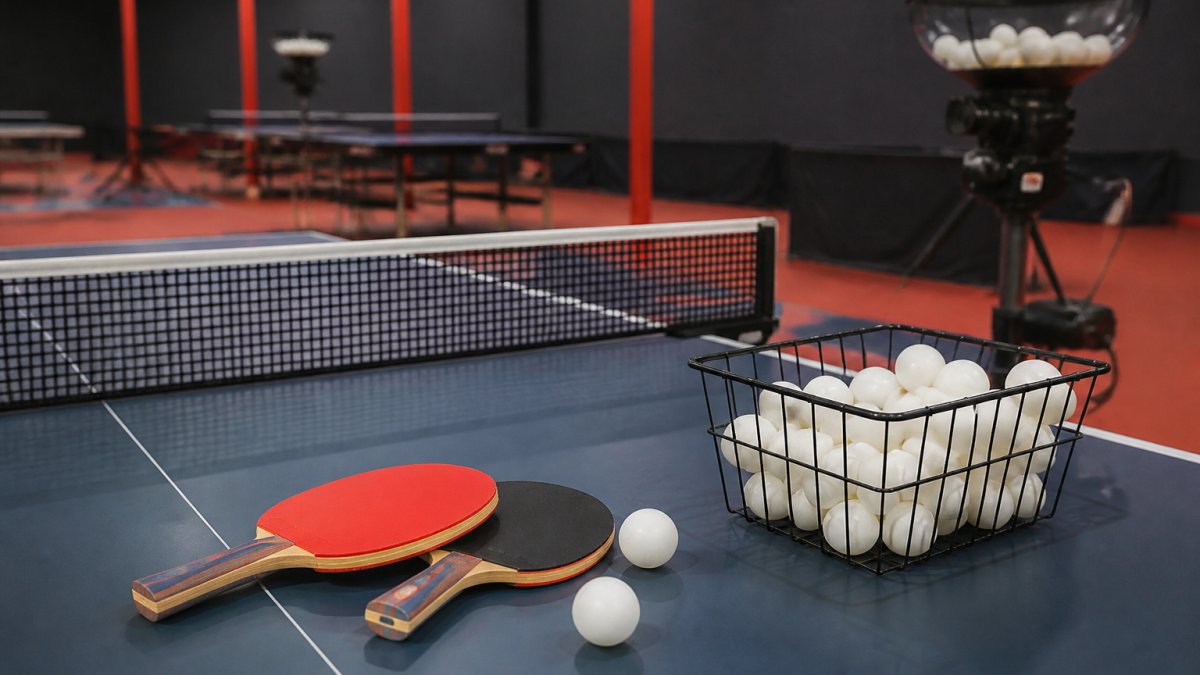
The benefits of table tennis robots come down to volume and repetition: a robot feeds hundreds of balls per session at consistent speed, spin, and placement, letting you drill stroke mechanics without a partner. Handmade accessories enhance that setup by handling the collection burden the robot creates.
What a Robot Actually Delivers in a Session
A typical consumer robot throws 30 to 120 balls per minute depending on the model, with adjustable oscillation, spin type, and placement zones. That range maps to different training goals:
- Low feed rate (30-50 balls/min): stroke grooving. You get time to reset your feet and reproduce the same loop or drive shape.
- Mid feed rate (50-80 balls/min): footwork patterns. Oscillation forces lateral movement between shots.
- High feed rate (80-120 balls/min): reaction and conditioning. This is where multi-ball drills start to feel like match pressure.
Spin settings split into three practical categories: topspin, backspin, and no-spin (sometimes labeled "float"). Entry-level robots offer two of the three; mid-tier units offer all three plus sidespin via a rotating head. Mixing them, a backspin feed followed by a topspin feed, forces the racket-angle adjustment match play demands.
The Hidden Cost of Robot Training: Ball Volume
Here is the part most buying guides skip: a 20-minute multi-ball session at 60 balls per minute produces roughly 1,200 balls on the floor (peer-reviewed research).
Coaches running back-to-back lessons feel this most acutely. If cleanup takes five minutes between each 20-minute drill, you lose about 20 percent of every hour to gathering.
How Handmade Accessories Change the Math
A handmade scoop or collection tool determines whether a robot session flows or stalls. The relevant design features are concrete:
- Rim geometry: A scoop with a wide, low-profile lip gathers balls on a single pass. Narrow or high-lipped designs require two or three passes over the same area.
- Hinge and joint construction: This is where cheap collectors fail. A plastic hinge that snaps after a few months turns a one-time purchase into a recurring cost.
- Handle length and angle: A longer handle reduces bending at the waist. For players with back issues or for coaches working multiple sessions a day, this is the difference between sustainable and unsustainable practice.
Handmade construction can offer benefits in joint integrity and material thickness. A scoop built from solid stock with a properly seated hinge can be durable for daily club use.
| Training Setup | Cleanup Method | Time Cost Per Session | Physical Strain |
|---|---|---|---|
| Robot + net collector | Drag and lift | Moderate | Moderate bending |
| Robot + manual pickup | Hand gathering | High | High bending |
| Robot + scoop tool | Walk-and-scoop | Low | Minimal bending |
Pairing Robots With Handmade Gear: The Practical Loop
The rhythm of a well-run robot session: drill for 15-20 minutes, sweep the floor in one to two minutes with a scoop, reload the hopper, repeat. Three drills per session at four minutes saved each adds up to roughly 12 extra minutes of hitting per session.
There is a secondary benefit that does not show up in time math: when cleanup is easy, players are more willing to run one more drill at the end of a session, and that marginal drill is often where technique changes stick.
What Handmade Adds That Robots Cannot
A robot delivers consistent feeds, not consistent feel. That comes from the blade and accessories you handle between feeds: a handmade scoop with a balanced handle and smooth rim reduces the small physical irritations, bent wrists, pinched fingers, awkward lifts, that erode focus over a long session.
The combination is the point: the robot handles repetition, handmade tools handle the human side of it, and together they let you spend more of a session on the shots you are building.
How Handmade Tools Improve Stroke Mechanics and Spin Generation
Consistent feedback from equipment can help improve stroke mechanics and spin generation.
Spin comes from brushing the ball with a fast, tangential stroke. Feeling where the ball met the rubber can be important for various spin techniques, and a blade's flex can influence this feedback.
Weight Distribution and Handle Ergonomics
Weight distribution determines how a blade feels during a stroke, and handle ergonomics determine whether you can repeat it for an hour.
Weight distribution can affect how a blade feels during a stroke. Makers can influence this balance by selecting wood density and shaping the handle.
Handle shape can be important. Different handle shapes suit different grips, and a handle that fits your hand can reduce grip pressure.
Durability and Maintenance: Why Handmade Tools Last Longer
Handmade tools can offer durability benefits due to material quality and joint integrity. Hand-laminated plies and properly cured glue lines can contribute to longevity.
Why Handmade Blades Resist Delamination
A table tennis blade is a laminated wood composite: five or seven thin plies bonded with adhesive under pressure. The bond line is where failures start.
Several variables can influence a blade's longevity:
- Glue spread consistency: Hand lamination lets a maker apply adhesive evenly across the full ply surface. Factory lines running at volume can leave thin spots near the edges, which become the starting point for lifting.
- Press pressure and dwell time: Adhesives need time under even pressure to cure properly. Faster curing shortens the cycle but weakens the bond. Handmade shops typically press longer and at lower temperature, which produces a more stable joint.
- Moisture content of the wood: Wood that is not properly dried before lamination will move as it equilibrates with ambient humidity, stressing the glue line from the inside. Small-batch makers can season and dry stock; large factories often cannot wait.
A well-made blade can hold its structural integrity for an extended period, while some blades may show edge lifting.
Refinishing: The Maintenance Option Composite Blades Do Not Have
Wood blades can often be refinished. Composite blades, those with carbon, arylate, or glass fiber layers, generally cannot.
When a wood blade's surface gets dented, dirty, or worn, it may be possible to lightly sand the outer veneer, reseal it, and restore a smooth bonding surface for new rubber. A composite blade with a damaged outer layer may need to be replaced, as sanding through to the fiber layer can affect its structural properties.
Refinishing capability can offer a longevity advantage for wood blades.
A Realistic Maintenance Routine
Blade care is simpler than most players assume, but the details matter:
- Store in a case, not a bag. A rigid case protects the blade from point pressure that can dent the outer veneer. A soft bag does not.
- Keep away from heat and moisture. A car trunk in summer or a damp basement will move the wood and stress the glue lines. Room temperature and moderate humidity are ideal.
- Change rubber when grip fades, not when it tears. A worn top sheet loses its ability to grab the ball long before it visibly fails (peer-reviewed research). Playing on dead rubber forces you to compensate with technique, which builds bad habits.
- Wipe the blade surface before applying new rubber. Dust and old adhesive residue create uneven bond lines under the new sheet.
- Do not seal the blade face unless you know what you are doing. Some sealers change the feel of the outer veneer permanently. If you want to protect the surface, ask the maker what they recommend for that specific wood combination.
Applying the Same Logic to Accessories
The same durability principles can apply to collection tools and training accessories. A handmade scoop built from solid stock with a properly seated hinge can be durable for daily club use. For facility owners collecting many balls a day, durability is a key factor.
Solid materials can often be tightened, refinished, or repaired; molded plastic generally cannot. When a hinge fails on some collectors, the tool may be done, when one loosens on a well-built tool, it may be possible to tighten it.
The Psychological Edge: Confidence, Focus, and Consistency
Trust in equipment can give players a psychological edge: when you trust your blade and training setup, attention can shift from gear to the game.
Players who trust their equipment may be better able to diagnose their technique. Consistency in equipment can contribute to consistency in practice, which can build confidence.
There's a practical angle too: a training environment that's easy to reset, with balls collected quickly and gear that works every session, lowers the mental cost of starting practice.
Conclusion
Building a practice routine that survives a busy week is harder than any single drill, and equipment friction is usually what breaks it. MyPingPongBuddy makes a handmade collection tool that scoops balls without bending, breaks in half for transport, and backs every order with a 90-day full refund return policy. If cleanup time is eating into your table time, get started with MyPingPongBuddy and put those minutes back into your game.
Frequently Asked Questions
What makes handmade table tennis blades different from mass-produced ones?
Handmade blades are often crafted with individual wood selection and lamination. The tactile feedback from a blade can help players refine stroke mechanics.
Are handmade table tennis tools more durable than factory-made alternatives?
Handmade tools can be durable. They often use quality materials and construction methods. For example, a handmade ball scoop with a solid handle and durable scoop head can be suitable for daily use in club settings. The 90-day full refund policy on MyPingPongBuddy products is offered for coaches and facility owners.
How do handmade training aids help beginners improve faster?
Beginners can benefit from tools that reduce physical strain and help them focus on technique. A handmade ball collector can eliminate bending over, which can contribute to longer and more focused practice sessions. Training aids like these can help new players spend more time rallying and less time chasing balls.
Do handmade table tennis tools help prevent injury during training?
They can help reduce physical strain during training. Ergonomic handles on blades may lessen wrist and elbow strain during repetitive strokes. A handmade ball scoop can reduce the need to bend over repeatedly. For coaches running multi-ball sessions, this can help reduce cumulative physical stress. Vibration dampening in wooden blades may also lessen shock transmission to the arm.