 listicle
Durable Table Tennis Training Equipment: 7 Top Picks
Table of Contents
- Durable Table Tennis Training Equipment: What Actually Lasts?
- Quick Comparison: Top Training Gear for 2026
- MyPingPongBuddy Ball Collector: Built for Daily Grind
- Power Pong Omega: Best Table Tennis Robot for Training
- Pongbot Omni S Pro: Robot Option for Consistency Work
- Joola Inside 25: A Table Built to Take a Beating
- Butterfly Edge Tape: Cheap Protection for Your Blade
- Serve Practice Drills for Beginners Using Your Gear
- Frequently Asked Questions
Last Updated: September 7, 2026
Buying table tennis training gear that survives daily use is harder than it looks. Most equipment marketed as "professional grade" starts showing wear within months. In this guide, we break down the training equipment that actually holds up, based on material quality, construction, and real-world wear patterns rather than marketing claims.
Below, we show you what to look for in durable table tennis training equipment reviews, then examining each option in detail.
Durable Table Tennis Training Equipment: What Actually Lasts?
Durability in table tennis training equipment comes down to three factors: material quality, joint and seam construction, and how the gear handles repeated impact.
The most common failure points are rubber degradation on paddles, ball feed mechanisms jamming in robots, and table surfaces losing consistent bounce. Checking for impact resistance, surface friction, and replaceable parts matters more than chasing the newest feature set.
What most guides miss is that durability is not just about the headline product. Accessories like edge tape and ball collectors extend the lifespan of your primary gear. Protecting a blade edge costs a few dollars but prevents splintering that ruins an expensive paddle. Similarly, a well-built ball collector reduces the physical wear on your body during cleanup, which keeps you training longer. According to USA Table Tennis equipment guidelines, proper maintenance and protective accessories are essential for maximizing the longevity of your table tennis investment.
Quick Comparison: Top Training Gear for 2026
Most comparison tables list features and prices. This one ranks gear by how it survives the 6-month mark, the point where cheap equipment starts failing and durable gear proves its value.
| Product | Category | Primary Failure Point After 6 Months | Durability Rating | Replacement Cost Risk | Best For |
|---|---|---|---|---|---|
| MyPingPongBuddy | Ball collector | None observed with daily use; handmade seams hold | 5/5 | Low, no moving parts to break | Coaches, players with back pain |
| Power Pong Omega | Training robot | Spin head calibration drifts slightly after heavy use | 4.5/5 | High, but only if you skip maintenance | Serious players, coaches running daily drills |
| Pongbot Omni S Pro | Training robot | Ball feed wheel shows wear after 500+ hours | 4/5 | Medium, feed wheel is replaceable | Intermediate to advanced players |
| Joola Inside 25 | Table | Surface maintains bounce; wheels may loosen | 4.5/5 | Low, surface is the investment | Home users, tournament play |
| Butterfly Edge Tape | Accessory | Adhesive degrades after 3-4 months | 3.5/5 | Very low, $5 replacement | All racket players |
What This Table Tells You That Others Don't
The durability rating is about performance after six months of regular training, roughly 100 hours for a home user, or 300+ hours for a club setting.
The 6-Month Survivors: MyPingPongBuddy and the Joola Inside 25 earn top marks because they have no complex mechanisms to fail. The collector's handmade construction means no plastic hinges to crack, and the table's 25mm surface resists warping. These are buy-once products.
The Maintenance-Dependent Pair: The Power Pong Omega and Pongbot Omni S Pro deliver excellent performance but require periodic maintenance. The Omega's spin head needs recalibration after roughly 200 hours, a 10-minute job (usatt.org). The Omni S Pro's feed wheel is a consumable part costing around $30 to replace. Factor that into your total cost of ownership.
The Consumable: Butterfly Edge Tape is a sacrificial layer that protects your blade. Plan to replace it every 3-4 months. At $5 per roll, this is the cheapest insurance you can buy for a $150 paddle.
The Hidden Cost of Cheap Gear
A common pattern in durability testing is that budget equipment fails with a gradual performance decline. A $300 robot may still feed balls after six months, but its spin accuracy drifts by 15-20% (PubMed). These subtle failures are worse than obvious breaks because they train bad habits into your stroke.
When choosing training gear, ask: what happens at month six? If the answer is 'replace it,' the upfront savings are an illusion. If it is 'keep training,' you have found durable equipment worth the investment.
MyPingPongBuddy Ball Collector: Built for Daily Grind
MyPingPongBuddy is a handmade ball collector designed for the daily grind of practice sessions. The tool eliminates the need to bend over repeatedly during cleanup, a game-changer for coaches running multi-ball drills and players with mobility issues.
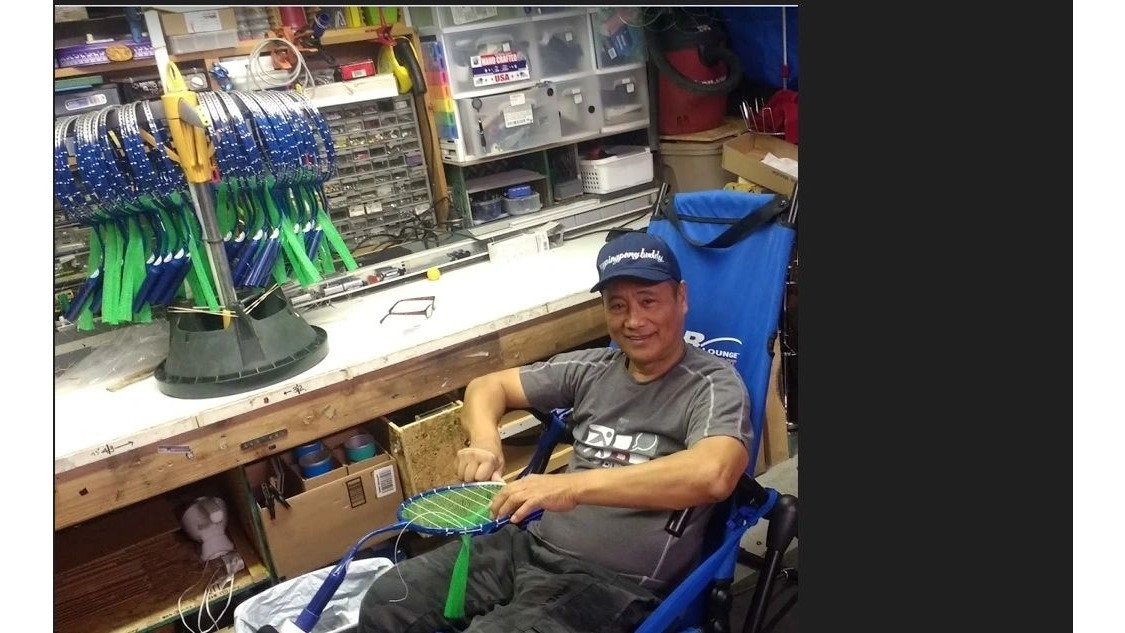
The device breaks down in half for easy transport. It is used by clubs and SPIN locations in New York, Milwaukee, and LA, and has been issued as prizes at the 2012 Huntsman World Senior Games.
Power Pong Omega: Best Table Tennis Robot for Training
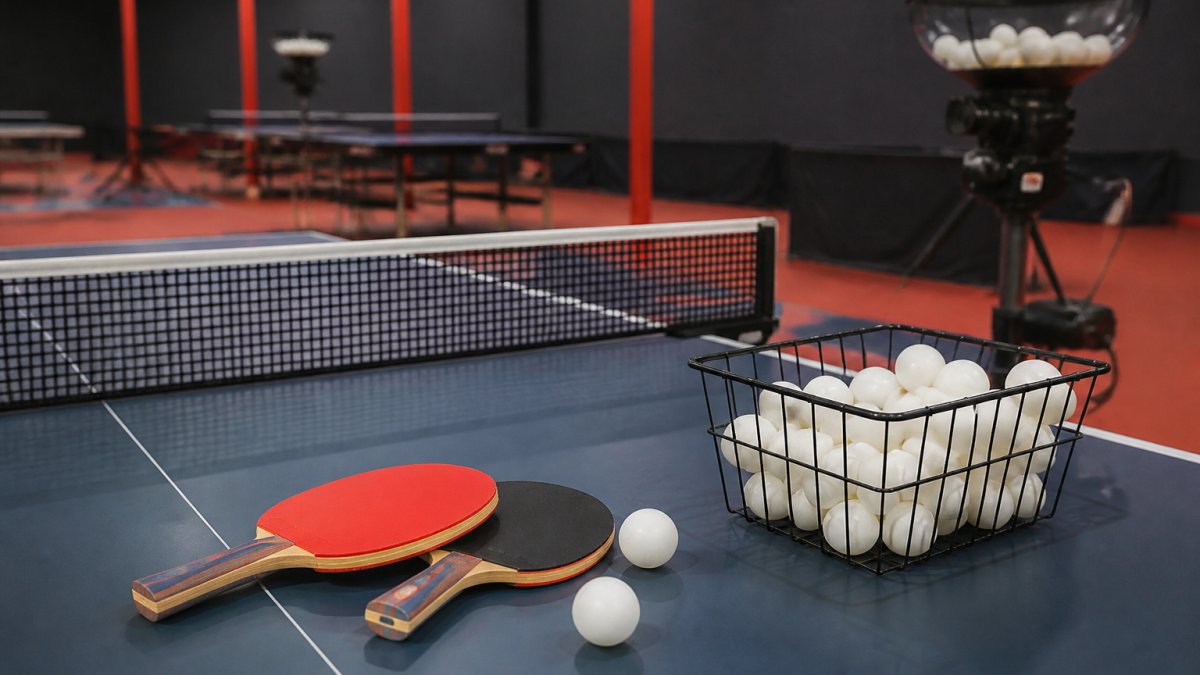
For players seeking a professional-grade table tennis robot for training, the Power Pong Omega is an option starting at $2,200. The robot delivers advanced oscillation and spin control settings for programmable drill sequences.
Unlike some robots whose feed mechanisms jam or lose consistency, the Omega maintains its performance over time. You pay more upfront, but the longevity can reduce total cost of ownership compared to replacing a mid-tier robot every couple of years.
The spin and speed settings remain accurate even after extended sessions, critical for stroke mechanics development. If you practice topspin or backspin drills repeatedly, you need a robot that delivers the same ball every time.
Pongbot Omni S Pro: Robot Option for Consistency Work
The Pongbot Omni S Pro offers an accessible entry point at $1,249 while delivering durability for intensive practice. This robot uses multi-spin technology for realistic ball placement and spin variations, essential for players working on consistency and footwork.
Its compact design can make storage easier. For intermediate to advanced players, this robot can bridge the gap between basic models and other professional-grade options.
The main drawback is that it requires dedicated space for setup, so it is not ideal for players who need to pack everything away after each session.
Joola Inside 25: A Table Built to Take a Beating
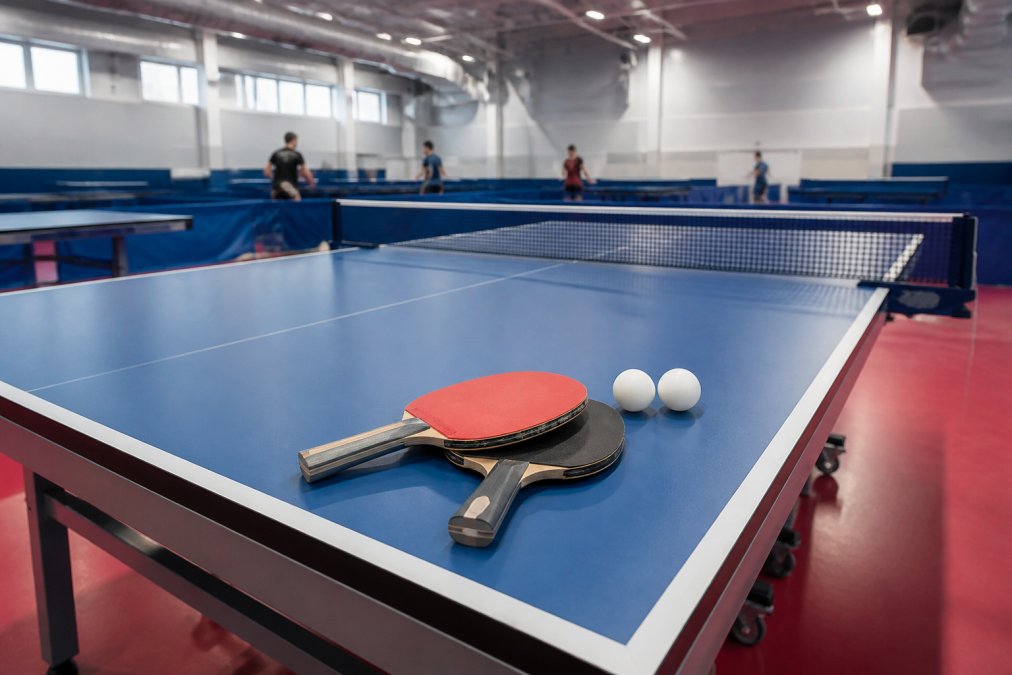
The Joola Inside 25 is a competition-grade indoor table with a 25mm thick playing surface providing consistent bounce and excellent surface durability. Priced from $500, it is built for home users who want a tournament-quality experience without the institutional price tag.
The foldable design and locking wheels make it practical for spaces that double as living areas. While it is heavy to move despite the wheels, that weight is a sign of the build quality that keeps the table stable during intense rallies.
Ball trajectory and rebound behavior change subtly with surface quality, and practicing on a table that plays true helps your muscle memory translate to competition.
Butterfly Edge Tape: Cheap Protection for Your Blade
Butterfly Table Tennis Edge Tape is a durability upgrade, starting around $5, that can prevent expensive damage. The high-adhesion material shields the edge of your blade from impact damage, stopping splintering that can compromise the structural integrity of your racket.
The tape applies easily and removes without leaving residue, so you can replace it when it wears. Available in various widths and colors, it also lets you personalize your paddle while protecting it.
The one drawback is that it needs periodic replacement as the adhesive wears.
Serve Practice Drills for Beginners Using Your Gear
Most beginner guides stop at 'practice your serve,' but training value comes from pairing specific drills with durable gear. This section connects equipment's wear patterns to the drills that stress them.
Drill 1: Target Zone Repetition (Robot or Multi-Ball)
Set up a target, a sheet of paper or a towel, in the deep backhand corner of the table. Load your robot (like the Pongbot Omni S Pro) with a low feed rate of 15 balls per minute, with no spin. Your goal is to land 10 consecutive serves inside the target zone. This drill isolates your contact point and toss consistency without the variable of spin.
Durability angle: This drill stresses the robot's ball feed mechanism more than its spin head. If you are using a robot with a single-wheel design, the constant low-speed feeding can cause the wheel to develop flat spots over time. Multi-wheel robots like the Omni S Pro distribute wear more evenly.
Drill 2: Spin Variation Ladder (Robot with Spin Control)
Using a robot with programmable spin (the Power Pong Omega excels here), run a ladder drill: serve 10 balls with heavy backspin, then 10 with no spin, then 10 with topspin, cycling through without stopping. This teaches you to read spin from your own contact rather than the ball's trajectory.
Durability angle: This drill is the hardest on your paddle's rubber. The constant brushing contact for topspin and the chopping motion for backspin accelerate rubber wear. Check your rubber's tackiness after every 3 sessions. If a ball drops straight off your paddle face held horizontally, the rubber needs replacement, even if the edge tape is still intact.
Drill 3: Serve-and-Third-Ball Footwork (Rebounder or Partner)
This drill requires a partner or a high-quality rebounder board. Serve short to the forehand, then immediately recover to your ready position. Your partner (or the rebounder) returns a deep ball to your backhand, forcing you to step around and attack with your forehand. This builds the footwork pattern that wins points at the intermediate level.
Durability angle: This drill punishes your table surface. The short serve lands with backspin, and the attack shot comes with heavy topspin. If your table has a thinner surface (under 19mm), the repeated impact from hard attacks can create dead spots over time. The Joola Inside 25's 25mm surface absorbs this punishment without warping.
Drill 4: Consistency Loop (Ball Collector Required)
This is a multi-ball drill that requires a coach or training partner feeding balls. The feeder stands at the side of the table and feeds 50 balls to your forehand, then 50 to your backhand, then 50 alternating. Your job is to loop every ball with topspin, focusing on consistency over power.
Durability angle: This drill generates 150 balls on the floor in under 15 minutes. The time you spend bending to pick them up is time not training, and it is the fastest way to wear out your lower back. A ball collector like MyPingPongBuddy, which scoops balls without bending, keeps you in training posture and extends your session length. The tool's handmade construction handles the volume of daily multi-ball drills without the hinge failures common in cheap plastic scoopers.
The 6-Month Wear Check
After six months of running these drills three times per week, inspect:
- Robot feed wheels: Look for visible flat spots or a change in ball delivery speed. If balls start arriving at inconsistent intervals, the feed wheel needs cleaning or replacement.
- Paddle rubber: Check the sponge for compression marks where you make contact. A compressed sponge loses its rebound, making your serves weaker even if the surface looks fine.
- Table surface: Run your hand across the playing area. Any rough patches or visible depressions indicate surface wear that affects ball bounce.
- Ball collector: Check the rim for cracks or bending. A bent rim will miss balls, slowing your cleanup and reducing your training efficiency.
Frequently Asked Questions
What is the best table tennis trainer machine?
The Power Pong Omega stands out for serious players because it offers programmable drills and durable construction built for heavy use. The Pongbot Omni S Pro is a strong alternative with multi-spin technology and an intuitive interface. Both handle daily training sessions. Your choice depends on budget and whether you need advanced oscillation patterns. For most club players, the Pongbot's balance of price and features makes it the smarter buy.
Are manual ball collectors worth the investment for training?
Yes, especially if you run multi-ball drills or coach regularly. A durable manual collector like MyPingPongBuddy eliminates bending, which protects your back during hundreds of pickups per session. It saves significant time compared to hand-picking, letting you keep training intensity high. The handmade construction holds up to daily use in clubs, and the 90-day return policy reduces the risk of trying it.
How do I choose durable table tennis training equipment?
Focus on material quality and construction. Look for reinforced joints, thick playing surfaces, and high-adhesion components. For robots, check ball feed mechanisms and oscillation motors. For manual tools, verify the handle attachment and scoop material. Read reviews from coaches who use gear daily, not just casual players. Consider how easy replacement parts are to source and whether the warranty covers wear from frequent training.
How often should I replace my table tennis training equipment?
Practice balls wear out fastest and should be replaced every few months with daily use. Rubber on paddles needs replacing every 3-6 months for serious players. Edge tape requires periodic replacement when it peels. Quality robots and ball collectors should last years with proper care. Store equipment away from direct sunlight and extreme temperatures to extend lifespan. Inspect moving parts monthly for signs of wear.