 blog
blog
7 Ways to Make Table Tennis Practice More Fun
Table of Contents
- Why Table Tennis Practice Doesn't Have to Feel Like a Chore
- 1. Play Competitive Games That Build Real Skills
- 3. Practice Table Tennis Alone With Purpose
- 4. Invest in Table Tennis Training Aids That Reduce Frustration
- 5. Create a Practice Session Plan That Keeps You Engaged
- 6. Adapt Practice for Your Age, Skill Level, and Group Size
- 7. Make Cleanup Easy So You Stay Focused on Improvement
- Frequently Asked Questions
Last Updated: October 13, 2026
Why Table Tennis Practice Doesn't Have to Feel Like a Chore
Table tennis training builds skill, but repetition can drain your motivation fast. The good news: practice doesn't have to feel like work.
The fix isn't complicated. It's about mixing up your drills, adding competition, and removing the friction that kills focus.
Here are 7 ways to make table tennis practice more fun while building real skills at the same time.
1. Play Competitive Games That Build Real Skills
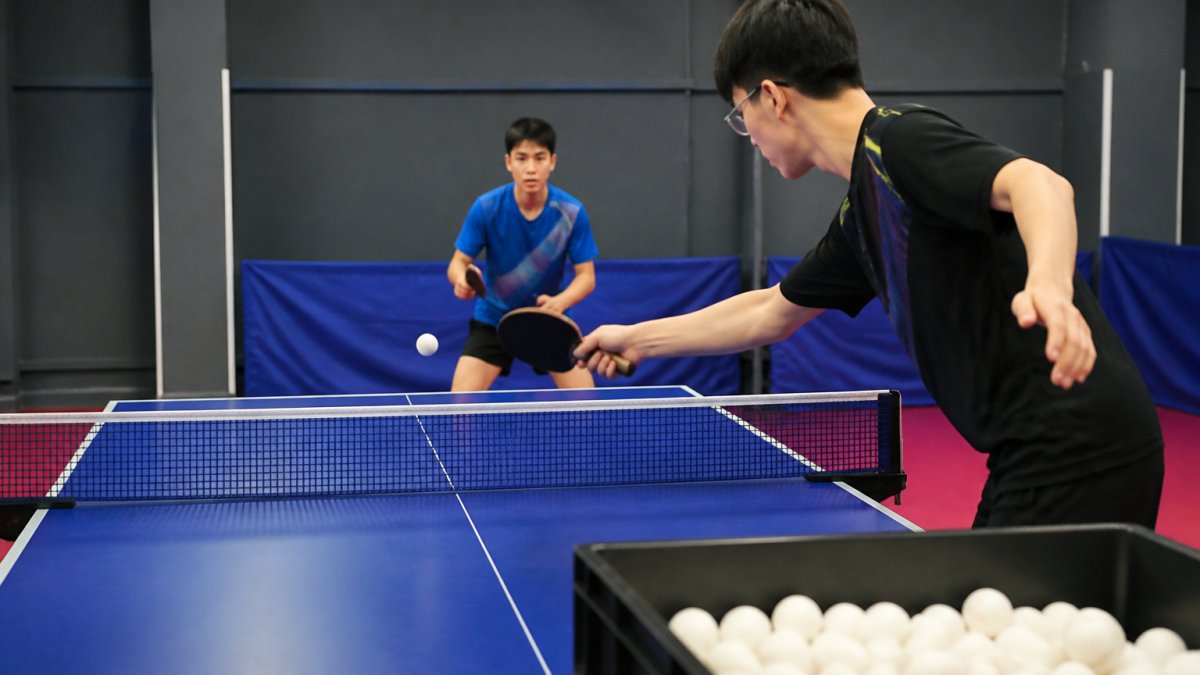
Competitive games beat solo drills for one simple reason: they force you to think. You can't zone out. You have to read your opponent, adjust, and execute under pressure.
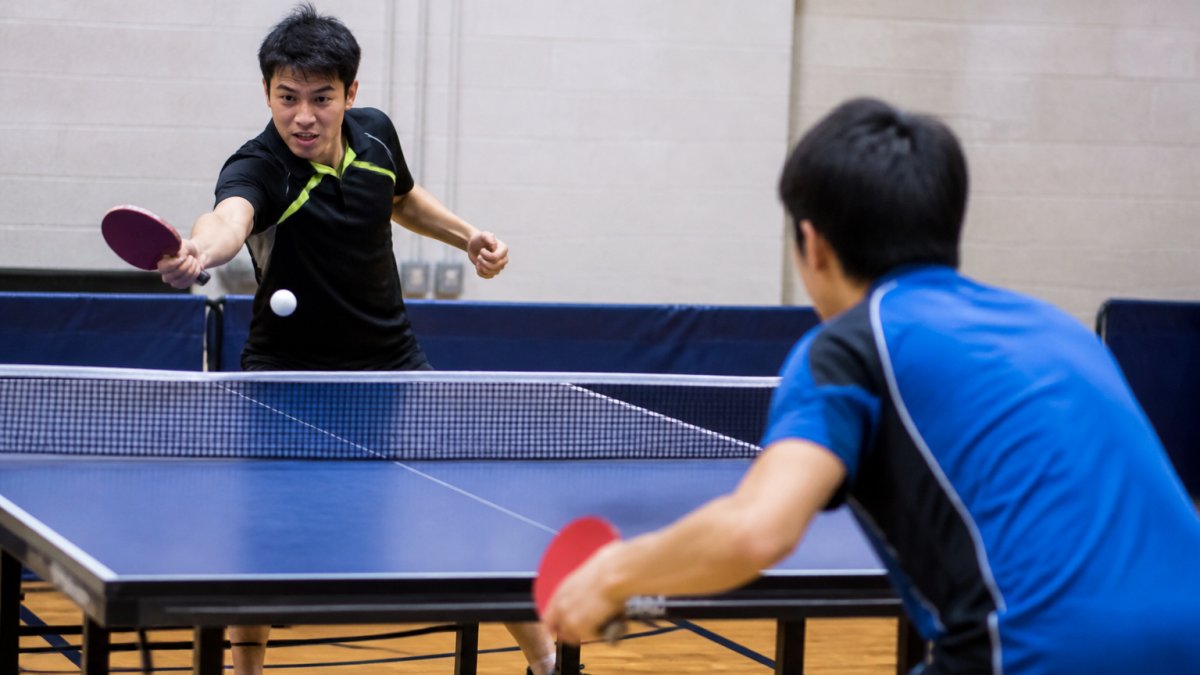
The trick is choosing games that target specific weaknesses without feeling like punishment.
Score-Based Challenges
Create mini-matches with custom scoring rules. Instead of playing to 11 points, play to 5 but require winning by 2. This keeps rallies short and intense. You stay engaged because every point matters more.
Try these scoring variations:
- First to 5 by 2: Tight, fast games that reward consistency
- Serve-only challenge: Score points only on your serve (or your opponent's serve). This forces serve improvement under pressure
- Placement zones: Divide the table into four quadrants. Score extra points for shots landing in specific zones
- Alternating serves: Switch serves every two points instead of every five. This adds unpredictability and tests adaptability
Each format teaches something different. Rotation keeps practice fresh.
Modified Rules for Different Skill Levels
Beginners and advanced players can practice together if you adjust the rules. A beginner might get two serves per point instead of one.
(https://blog.mypingpongbuddy.com/table-tennis-training-drills-speed-agility) combine repetition with small challenges that make you think.Reaction Ball Drills
Reaction balls force you to stay sharp. They bounce unpredictably, so you can't anticipate where the ball lands. This trains hand-eye coordination and reflexes fast.
Set up a drill:
- Drop a reaction ball from waist height onto the table
- Return it before the second bounce
- Repeat 10 times, then rest
- Increase difficulty by dropping from higher or moving further from the table
This drill takes three minutes but builds reflexes that carry into matches. The unpredictability keeps your brain engaged.
Placement and Consistency Games
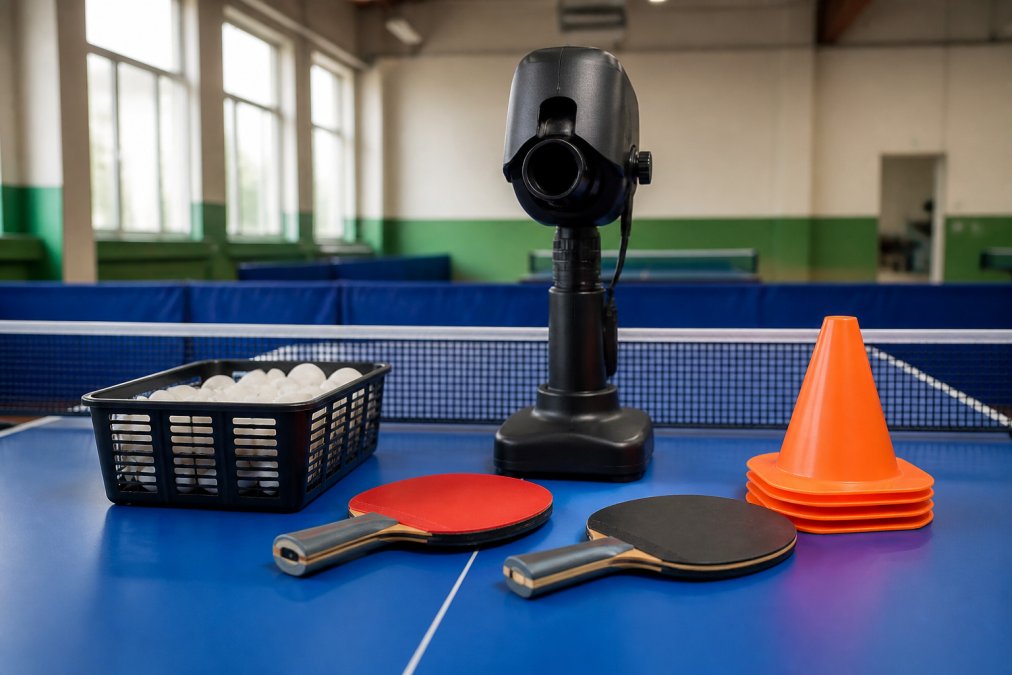
Play a game where you score points only for shots landing in a specific zone. Place cones or tape on the floor to mark target areas.
Example: Score one point for a shot landing in the deep corner, two points for the sideline, three points for the short table. First to 20 points wins.
This format mixes skill-building with competition. You're not just drilling placement. You're competing for it.
3. Practice Table Tennis Alone With Purpose
Solo practice often feels hollow because there's no opponent to challenge you. But solo sessions build consistency and footwork faster than group play when structured right.
Solo Drill Routines
Create a 15-minute solo routine that rotates through four drills:
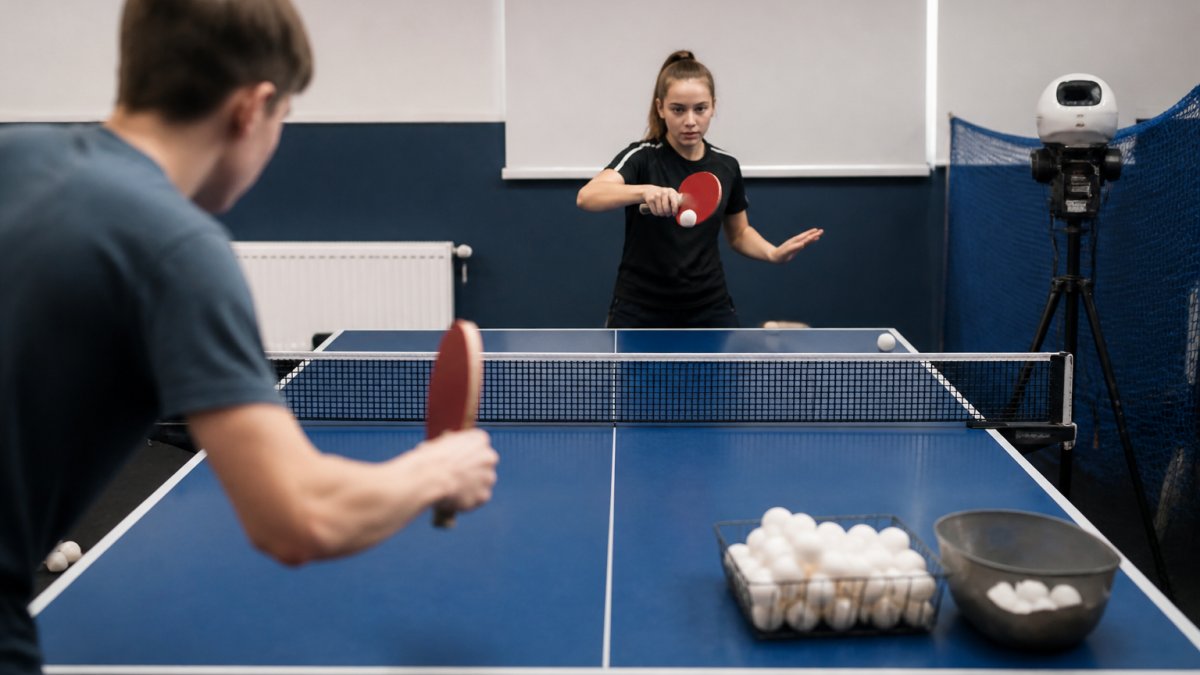
- Minute 1-3: Forehand loops against a wall or ball machine
- Minute 4-6: Backhand blocks and counter-attacks
- Minute 7-9: Footwork patterns (side-to-side, forward-back)
- Minute 10-15: Random placement targets
Set a timer. Move to the next drill when time's up. This structure keeps you focused and ensures balanced skill development.
Track how many successful shots you hit in each drill. Try to beat yesterday's number. This small competition against yourself builds motivation.
Wall Practice and Footwork Work
A wall and a paddle are enough for solo table tennis practice alone. Rally against the wall for two minutes, focusing on footwork. Move your feet constantly.
Wall practice teaches rhythm and timing. The ball returns at consistent speed, so you can focus on movement patterns instead of reacting to variation.
Add footwork drills:
- Side-to-side shuffles while hitting forehands
- Forward-back steps with alternating forehand and backhand
- Diagonal movements to simulate court coverage
Footwork work alone won't make you a great player, but it's the foundation everything else builds on.
4. Invest in Table Tennis Training Aids That Reduce Frustration
Frustration kills motivation faster than anything else. When cleanup takes forever, you lose focus. When you're chasing balls constantly, you waste practice time.
The right training aids solve these problems.
Ball Collection Tools That Save Time
Collecting hundreds of balls by hand wastes 20-30 minutes per session. A ball collection tool cuts that to five minutes.
MyPingPongBuddy was designed specifically for this. It scoops up balls with ease, so you're not bending over repeatedly.
The tool breaks down in half for transport, so it fits in any storage space.
Customers consistently report that cleanup actually becomes easy, not a chore. Removing friction changes how often you practice.
Portable Equipment for Flexible Training
A portable net, portable paddle holder, or lightweight table extension lets you practice anywhere. Your space doesn't have to be perfect. A small corner with a wall works. A driveway with a net works.
Flexibility removes excuses. If you can set up in five minutes, you're more likely to practice on a random Tuesday. Convenience drives consistency.
5. Create a Practice Session Plan That Keeps You Engaged
Unstructured practice feels aimless. Structure feels like work. The sweet spot is a plan with clear goals but room for adaptation.
Structure Your 60-Minute Session
Follow this framework for a focused session:
- Minute 1-5: Warm-up (easy rallies, light forehands and backhands)
- Minute 6-20: Skill focus (one drill targeting your weakness)
- Minute 21-35: Competitive game (play to 11 or use a modified format)
- Minute 36-50: Secondary skill drill (different weakness, different drill)
- Minute 51-60: Cool-down (easy rallies, low pressure)
This structure ensures balanced development. You're not just drilling. You're competing. You're not just playing games. You're targeting specific weaknesses.
The framework works for solo sessions too. Replace competitive games with solo drills or wall practice.
Track Progress and Set Mini-Goals
Set a specific mini-goal for each session. Examples:
- Hit 15 consecutive forehands cross-court
- Win three games in a row against a specific opponent
- Complete the footwork drill without breaking rhythm
- Land eight placements in the target zone
Tracking progress toward these goals keeps practice engaging. You're not just hitting balls. You're working toward something measurable.
6. Adapt Practice for Your Age, Skill Level, and Group Size
One-size-fits-all practice doesn't work. A beginner needs different structure than an advanced player. A solo player needs different drills than a group. Adapting practice to your situation makes it sustainable.
Solo Players and Beginners
Beginners should focus on consistency over power. Keep rallies going. Build confidence. Solo drills work best:
- Rally against a wall for five minutes
- Practice serves (50 serves, focus on depth and spin)
- Footwork drills (side-to-side movement)
- One competitive game against a ball machine or wall
This structure builds fundamentals without overwhelming you. Progress feels visible. Confidence grows.
Club Meetings and Multi-Player Sessions
Groups benefit from rotation formats. Divide players into pairs. Each pair plays one game, then rotates to a new opponent. This keeps everyone engaged and ensures mixed skill-level play.
Use a ladder format for clubs. Players are ranked. Each week, you can challenge someone one rank above. Win, and you move up. This creates natural competition and motivation.
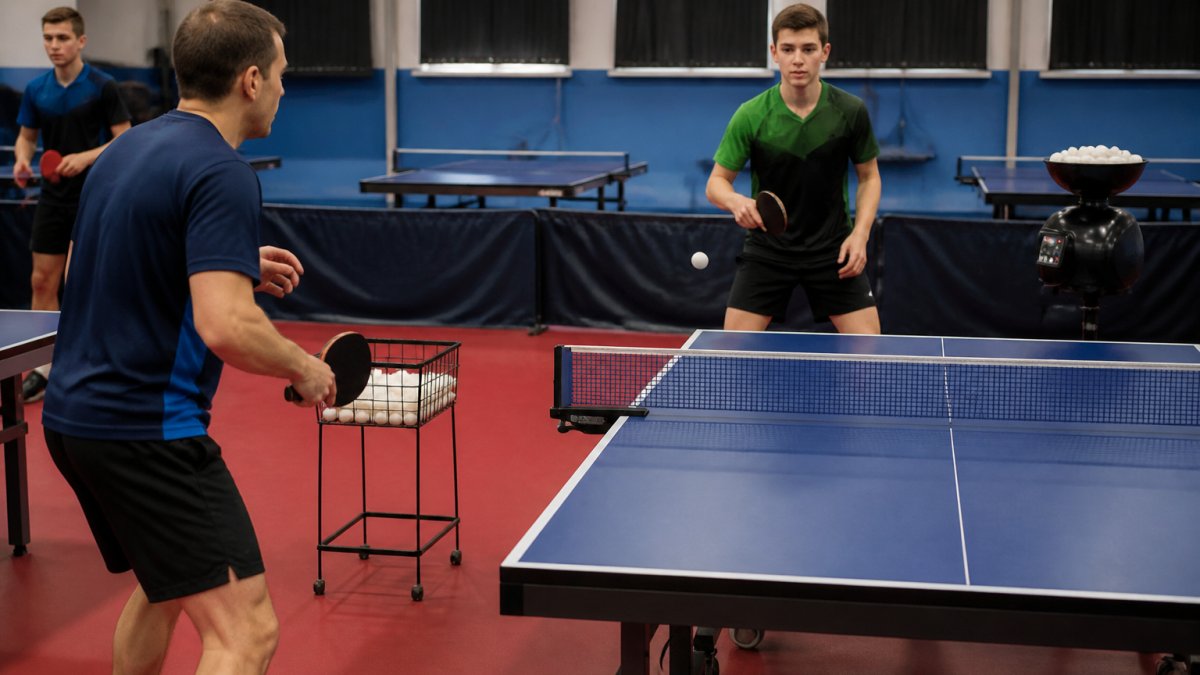
For multi-ball training with coaches, structure drills by difficulty:
- Round 1: Baseline rallies (easy)
- Round 2: Attack shots (medium)
- Round 3: Pressure situations (hard)
Progression keeps players engaged and builds skills systematically.
Players With Mobility Concerns
Mobility issues don't mean you can't play. Adapt the court and rules. Play on a smaller table. Use a shorter rally format (first to 5). Focus on placement instead of power.
A tool like MyPingPongBuddy becomes essential here. You eliminate bending over, which means you can practice longer without pain. Cleanup takes minutes instead of half an hour. That's the difference between practicing twice a week and practicing five times.
7. Make Cleanup Easy So You Stay Focused on Improvement
Cleanup is invisible until it's not.
A cluttered, frustrating cleanup process kills motivation.
When cleanup takes five minutes, you finish your session sharp.
The easiest cleanup solutions:
- Use a ball collection tool (saves 20+ minutes)
- Keep balls in a storage bin, not scattered
- Organize equipment in one spot so you don't hunt for things
- Set a cleanup timer (five minutes forces efficiency)
Simple systems compound. Over a year, easy cleanup saves dozens of hours.
Table tennis skill builds through consistent, focused practice.
The difference between players who improve and those who stall isn't talent.
MyPingPongBuddy removes one major friction point: cleanup.
| Practice Format | Best For | Time Commitment | Skill Focus |
|---|---|---|---|
| Competitive games | All levels | 30-60 minutes | Pressure handling, adaptability |
| Solo drills | Beginners, solo players | 15-30 minutes | Fundamentals, consistency |
| Wall practice | Footwork, timing | 10-20 minutes | Rhythm, movement patterns |
| Group rotation | Clubs, mixed levels | 60+ minutes | Variety, motivation |
| Ladder format | Clubs, competition | 60+ minutes | Ranking advancement, consistency |
According to research on skill development in sports, consistent, focused practice with clear goals produces measurable improvement faster than sporadic, unstructured sessions. This principle applies directly to table tennis.
Studies on exercise adherence show that removing logistical barriers to activity significantly increases consistency.
Frequently Asked Questions
How can I make table tennis practice more fun if I play alone?
Solo practice becomes engaging when you set specific targets: work on consistency by hitting 20 consecutive forehands, practice placement by aiming for corners, or use wall drills to build footwork. Track your personal bests and challenge yourself to beat them each session. Adding variety, alternating between forehand, backhand, and serve practice, keeps your mind active. Many solo players find that practicing with a partner for even 20 minutes per week, combined with structured solo drills, creates the best mix of focused skill work and enjoyment.
What table tennis training aids actually improve practice efficiency?
The most valuable training aids address two needs: skill development and cleanup. Ball collection tools like MyPingPongBuddy eliminate time wasted bending over, letting you focus on technique instead of retrieval. A portable ball scoop that breaks down for easy transport works especially well for coaches managing multi-ball training or club facilities handling high ball volume. Quality training aids also reduce frustration during practice, which directly improves focus and retention of new skills. The best aids are ones you'll actually use consistently, so durability and ease of use matter more than fancy features.
Can I practice table tennis at home with limited space?
Yes, wall drills and footwork exercises require minimal space and build hand-eye coordination and reaction speed without needing a full table. You can practice serves, returns, and placement drills against a wall or garage door. If you have a small table, focus on consistency drills and short-range rallies. Portable training aids that break down for storage make home practice more practical. Many players find that 30 minutes of focused wall work or footwork drills is more valuable than rushed table practice in cramped conditions. The key is consistent, purposeful practice rather than space or equipment.
What's the difference between fun drills and competitive games in table tennis practice?
Drills isolate specific skills, footwork, spin, placement, with repetition and immediate feedback. Games add pressure, strategy, and variety, which builds mental toughness and keeps practice engaging. The best practice sessions combine both: spend 20 minutes on targeted drills to fix weak spots, then finish with competitive games to apply those skills under pressure. Modified scoring rules and challenges (like playing only backhand or winning by 2 points instead of 11) let you design games that target specific weaknesses while staying fun. This mix prevents boredom and accelerates improvement faster than drills or games alone.