 listicle
Professional Grade Table Tennis Training Equipment Guide
Table of Contents
- Quick Comparison: Professional Grade Table Tennis Training Equipment
- Best Table Tennis Robots for Professional Training
- Table tennis serve practice drills for beginners
- Table Tennis Ball Collection Tools: Save Time and Your Back
- Essential training accessories for professional grade play
- Building Your Pro Setup: Blades, Rubbers, and Tables
- Frequently Asked Questions
Last Updated: September 17, 2026
Quick Comparison: Professional Grade Table Tennis Training Equipment
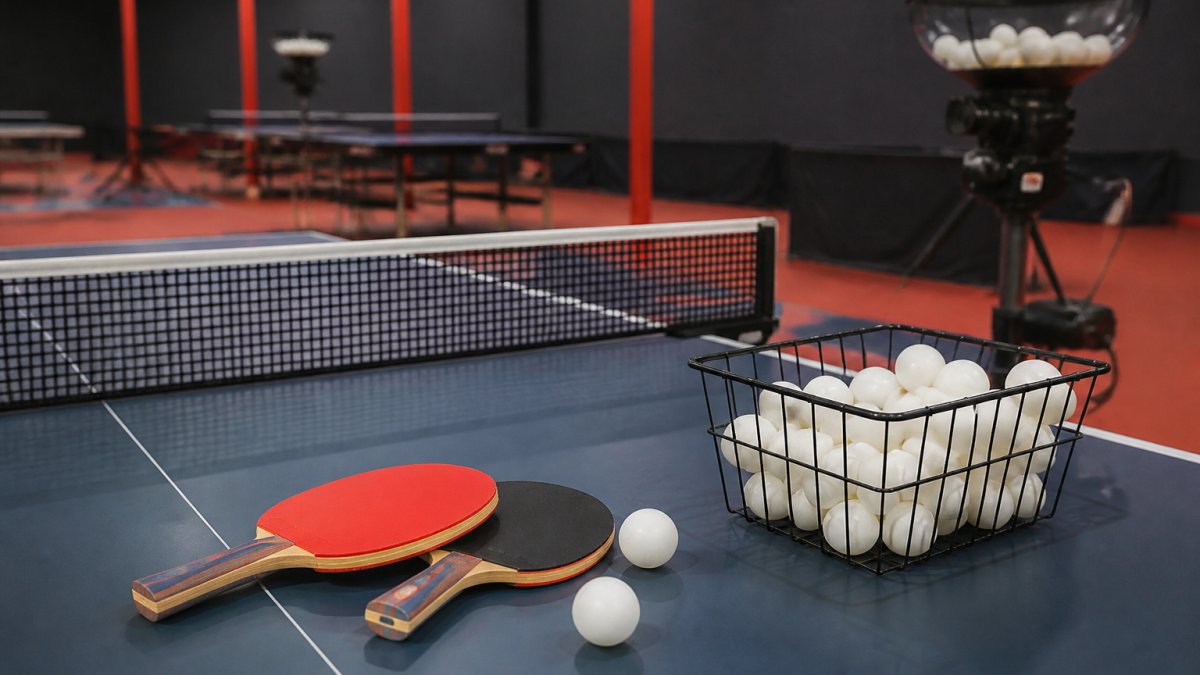
Professional grade table tennis training equipment separates players who practice from players who improve. At MyPingPongBuddy, we've watched coaches build entire training sessions around the right mix of robots, collection tools, and racket components. This guide breaks down the gear that actually earns its place in a serious training bag, from programmable ball machines to the humble scoop that saves your back.
| Equipment | Category | Best For | Standout Feature |
|---|---|---|---|
| Power Pong Omega | Robot | Clubs and competitive players | Three-wheel spin control |
| Pongbot Nova S Pro | Robot | Home training on a budget | App-based drill programming |
| MyPingPongBuddy | Ball collection | Coaches and high-volume drills | Breaks in half for transport |
| JOOLA Training 3-Star Balls | Balls | Multi-ball feeding | ITTF-approved 40+mm ABS |
| Butterfly Viscaria Blade | Blade | Advanced offensive play | Arylate-Carbon construction |
| DHS Hurricane 3 Neo Rubber | Rubber | Spin-heavy loopers | Tacky surface |
Best Table Tennis Robots for Professional Training
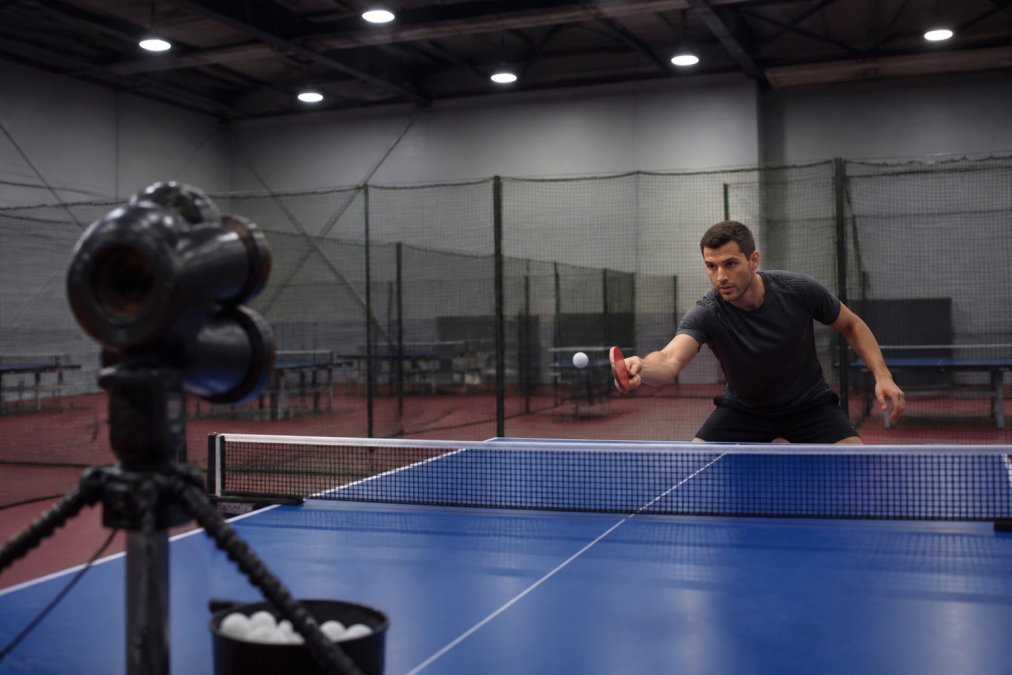
The best table tennis robots for professional training deliver programmable spin, speed, and placement so players can repeat specific match scenarios hundreds of times. Two models dominate the serious end of the market: the Power Pong Omega and the Pongbot Nova S Pro.
Power Pong Omega: Three-Wheel Spin Control
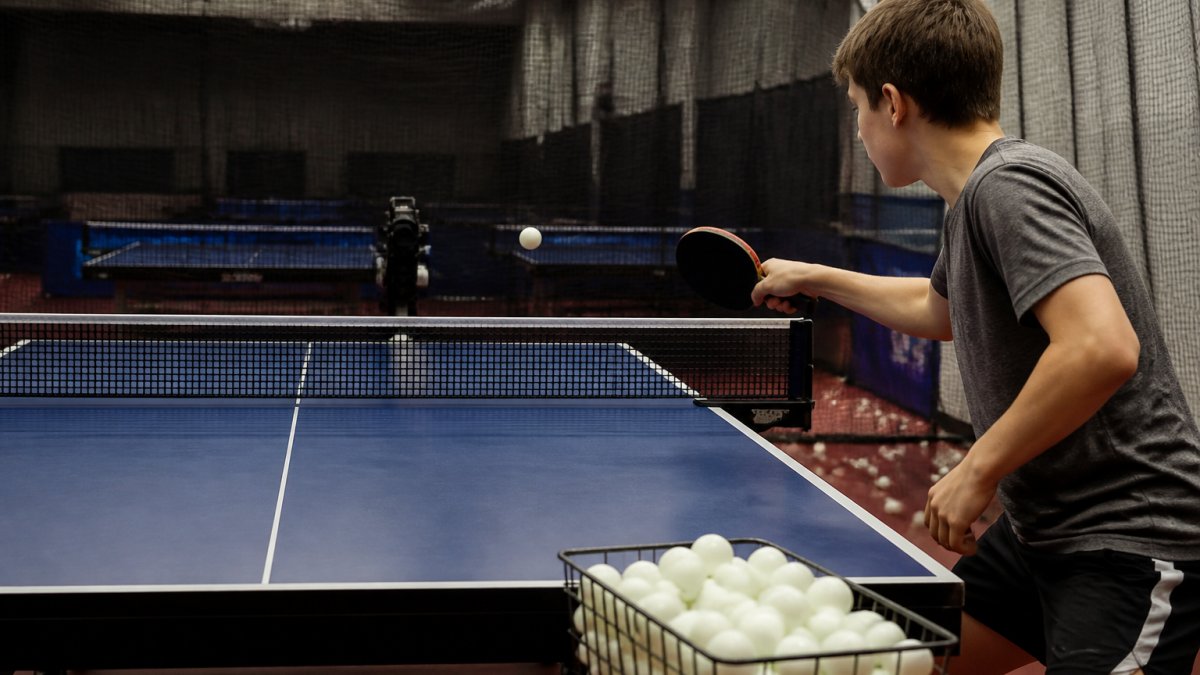
A three-wheel head is what separates a real training robot from a toy. Each wheel spins independently, which lets the Omega produce genuine topspin, backspin, and sidespin, plus combinations that mimic a live opponent's variation. Programmable drill sequences run through a smartphone app, and the wireless remote lets a coach adjust shot frequency mid-session without walking to the machine. The ball recycling system keeps a high-volume session moving.
Pongbot Nova S Pro: Programmable Drills on a Budget
For players who want oscillation settings and custom spin without the club-level price, the Nova S Pro is the smarter entry point. Multi-point oscillation forces footwork drills across the full width of the table, and the integrated software tracks skill progression over time. Setup takes longer than the Omega, and beginners will need a session or two to build their first meaningful drill sequence.
Table tennis serve practice drills for beginners
Table tennis serve practice drills for beginners should start with placement, not power. Beginners who chase spin before they can land a serve consistently build habits that take months to undo. The equipment you pair with each drill matters as much as the drill itself, a serve session with no ball containment is a session where half your reps are spent walking.
The four-stage serve progression
- Flat placement (no spin). Serve 20 balls to the same spot with a low toss and consistent contact. Use a ball hopper at the end of the table so you can reload without leaving the baseline. Target: 18 of 20 land inside a 12-inch zone.
- Backspin. Brush under the ball and repeat the same 20-ball target. The contact point moves from the middle of the ball to the lower half; the toss stays identical.
- Short-long alternation. Serve short to the forehand side, then long to the backhand corner, alternating on every ball. This is where a rebound board earns its place, set it on the receiving end and you can read your own spin coming back without a partner.
- Sidespin. Introduce it last, once the first three stages feel automatic. Sidespin masks a weak toss, so beginners who start here never learn to control the ball's height.
Configuring equipment for serve-specific work
Most robots are sold as rally machines, but they can be repurposed for serve practice. On a Pongbot Nova S Pro, set oscillation to a single fixed point and spin to zero, then use the app to fire one ball every 4-6 seconds. That cadence forces you to complete your toss, contact, and recovery before the next feed, the same rhythm a real serve-and-third-ball pattern demands.
Beginner vs. advanced serve equipment
Beginners should practice serves with the same racket and rubber they use in matches, switching to a slow setup for drills teaches contact feel that does not transfer. Advanced players working on serve variation often keep a second racket with tacky rubber (like a DHS Hurricane 3 Neo sheet) specifically for serve practice, because the extra grip exaggerates spin feedback.
Table Tennis Ball Collection Tools: Save Time and Your Back
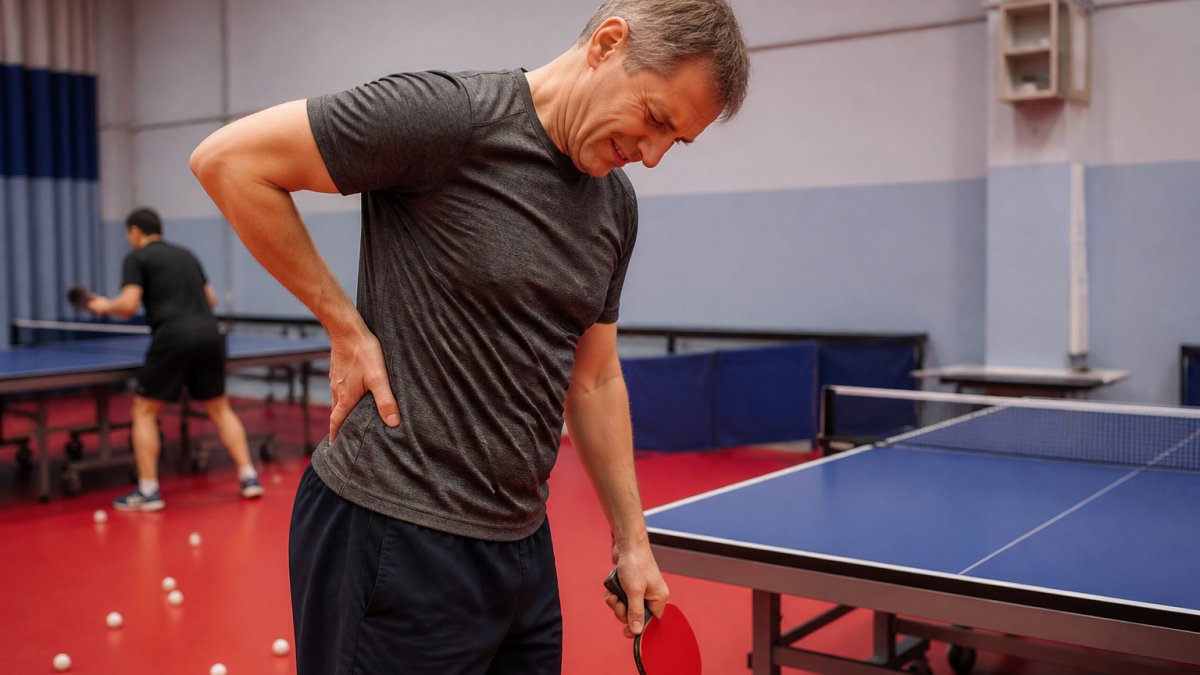
Ball collection is the most overlooked part of professional grade table tennis training equipment, and it's the one that decides whether coaches can run a full multi-ball session without wrecking their lower back. Every ball on the floor is a ball you're not hitting.
Essential training accessories for professional grade play
The accessories that matter most are the ones that keep a session running: a ball hopper, a retractable net for portable setups, and a rebound board for solo stroke work. But the accessory list is only half the story. The other half is how you configure those tools when you do not have a full club, a garage, a basement, or a 12-foot stretch of wall.
The three accessories that earn their place
Ball hopper. A 100-ball hopper turns a 30-minute session into a 30-minute session instead of a 20-minute session plus 10 minutes of gathering. For multi-ball feeding, the hopper sits at the end of the table and the coach feeds from it directly; for solo drills, it sits on the floor within arm's reach of the serve position.
Micro-training setups for small spaces
Most home players do not have room for a full table plus a robot plus a collection zone. A workable micro-setup fits in roughly 8 feet by 10 feet:
- Half-table against a wall. Fold one half of a folding table up and push it against the wall. You get a full playing surface for serve practice and a backboard for rebound work in the same footprint.
- Robot on a tripod at the net line. A robot placed at the net rather than the far end shortens the ball's travel, which reduces the space needed behind the table. The trade-off is that you lose the full-court footwork element, this setup is for stroke mechanics, not movement.
- Rebound board on the floor, angled up. Leaning a rebound board against a wall at a 15-20 degree angle returns the ball in a higher arc, which gives you more time to react in a confined space.
- Collection scoop and a laundry basket. A scoop plus a basket replaces a full ball-retrieval system in a small room. The scoop picks up without bending; the basket holds 150+ balls and stacks against a wall.
Balls and maintenance accessories
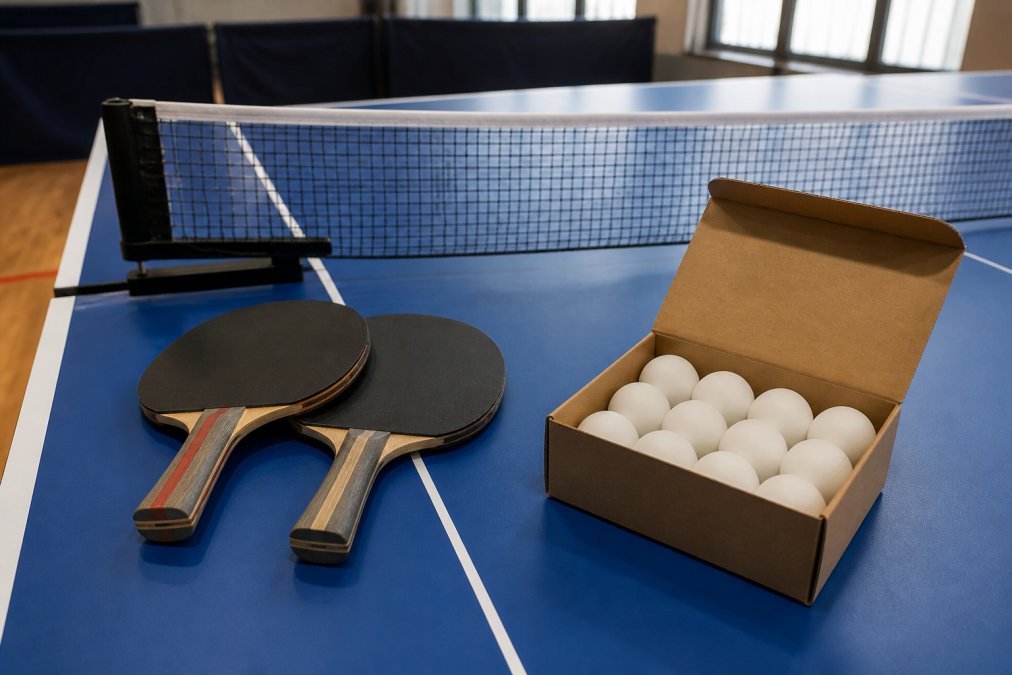
Balls deserve real attention here. JOOLA Training 3-Star Balls are ITTF-approved 40+mm ABS, which means uniform roundness and a consistent bounce across the whole session. Cheap practice balls deform, and a deformed ball teaches your hand the wrong contact feel. Rotate a fresh set of 12 into your hopper every few weeks; the cost is small compared to the cost of grooving a bad habit.
Building Your Pro Setup: Blades, Rubbers, and Tables
Blade and rubber choices should match your playing style, not your ego. An advanced offensive blade in the hands of a developing player produces inconsistency, not speed.
Butterfly Viscaria Blade: Arylate-Carbon Speed
The Viscaria is the reference point for offensive blades. Arylate-Carbon layers widen the sweet spot and dampen vibration, so off-center contact still produces a predictable ball. The tradeoff is honest: this blade rewards players with developed technique and punishes those without it.
DHS Hurricane 3 Neo Rubber: Tacky Spin Machine
The Hurricane 3 Neo's tacky surface generates heavy topspin, which is why elite loopers favor it. It needs frequent cleaning to hold that tackiness, and it suits an aggressive loop-drive game rather than a blocking style.
| Setup Level | Blade | Rubber | Training Focus |
|---|---|---|---|
| Beginner | All-wood, slow | Soft, non-tacky | Consistency and placement |
| Intermediate | Carbon, medium | Medium-tacky | Spin variation and footwork |
| Advanced | Arylate-Carbon | Tacky, hard sponge | Loop-drive and reaction time |
Frequently Asked Questions
What is the best brand for table tennis equipment?
There is no single best brand because each excels in different categories. Butterfly leads in blades like the Viscaria and professional glues. DHS dominates rubbers with the Hurricane 3 Neo. JOOLA makes ITTF-approved training balls. For ball collection, MyPingPongBuddy offers a handmade scoop that eliminates bending. Match the brand to the specific gear you need rather than sticking to one label.
What are the most effective table tennis training tools for solo practice?
For solo practice, a table tennis robot like the Pongbot Nova S Pro provides programmable drills with spin and placement variation. The OFFAXE Ping Pong Trainer offers a flexible shaft for stroke repetition without a partner. A rebound board also helps, but robots deliver the most realistic ball trajectory and oscillation. Pair any of these with a ball collection tool to keep sessions efficient.
How does a table tennis robot compare to manual training aids?
Robots like the Power Pong Omega deliver multi-ball feeding with adjustable spin, speed, and oscillation, mimicking match play. Manual aids such as the OFFAXE trainer cost far less but cannot replicate heavy topspin or backspin. Robots suit coaches running high-volume drills; manual tools work for beginners building stroke consistency. Your choice depends on budget and whether you need realistic spin variation.
What are the benefits of using professional-grade ball collection tools?
Professional-grade ball collection tools like MyPingPongBuddy save time during cleanup and reduce physical strain. The ergonomic scoop eliminates the need to bend over, which matters for players with back pain or coaches collecting hundreds of balls daily. It breaks down in half for transport and comes with a 90-day full refund policy. Faster cleanup means more practice time and better training focus.
What equipment do top table tennis players use?
Top players typically use custom blades like the Butterfly Viscaria paired with tacky rubbers such as DHS Hurricane 3 Neo. They train with high-end robots like the Power Pong Omega for multi-ball drills and ITTF-approved balls like JOOLA Training 3-Star. Many also rely on professional-grade ball collection tools to streamline practice sessions and avoid downtime between drills.
The hard part of table tennis training isn't finding drills; it's building a setup that lets you repeat them without wasting time or straining your body. MyPingPongBuddy solves the piece most players ignore: ball cleanup. It's handmade for durability, breaks in half for transport, and eliminates the bending that ends sessions early for anyone with back pain. Get started with MyPingPongBuddy and spend your practice time hitting balls, not chasing them.