 listicle
Speed Up Ping Pong Drills: 7 Ways to Train Faster
Table of Contents
- Speed Up Ping Pong Drills: 7 Ways to Train Faster
- 1. Master Footwork for Explosive Speed
- 2. Implement Multi-Ball Training Efficiency
- 3. Use Table Tennis Robots for Consistent Placement
- 4. Develop Reaction Speed Through Shadow Play
- 5. Choose the Best Ball Collector for Table Tennis
- 6. Structure Table Tennis Drill Duration Best Practices
- 7. Combine Physical Conditioning With Drill Work
- Conclusion
- Frequently Asked Questions
Last Updated: October 1, 2026
Speed Up Ping Pong Drills: 7 Ways to Train Faster
Speed matters in table tennis. The faster you can execute drills, the more repetitions you fit into a practice session. More reps means faster improvement. But most players approach drill acceleration wrong, they rush through movements without building the foundation that actually creates speed.
The best ways to speed up ping pong drills involve a combination of footwork precision, equipment strategy, and deliberate training structure. This guide breaks down seven concrete methods to compress your training timeline without sacrificing technique.
The sections below cover footwork mechanics, multi-ball efficiency, robot training, reaction work, ball collection, drill timing, and conditioning. Each one addresses a specific bottleneck in training. By the end, you'll have a playbook for running faster, more productive sessions.
1. Master Footwork for Explosive Speed
Footwork is the foundation of speed. If your feet are slow, your paddle will be too. Most players spend 80% of their drill time on arm mechanics and 20% on foot movement. That's backward.
Fast footwork starts with knee bend. Your knees act as shock absorbers and launch pads. When you bend deeper, you generate more power and move faster laterally. The motion looks simple, small, quick steps with a low center of gravity, but it requires repetition to automate.
Shadow play is the fastest way to build footwork speed without a ball. Stand at the table and move through your court positions: forehand corner, middle, backhand corner, repeat. Do this for 30 seconds at a time, focusing on explosive lateral movement. The rhythm matters more than the distance. Quick steps, low knees, explosive direction changes.
Weight transfer amplifies speed. As you move, transfer your weight from your back foot to your front foot in one fluid motion. This creates momentum that carries you faster to the next position. Players who skip weight transfer waste energy and move slower overall.
Add agility ladder drills 2-3 times per week. The ladder forces rapid foot placement and coordination. Spend 10 minutes on ladder work before your table drills, then move directly to the table. Your feet will feel faster because they're primed for quick, precise steps.
2. Implement Multi-Ball Training Efficiency
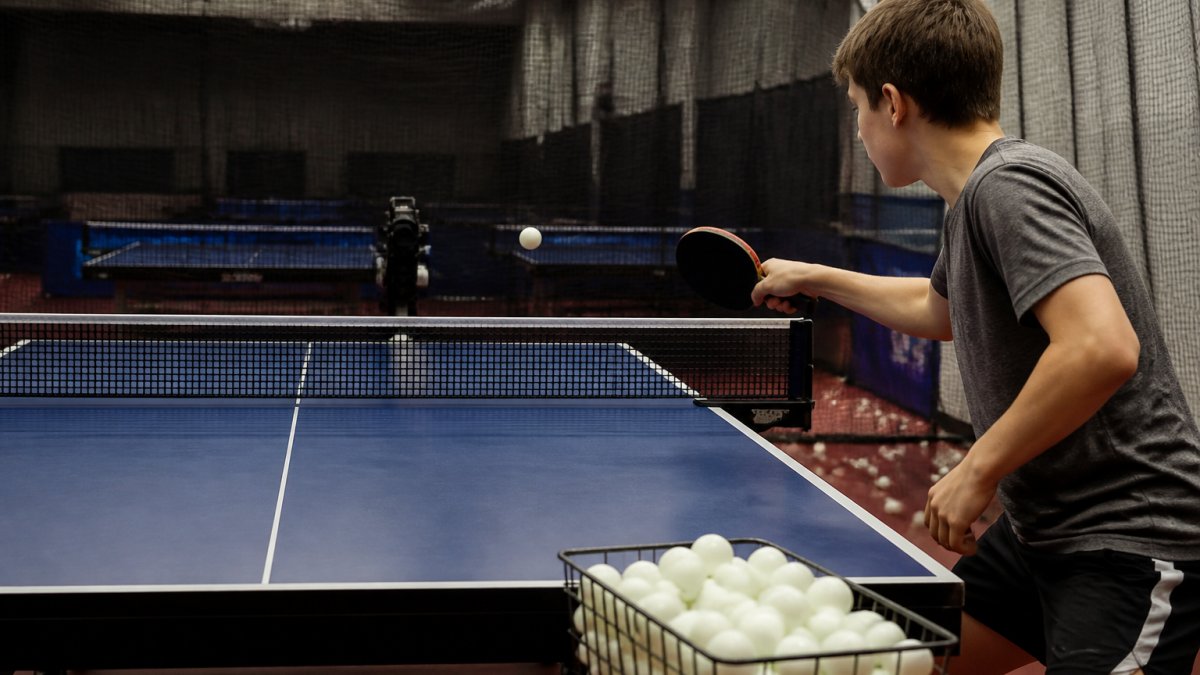
Multi-ball training compresses learning into shorter time windows. Instead of waiting for one ball to come back, you receive 10 balls in rapid succession. This means 10 repetitions instead of 1 per cycle.
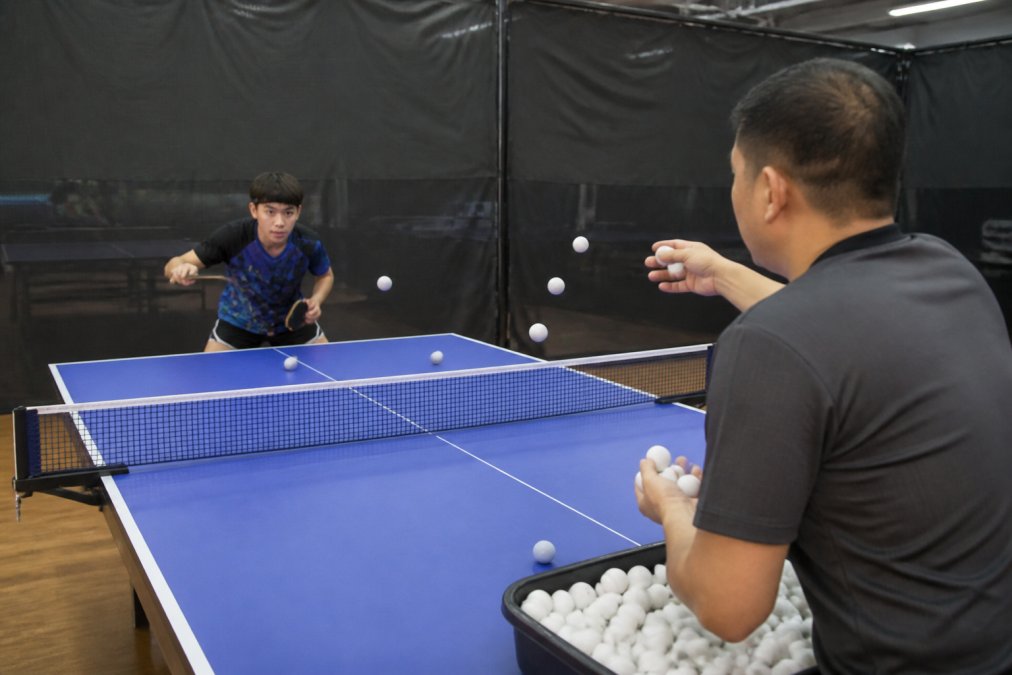
The setup matters. A feeder (coach or partner) stands to the side of the table with a bucket of balls. They feed balls to a fixed pattern, three to the forehand corner, three to the backhand, three to the middle. The player executes the same stroke repeatedly, building consistency and muscle memory fast.
Random drills accelerate improvement faster than fixed patterns. Once you master a fixed sequence, switch to random placement. The feeder varies where each ball lands. This forces you to react faster, adjust your footwork mid-drill, and develop anticipation. Reaction time improves dramatically when you can't predict the next ball's location.
Drill intensity should increase gradually. Start with slower feeds (5 balls per 10 seconds), then progress to faster feeds (10 balls per 10 seconds). This is progressive overload for drills. Your nervous system adapts to higher ball velocity and frequency, making your normal game-speed practice feel slower by comparison.
A catch net under the table speeds up collection between sets. Instead of chasing balls, they fall into the net. You scoop them back into the bucket in seconds. This cuts dead time between drill cycles from 2 minutes to 30 seconds.
3. Use Table Tennis Robots for Consistent Placement
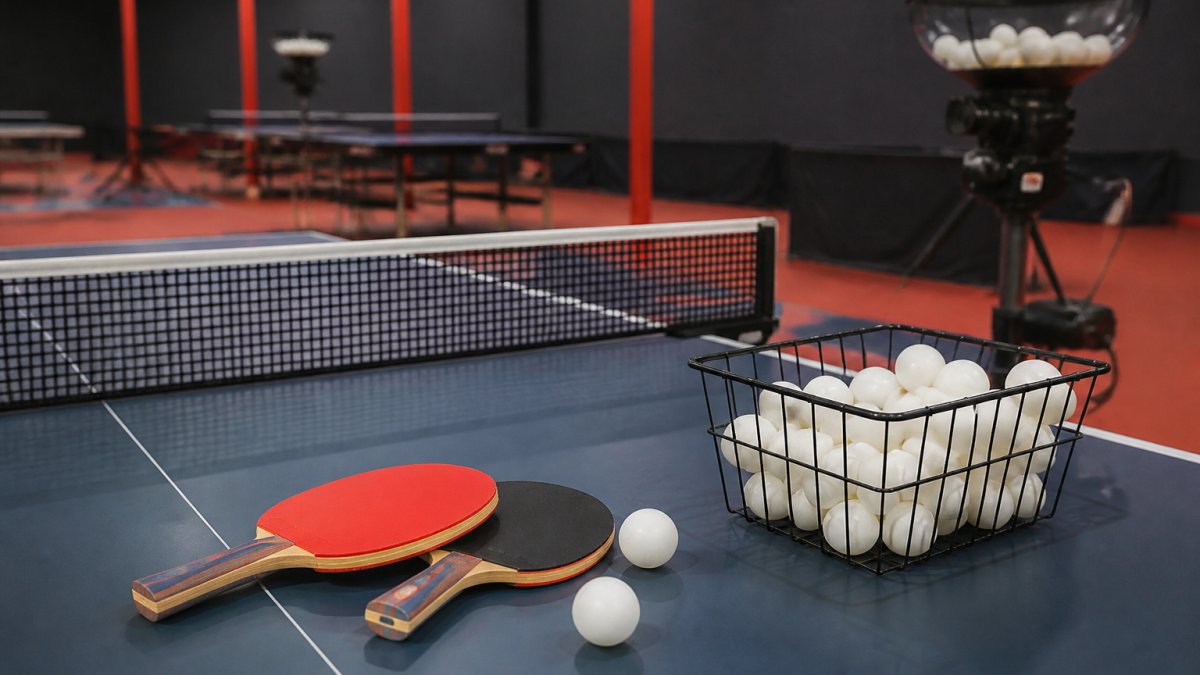
Table tennis robots remove the human variable. They feed balls at the exact same speed, spin, and placement every time. This consistency builds stroke efficiency faster than any human feeder can.
The Newgy Robo-Pong 3050XL features dual-wheel head design that creates varied spin combinations, and you control everything via Bluetooth app. Pre-programmed drills let you select a specific pattern, crosscourt forehands, alternating forehand-backhand, or random placement. The machine never gets tired, never feeds inconsistently, and never misses.
For solo practice, a robot eliminates the need for a partner. You set the machine, step to the table, and execute 100+ repetitions of the same stroke. The repetition builds automaticity, your body learns the motion without conscious thought. Game situations then feel slower because you've already executed that stroke hundreds of times.
Entry-level robots like the IPONG Trainer Motion work well for beginners. The oscillation feature practices side-to-side movement, and adjustable spin settings let you progress from topspin to sidespin to backspin. It's not as sophisticated as professional models, but it's perfect for home practice.
Robots save time on ball collection. Many models feature automatic ball recycling systems. Balls roll back to the machine, which feeds them again. No stopping, no walking around the table, no wasted minutes.
4. Develop Reaction Speed Through Shadow Play
Reaction speed is your ability to see the ball and move your feet before executing your stroke. It's the cognitive component of speed. Faster reaction time means you reach the ball earlier, giving yourself more time to set up your shot.
Shadow play without a ball builds reaction speed by removing the distraction of ball tracking. You focus purely on movement patterns and directional changes. Stand at the table and have a partner call out directions: "forehand corner, backhand, middle, backhand corner." Move to each position as fast as possible without a ball in play.
Add complexity gradually. Start with slow callouts (one every 2 seconds). Progress to rapid callouts (one every 1 second). Your feet will move faster because your brain is processing directional commands at higher frequency.
Game footage analysis sharpens anticipation. Watch video of your own matches or professional players. Pause the video just before the opponent strikes the ball. Predict where they'll hit it based on their racket angle and body position. This trains your brain to recognize patterns and react faster in real play.
Coordination drills like the agility ladder improve reaction speed indirectly. The ladder forces rapid foot placement in response to visual cues (the ladder rungs). This trains your nervous system to process visual information and execute movement quickly.
5. Choose the Best Ball Collector for Table Tennis
Ball collection eats practice time. If you spend 20 minutes per session picking up balls, that's 2 hours per month of lost training time. The right collection tool cuts this dramatically.
MyPingPongBuddy is our top pick for serious players and coaches. It's handmade for durability, breaks down in half for easy transport, and lets you scoop up balls without bending over.
6. Structure Table Tennis Drill Duration Best Practices
Drill structure determines whether you build speed or just go through motions. A 30-minute session structured poorly teaches bad habits. A 15-minute session structured well builds speed faster.
7. Combine Physical Conditioning With Drill Work
Speed isn't just technical. It's physical. Your legs, core, and cardiovascular system must support explosive movement for 30-60 minutes straight.
Conclusion
Speed in table tennis comes from footwork precision, efficient drill structure, and the right equipment. Master your footwork first, it's the foundation. Then layer in multi-ball training, robot work, and reaction drills to build speed at every level of the game. Use MyPingPongBuddy to eliminate ball collection time so you can focus on what matters: getting more quality repetitions per session.
| Method | Best For | Key Benefit | Time Investment |
|---|---|---|---|
| Footwork drills | All players | Foundation for explosive movement | 10 min/session |
| Multi-ball training | Coaches and groups | High-frequency repetition | 8-12 min/drill |
| Table tennis robots | Solo players | Consistent, tireless practice | 15-30 min/session |
| Shadow play | Reaction speed | Cognitive processing | 5-10 min/session |
| Ball collection tools | All players | Reduced downtime | Saves 10-15 min/session |
| Drill structure | All players | Maximized learning per session | 30-45 min/session |
| Physical conditioning | Serious players | Sustained speed and injury prevention | 10-15 min/session |
Frequently Asked Questions
What's the fastest way to collect balls during multi-ball training sessions?
A dedicated ball collector tool eliminates bending and speeds up recovery between drills. Handmade designs like MyPingPongBuddy are built for durability during high-volume sessions. Most coaches report collecting balls 3-4 times faster than picking them up individually, which means less downtime and more active training time per session.
How does footwork affect the speed at which I can execute ping pong drills?
Footwork directly determines your court coverage and reaction time. Proper knee bend, weight transfer, and lateral movement let you reach balls faster and reset position quicker between shots. Training footwork through agility drills and shadow play builds the muscle memory needed to accelerate through your entire drill sequence without wasted motion.
What's the ideal table tennis drill duration for maximum improvement without fatigue?
Most coaches structure drills in 10-15 minute blocks with 2-3 minute active recovery between sets. This duration maintains focus and stroke quality while building stamina. Shorter, intense drills prevent mental fatigue and allow players to concentrate on technique. Recovery time is critical for preventing injury and allowing your body to absorb the training stimulus.
Can a table tennis robot really speed up my training compared to practicing with a partner?
Yes. Robots provide consistent ball placement, eliminating the time your partner spends retrieving balls or adjusting their position. Entry-level robots like the IPONG Trainer Motion offer customizable drill sequences and dual-wheel spin combinations. The consistency lets you focus entirely on execution rather than adapting to variable placement.