 comparison
Newgy vs Pongbot Ball Collectors: 2026 Comparison
Table of Contents
- Newgy vs Pongbot Ball Collectors: Quick Comparison
- How Newgy and Pongbot Handle Ball Collection
- The Best Ball Collector for Table Tennis: What Actually Matters
- Manual vs Automatic Ball Pickup: Time, Cost, and Back Strain
- Multi-Ball Training Equipment: Matching the Tool to Your Session
- Maintenance, Space, and Long-Term Ownership Costs
- Conclusion
- Frequently Asked Questions
Last Updated: September 24, 2026
Newgy vs Pongbot Ball Collectors: Quick Comparison
Choosing between Newgy and Pongbot ball collectors comes down to a simple split: Newgy feeds balls through a recycling net system, while Pongbot relies on sensor-based feeding inside the robot head. This comparison from MyPingPongBuddy breaks down how each handles pickup, jamming, and cleanup.
| Feature | Newgy Robo-Pong 2055 | Pongbot Nova S Pro | Pongbot Pace S Pro |
|---|---|---|---|
| Collection method | Recycling net system | Sensor-based feeding | Sensor-based feeding |
| Ball capacity | Up to 170 balls/min delivery | Integrated drill library | Extended battery, long sessions |
| Starting price | Under $1,000 | $350 | $1,300 |
| Control type | Digital control box | App-connected | App-connected |
| Best for | Repetitive drills | Beginners, portability | Long stationary sessions |
How Newgy and Pongbot Handle Ball Collection
Ball collection in both systems means recycling, not floor pickup. The robot catches balls that return to its net or hopper, then feeds them back into the next drill cycle. Anything that rolls past the net stays on the floor until you gather it.
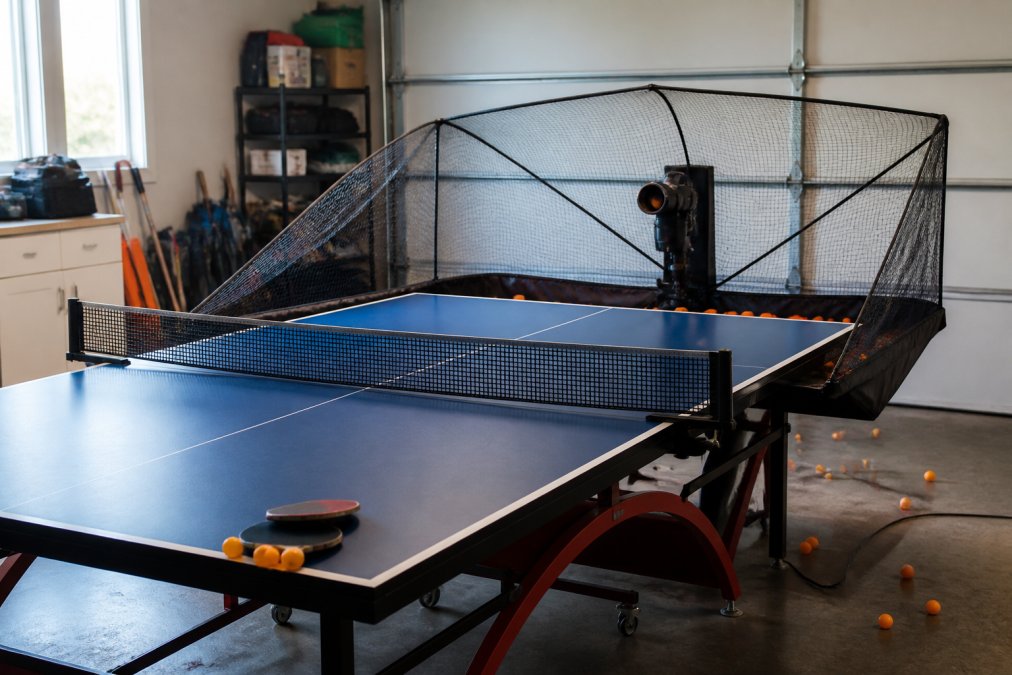
Newgy's Recycling Net Approach
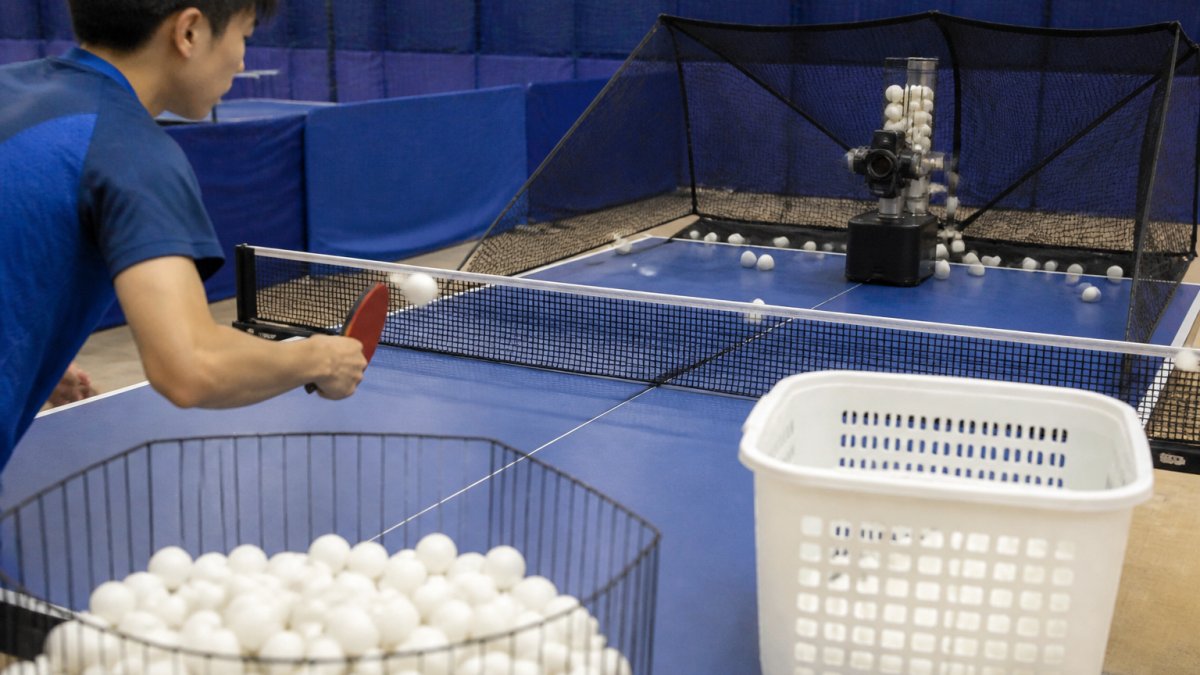
Newgy's Robo-Pong 2055 uses a physical net that catches balls after they leave the table, funneling returns into a hopper that the digital control box feeds back at up to 170 balls per minute. It's mechanical, so fewer firmware variables and fewer surprises.
Pongbot's Sensor-Based Feeding System
Pongbot's Nova S Pro and Pace S Pro use sensors to detect and prevent jams before they stop a drill. The Nova S Pro is light enough to move between tables; the Pace S Pro offers extended battery life.
The Best Ball Collector for Table Tennis: What Actually Matters
The best ball collector for table tennis matches your session length, your space, and your back. For robot owners, that usually means a separate manual pickup tool, because no machine handles floor balls on its own, and the two halves of the collection problem have very different failure modes.
- Jam frequency: A machine that jams mid-drill wastes more time than a slow one that never stops. Net-based recycling jams when balls stack in the hopper throat or a cracked ball wedges the feed wheel. Sensor-based feeding jams less often, but can stall if a ball sits on the sensor lens.
- Return rate: How many balls make it back to the net or hopper, the number that decides your cleanup load, and almost never printed on a spec sheet. A wide catch area might return 70-80% in a controlled drill; a narrow net or off-center placement can drop that below 50%.
- Court footprint: Net systems need clear space behind the table for the net to billow and funnel balls into the hopper. Sensor-fed robots sit closer but still need a return lane.
- Cleanup method: What happens to the balls that miss. This is the half no robot covers.
- Maintenance cycle: Nets tear, sensors drift, hoppers clog. The cycle length, not the purchase price, is what wears owners down.
Why Return Rate Beats Feed Rate
A robot rated at 170 balls per minute sounds impressive until you realize feed rate only matters if balls reach the hopper. Feed rate is a ceiling; return rate is the floor your session operates at. A machine feeding 170 balls per minute into a hopper receiving only 60% of returns is effectively a 100-ball-per-minute machine with a floor full of stragglers.
The Space Math Nobody Publishes
Net-based recycling systems need a clear zone behind the table, commonly a meter or more, for the net to catch and funnel returns. In a garage with a car parked behind the table, or a club room with a wall a few feet back, that footprint can rule out net-based designs before you compare features.
What This Means for Your Buying Decision
If your space is tight and sessions are short, a sensor-fed robot plus a durable manual scoop is the cleaner fit. If your space is open and sessions are long, a net-based system returns more balls per hour, but you'll still want a scoop for misses. Either way, the collection tool gets used every session, the robot only when the drill calls for it.
Manual vs Automatic Ball Pickup: Time, Cost, and Back Strain
Manual and automatic ball pickup solve different halves of the same problem: robots automate feeding, manual tools automate gathering. Most training setups need both, and gathering is where coaches lose the most time.
Manual pickup tools fall into two broad groups:
- Net scoopers: Light, cheap, and fine for a handful of balls. They wear out fast under daily club use.
- Rigid scoop designs: Built to handle volume without bending. These are what most coaches keep by the table.
Multi-Ball Training Equipment: Matching the Tool to Your Session
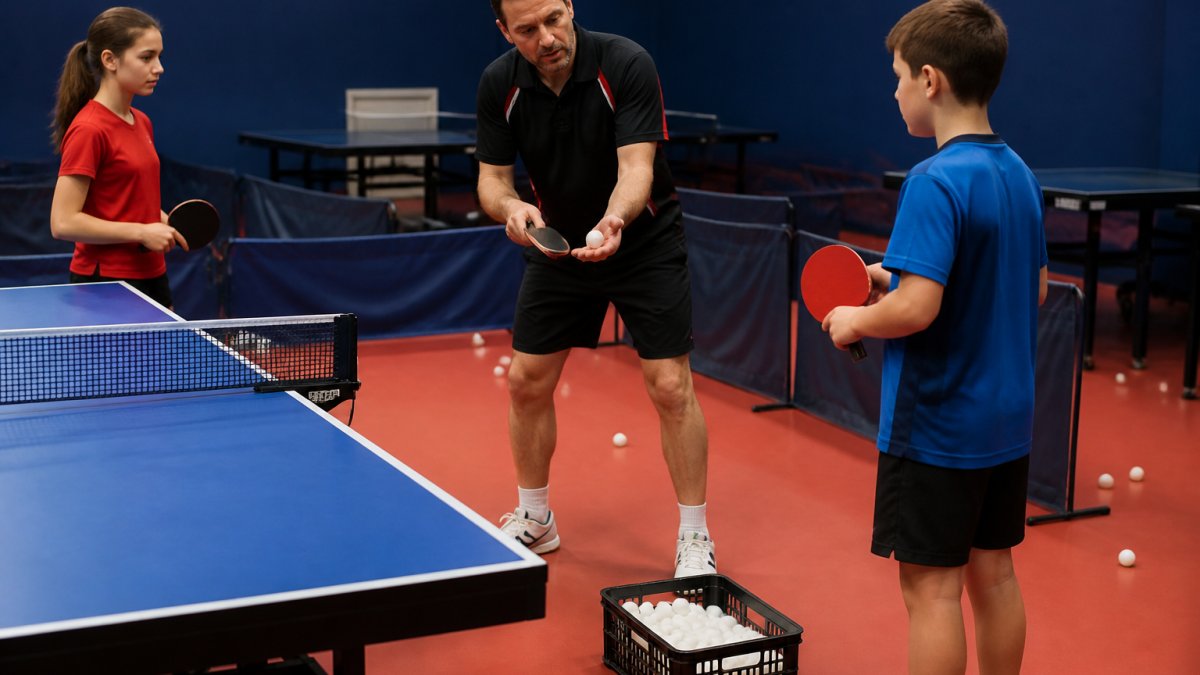
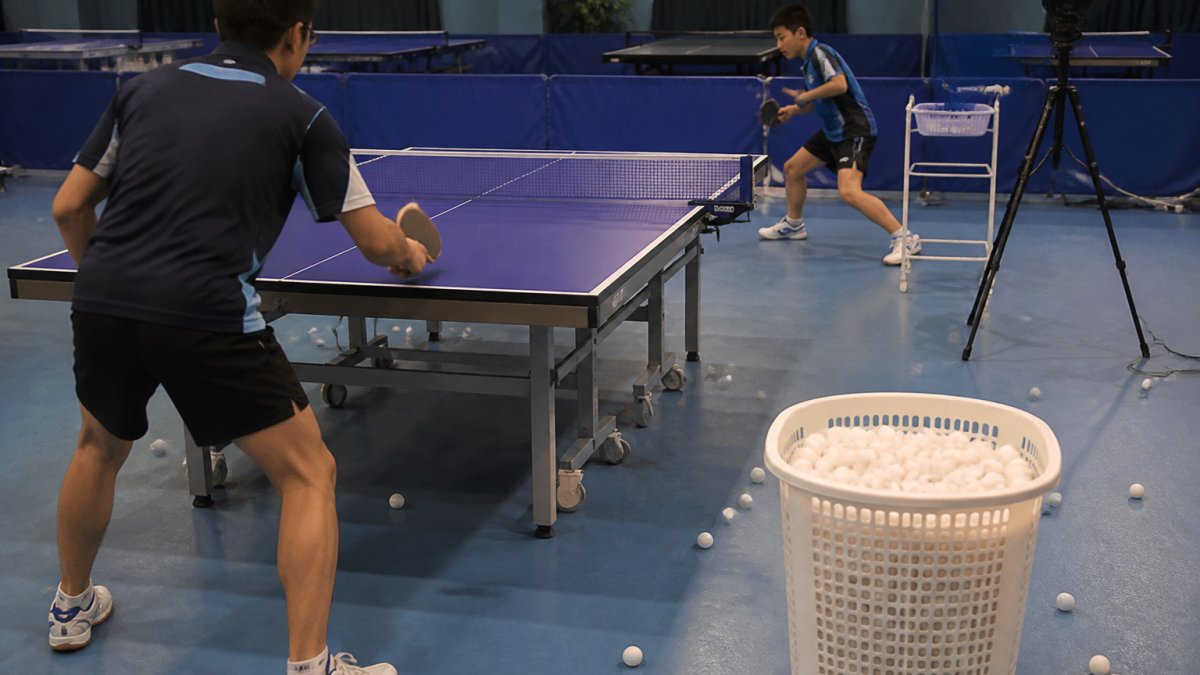
Multi-ball training equipment should be chosen by session type, not spec sheet. A solo player running 20-minute drills needs something different from a coach feeding 15 students all afternoon.
Match the tool to the session:
| Session Type | Robot Priority | Collection Priority |
|---|---|---|
| Solo practice, 20-30 min | Portability, quick setup | Lightweight scoop |
| Coach feeding one student | Drill variety, spin control | Durable scoop, high volume |
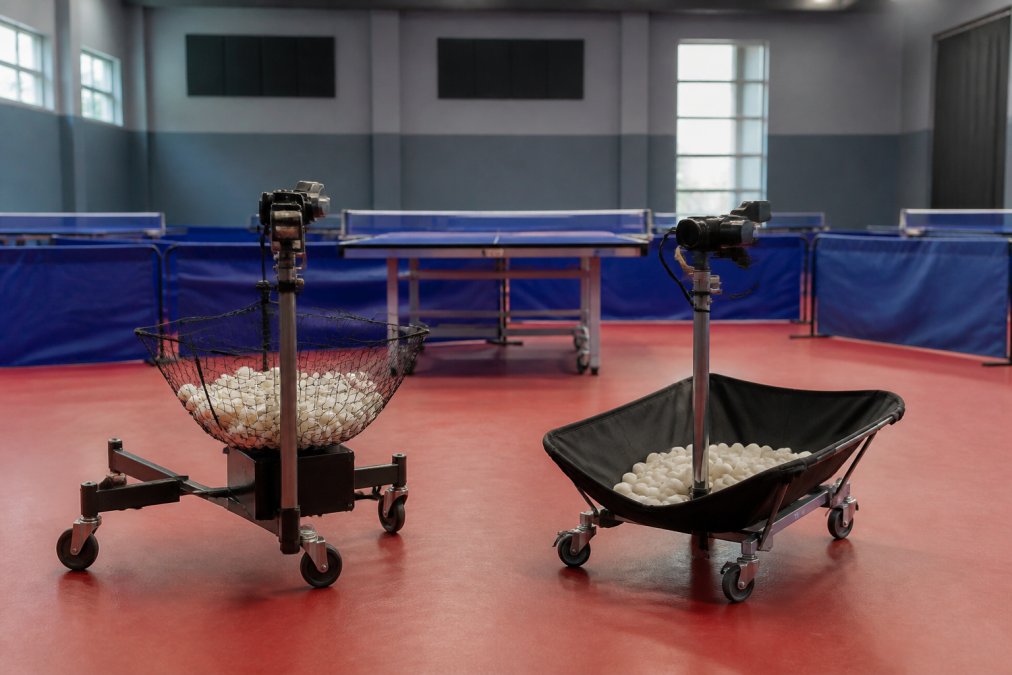
| Club session, multiple tables | Reliability, low jamming | Multiple scoops or a cart |
| Back-pain-limited player | Simple controls | Rigid scoop, no bending |
Maintenance, Space, and Long-Term Ownership Costs
Long-term ownership costs separate these systems more than purchase price. Net-based recycling needs net replacement and hopper cleaning; sensor-based systems need firmware updates and occasional recalibration. Neither is expensive monthly, but the pattern of small recurring costs, which most reviews skip, decides whether a machine still feels worth it in year three.
The Maintenance Cost Picture
Most reviews stop at the purchase price. Here's what actually recurs:
- Nets: Inspect monthly, replace when torn or stretched. A stretched net loses catch efficiency before it visibly tears, so return rate drops before you notice. Replacement nets are a consumable, not a one-time purchase.
- Sensors: Clean per manufacturer guidance, update firmware as released. Sensor drift is gradual, the machine doesn't fail, it just starts missing returns it used to catch. Recalibration is usually a menu action, not a service call.
- Hoppers: Clear debris and cracked balls regularly. Cracked balls are the most common cause of feed-wheel jams in both system types, and cost nothing to prevent if you cull them.
- Manual scoops: Wipe down, check joints, replace if the frame flexes. A scoop with no electronics, no firmware, and nothing to recalibrate is the only piece in the setup that has no recurring cost at all.
Space Requirements for Auto-Collection
Auto-collection performance is a function of floor space, and the requirement differs by method:
- Net-based recycling: Needs a clear zone behind the table, commonly a meter or more, for the net to billow and funnel returns into the hopper. It must be clear of walls, furniture, and parked cars, because a ball that hits an obstacle never reaches the net.
- Sensor-based feeding: Needs an unobstructed return lane so balls can roll back toward the intake. The rear footprint is smaller than a net system.
- Both systems: Need side clearance so balls that miss the return path don't pile against a wall where you can't reach them without moving furniture.
What Drives Cost Over Time
That's where a tool like MyPingPongBuddy fits. It's a handmade scoop that breaks in half for transport, so it stores in a bag or corner without eating court space. It eliminates the bending robots don't address, and it's backed by a 90-day full refund return policy. For coaches and players managing both a robot and a floor full of balls, it covers the half of the problem the machine ignores, with no recurring maintenance cost.
Conclusion
The real challenge with Newgy vs Pongbot ball collectors isn't picking a winner. It's recognizing that both systems handle feeding, not floor cleanup, and most training setups need a separate tool for the gathering half.
Frequently Asked Questions
What is the most efficient way to collect table tennis balls?
It depends on volume. For a few dozen balls, a manual scoop tool clears the floor in under a minute without bending. For hundreds of balls per session, a robot with a recycling net keeps balls cycling back through the machine, but it only catches balls hit toward the net. Many coaches combine both: the robot handles the feed, and a scoop handles strays scattered across the court.
Do Newgy and Pongbot offer dedicated ball collection tools?
Neither brand sells a standalone ball collector as its main product. Newgy's Robo-Pong 2055 includes a recycling net that returns balls to the machine during drills, and Pongbot robots rely on their internal ball supply plus a catch net. For the balls that miss the net entirely, you still need a manual pickup tool, which is where a dedicated scoop like MyPingPongBuddy fits into the setup.
How does a manual ball collector compare to automated collection systems?
Manual collectors need no power or sensors, and work in any space, including tight home setups. Automated systems like autonomous robots handle court-wide collection without you leaving the table, but they need clear floor space to navigate. For most home players and small clubs, a manual scoop covers the same job.
Is it worth investing in a specialized ball collector for multi-ball training?
If you run multi-ball drills regularly, yes. Bending to pick up 100 or more balls per session adds up, and players with back pain feel it fastest. A specialized scoop removes that repeated bending and cuts cleanup time so you spend more of your session hitting. Look for one that is durable, easy to store, and backed by a return policy you can test.
What features should I look for in a table tennis ball collector?
Prioritize three things: how many balls it holds per scoop, whether it lets you collect without bending, and how it stores when not in use. A tool that breaks down or hangs flat fits tight spaces better. Durability matters too, especially for clubs running daily sessions, so check the build material and warranty before buying.