 comparison
Newgy vs Pongbot Ball Collection Tools: 2026 Guide
Table of Contents
- Newgy vs Pongbot Ball Collection Tools: Quick Comparison
- What Separates Newgy and Pongbot Collection Systems
- Manual vs Automatic Ball Collection: Time, Cost, and Strain
- Best Ball Collector for Table Tennis: Matching the Tool to Your Training
- How Collection Tools Fit into Multi-Ball Training Drills
- Long-Term Costs and Maintenance: What Competitors Overlook
- Conclusion
- Frequently Asked Questions
Last Updated: September 23, 2026
Newgy vs Pongbot Ball Collection Tools: Quick Comparison
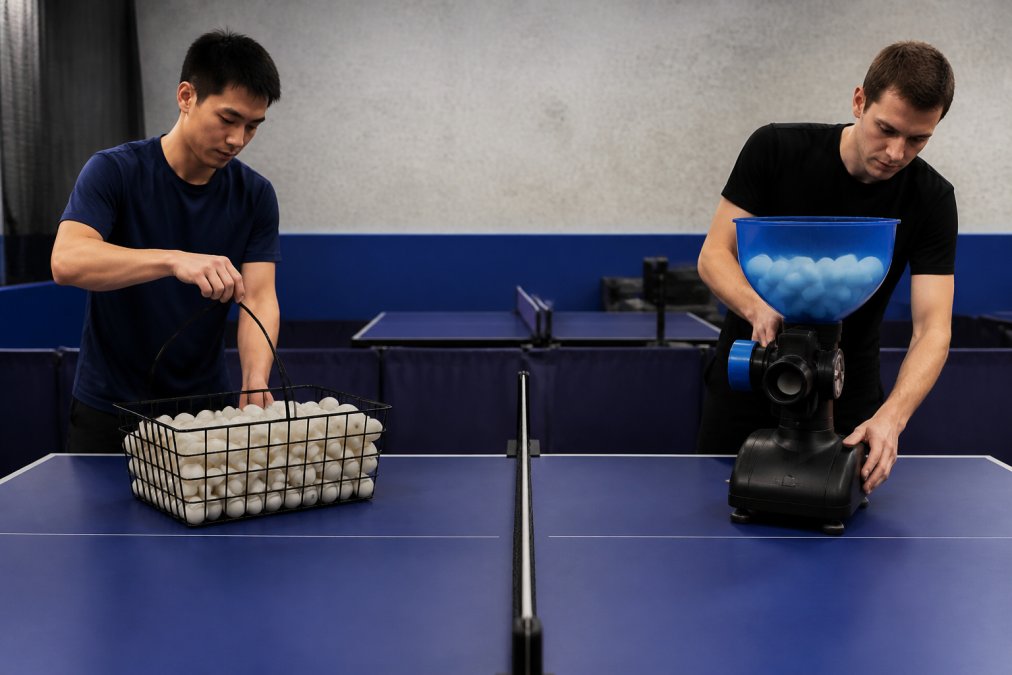
Choosing between ball collection tools from Newgy and Pongbot comes down to one question: do you want the robot to handle retrieval for you, or do you want a tool that works with any setup you already own? Newgy's Robo-Pong 2055 builds recycling into the robot itself. Pongbot's Nova S Pro and Omni S Pro pair AI-driven training with high-capacity return systems.
What Separates Newgy and Pongbot Collection Systems
The core difference is philosophy. Newgy built its reputation on a self-contained training machine that recycles balls as it fires them. Pongbot built its reputation on programmable, app-controlled robots with smarter retrieval and storage. One is a workhorse; the other is a specialist.
Newgy Robo-Pong 2055: Integrated Recycling
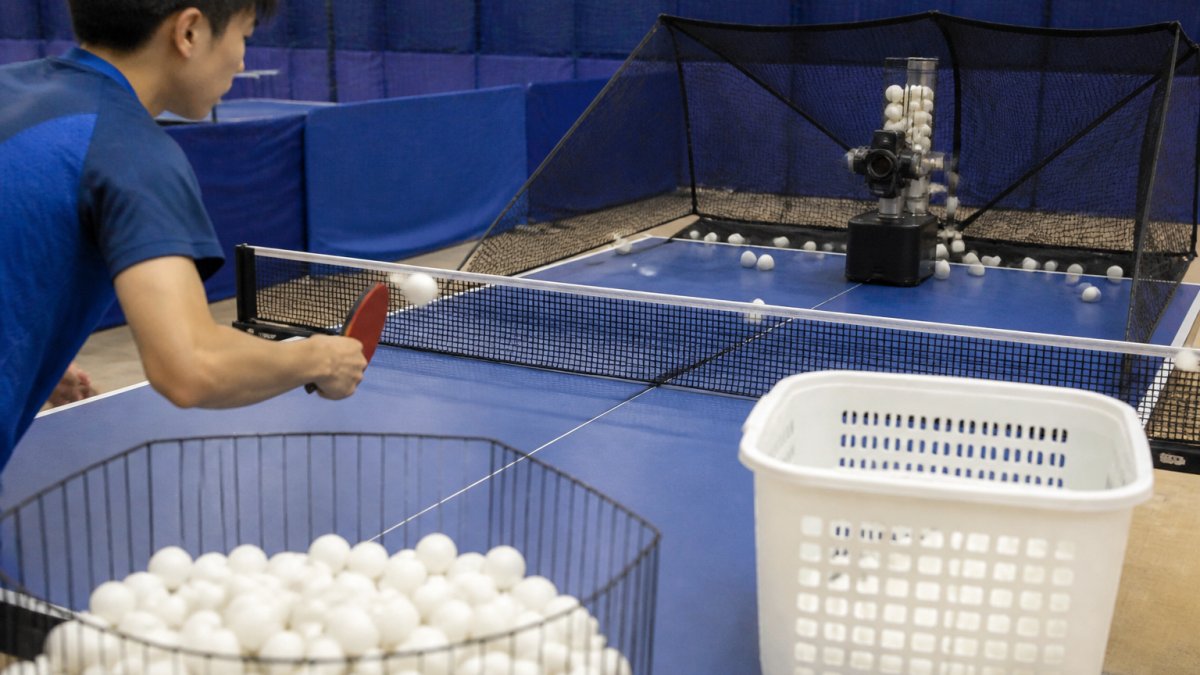
The Newgy Robo-Pong 2055 is a mid-range robot with a digital control box and an integrated ball recycling net. It fires up to 170 balls per minute and supports adjustable spin, speed, and placement. The recycling system means balls drop into the net and feed back into the machine, so you rarely stop to collect.
Pongbot Nova S Pro and Omni S Pro: AI-Driven Retrieval
Pongbot splits its lineup by ambition. The Nova S Pro is compact and portable, built for beginners and home players who want robotic training without a huge footprint. The Omni S Pro is the flagship, with AI training modes, high-capacity ball storage, a flexible head, and app-based drill programming.
Manual vs Automatic Ball Collection: Time, Cost, and Strain
Automatic collection saves time during a session but costs far more upfront. Manual collection costs less and works with any robot or none at all, but it puts your back in the equation. That trade-off is the whole decision, but the numbers behind it are where most comparisons stop short.
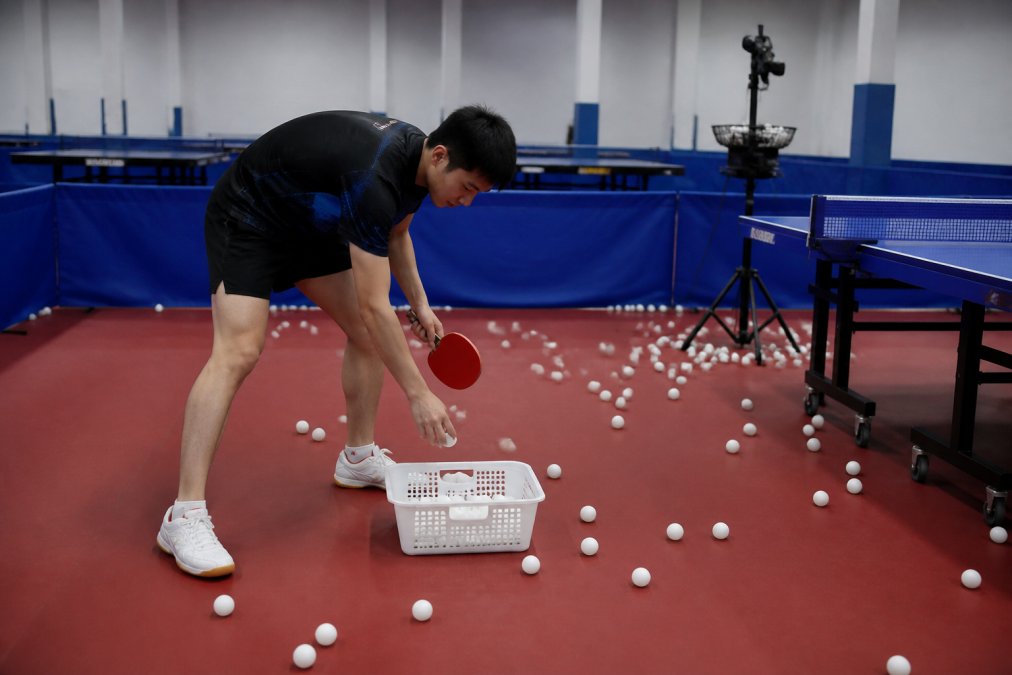
The reset-time math
A multi-ball bucket holds roughly 100 to 120 balls. At a feeding pace of 60 to 80 balls per minute, that bucket empties in about 90 seconds. Then the reset begins.
- Robot recycling (Newgy Robo-Pong 2055): balls that land in the net feed back automatically, so the pause is short, but only for balls that stay in the net. Serve practice, live drilling, and mishits scatter balls across the floor, and those still need to be gathered by hand.
- Manual scoop: a full-court sweep of 100 scattered balls typically takes two to four minutes depending on table count and floor layout. A handheld scoop cuts that by roughly half versus bending and picking one at a time.
- Net scooper: effective on a clean floor, but slower on carpet, turf, or a floor with table legs and barriers in the way.
Upfront cost vs total cost of ownership
Purchase price is the easy number. The harder number is what the system costs over three to five years.
| Cost category | Automatic (robot recycling) | Manual (handheld tool) |
|---|---|---|
| Upfront | High, bundled into the robot | Low, one-time tool |
| Replacement nets | Periodic, wear-dependent | None |
| Motor / mechanism service | Occasional, plus downtime | None |
| Battery replacement | Every few years | None |
| Charging / power draw | Continuous standby draw | None |
| Labor per session | Low, but not zero | Low with ergonomic scoop |
| Works without a robot | No | Yes |
| Best for | Solo robot drills | Coaches, clubs, any setup |
Hybrid workflows: the angle most comparisons miss
Automatic and manual collection are not mutually exclusive. The strongest facilities run both, split by session type:
- Peak hours (back-to-back lessons, group clinics): robot recycling handles the bulk of balls during structured drills; a handheld scoop at each table clears strays between students in under a minute.
- Off-peak (solo practice, serve work): the robot may not be running at all, so a manual tool is the only collection method in play.
- Mixed-floor layouts: on carpet, turf, or a floor with barriers, robot recycling captures fewer balls, so manual cleanup carries more of the load.
Best Ball Collector for Table Tennis: Matching the Tool to Your Training
The best ball collector for table tennis is the one that fits how you actually train. There's no universal winner, and anyone claiming otherwise is selling something.
How Collection Tools Fit into Multi-Ball Training Drills
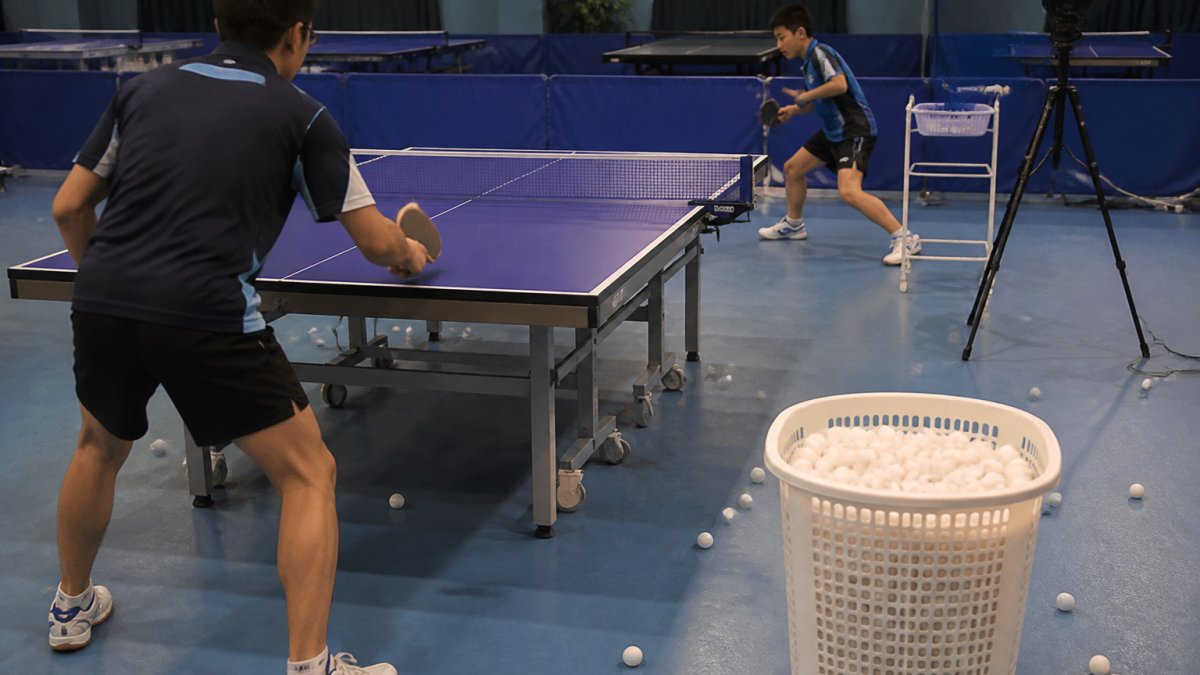
Multi-ball training drills live or die on rhythm. The faster you reset, the more reps your player gets, and the more reps, the faster they improve. Collection speed is a training variable, not just a cleanup chore.
Where the downtime actually goes
A typical feeding block looks like this:
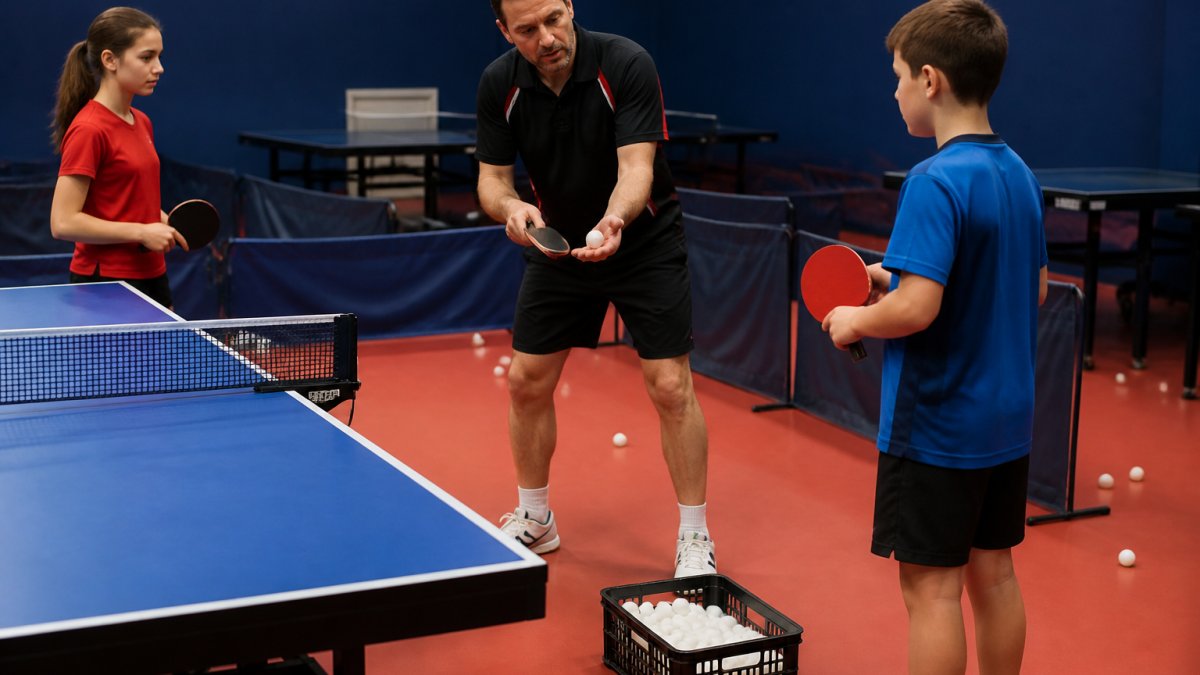
- Feed phase (60-90 seconds): coach pushes 100-120 balls across the table at 60-80 balls per minute.
- Reset phase (2-4 minutes): balls are gathered, returned to the bucket, and the next drill is set up.
- Repeat.
The reset phase is where the session quietly loses its edge. For a player working on footwork, that pause is wasted recovery time, the heart rate drops, the movement pattern cools, and the next block starts from a colder state. For a coach running back-to-back lessons, the same pause eats into billable time.
Drill structures that reward fast collection
Different drill formats put different pressure on collection speed:
- Random placement drills: balls scatter wide, so a scoop that covers a broad arc without bending beats a narrow net scooper.
- Serve-and-return blocks: most balls stay near the table, so a quick table-side sweep between reps keeps the player in position.
- Footwork ladders: balls are fed to alternating corners; strays roll far, and a handheld scoop that reaches under and around table legs saves the most time.
- Junior group rotations: students can run the scoop themselves between turns, which keeps the coach feeding instead of gathering.
A manual scoop tool cuts the reset window dramatically in all four formats. Students often prefer it over traditional net scoopers because they simply pick up balls faster. One customer put it plainly: this makes cleanup so incredibly easy, and actually kind of fun. Another noted their students liked it better than the net scoopers they'd used for years.
Consistency and safety during resets
Collection method also affects consistency. When balls are gathered by hand one at a time, the bucket count drifts, and the next drill may start short.
The compounding effect across a day
For coaches running back-to-back lessons, the speed compounds. Ten minutes saved per session adds up across a full day of training, and unlike a robot, a manual tool has no warm-up, no pairing, and no charging window between sessions.
Long-Term Costs and Maintenance: What Competitors Overlook
Total cost of ownership is where the marketing copy goes quiet. Robots need maintenance cycles: nets wear, motors need servicing, and battery life degrades over time. A recycling robot's return system is only as good as its moving parts.
Conclusion
The real challenge with ball collection tools isn't picking a winner between Newgy and Pongbot. It's matching the tool to your training reality, and recognizing that even the best robot leaves strays behind. MyPingPongBuddy solves the part robots miss: fast, back-friendly cleanup that works with any setup. It's handmade for durability, breaks down in half for easy transport, and comes with a 90-day full refund return policy.
Frequently Asked Questions
How do automated ball collection tools improve table tennis training efficiency?
Automated collection tools like Newgy's integrated recycling net or Pongbot's return system keep balls in continuous play, reducing downtime between drills. They cut labor efficiency losses by eliminating manual retrieval, allowing coaches to focus on multi-ball training drills. For example, Newgy can deliver up to 170 balls per minute with its recycling system, so players spend more time hitting and less time chasing.
What are the primary differences between Newgy and Pongbot collection systems?
Newgy uses an integrated net that catches balls and funnels them back to the robot, while Pongbot employs a high-capacity storage and return system with AI-driven modes. Newgy's Robo-Pong 2055 is a proven workhorse with simple setup. Pongbot's Nova S Pro is portable and budget-friendly, and the Omni S Pro offers advanced programming. The choice depends on your need for automation versus manual control.
Do I need a specialized ball collector for multi-ball practice?
Not necessarily, but it helps. If you use a robot with integrated recycling, balls return automatically. However, many coaches and players still need a manual tool to collect stray balls or when using a robot without recycling. A specialized collector like MyPingPongBuddy eliminates bending and speeds up cleanup, which is especially useful for those with back pain or during high-volume sessions.
How does manual ball collection compare to automated systems in terms of time saved?
Automated systems save time by continuously recycling balls during play, reducing breaks. Manual collection, even with a tool, requires stopping to gather balls. However, manual tools can be faster for spot cleanup and cost far less. For example, a manual scoop can clear a court in minutes, while automated systems require setup and maintenance. The best choice depends on your training frequency and physical comfort.
Are there portable alternatives to heavy-duty ball collection robots?
Yes. The Pongbot Nova S Pro is compact and portable, and manual tools like MyPingPongBuddy break down in half for easy transport. These are ideal for home users or coaches who travel. They offer a balance between efficiency and portability, though they may lack the advanced features of larger robots. Consider your storage space and setup time when choosing.