 comparison
Manual vs Automatic Ball Collection Tools: 2026 Guide
Table of Contents
- Manual vs Automatic Ball Collection Tools: A Quick Comparison
- Manual Collection Methods: Scoops, Hoppers, and Rollers
- Automatic Collection Robots: Autonomous Navigation and Sensor Tech
- Efficiency and Time Savings: Manual vs Automatic
- Total Cost of Ownership and ROI Analysis
- How to Speed Up Multi-Ball Practice
- Choosing the Best Ball Collector for Table Tennis
- Frequently Asked Questions
Last Updated: September 22, 2026
Manual vs Automatic Ball Collection Tools: A Quick Comparison
Manual vs automatic ball collection tools comes down to a simple tradeoff: manual scoops and rollers cost less and never need charging, while autonomous robots handle high volumes with almost no effort. For most table tennis players, coaches, and families, a well-made manual tool wins on value, reliability, and simplicity. This guide from MyPingPongBuddy breaks down both approaches so you can pick the right one for your table.
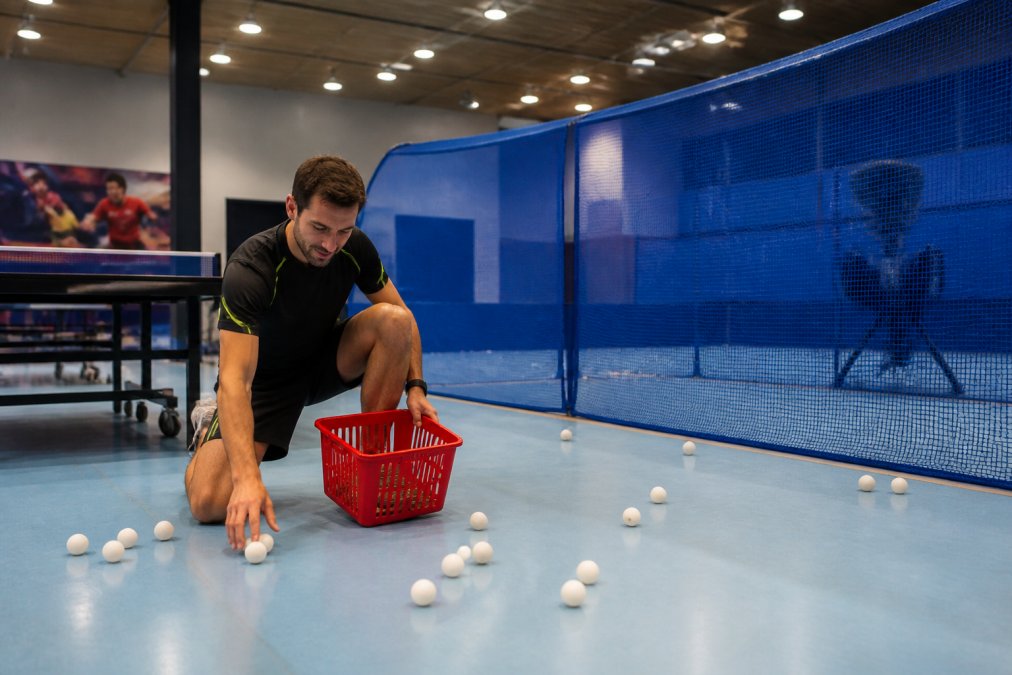
| Factor | Manual Tools | Automatic Robots |
|---|---|---|
| Upfront cost | Low | High |
| Power needed | None | Battery and charging |
| Effort per session | Moderate | Minimal |
| Best for | Home tables, small clubs | Large facilities, high volume |
| Maintenance | Rare | Regular |
Manual Collection Methods: Scoops, Hoppers, and Rollers
Manual collection covers three main types: handheld scoops, rolling hoppers, and pull-behind pickers. Each one gathers balls without any power source, and each suits a different setting.
How Manual Tools Work
A handheld scoop uses a simple lip or cage to trap balls as you sweep. Rolling hoppers pick up balls through a rotating drum as you push them across the floor. Pull-behind pickers, common at driving ranges, collect over a wider path but need a person to operate them.
Pros and Cons of Manual Collection
The upsides are clear: no charging, no electronics to fail, and a lower price. The downside is physical effort. For players managing back pain, bending repeatedly is the real problem, and that's exactly where a long-handled scoop changes the experience.
Automatic Collection Robots: Autonomous Navigation and Sensor Tech
Automatic collection robots use autonomous navigation, cameras, and obstacle detection to find and gather balls on their own. They shine in large facilities where hundreds of balls scatter across a wide area.
Key Features of Automated Systems
Most robots combine computer vision, path planning, and a storage hopper. Some sync with a mobile app for scheduling and remote control. Battery life and collection capacity vary widely by model, so check both before buying.
Pros and Cons of Automatic Collection
Automation removes nearly all manual labor and keeps a consistent pace. The tradeoffs are real: a high upfront cost, regular charging, and maintenance of sensors and motors. A robot that stops mid-session because of a dead battery or a dirty lens can stall an entire practice.
Efficiency and Time Savings: Manual vs Automatic
Efficiency claims in this category are almost always made without naming the surface, the court count, or the ball density. Those three variables decide the winner far more than the tool itself. This section breaks the comparison down by surface type and facility size, an angle the standard overviews skip entirely.
Surface Type Changes Everything
Automated collectors navigate by wheel traction and sensor line-of-sight. Both degrade on certain surfaces, and the degradation is not linear.
- Hard, smooth, indoor floors (wood, synthetic, tile). This is the robot's best case. Wheels grip cleanly, cameras see high-contrast balls against a uniform floor, and a robot can run a predictable boustrophedon (back-and-forth lane) pattern. Manual scoops are also fast here, but the robot's advantage is largest because it never tires.
- Clay and loose-grit surfaces. Loose material fouls wheels, clogs intake rollers, and kicks up dust that settles on camera lenses and IR sensors. Robots on clay need more frequent cleaning and shorter service intervals. Manual rolling hoppers also struggle here, grit jams the drum, but a simple handheld scoop with a rigid lip handles clay better than either powered option.
- Natural grass and turf. Uneven ground is the robot's worst case. Small wheels lose traction on slopes, sensors misread ball position against textured green, and the robot may simply stop. Manual pull-behind pickers, common at driving ranges, are designed for exactly this surface and remain the practical choice on turf.
- Multi-surface facilities. A club with wood courts, a turf training area, and a clay section cannot rely on a single robot to cover all three. This is where hybrid workflows matter.
Hybrid Workflows: The Angle Most Guides Miss
The manual-vs-automatic framing assumes you pick one. In practice, the most efficient facilities run both, and they split the work by time of day and court type.
- Peak hours (back-to-back sessions, high ball volume, multiple courts). Run the robot. It clears lanes continuously while coaches reset drills, and it does not need a break between sessions.
- Off-peak hours (single court, low volume, odd surfaces). Grab the scoop. Setup is instant, there is no charging window to respect, and a long-handled scoop works on surfaces the robot cannot handle.
- Surface-based split. Robot on the smooth indoor courts, manual tools on turf and clay. This is the pattern that shows up most often in facilities that have run automation for more than a year.
Facility Size: Where the Crossover Actually Sits
- Single home table. Manual wins decisively. The floor area is small, ball count is low, and robot setup plus charging overhead exceeds the time saved.
- Single training court, coached sessions. Roughly even. A practiced scoop user clears the floor in about the time it takes to deploy and monitor a robot, and the manual tool has no failure modes mid-session.
- Multi-court club or training center. Robots win on throughput, but only if the surface is robot-friendly and the facility has the charging infrastructure to keep units running across sessions.
- Large facility with mixed surfaces. Neither tool alone is optimal. This is the hybrid case, and it is the one most buying guides fail to address.
Occupational Safety and Health Administration ergonomics overview remains relevant here, on surfaces where robots underperform, the manual fallback is still a person bending and sweeping, which is exactly the strain a long-handled scoop is designed to reduce.
Total Cost of Ownership and ROI Analysis
Sticker price is the least useful number in this comparison. Total cost of ownership (TCO) is what actually decides whether a robot earns its keep, and it breaks into five buckets that most buyers never add up before purchase: acquisition, consumables, energy, maintenance and repair, and downtime.
The Five Cost Buckets
Acquisition. A manual scoop or rolling hopper is a one-time purchase with no follow-on hardware. An autonomous collector carries the unit price plus, in many cases, a charging dock, spare battery, replacement brushes or rollers, and a firmware/app ecosystem that may require a phone or tablet to configure.
When the Math Actually Flips
- Replacing paid labor. If a facility pays staff by the hour to clear floors between sessions, a robot that removes even a portion of those hours can amortize its purchase price over a multi-year horizon. This is the scenario where automation pencils out.
- Replacing unpaid labor. A family, a solo coach, or a volunteer-run club is not paying anyone to sweep. There is no labor line to offset, so the robot's TCO has to be justified purely on convenience and consistency, a much harder case.
Federal Trade Commission guidance on warranties and consumer guarantees is worth reviewing before buying any robot, since warranty length and what counts as "normal wear" vary widely and directly affect the repair line in your TCO.
How to Speed Up Multi-Ball Practice
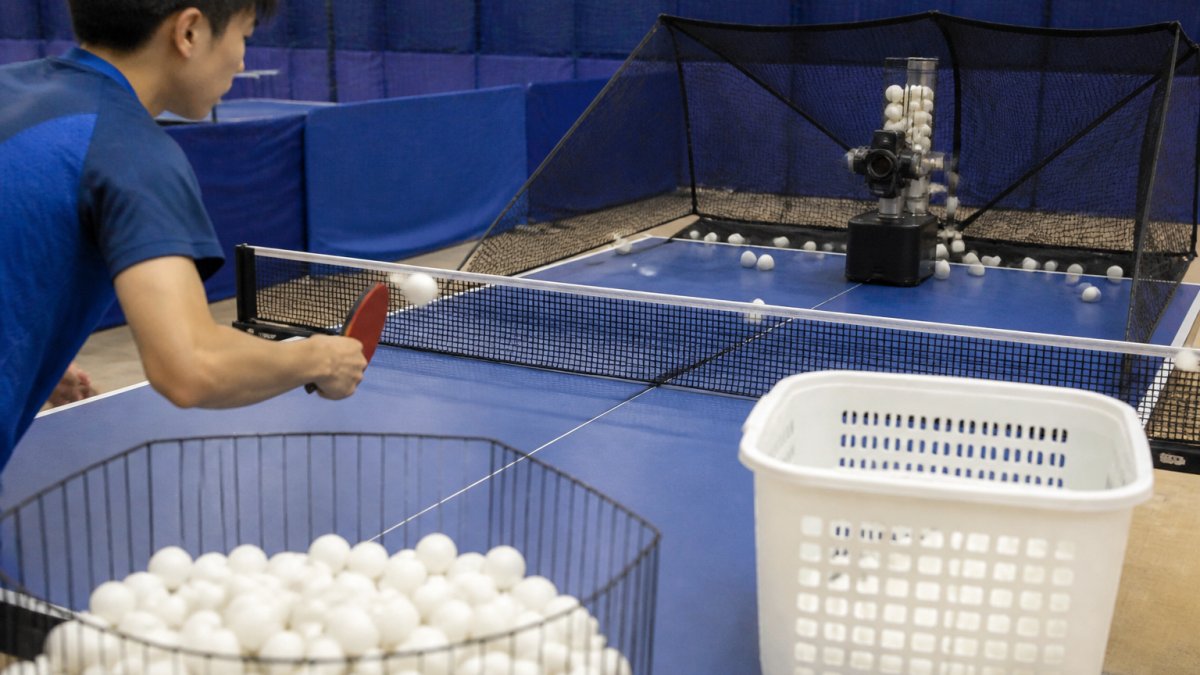
Speeding up multi-ball practice starts with a collection routine, not a bigger machine. Group your balls, collect in one pass, and keep a scoop within arm's reach of the robot.
- Park the collection tool at the net before the drill starts
- Sweep in straight lanes instead of chasing single balls
- Empty the hopper during rest breaks, not after the session
- Keep a spare basket near the robot's feed chute
Choosing the Best Ball Collector for Table Tennis
The best ball collector for table tennis depends on your space, your volume, and your back. For most players, coaches, and families, a portable manual scoop is the practical pick.
Frequently Asked Questions
What are the primary benefits of using a manual ball collector?
Manual ball collection tools offer several advantages: they require no power source or charging, have a lower upfront cost, and need minimal maintenance. For players with back pain, tools like MyPingPongBuddy eliminate the need to bend over, reducing strain. They are also portable and easy to store. While they require physical effort, many coaches find them reliable for daily training sessions and multi-ball practice.
Are automatic ball collection robots worth the investment for individual players?
For most individual players, automatic robots are not cost-effective. They involve high initial capital, require charging and maintenance, and are designed for large facilities. A manual tool like MyPingPongBuddy is more practical for home use, offering durability and portability at a fraction of the cost. Only consider automation if you run a commercial club with high ball volume and labor costs.
How do manual ball collection tools improve training session efficiency?
Manual tools speed up cleanup by allowing you to scoop multiple balls at once without bending. This reduces downtime between drills, so you can focus on practice. Coaches report that players pick up balls faster with a scoop than with net collectors. For multi-ball practice, having a reliable manual tool means less time collecting and more time hitting, which directly improves session productivity.
What factors should coaches consider when choosing between manual and automatic collection?
Coaches should weigh facility size, daily ball volume, budget, and maintenance. Manual tools suit small to mid-size clubs and home setups, offering low cost and no downtime. Automatic robots fit large facilities with hundreds of balls daily, but require charging, repairs, and a higher upfront investment. Consider your labor costs and whether you have staff to operate manual tools during sessions.
How does a portable manual collector compare to a stationary automatic system?
A portable manual collector like MyPingPongBuddy breaks down for transport and requires no installation. It works anywhere and is ideal for coaches who travel. A stationary automatic system is fixed, needs power and maintenance, and is best for permanent training centers. For flexibility and low cost, manual wins; for high-volume, hands-free operation, automatic is better suited.
Clearing a floor of balls shouldn't hurt or eat into your practice time. MyPingPongBuddy solves that with a handmade, portable scoop that eliminates bending, speeds up cleanup, and breaks down in half for transport, all backed by a 90-day full refund policy. Get started with MyPingPongBuddy and spend less time chasing balls and more time at the table.