 comparison
Newgy Alternative for Training Clubs: 5 Best Options
Table of Contents
- Why Clubs Need More Than a Newgy
- Comparison Table: Robots and Collectors for Clubs
- 1. Pongbot Nova S Pro: Best Budget Entry for Small Clubs
- 2. Power Pong Omega: Professional-Grade Spin and Drills
- 3. iPong Trainer: Portable Option for Footwork Drills
- 4. Donic Omni S Pro: App-Controlled Coaching Partner
- 5. MyPingPongBuddy: The Best Ball Collector for Table Tennis Clubs
- Integrating Robots with Multi-Ball Training Drills for Clubs
- Frequently Asked Questions
Last Updated: September 10, 2026
Why Clubs Need More Than a Newgy
If you manage a table tennis club, you already know the Newgy name and you're probably searching for a newgy alternative. For years, it has been the default answer for automated practice. But "default" and "best" are not the same thing, and that gap is exactly where club managers get stuck.
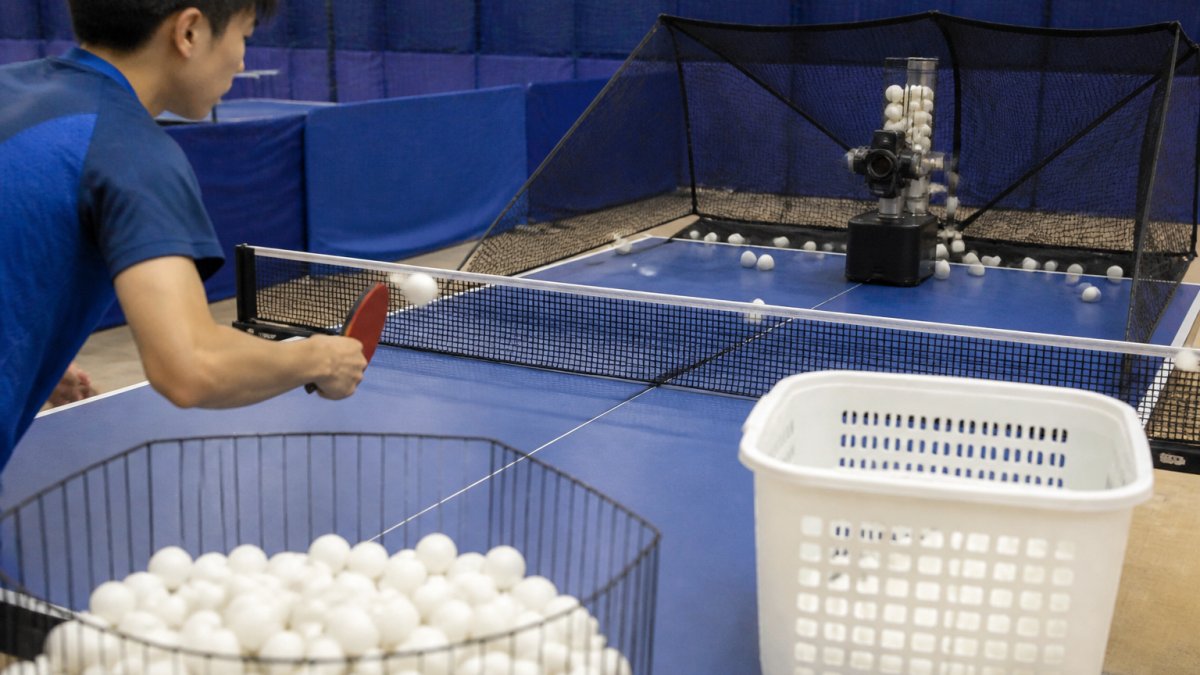
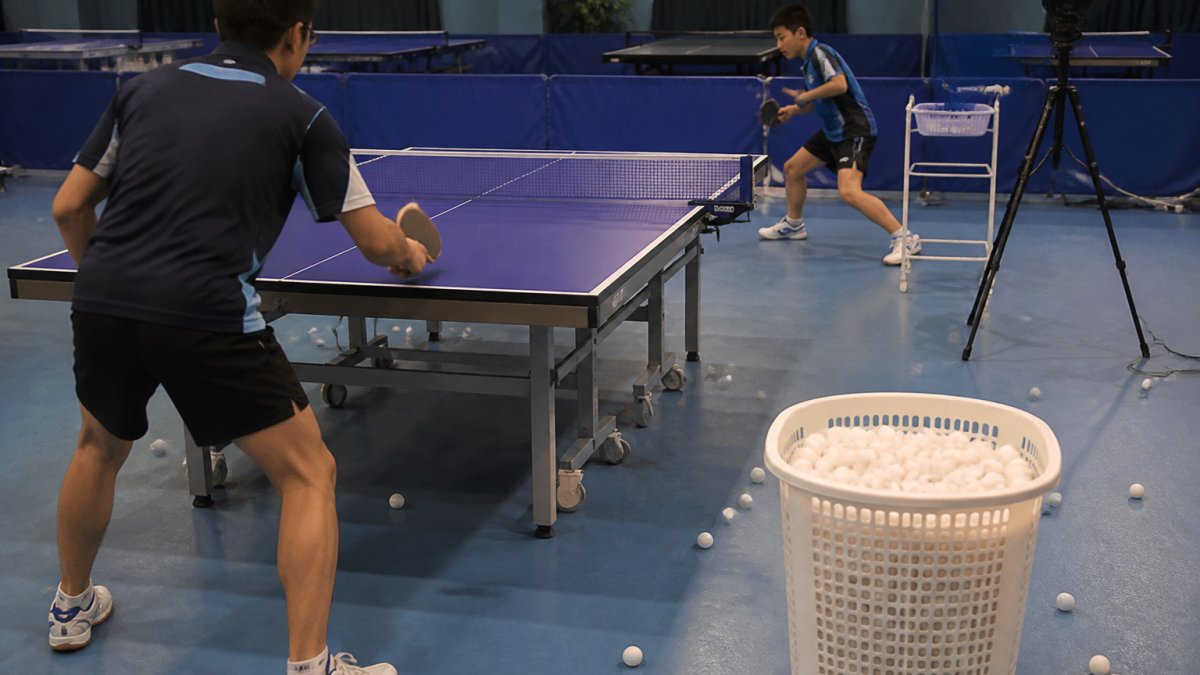
The real problem isn't the robot. It's everything around it: the balls scattered across the floor, the players bending down to collect them, and the coach watching the clock tick while cleanup eats into practice time. A newgy alternative for training clubs has to solve the whole workflow, not just the feeding mechanism.
This guide breaks down five options that fit different club budgets and training styles. We'll cover what each machine does well, where it falls short, and why the best ball collector for table tennis might matter more to your operation than the robot itself.
USA Table Tennis club resources
Comparison Table: Robots and Collectors for Clubs
Here's how the five options stack up on the specs that actually matter to a club: price, best use case, and the trade-off you're accepting.
| Option | Starting Price | Best For | Main Trade-Off |
|---|---|---|---|
| Pongbot Nova S Pro | $250 | Small clubs, stroke basics | Limited drill programming |
| Power Pong Omega | $1,800 | Advanced spin simulation | High upfront cost |
| iPong Trainer | $150 | Portable footwork drills | Weak spin and placement |
| Donic Omni S Pro | $1,200 | App-driven coaching | Needs a phone or tablet |
| MyPingPongBuddy | Contact for pricing | Fast ball collection | Manual, not automated |
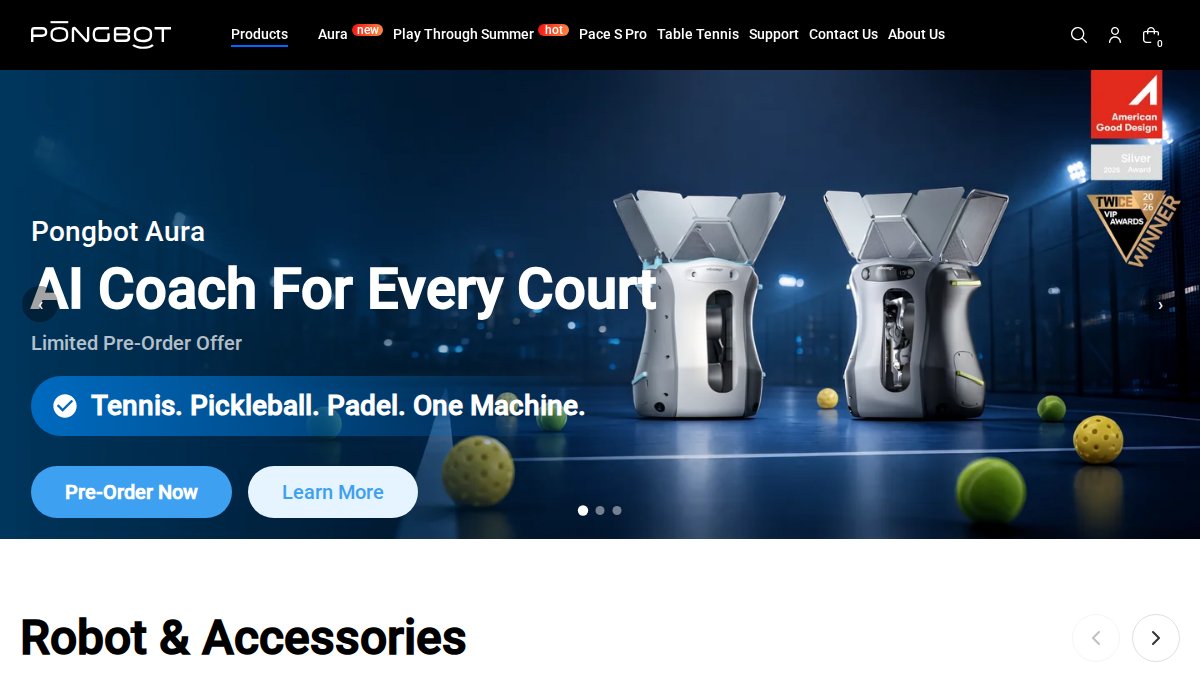
1. Pongbot Nova S Pro: Best Budget Entry for Small Clubs
The Pongbot Nova S Pro is the cheapest way to add a table tennis robot to a small club without gambling on used gear. At $250, it offers adjustable ball speed and frequency, a compact frame, and an interface simple enough that new members can set it up without a coach standing over them.
Where it earns its place: consistency training. Feed frequency stays steady, so players build repeatable strokes.
What most guides miss is the ceiling. The Nova S Pro has no complex drill programming, so once your players outgrow basic repetition, you'll be looking again. For a club testing whether robot training fits its culture, that's a fair trade.
2. Power Pong Omega: Professional-Grade Spin and Drills
Advanced players need to see real spin, and the Power Pong Omega delivers it. Its three-wheel head produces genuine topspin, backspin, and sidespin variation, which is the difference between practicing against a machine and practicing against an opponent.
At $1,800, it's a serious investment. Bluetooth connectivity lets coaches build and share custom sequences, and the pre-programmed drill library covers professional-level patterns. The drawback is obvious: the cost puts it out of reach for smaller clubs, and one unit won't serve fifteen tables.
3. iPong Trainer: Portable Option for Footwork Drills
Portability is the iPong Trainer's entire argument, and it wins it. At $150 and battery-operated, it moves from table to table without a power supply, making it the easiest machine here to deploy for quick footwork drills.
The compromise is accuracy. Spin and shot placement are limited compared to stationary club robots, so it works best as a supplement, not a primary training partner. If your space is tight and your sessions are short, that's a reasonable fit.
4. Donic Omni S Pro: App-Controlled Coaching Partner
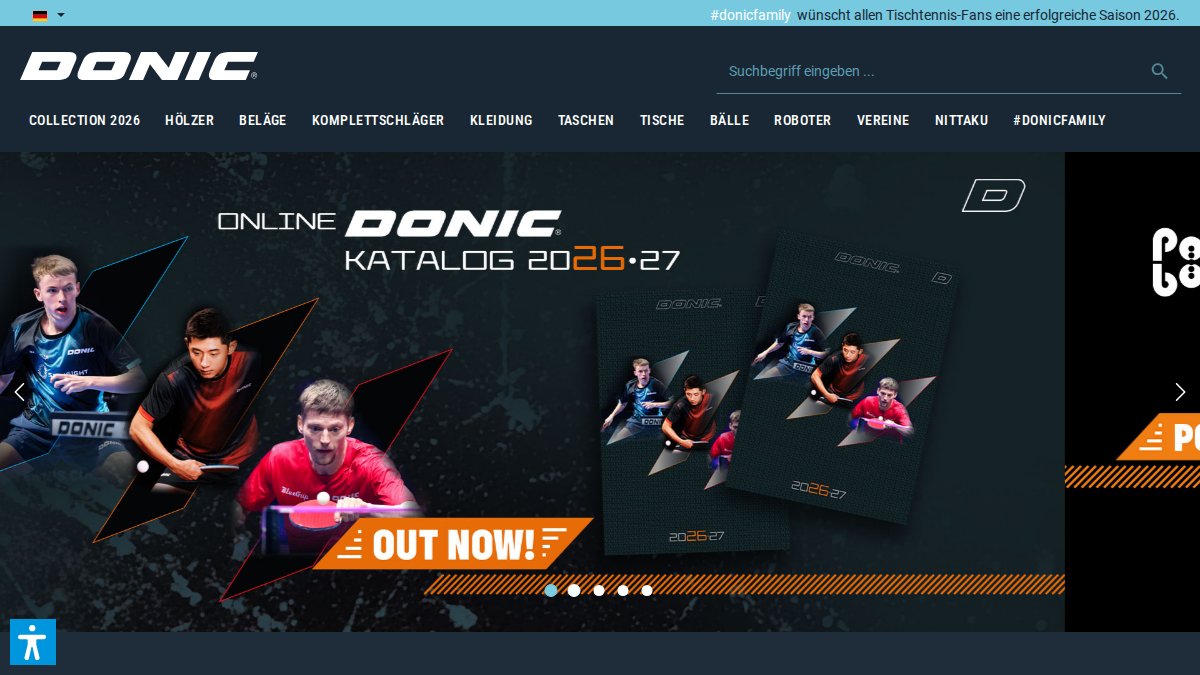
The Donic Omni S Pro treats software as the product. Its app interface controls 522+ pre-programmed drills and unlimited custom sequences, all stored and recalled from a phone or tablet (donic.com). For coaches running structured progression across a season, that library is genuinely useful.
At $1,200, it sits between budget and professional tiers. The catch: full functionality depends on a smartphone or tablet, so a dead battery means a dead session. Plan for a charging station at the table.
5. MyPingPongBuddy: The Best Ball Collector for Table Tennis Clubs
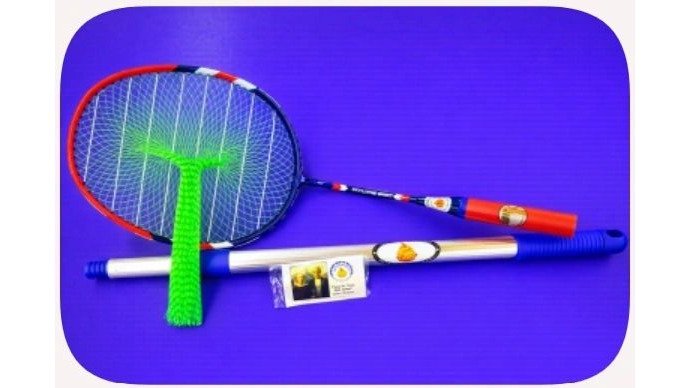
Every robot on this list creates the same problem: hundreds of balls on the floor, and a collection process that quietly eats your practice time. MyPingPongBuddy solves it with a handheld scoop that collects balls without bending over, and it's the tool our club partners reach for first.
Why collection speed is a club economics problem, not a convenience problem
A robot that feeds 50-100 balls per drill means 50-100 balls on the floor after every rotation. If a coach or player spends even a few minutes per rotation on manual pickup, that time multiplies across a full session and a full season. Most club managers we talk to treat ball collection as the single largest non-coaching time sink in a robot-based practice block, bigger than robot setup, bigger than drill selection.
MyPingPongBuddy is designed around that reality:
- No bending. The handle length keeps the user upright, which matters when a coach is collecting for hours across multiple sessions.
- Breaks down in half. It fits in a gear bag or a storage bin, so it travels between tables and between facilities.
- Handles daily club volume. It's built for repeated use by multiple members, not occasional home practice.
- 90-day full refund return policy. Clubs can trial it against their existing net scoopers without committing long-term.
Coaches tell us their students prefer it to the net scoopers they used for years they pick up the ball faster. For clubs running multi-ball training drills, that speed compounds across every session, and it also reduces the number of balls that roll under tables, into corners, or out of the room entirely, which is where a surprising share of a club's ball inventory disappears over a season.
The hidden cost competitors don't talk about
Most robot guides stop at the sticker price. Club managers can't afford to. The real cost of ownership includes:
- Ball attrition. Lost and crushed balls are a recurring line item. Faster, more complete collection directly reduces that loss.
- Labor time. Every minute a coach spends collecting is a minute not spent coaching. At scale, that's the most expensive part of the workflow.
- Replacement parts. Scoops, hinges, and handles wear out faster in a club than in a home. Ask any vendor, including MyPingPongBuddy, about spare-part availability and turnaround before you buy, and do the same for the robots on your shortlist.
Pricing depends on quantity and delivery, so check the MyPingPongBuddy site for current details. If you're outfitting multiple tables, ask about club quantities directly rather than ordering single units.
Integrating Robots with Multi-Ball Training Drills for Clubs
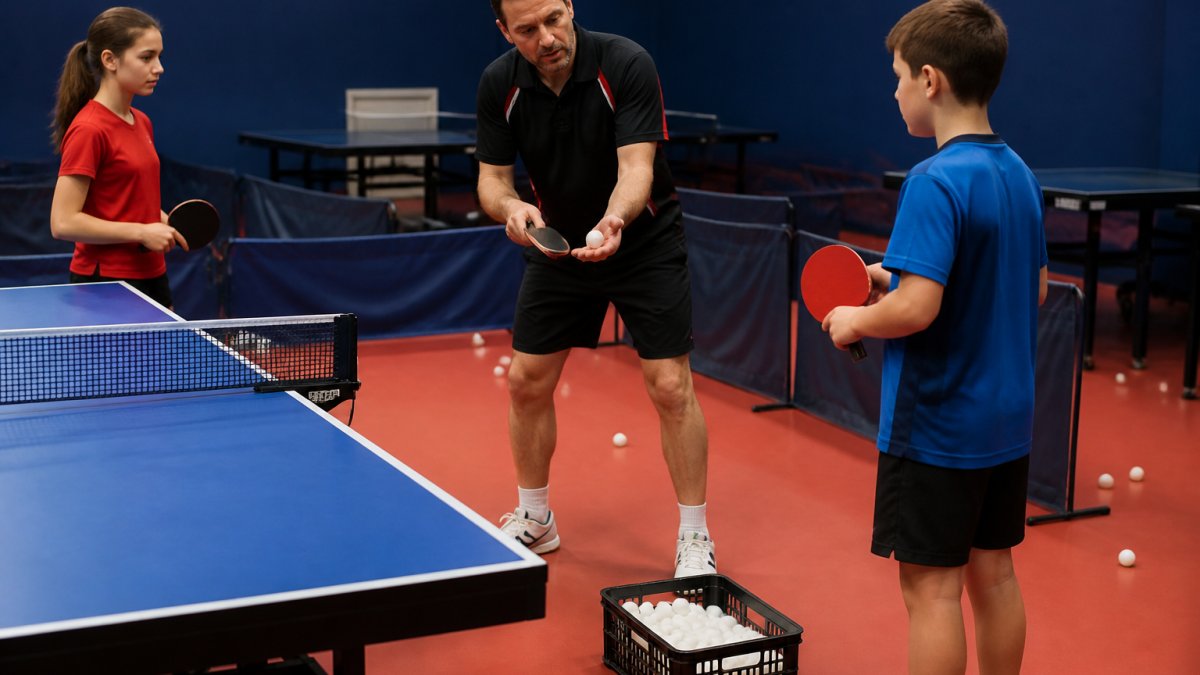
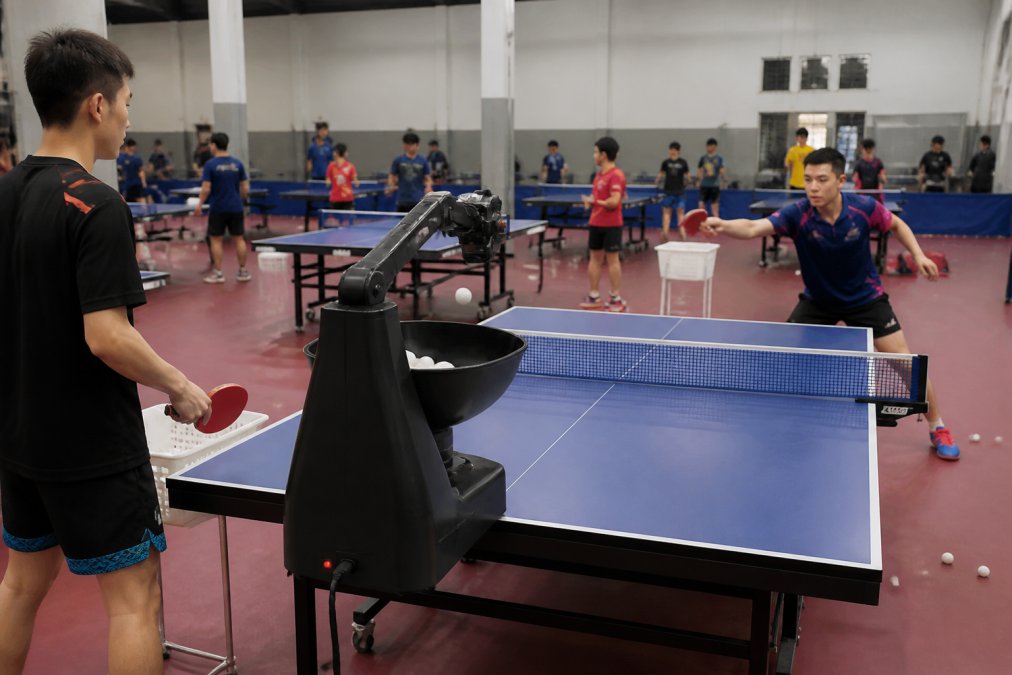
The best setup pairs a robot with a fast collection system, because the bottleneck in multi-ball training is rarely the machine. It's the reset time between drills, and in a club, reset time is multiplied by every player waiting in line.
A practical rotation for a club session
- Robot feeds a set of 50-100 balls at your chosen oscillation setting
- Player completes the drill, focusing on footwork and shot placement
- Coach scoops the floor with a collector while the next player warms up
- Reset the robot's drill pattern and repeat
This rhythm keeps players moving and coaches coaching. But the rotation only works if the room is set up for it. That's where most club guides stop short.
Space requirements most guides ignore
A robot table needs more than the table itself. Plan for:
- A clear collection lane behind the table. Players and coaches need to move through it without stepping onto the playing surface or into a neighboring table's zone.
- A staging area for the next player. If the next player has to stand in the collection lane, the rotation breaks down.
- Storage off the playing surface. Robots, collectors, and ball bins should have a designated spot that doesn't block foot traffic between tables.
- Power and charging. App-controlled robots and tablets need charging stations near the table, not across the room.
If your facility runs multiple tables in one room, map the robot table's footprint before you buy. A machine that fits a home basement can still crowd a shared club floor.
Safety protocols for group use
Common club protocols include:
- No one crosses the collection lane while the robot is feeding.
- Eye protection for players receiving high-speed feeds (aao.org).
- A clear signal, verbal or visual, before anyone steps behind the table.
- A designated person responsible for stopping the robot if a ball or a person enters the feed path.
Planning for the long term
For clubs weighing long-term value, spare-parts availability and firmware updates should factor into any robot purchase, not just the sticker price. Ask vendors three questions before you commit:
- How long are replacement wheels, feed mechanisms, and control boards available after purchase?
- How are firmware and app updates delivered, and do they require a subscription?
- What's the typical turnaround when a unit goes down mid-season?
A robot that's cheap to buy but expensive to keep running is a worse deal for a club than a higher-priced unit with a documented parts pipeline. The same logic applies to the collector: buy for the season, not for the first week.
Frequently Asked Questions
What are the best table tennis robots for professional clubs?
For professional clubs, the Power Pong Omega and Donic Omni S Pro stand out. The Power Pong Omega offers a three-wheel head for realistic spin variation and app-based drill control, while the Donic Omni S Pro provides over 522 pre-programmed drills and unlimited custom sequences. Both are priced around $1,200 to $1,800, making them a significant investment for clubs that need advanced training tools and multi-user efficiency.
How do manual ball collection tools compare to robots for training?
Manual collectors like MyPingPongBuddy and robots serve different purposes. Robots feed balls for drills, but someone still has to pick them up. A manual collector eliminates bending and speeds up cleanup, which is crucial for clubs running back-to-back sessions. Many coaches use both: a robot for multi-ball training drills and a collector to quickly reset the court, saving time and reducing physical strain on staff and players.
Is a table tennis robot necessary for club-level coaching?
A robot is not strictly necessary, but it significantly enhances training efficiency. It provides consistent feed frequency, spin variation, and shot placement that human feeders cannot match over long sessions. For clubs with limited coaching staff, a robot allows players to practice independently. However, pairing a robot with a reliable ball collector ensures that practice time is maximized and cleanup does not eat into session time.
What equipment is needed for efficient multi-ball training?
Efficient multi-ball training requires a ball machine or a coach to feed balls, a large supply of balls (100+), and a fast collection method. A ball collector like MyPingPongBuddy is essential for clubs because it lets coaches or players scoop up balls without bending, reducing fatigue and speeding up transitions between drills. Additionally, a robot with app-controlled drills can automate feeding for consistent repetition.
How can clubs improve training session throughput?
To improve throughput, clubs should minimize downtime between drills. Using a robot with pre-programmed drills reduces setup time, while a manual ball collector speeds up cleanup. MyPingPongBuddy, for example, allows one person to collect hundreds of balls in minutes without bending. Combining these tools can increase the number of players served per hour and enhance overall training focus.
Running a club means every minute of practice time counts, and cleanup is where most of it disappears. MyPingPongBuddy was built for exactly that problem: a handmade, portable scoop that breaks down in half, eliminates bending over, and speeds up collection so your players spend more time at the table. It's backed by a 90-day full refund return policy and trusted by clubs and coaches across the country. Get started with MyPingPongBuddy and take back your practice time.