 how-to
How to Identify High Quality Table Tennis Balls
Table of Contents
- Start With the Stamp: Star Ratings and 40+ Markings
- Table Tennis Ball Material: ABS vs Celluloid and What Changed
- How to Check Table Tennis Ball Roundness at Home
- The Table Tennis Ball Bounce Test You Can Run in Two Minutes
- 1 Star vs 3 Star Table Tennis Balls: When Cheap Balls Cost You More
- Weight, Size, and Feel: What the Specs Tell You
- Defects, Storage, and How Long Table Tennis Balls Last
- Your At-Home Inspection Checklist: Pass or Fail in Five Steps
- Frequently Asked Questions
Last Updated: October 9, 2026
Start With the Stamp: Star Ratings and 40+ Markings
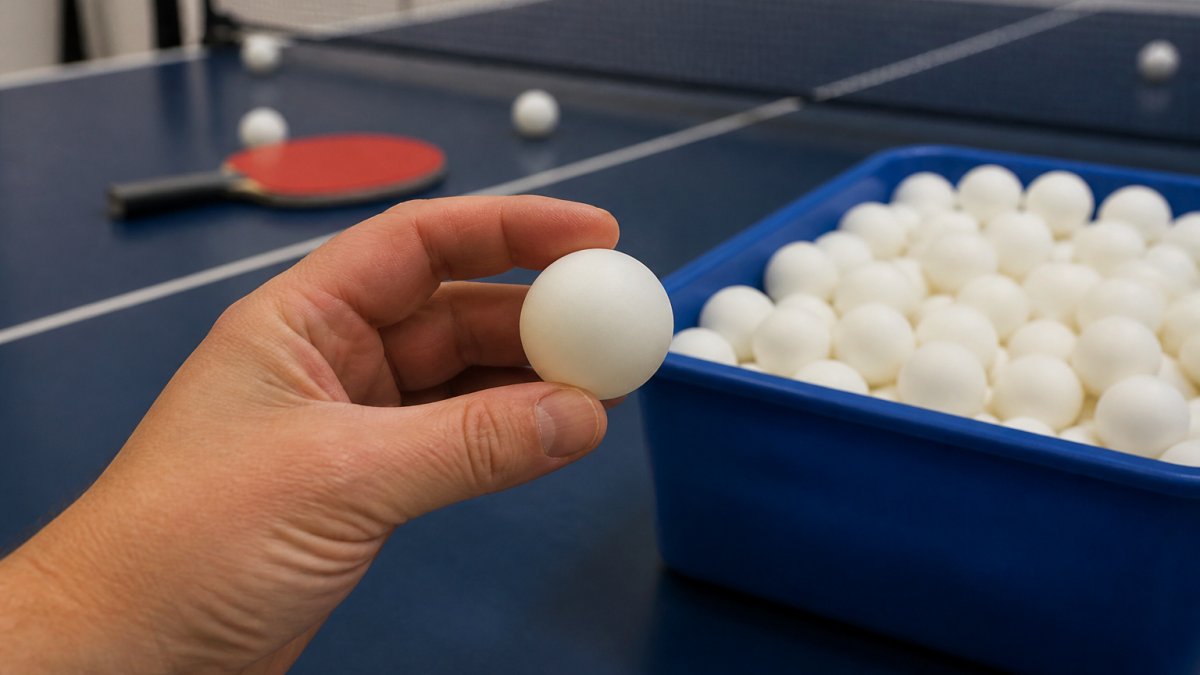
The fastest way to identify a high quality table tennis ball is to read the stamp printed on it. Every regulation ball carries two key pieces of information: a star rating and a size code.
Here is the short version: the stamp is a manufacturer's own quality grade, and it is the first filter you should apply.
What One-Star, Two-Star, and Three-Star Balls Actually Mean
Star ratings indicate quality control, not a different ball. A one-star ball is a practice-grade ball that may have minor flaws in roundness or bounce. A three-star ball passed the strictest checks the maker runs, so it is the most consistent ball in the line.
The star system is a manufacturer's internal grading, not a government standard. That matters because two brands can both print three stars and still feel different.
- One-star: training, robots, casual play
- Two-star: general club use, still not match grade
- Three-star: competition and serious practice
Why 40+ on the Ball Matters for Competition Play
The "40+" mark means the ball is 40 millimeters or larger in diameter. That is the current size used in sanctioned play, and it replaced the smaller 38mm ball years ago.
If you plan to enter tournaments, check for 40+ before anything else. A ball without it is a recreational ball, no matter how many stars are printed next to it.
Table Tennis Ball Material: ABS vs Celluloid and What Changed
Modern table tennis balls are made from ABS plastic, and older ones were made from celluloid. The switch happened because celluloid is flammable and costly to ship, so the sport moved to a safer plastic. That change is not just a safety footnote. It changed how the ball feels, how long it lasts, and how you should shop.
Why the Sport Moved Away From Celluloid
Celluloid is a nitrocellulose-based plastic. It is flammable, which made storage, shipping, and air travel a genuine headache for clubs and tournament organizers. ABS is a sturdier plastic that does not carry the same fire risk, so manufacturers could produce, store, and ship balls more cheaply and safely.
The practical result is that nearly every new ball sold today is ABS. Celluloid balls still exist, mostly as old stock or specialty items, but they are no longer the default.
How ABS and Celluloid Play Differently
The material changes the feel and the flight of the ball. ABS balls tend to hold their shape longer and resist cracking better than celluloid.
Celluloid balls feel softer and, in the experience of many long-time players, spin a little more easily. That softer feel is one reason some older players still prefer them, but the trade-off is fragility.
- ABS: durable, holds shape, current standard, harder feel
- Celluloid: softer feel, older stock, more fragile, harder to find
The Compatibility Trap Nobody Warns You About
You cannot mix ABS and celluloid balls in one match and expect consistent results. The two materials bounce, spin, and sound differently, so a rally that feels normal with one ball can feel off with the other.
This is also where the star rating gets tricky. The star system is a manufacturer's internal grading, not a government standard.
What to Buy Today
For anyone buying new balls, ABS is the practical choice. It is what most clubs and leagues now use, it stores better, and it lasts longer. If you find a box of celluloid balls, they can be fine for casual play, but do not build your match preparation around a material you may not be able to replace.
How to Check Table Tennis Ball Roundness at Home
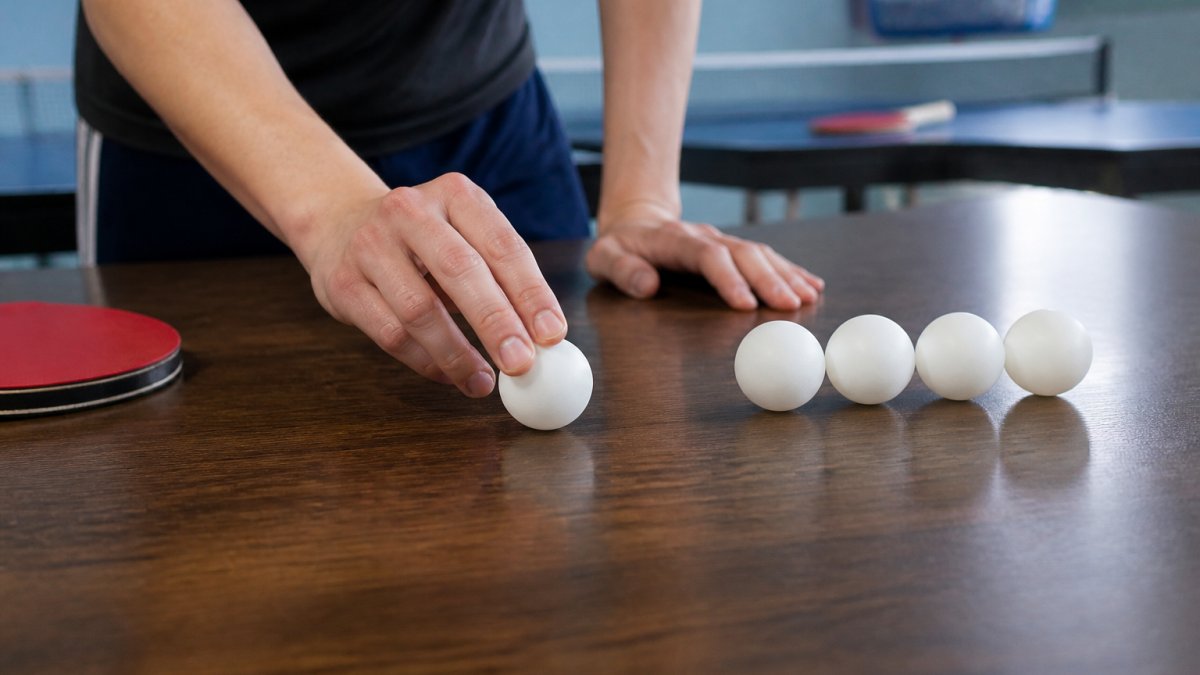
Roundness is where cheap balls give themselves away. A ball can look perfect on a shelf and still wobble when it rolls. The good news is that you can test this in your kitchen in under a minute.
The Roll Test: A Flat Surface Never Lies
Place the ball on a flat, level surface and give it a gentle push. A round ball rolls in a straight line. A warped ball curves, wobbles, or drifts to one side.
Run this test on a few balls from the same box. If several of them drift, the batch has a roundness problem.
The Table Tennis Ball Bounce Test You Can Run in Two Minutes
Drop the ball from a fixed height, ideally about 30 centimeters, and watch how high it bounces back.
Do this three times with the same ball. Then do it with three different balls from the box.
- Consistent height across drops: good sign
- One ball bouncing much lower: likely a defect
- Bounce height varying between balls: poor batch consistency
Bounce consistency matters more than raw bounce height. A ball that always bounces to the same height is playable. A ball that surprises you is not.
1 Star vs 3 Star Table Tennis Balls: When Cheap Balls Cost You More
One-star balls are not a scam. For a robot throwing hundreds of balls an hour, a one-star ball is the smart buy because it is cheap and you do not care about tiny flaws.
Three-star balls earn their place in matches and serious drills. When a rally hinges on a consistent bounce, a warped practice ball ruins the point and your timing.
| Use Case | Recommended Grade | Why |
|---|---|---|
| Robot and multi-ball drills | One-star | Cheap, flaws do not affect training |
| Casual home play | One or two-star | Good enough, low cost |
| Club practice | Two or three-star | Better consistency for skill work |
| Matches and tournaments | Three-star, 40+ | Required consistency and size |
The trap is buying one-star balls for match play to save money. You will spend the savings on frustration.
Weight, Size, and Feel: What the Specs Tell You
A regulation table tennis ball weighs about 2.7 grams and measures 40 millimeters across. Those two numbers matter because they drive how the ball flies, spins, and feels off the paddle. But the numbers alone do not tell you whether a ball is good. You need to know what they mean in play and how to check them at home.
Why 40mm and 2.7 Grams Matter
The 40mm size is the current standard for sanctioned play. It replaced the smaller 38mm ball years ago, and the change slowed the game down slightly and made rallies longer.
Since all regulation balls sit near the same weight, big differences usually signal a manufacturing defect rather than a design choice. A ball that feels noticeably heavier or lighter than the rest of the box is a red flag.
How to Check Weight and Size at Home
You do not need a laboratory to catch outliers. A kitchen scale that reads in grams is enough to spot a ball that is clearly heavier or lighter than its boxmates. If one ball is off by a noticeable margin, set it aside for practice.
For size, you can compare balls side by side against a known regulation ball. A ball that looks visibly larger or smaller than the rest is worth checking.
What Feel Actually Tells You
Feel is subjective, but it is real. Some players prefer a harder ball with a crisp sound. Others like a softer contact. The material and the manufacturing tolerances drive that feel.
Once you find a ball that suits your game, buy it in bulk so you get a consistent batch. Buying the same model in large quantities is the simplest way to avoid the batch-to-batch variation that makes practice feel inconsistent.
The Limits of Home Checks
Home checks can catch obvious defects, but they cannot certify a ball for sanctioned play. Official approval depends on recognized specifications and approval markings, and those are verified by the governing bodies, not by a kitchen scale. Use your home checks to sort good balls from bad ones, and rely on the official markings when you need a ball that is cleared for competition.
Defects, Storage, and How Long Table Tennis Balls Last
Most ball failures come from defects, not age.
Storage matters too. Heat and sunlight break down plastic over time. Keep balls in a cool, dry place, away from a hot car or a sunny window.
- Cracked: toss it, it is done
- Dented: toss it, the dent will not come out
- Warped: use it for robot drills only
With good care, a quality ball lasts a long time. The enemy is not age. It is heat, sunlight, and stepping on them.
Your At-Home Inspection Checklist: Pass or Fail in Five Steps
Run this checklist on any new box of balls before you commit them to a match. It takes about five minutes for a full box.
- Check the stamp. Confirm the star rating and the 40+ mark match your intended use. Fail if a competition ball lacks 40+.
- Roll test. Roll each ball on a flat surface. Fail any ball that curves or wobbles.
- Bounce test. Drop from a fixed height three times. Fail any ball with an inconsistent bounce.
- Sight and feel check. Look for cracks or dents and feel for weight outliers. Fail any ball that looks or feels off.
- Sort and store. Move the passes to your match box and the fails to your practice bin. Store everything cool and dry.
This routine separates the good balls from the bad before they cost you a point.
Frequently Asked Questions
How can you tell if a table tennis ball is good quality?
Check the stamp first: a genuine three-star ball with a 40+ marking has passed factory sorting for roundness and bounce. Then run your own tests. Roll the ball across a flat table and watch for wobble. Drop it from 30 centimeters onto the table and confirm it rebounds roughly 23 centimeters. Squeeze it gently between your thumb and fingers; it should flex slightly and return to shape. Any ball that cracks, dents, or sounds dull on impact fails the check.
What is the difference between 1-star, 2-star, and 3-star table tennis balls?
Star ratings reflect how strictly a ball was sorted at the factory. One-star balls are the least consistent and suit casual play or robot feeding. Two-star balls fall in the middle, fine for practice rallies where perfect flight is not critical. Three-star balls are the top grade, sorted for uniform roundness, weight, and bounce, and they are what you want for matches and serious training. The rating is not about material; all three grades can use the same plastic.
Do table tennis balls bounce differently depending on their quality?
Yes, and the difference shows up most in consistency. A high-quality ball dropped from 30 centimeters onto a standard table should rebound close to 23 centimeters every time. Lower-grade balls vary more from ball to ball, so your timing drifts during a rally. If you drop ten balls and the rebound heights spread across several centimeters, that batch is not reliable for match play. Use those for robot drills or recreational hitting instead.
How long do table tennis balls last?
A three-star ball used in regular club play typically lasts a few sessions before the surface smooths or a hairline crack appears. Balls used only for casual rallies can last weeks. Heat and sunlight speed up degradation, so store balls in a sealed bag or box away from direct sun and car trunks. Inspect before each session: squeeze the ball, roll it on a flat surface, and listen for a clean, sharp sound on impact. Replace any ball that sounds dull or shows visible seams.
Cleanup is the other half of good ball management. Once you have sorted your quality balls, the last thing you want is to bend over and gather them one by one after every session. MyPingPongBuddy makes a handmade scoop that picks up balls with ease, so you skip the back strain and get back to playing. It breaks down in half for transport, stands up to daily club use, and comes with a 90-day full refund return policy. Buy it now and make cleanup the easy part of your training.