 how-to
How to Create a Consistent Table Tennis Training Routine
Table of Contents
- Start With a Table Tennis Training Session Template
- How Long Should a Table Tennis Training Session Length Be?
- A Table Tennis Training Plan for Beginners
- Building Your Weekly Table Tennis Practice Schedule
- Multi-Ball Table Tennis Training for Faster Progress
- Tracking Progress and Hitting Measurable Milestones
- Balancing Table Time, Physical Training, and Recovery
- Staying Consistent When Motivation and Schedules Change
- Frequently Asked Questions
Last Updated: October 21, 2026
Start With a Table Tennis Training Session Template
A consistent table tennis training routine starts with a repeatable session template, not a list of random drills. Players improve fastest when every practice follows the same shape: warm-up, drills, match play, cooldown.
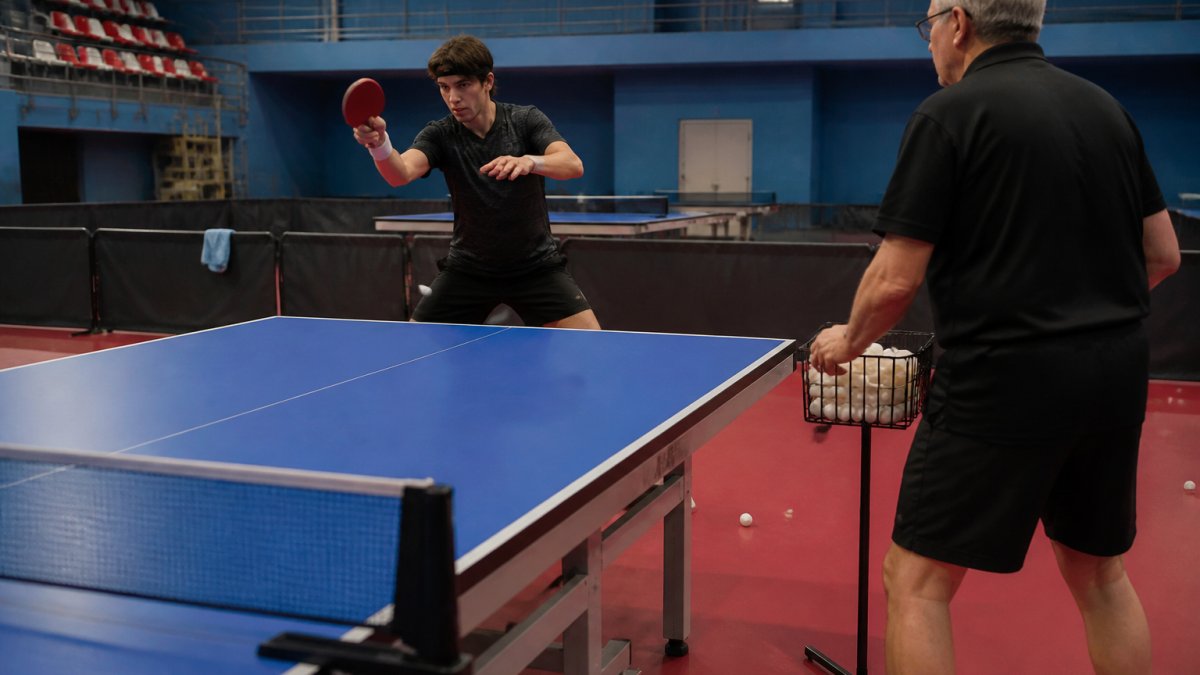
That structure removes decisions. You show up, you know what comes next, and you spend your energy playing instead of planning.
Here is the template we recommend for almost every session:
- Warm-up (10 minutes): raise your heart rate and wake up your joints
- Drills (20-30 minutes): focused reps on one or two skills
- Match play (15-20 minutes): apply what you drilled under pressure
The USA Table Tennis coaching resources offer free drill ideas you can slot into this frame.
The 10-Minute Warm-Up You Should Never Skip
The biggest mistake we see is skipping the warm-up to "save time." That trade never works. Cold muscles mean slower footwork and sloppy stroke mechanics.
A simple warm-up looks like this:
- 2 minutes of light jogging or jumping jacks
- 3 minutes of shadow swings, forehand and backhand
- 3 minutes of easy rallying at half speed
The warm-up is also your first ball control check. If your strokes feel wild during warm-up, slow down before you add power.
Structuring Drills, Match Play, and Cooldown
Drills build the skill. Match play tests it. The cooldown protects your body for the next session.
A common mistake is spending all your time on drills and never playing points. You need both. Drills teach technique; match play teaches decision-making under pressure.
Try this split for a one-hour session:
| Phase | Time | Focus |
|---|---|---|
| Warm-up | 10 min | Movement and easy rallying |
| Drills | 25 min | One or two specific skills |
| Match play | 15 min | Applying skills in points |
| Cooldown | 10 min | Light rallying and stretching |
How Long Should a Table Tennis Training Session Length Be?
Most players get the best results from 60 to 90 minutes per session.
Session length matters less than consistency. Three focused 60-minute sessions beat one exhausting three-hour marathon every week. Fatigue kills technique, and tired reps build bad habits.
Beginners should start at 45 to 60 minutes. Intermediate players can push to 90 minutes. Advanced players training for competition may split the day into two shorter sessions.
A Table Tennis Training Plan for Beginners
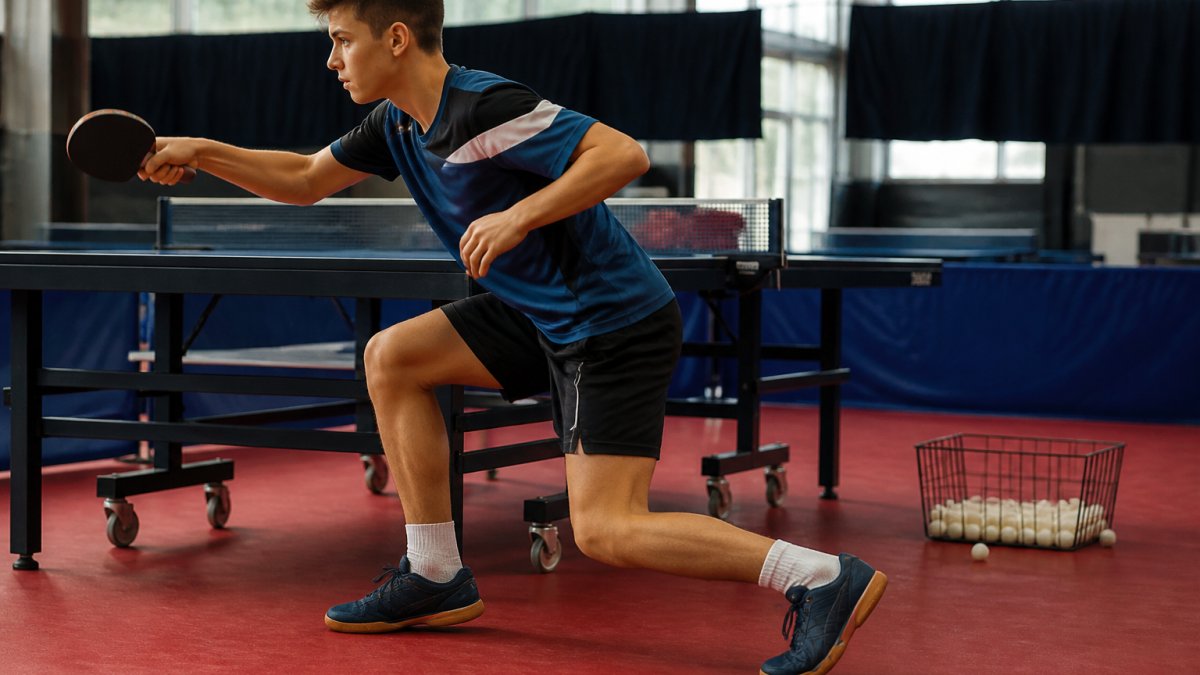
A table tennis training plan for beginners should focus on stroke mechanics and racket control before power or spin.
New players often want to learn everything at once. Resist that. Pick one skill per session and repeat it until it feels automatic.
Here is what a beginner week looks like:
- Session 1: forehand drive and ready position
- Session 2: backhand drive and footwork basics
- Session 3: serving and return of serve
Add a short physical block to two sessions a week. Bodyweight squats, lunges, and light core work build the stability your strokes need.
First Month: Building Stroke Mechanics and Racket Control
Month one is about repetition, not results. Your goal is a repeatable forehand and backhand with a consistent contact point.
Focus on these fundamentals:
- Grip pressure: firm but relaxed, never squeezing
- Ready position: knees bent, weight on the balls of your feet
- Contact point: in front of your body, not beside it
Brushing the ball comes later. First, learn to hit it cleanly and consistently.
Building Your Weekly Table Tennis Practice Schedule
A table tennis practice schedule works best when it matches the time you actually have. Building a plan around an ideal week you cannot keep is the fastest way to quit.
Be honest about your available hours. Then build the schedule around that number, not the other way around. The templates below are written day by day so you can copy them into a calendar, and each one includes a rule for what to cut when a session gets missed.
Ready-to-Use Schedules for 3, 5, and 7 Hours a Week
These three templates cover most players.
3 hours per week, three 60-minute sessions
| Day | Session | Focus |
|---|---|---|
| Tuesday | 60 min | Forehand drive drills plus 15 min match play |
| Thursday | 60 min | Backhand drive and footwork patterns |
| Saturday | 60 min | Serving practice plus full match play |
Best for busy beginners and players returning after a layoff.
5 hours per week, two 90-minute sessions plus two 45-minute sessions
| Day | Session | Focus |
|---|---|---|
| Monday | 45 min | Serve and return-of-serve reps |
| Wednesday | 90 min | Technical drills plus multi-ball block |
| Friday | 45 min | Footwork and shadow drills |
| Sunday | 90 min | Match play plus cooldown review |
Best for intermediate players with a regular partner or club night. The two short sessions are deliberately low-equipment, a table, a bucket of balls, and a partner are enough.
7 hours per week, four 90-minute sessions plus one 60-minute session
| Day | Session | Focus |
|---|---|---|
| Monday | 90 min | Technical drills (forehand and backhand) |
| Tuesday | 60 min | Conditioning and footwork |
| Thursday | 90 min | Multi-ball and third-ball attack |
| Friday | 90 min | Match play and point construction |
| Sunday | 90 min | Serve variation plus review |
Best for competitive players with tournament goals.
Adapting the Schedule to Solo or Partner Practice
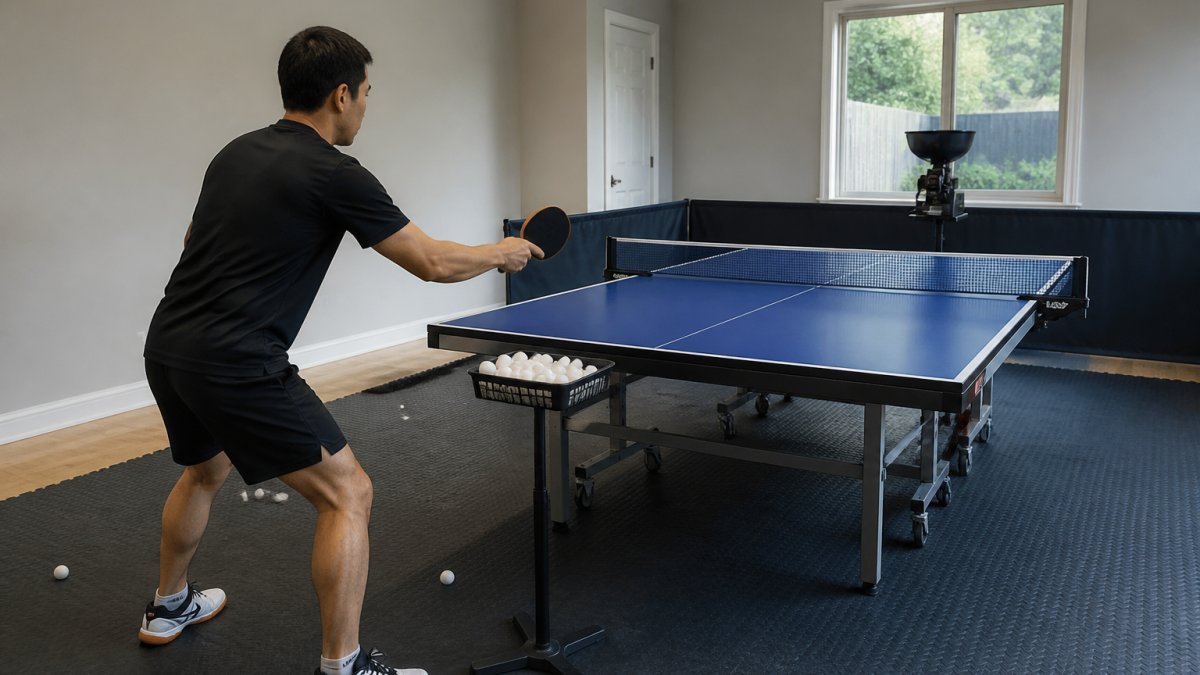
Not every session needs a partner. Solo practice works well for serving, shadow footwork, and ball-machine drills; partner practice is better for rally consistency, match play, and irregular drills.
If you train alone most weeks, weight the schedule toward serving and ball-machine blocks, and reserve one partner session for match play. If you have a regular partner, split the sessions so each of you gets a dedicated drill block before you play points, alternating drill and match sessions keeps both players improving instead of one feeding balls for an hour.
Multi-Ball Table Tennis Training for Faster Progress
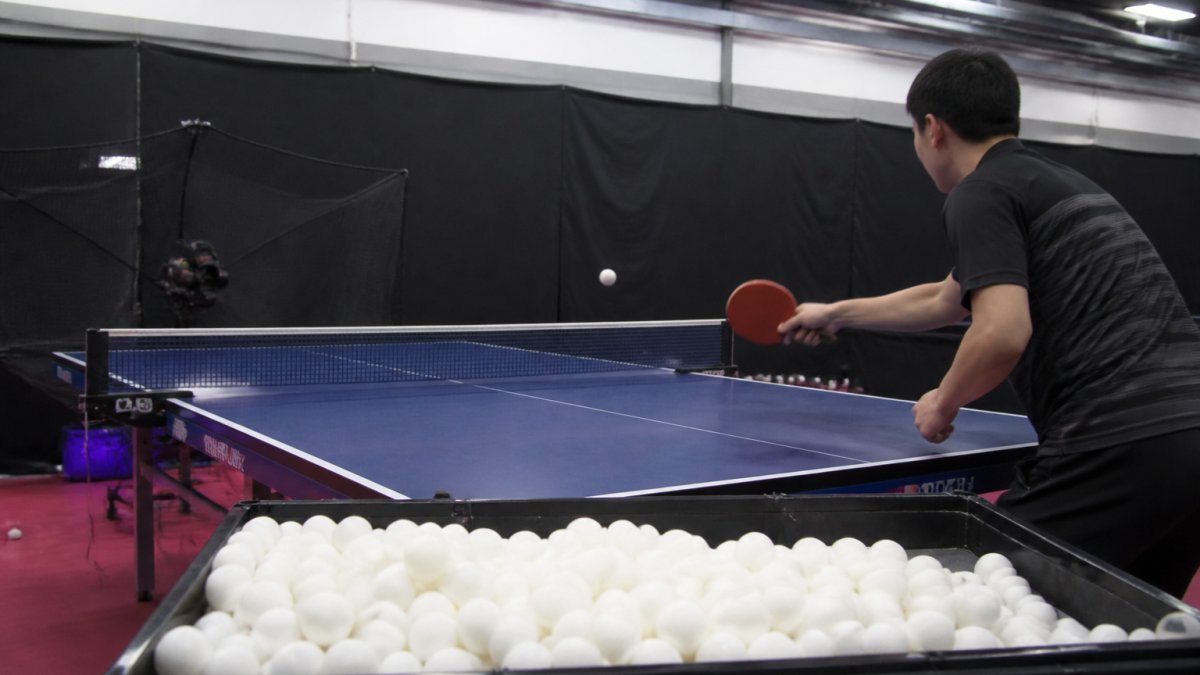
Multi-ball table tennis training is the fastest way to build stroke repetition.
The format suits skill development because you control the feed. You can isolate one stroke, one placement, or one footwork pattern.
Keep multi-ball blocks short, around 10 to 15 minutes. Fatigue sets in fast when balls keep coming.
Cleanup is the hidden cost of multi-ball work. Balls scatter everywhere, and bending to collect them eats your session time and strains your back.
Tracking Progress and Hitting Measurable Milestones
Progress tracking turns a vague goal into a target you can hit. Players who measure their practice tend to stay motivated longer, and the numbers tell you when to change the drill mix instead of guessing.
Track a few simple numbers each session. Keep them in a notebook or a phone note, the format matters less than recording them the same way every time.
- Rally length: your longest streak without an error in a cooperative rally
- Serve accuracy: serves that land in your target zone out of ten attempts
- Drill success rate: clean reps out of twenty in your main drill
Setting Baselines and Milestones
A number means nothing without a starting point. In your first week, record each metric as-is, do not try to improve it yet. That first reading is your baseline.
From there, set milestones that are small enough to reach in four to six weeks. A common pattern among club players:
- Rally length: add roughly five clean shots to your baseline before raising the target again
- Serve accuracy: move from landing half your serves in the target zone to landing most of them
- Drill success rate: aim for a steady climb in clean reps rather than a single perfect set
Write the milestone down next to the baseline. A target you can see is easier to chase than a feeling that you are 'getting better.'
The Monthly Review: What to Change When Numbers Stall
Review the numbers once a month, not every session. Session-to-session swings are noise; monthly trends are signal.
Use this decision rule:
- Rally length climbing, error rate falling: the routine is working, keep the drill mix and raise one milestone.
- Rally length flat for two months: change the drill, not the schedule. Swap in a different feeding pattern or slow the pace until contact is clean.
- Serve accuracy flat: reduce the target zone size or practice serves at the end of the session when you are tired, which mirrors match conditions.
A routine with numbers attached is easier to keep than one without, because every session has a small, visible purpose beyond 'practice more.'
Balancing Table Time, Physical Training, and Recovery
Table time alone will not build a complete player. Physical training and recovery are part of the plan, not extras.
Add two short conditioning blocks per week:
- Strength: squats, lunges, and core work for stability
- Rotational power: medicine ball throws for forehand power
- Speed and agility: multidirectional movement drills for footwork
Recovery matters just as much. Sleep, hydration, and at least one full rest day per week protect your joints and keep your training intensity high.
Staying Consistent When Motivation and Schedules Change
Consistency beats intensity every time. The players who improve are not always the most talented; they are the ones who keep showing up.
Motivation will dip. Schedules will break. Plan for both.
- Shrink the session on bad days: 20 focused minutes still counts
- Book practice like an appointment with a partner
- Rotate drills so practice stays fresh
A short session kept is worth more than a perfect session skipped. That single rule protects your table tennis training routine when life gets busy.
Frequently Asked Questions
How often should you train table tennis to improve?
Three to four sessions per week is enough to see steady improvement for most recreational players, as long as each session has a clear focus. Two sessions of focused drills plus one match-play night beats five unfocused hit-arounds. If you are newer to the sport, start with two or three 45-minute sessions and add time once your footwork and stroke mechanics feel repeatable. Consistency matters more than volume: a fixed weekly table tennis practice schedule you actually keep will outperform sporadic long sessions every time.
How long should a table tennis training session be?
Plan for 60 to 90 minutes for a full session: roughly 10 minutes of warm-up, 40 to 60 minutes of drills and multi-ball work, 10 to 15 minutes of match play, and 5 to 10 minutes of cooldown and stretching. Beginners can get real value from 45-minute sessions. The table tennis training session length matters less than the structure, so keep the warm-up and cooldown even when you shorten the middle. Sessions longer than 90 minutes tend to lose intensity and raise injury risk.
What should a table tennis practice routine include?
A complete table tennis training routine covers four blocks: a warm-up with light footwork and brushing the ball, technique drills for forehand and backhand stroke mechanics, multi-ball or partner drills for ball placement and reaction time, and match play to test what you practiced. Finish with a cooldown and a quick note on what worked. Add strength and rotational power work, like medicine ball throws, two days a week away from the table. This mix keeps skill development and conditioning moving together.
How can you stay consistent with table tennis practice?
Anchor practice to fixed days and times, keep a written log of rally length and drill accuracy, and set small measurable milestones such as landing 20 backhand loops in a row. Line up a regular practice partner or book a ball machine slot so the session is scheduled, not optional. Cut sessions to 30 minutes on busy weeks rather than skipping them entirely. Keeping your gear packed and your training space tidy, including quick ball cleanup between drills, removes friction that often turns a planned session into a missed one.
Building a consistent table tennis training routine is a challenge, but the right tools make it easier to protect your practice time. MyPingPongBuddy makes cleanup effortless with a handmade scoop that eliminates bending, breaks in half for easy transport, and is backed by a 90-day full refund return policy. Get started with MyPingPongBuddy and spend your sessions training, not chasing balls.