 comparison
Handmade vs Mass Produced Training Aids: 2026 Comparison
Table of Contents
- Handmade vs Mass Produced Training Aids: The Core Differences
- Durability and Longevity: Which Build Actually Lasts
- The Benefits of Handmade Sports Equipment for Serious Players
- Improving Table Tennis Practice Efficiency With the Right Training Aid
- Cost, Pricing, and Value: What You Get at Each Price Point
- How to Choose Between Handmade and Mass Produced Training Aids
- Frequently Asked Questions
Last Updated: September 19, 2026
Handmade vs Mass Produced Training Aids: The Core Differences
The debate between handmade vs mass produced training aids comes down to one question: what do you need the tool to do? A mass produced training aid is manufactured at scale through standardized, automated processes to identical specifications. A handmade training aid is built in smaller batches, often by hand, with more variation between units and more attention to finishing.
Below, we break down durability, cost, performance, and repairability.
How Manufacturing Method Shapes Performance
Mass production wins on output consistency: every unit matches the last, so a mass produced training aid behaves predictably session after session, valuable when drilling the same stroke hundreds of times.
Handmade production wins on craftsmanship and fit. A maker can adjust a handle angle, reinforce a stress point, or tune a scoop to a specific use case. The trade-off is variation: two handmade units may not feel identical.
For table tennis, the difference shows up in how the tool handles repeated ball contact and feels during a long session. Neither method automatically wins, it depends on whether you value standardization or a bespoke touch.
Durability and Longevity: Which Build Actually Lasts
Construction quality, not manufacturing method, decides how long a training aid lasts. A well-made mass produced aid can outlast a poorly built handmade one, and vice versa. Durability is a set of failure modes you can inspect before you buy.
Where Training Aids Actually Fail
Most training aids die from one of four predictable failure modes:
- Joint fatigue. Handle-to-scoop or hoop-to-frame connections take hundreds of pickups per session. Glued joints and snap-fit connectors loosen first; through-bolts, threaded inserts, and mechanically fastened joints hold far longer.
- Stress cracks at molded corners. Injection-molded plastic concentrates stress at inside corners and thin ribs, and cracks propagate fast under repeated flexing.
- Abrasion at the contact surface. The lip or scoop edge that scrapes a table or floor wears down. Hard plastics glaze and crack; softer polymers and reinforced edges wear more gradually.
- Fastener back-out. Screws, clips, and pivots loosen over time. Thread-locking compound, nylon-insert lock nuts, or captured fasteners resist this; friction alone does not.
What to Inspect Before You Buy
A quick physical inspection tells you more than any marketing claim:
- Flip it over and look at the joints first. Reinforced connection points outlast glued or snap-fit parts regardless of how the tool was made.
- Flex the handle and frame gently. A tool that creaks or shifts under light load will loosen faster under daily use.
- Check the contact edge. A thick, radiused, or replaceable wear edge lasts longer than a thin, sharp lip.
- Ask about the wear part. If the maker can name the component that wears first and sell you a replacement, the tool is serviceable. If the answer is 'just buy a new one,' it is disposable.
Handmade vs Mass Produced: Where Each Wins on Longevity
Mass produced aids often use molded plastics and standardized fasteners. Replacement parts are cheap and uniform when they exist, but the housing is frequently a single molded piece, so one corner crack can retire the whole tool.
Handmade aids tend to use thicker stock, hand-finished joints, and mechanically fastened assemblies.
A Simple Longevity Test
For a fast, non-destructive comparison:
- Load the tool as you would in a real session, fill, lift, empty, twenty times in a row.
- After the twentieth cycle, check every joint for movement and every fastener for back-out.
- Flex the frame lightly and listen for creaks.
- Look at the contact edge for visible wear.
A tool that passes cleanly will likely survive a season of daily use; one that shows movement or noise after twenty cycles will show more after two hundred. This repeatable check is the fastest way to separate a durable training aid from a disposable one.
The Benefits of Handmade Sports Equipment for Serious Players
Handmade sports equipment gives serious players three things mass production struggles to match: customization, repairability, and a direct line to the maker.
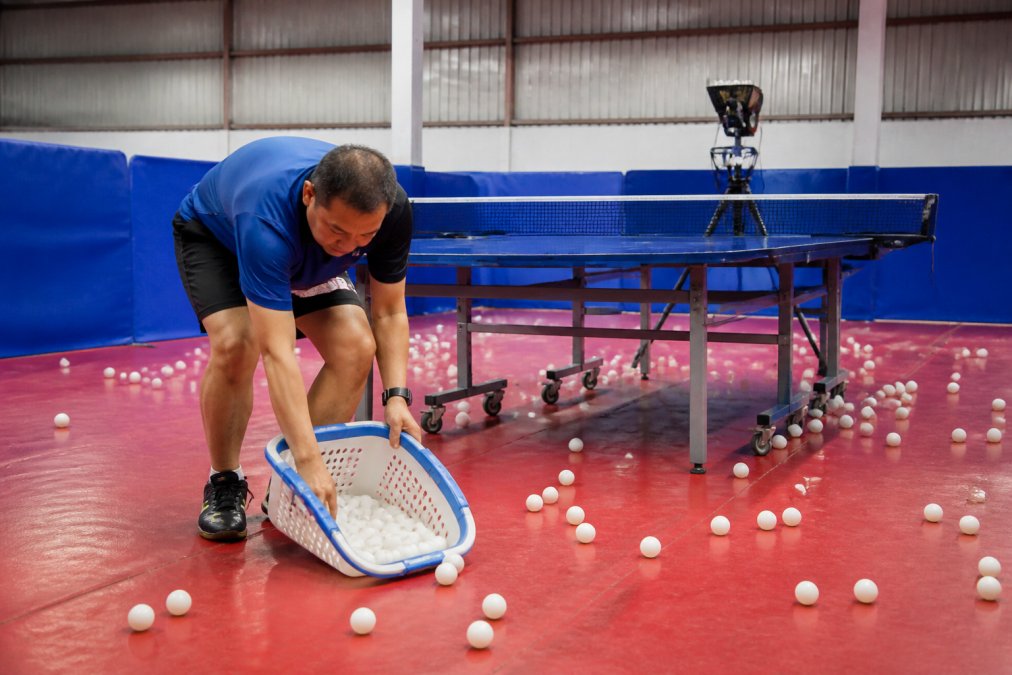
Improving Table Tennis Practice Efficiency With the Right Training Aid
Practice efficiency comes down to time spent training versus time spent resetting. A training aid that speeds up ball collection directly increases your reps per session.
Cost, Pricing, and Value: What You Get at Each Price Point
Price alone tells you very little. What matters is cost per use, cost per year, and how the tool holds up under your training volume, not the sticker price most guides stop at.
The Cost-Per-Use Math
A training aid is used repeatedly, so the honest comparison is total cost divided by sessions survived. Two aids at very different prices can land at the same cost per session.
Run the comparison like this:
- Estimate sessions per week.
- Multiply by the weeks you expect it to last before replacement or repair.
- Divide the purchase price (plus repair cost) by that total.
Where the Money Actually Goes
Mass produced aids cost less upfront because economies of scale lower per-unit cost, molded tooling, automated assembly, and standardized parts that are cheap to produce but often replace-only when they fail.
| Factor | Mass Produced Training Aid | Handmade Training Aid |
|---|---|---|
| Upfront cost | Lower | Higher |
| Unit consistency | High (identical units) | Varies by maker |
| Customization | Limited to stock options | Often available |
| Repairability | Usually replace-only | Often serviceable |
| Lead time | Immediate | Can vary by batch |
| Best for | High-volume, standardized needs | Specific fit, long-term use |
The Hybrid Option Most Guides Ignore
The handmade-vs-mass-produced framing misses a third, fast-growing category: hybrid production. Small makers use CNC routers, laser cutters, and 3D printers to cut parts precisely, then finish, assemble, and tune them by hand, repeatability of a machined part with the fit-and-finish of a handmade one.
What to Ask Before You Pay
- What is the return window? A clear refund policy is the best signal a maker stands behind the tool.
- What is the warranty, and what does it cover? One covering joints and fasteners beats one covering only obvious defects.
- Can I buy replacement parts? If yes, the tool is serviceable and cost-per-use improves.
- How long is the lead time? Handmade and hybrid aids are often produced in batches, so stock and lead times vary.
Pricing for MyPingPongBuddy depends on quantity and current stock, so check the website for current pricing. The value question is whether the tool reduces bending, saves cleanup time, and survives daily use.
Maintenance and Repairability Over Time
Repairability is the most overlooked factor here, and where handmade and hybrid aids often pull ahead. A mass produced tool with a cracked housing usually gets thrown out; a handmade or hybrid tool with a worn joint can often be fixed with a screwdriver and a replacement part.
How to Choose Between Handmade and Mass Produced Training Aids
Choose based on training volume, your body, and expected lifespan, not which label sounds better:
- If you train alone a few times a week: A mass produced aid is usually fine. Standardization and low upfront cost matter more than customization.
- If you coach or run multi-ball sessions: Prioritize collection speed and bend-free pickup. A handmade scoop built for one-handed use saves real time every session.
- If you have back pain or mobility limits: Eliminating bending is the deciding factor. Look for a tool designed specifically to avoid floor-level reaching.
- If you need a specific fit or setup: A handmade aid lets you request adjustments a mass produced unit can't offer.
- If you want long-term value: Weigh repairability and warranty terms, not just the sticker price.
Frequently Asked Questions
Why are handmade training aids often more durable than mass-produced versions?
Handmade training aids typically use thicker materials and hand-finished joints that resist stress better than assembly-line products. A craftsperson building one unit at a time can inspect every seam, hinge, and connection before it ships. Mass produced training aids prioritize production speed and economies of scale, which sometimes means thinner plastics or looser manufacturing tolerances. The trade-off shows up after months of daily use, when a handmade piece holds its shape while a cheaper factory version may crack or loosen.
Are handmade training tools worth the higher price point for serious athletes?
For athletes training multiple times per week, the math often favors handmade. Handmade equipment also tends to offer better customization and attention to detail, which matters when you rely on a tool for improving table tennis practice efficiency. If you train casually a few times a month, a mass-market option may be sufficient. Daily users get more value from craftsmanship.
What should players look for when choosing between handmade and factory-made practice gear?
Start with how often you will use the tool and how much bending, reaching, or repetitive motion it involves. Check the material sourcing and whether replacement parts are available. Look for a return policy that lets you test the product risk-free. Ask whether the maker offers repairs, since maintenance and repairability extend the life of any training aid. Finally, read reviews from coaches or facility owners who use the product at high volume, because their experience reveals durability that photos cannot show.
How does the design process differ between handmade and mass-produced training aids?
A handmade training aid usually starts with a player or coach solving a specific problem, then refining the design through repeated use. Changes happen quickly because there is no retooling cost. Mass produced training aids go through industrial design, prototyping, and factory tooling, which favors standardization and output consistency but slows iteration. That means handmade gear often fits niche needs better, while mass produced gear excels at repeatability and wide availability at a lower price point.