 how-to
Table Tennis Serve Practice Drills for Beginners
Table of Contents
- Table Tennis Serve Practice Drills for Beginners: Where to Start
- Understanding Table Tennis Serve Rules for Beginners
- Solo Table Tennis Serve Practice: Building Your Foundation
- Essential Table Tennis Training Aids for Serve Development
- Partner-Based Serve Drills for Beginners
- Mastering Spin Variation in Your Serve
- Building Your Weekly Serve Practice Routine
- Common Beginner Serve Mistakes and How to Fix Them
- Frequently Asked Questions
Last Updated: September 28, 2026
Table Tennis Serve Practice Drills for Beginners: Where to Start
Learning to serve in table tennis is your foundation. Everything else builds from this one skill.
The serve is the only shot you control completely. Your opponent doesn't touch the ball. This means you can practice it alone, refine it endlessly, and own every aspect of your technique. Most beginners skip straight to rallies and never develop a reliable serve. That's the mistake.
This guide covers the serve practice drills that actually work. We'll walk through solo drills, partner exercises, spin variations, and a weekly routine you can start today. Whether you're recovering from back pain or just want to improve faster, these drills scale to your level.
Understanding Table Tennis Serve Rules for Beginners
Legal Serve Requirements
A legal serve in table tennis follows specific rules. The ball must start behind the baseline and above the table surface. You toss it upward at least 16 centimeters (about 6 inches) and strike it on the way down or at its peak. The ball must clear the net and land in the opponent's service box.
Your serve must be thrown upward, not dropped. The contact point matters, you strike the ball as it falls or at the top of its arc. Many beginners drop the ball instead of tossing it. That's illegal.
The ball must be visible to your opponent at all times. You can't hide it behind your body or use your free hand to block their view. Keep your throw high and your motion clear.
Common Rule Violations to Avoid
The most common mistake is a poor ball toss. If you don't toss high enough, the serve gets rejected. Toss low and you'll lose points before you even strike the ball.
Another violation is striking the ball below table height. Your contact point must be above the table surface. Hit it too low and it's illegal.
Serving into the wrong box is easy to do under pressure. Practice your placement until it becomes automatic. The ball lands diagonally across the net into your opponent's service box, not down the line.
Hiding the ball from your opponent's view is illegal. Keep your throw visible and your body open. Don't use your free hand to block their sight line.
Solo Table Tennis Serve Practice: Building Your Foundation
Solo drills build rhythm and muscle memory. You control every variable. No pressure. No opponent. Just you and the table.
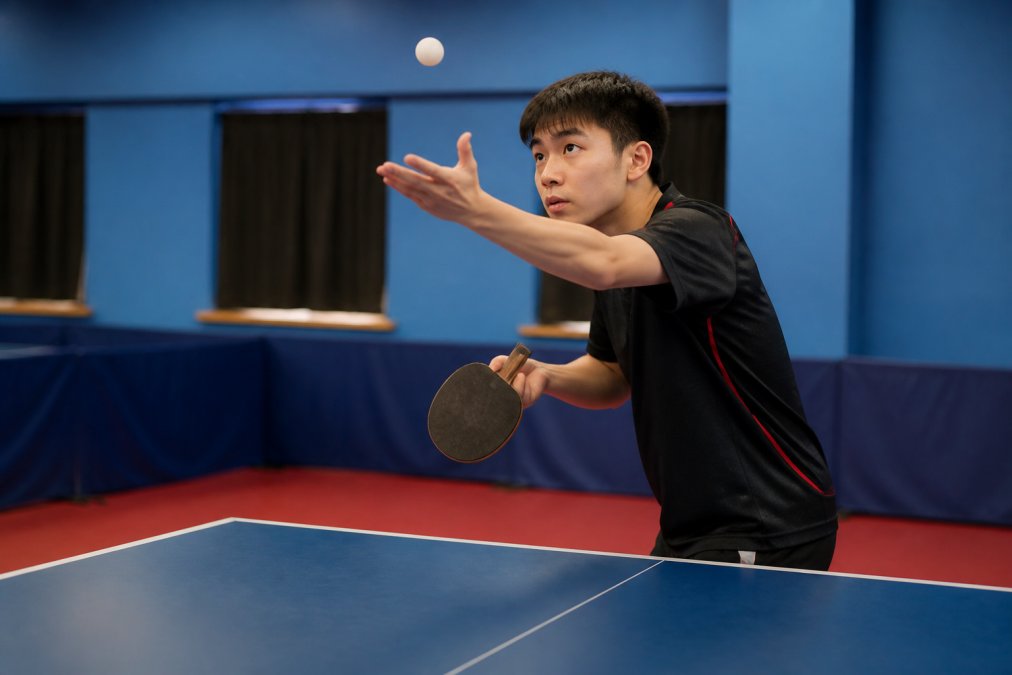
The Wall Drill for Consistency
The wall drill teaches ball toss consistency without needing a partner or a table. Stand 2 meters from a wall. Toss the ball and strike it into the wall. Catch it on the bounce.
Do this 20 times in a row. Focus on one thing: the toss. Make every toss identical. Same height. Same spot in front of your body. Same rhythm.
After mastering the toss, add the serve motion. Full follow-through. Complete the stroke. The wall doesn't judge placement, it only teaches consistency.
Do this drill 3 times per week for 10 minutes.
Target Box Accuracy Work
Set up cones or tape to mark the service box on your side of the table. Serve 10 balls into the box. Count how many land inside.
Most beginners hit 4 or 5 out of 10. That's normal. Do this drill twice per week.
Week 1: Hit 10 serves. Record how many land in. Week 2: Hit 15 serves. Track your percentage. Week 3: Hit 20 serves. Push for consistency.
This drill builds placement accuracy. You learn where the ball goes when you adjust your angle. You discover how much spin affects landing position.
Ball Toss Drills for Rhythm
The ball toss is half the serve. Get it wrong and nothing else matters.
Stand at the table.
Essential Table Tennis Training Aids for Serve Development
The right tools make practice easier and more efficient. Some help you collect balls faster. Others improve your footwork and positioning.
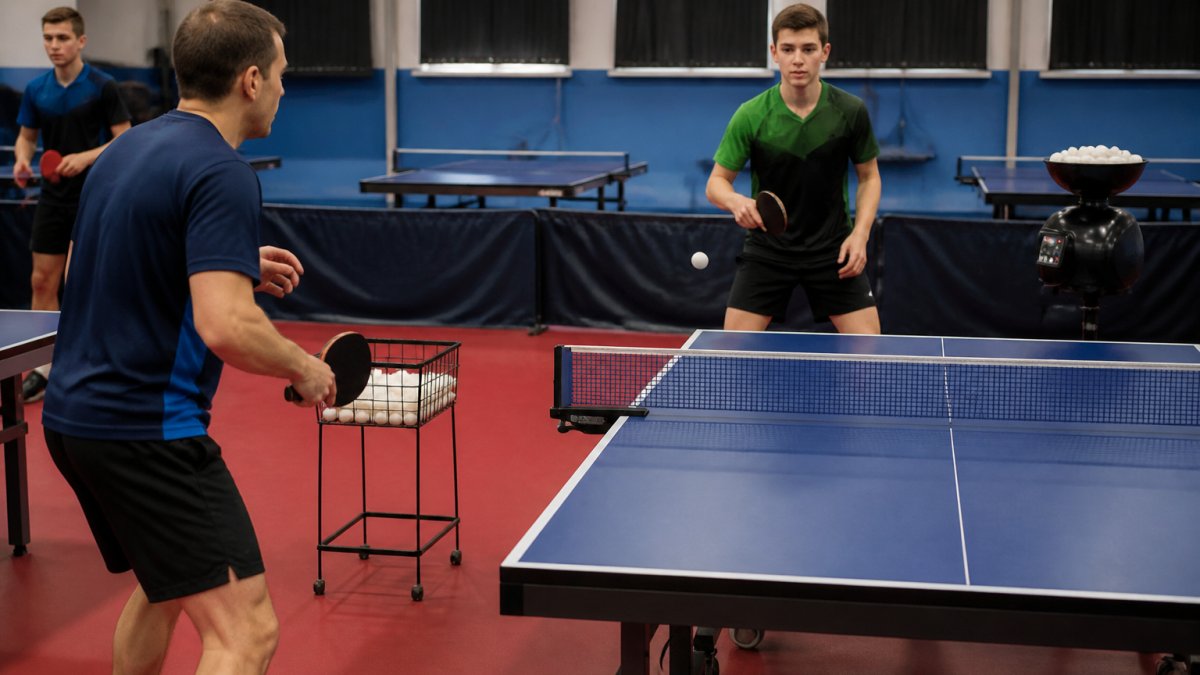
Ball Collection Tools for Efficient Practice
Collecting balls wastes time. You bend over. Your back hurts. You lose focus.
Footwork and Positioning Markers
Use tape or cones to mark your serving stance. Place one marker where your feet should start. Place another where you step forward during the serve.
Partner-Based Serve Drills for Beginners
Solo drills build foundation. Partner drills build pressure and adaptability. You learn to serve when someone watches and responds.
Serve and Receive Combinations
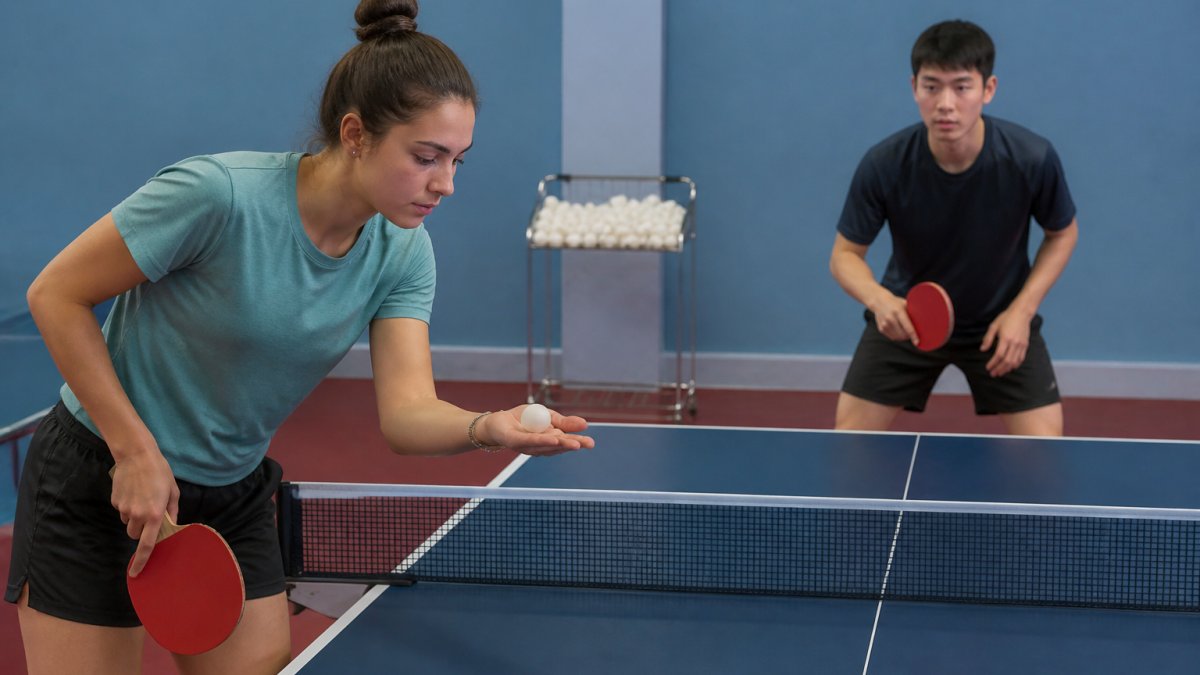
Your partner stands on the other side of the table. You serve. They return. You play out the point.
Do this 2 times per week for 15 minutes.
Placement Accuracy Challenges
Your partner stands at the baseline. You serve to different spots. Left corner. Right corner. Short. Deep. Wide.
Mastering Spin Variation in Your Serve
Spin confuses opponents. It changes how the ball bounces. It makes returns difficult. Beginners often serve flat, no spin at all. That's easy to attack.
Topspin Serve Fundamentals
Topspin makes the ball dip faster over the net. It bounces lower on the other side. Opponents struggle with the low bounce.
Backspin and Sidespin Progression
Backspin makes the ball float. It bounces lower and slower. Opponents often pop the ball up.
Building Your Weekly Serve Practice Routine
Consistency beats intensity. A 20-minute session twice per week beats a 2-hour session once per month.
Warm-Up and Stroking Sequence
Warm up for 5 minutes. Do light stretching. Swing your racket gently. Loosen your shoulders.
Progressive Difficulty Scaling
Week 1-2: Focus on ball toss consistency. Hit 10 serves per session. Week 3-4: Add placement accuracy. Hit 20 serves into specific zones. Week 5-6: Introduce topspin. Hit 15 serves with spin. Week 7-8: Add a partner. Play out points after serving.
Recovery and Transition Drills
After serving, you need to recover to your ready position. This transitions you from serve into the rally.
Common Beginner Serve Mistakes and How to Fix Them
Mistake 1: Inconsistent Ball Toss
The ball toss determines everything. A bad toss ruins the serve before you even strike.
Mistake 2: Striking Too Early or Too Late
Timing is everything. Strike too early and the ball goes backward. Strike too late and it goes forward into the net.
Mistake 3: Poor Follow-Through
Many beginners stop their racket at contact. They don't complete the stroke.
Mistake 4: Serving Into the Wrong Box
Diagonal serves go into the opponent's service box. Many beginners serve down the line or too wide.
Mistake 5: No Spin Variation
Flat serves are easy to attack. Opponents read them immediately.
| Drill Type | Duration | Frequency | Best For |
|---|---|---|---|
| Wall toss | 10 minutes | 3x per week | Ball toss consistency |
| Target box | 10 minutes | 2x per week | Placement accuracy |
| Spin practice | 10 minutes | 2x per week | Spin variation |
| Partner serves | 15 minutes | 2x per week | Match simulation |
| Footwork drills | 5 minutes | 2x per week | Recovery position |
Frequently Asked Questions
How do I practice table tennis serves alone?
Solo serve practice drills focus on repetition and consistency without a partner. Start with wall drills, bouncing the ball against a wall to develop rhythm and contact point accuracy. Use target boxes on your table to practice placement, set up cones or tape lines in the service boxes and aim for specific zones. Work on ball toss consistency by tossing 20 times without hitting, focusing on height and trajectory. Repeat each drill 50-100 times per session, tracking which serves land in your target zones. This builds muscle memory and serves as the foundation for all other serve techniques.
What are the most common mistakes in beginner table tennis serves?
Beginners commonly struggle with inconsistent ball toss, which throws off timing and contact point. Many rush the service motion instead of maintaining smooth rhythm. Incorrect racket angle at contact reduces spin and control. Tossing too high or too low disrupts the entire sequence. Players often fail to follow through properly, cutting the motion short and losing power. Poor footwork positioning before the serve creates balance issues. Watching the ball during toss instead of tracking the contact point causes errors. Practice slow-motion serves, focus on one element at a time, and use video feedback to identify which mistakes you're making most often.
What equipment helps make table tennis serve practice more efficient?
Ball collection tools save enormous time during practice sessions, eliminating the need to bend over repeatedly and allowing you to focus on technique rather than cleanup. Training aids like footwork markers help you position correctly before each serve. A ball bucket positioned near the baseline keeps serves organized and speeds up repetition drills. A video camera or smartphone setup provides visual feedback loops so you can review your service motion and spot inconsistencies. Quality training aids designed for durability ensure your equipment lasts through hundreds of daily practice serves. These tools reduce fatigue and frustration, keeping your focus on skill development rather than logistics.
How long should a beginner spend on serve practice per session?
Beginners should dedicate 15-20 minutes per session focused solely on serve drills, separate from match play or other strokes. Start with 5 minutes of warm-up serves at slower speed, focusing on consistency and rhythm. Spend 10 minutes on a specific drill, wall drills, target box accuracy, or spin variation work. Finish with 5 minutes of serves at match pace. Quality repetition matters more than duration; 100 focused serves beats 300 careless ones. As you progress, increase to 30 minutes, adding partner drills and recovery transitions. Practicing 3-4 times per week builds steady improvement without overuse injuries, especially important if you have mobility concerns.