 how-to
Ping Pong Room Safety for Families: A Complete Guide
Table of Contents
- Why Ping Pong Room Safety Matters for Families
- Ping Pong Table Clearance Space: Measurements and Layout
- Table Tennis Injury Prevention: Common Hazards and How to Avoid Them
- How to Pick Up Ping Pong Balls Without Bending
- Safe Table Tennis Setup for Kids: Age-Appropriate Rules and Supervision
- Equipment Stability, Assembly, and Maintenance Checks
- Flooring, Lighting, and Environmental Conditions
- Creating a Comfortable, Connected Space for Family Play
- Frequently Asked Questions
Last Updated: October 10, 2026
Why Ping Pong Room Safety Matters for Families
Ping pong room safety is more than just a precaution, it's the foundation that lets families actually enjoy playing together without worry. When you set up a space properly, everyone from young children to grandparents can play comfortably and confidently.
A safe room is one where people actually want to spend time together, more time playing, less time managing injuries or cleanup stress.
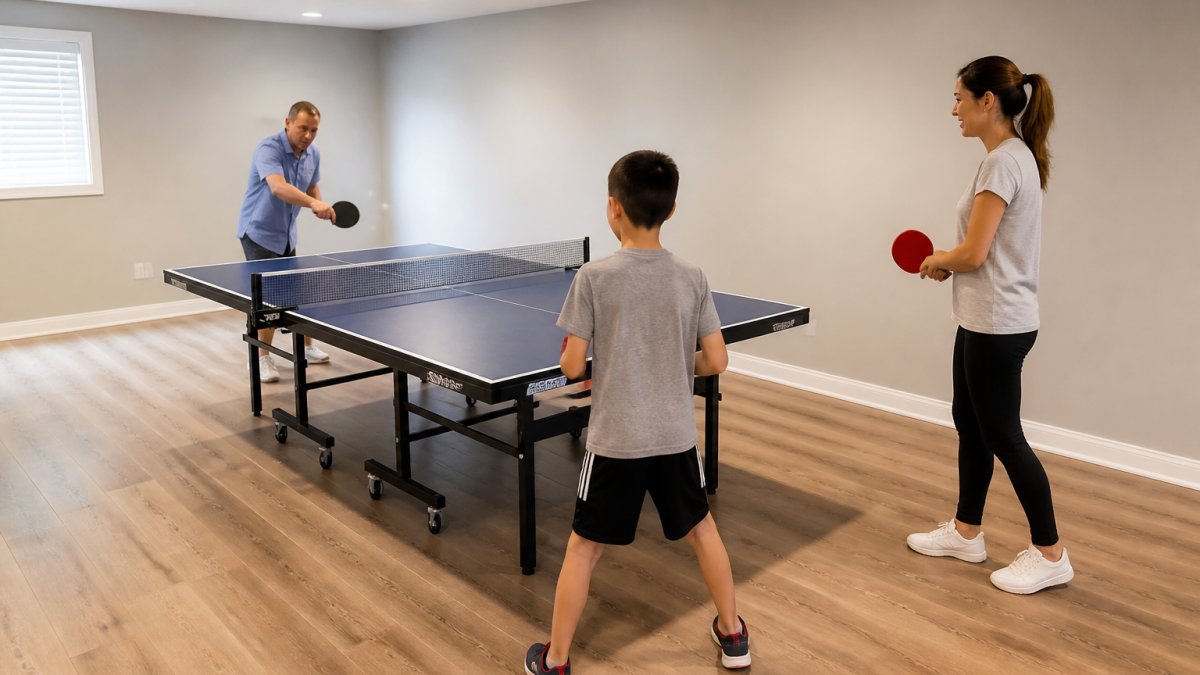
Safety and fun aren't competing goals. A well-designed space actually makes the game better because nobody's holding back or worried about what might happen next.
Ping Pong Table Clearance Space: Measurements and Layout
Minimum Space Requirements Around the Table
A regulation ping pong table is 9 feet long and 5 feet wide, but you need room around it for players to move, serve, and chase balls.
Here's what actually works:
- Minimum clearance on all sides: 3 feet minimum, though 4-5 feet is better
- Behind each end line: 6-7 feet for serving and backing up during rallies
- Side-to-side clearance: 4-5 feet on each side for lateral movement
- Ceiling height: 9 feet minimum (higher is safer for overhead shots)
These measurements come from how the game is actually played. If you skimp on clearance, players tense up, which makes injuries more likely.
Room Layout and Traffic Flow
Room arrangement matters as much as raw measurements. A cramped room still feels unsafe if people constantly walk behind players or duck under shots.
Think about traffic flow first:
- Entry and exit paths: Keep them clear of the playing area. Don't make people squeeze past the table to leave.
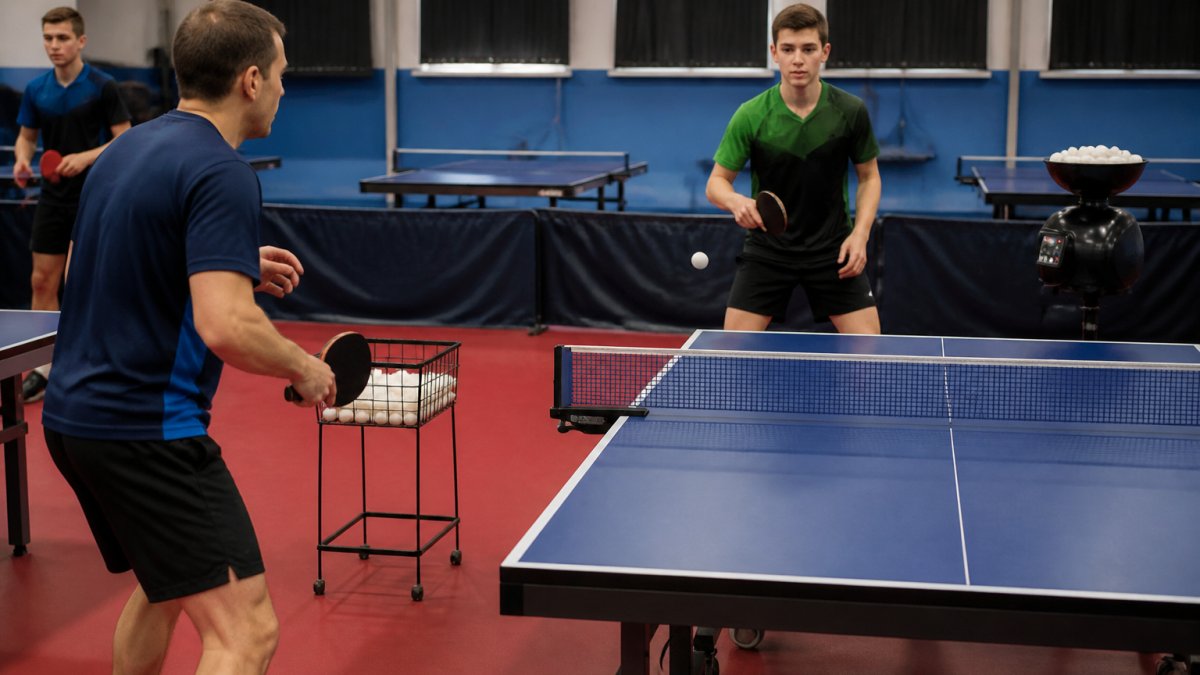
- Ball collection: Decide where loose balls will go. A corner basket beats having them scattered underfoot.
- Furniture placement: Push bulky items to the edges. A coffee table in the middle of your clearance zone is a collision waiting to happen.
- Spectator seating: If kids are watching, position chairs outside the active play area, never behind a player.
Walk through your room as if playing an actual match. Serve, chase a wide ball, back up for a lob. If anything feels tight or your elbow hits a wall, adjust.
Table Tennis Injury Prevention: Common Hazards and How to Avoid Them
Slip and Trip Hazards
Ping pong balls scatter across the floor, under the table, and behind furniture, that's the nature of the game.
Loose balls are a genuine hazard: stepping on them creates an unstable surface, tripping over them is especially dangerous for younger players and older adults, and wet floors combined with scattered balls create slip hazards.
Prevention: Use a ball collector like MyPingPongBuddy to scoop balls efficiently without bending. Establish a collection routine after every few rallies. Choose matte, non-slip flooring or rubber mats. Insist on shoes with good traction.
Collision and Impact Risks
Players moving at speed can collide with walls, furniture, or each other. Kids are particularly vulnerable because they're less aware of spatial boundaries.
Common scenarios: backing up into walls, lateral movement into furniture, player-to-player contact, and head strikes from low ceilings or fixtures.
Prevention: Clear the perimeter and pad sharp edges. Establish boundaries with floor tape. Only one player retrieves balls at a time. Check ceiling height and restrict overhead shots if needed.
How to Pick Up Ping Pong Balls Without Bending
If you play regularly, bending repeatedly to grab balls strains your back and wastes time.
A proper ball collector eliminates the bend entirely:
- Scoop, don't stoop: A tool like MyPingPongBuddy lets you collect balls with a smooth scooping motion. Your back stays neutral. Your knees stay straight.
- Speed: Collection takes seconds instead of minutes. That means less standing time between rallies and more actual playing time.
- Durability matters: A handmade tool built to last handles daily use without breaking. Cheap scoops wear out or crack quickly.
- Portability: If you're using a training robot or moving between tables, a tool that breaks down in half is genuinely useful. You carry it easily, set it up fast.
Why this matters for families: When cleanup is easy, people actually do it. Kids see you using an efficient tool and they're more likely to help. Games flow better because you're not spending 10 minutes picking up balls at the end.
Safe Table Tennis Setup for Kids: Age-Appropriate Rules and Supervision
Rules and Boundaries by Age Group
Different ages need different rules. A four-year-old and a fourteen-year-old play completely different games.
Ages 4-7:
- Play only with adult supervision
- Use soft, lighter paddles designed for small hands
- Keep rallies short and slow
- No overhead shots (collision risk with ceiling and walls)
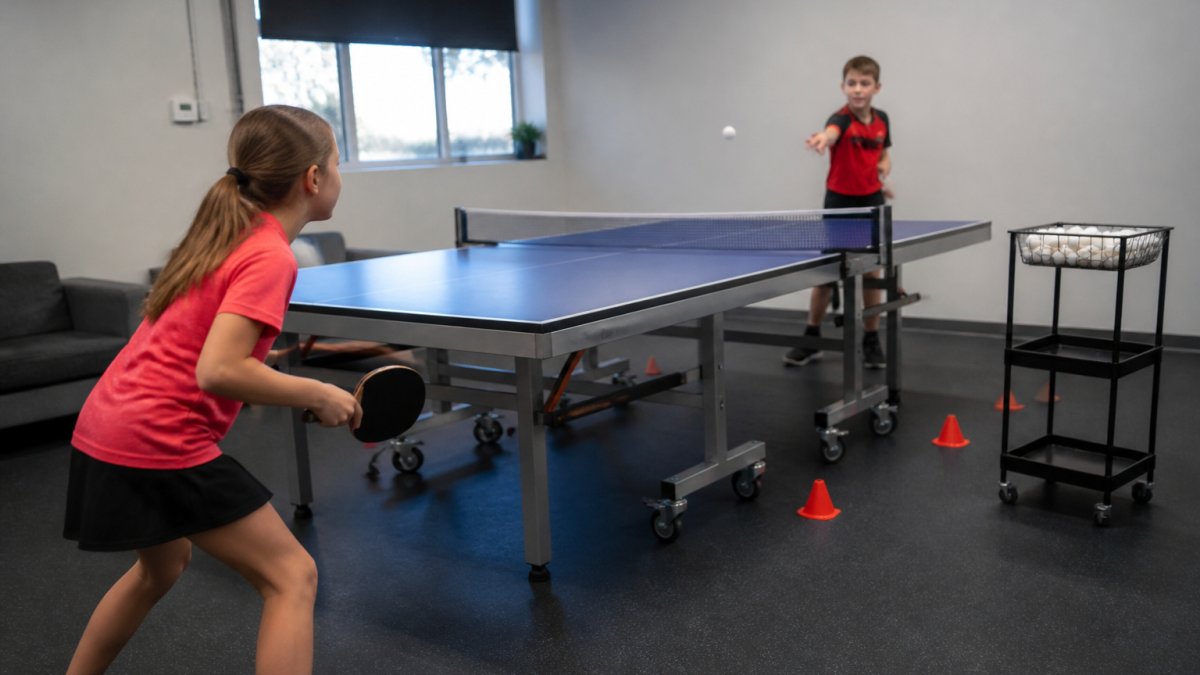
- Establish a "play zone" marked with tape on the floor
- Use larger, slower balls if available
- Limit play sessions to 15-20 minutes
Ages 8-12:
- Supervision required, but can play with minimal instruction
- Standard paddles work, but lighter ones are still better
- Introduce basic serve-and-rally rules
- Allow overhead shots only if ceiling height is safe
- Teach "call the ball", let others know you're going for it
- Play sessions can extend to 30-40 minutes
- Establish a "no running behind the table" rule
Ages 13+:
- Can play without constant supervision, but check in periodically
- Standard rules apply
- Competitive play is fine if space allows
- Teach proper footwork to prevent strain injuries
- Remind them about clearance, don't push the boundaries
Supervision and Spacing Between Players
The amount of supervision needed depends on age and the number of players. One adult watching two young kids is manageable. One adult with six kids playing simultaneously is chaos.
Here's a practical framework:
- Young children (under 8): One adult per 1-2 children during active play. Adult stands outside the play zone where they can see the whole room.
- Older children (8-12): One adult can supervise 3-4 children if the room is well-organized and rules are clear. Adult should stay in the room.
- Teens: Minimal supervision needed, but an adult should check in every 15-20 minutes.
Spacing between players matters too:
- Doubles play: If two pairs are playing at once, use separate tables or establish very clear boundaries.
- Multiple tables: If you have more than one table, space them at least 8 feet apart.
- Spectators: Keep them at least 4 feet away from active play.
Equipment Stability, Assembly, and Maintenance Checks
A wobbly table is a safety problem. It affects play, it's distracting, and it can tip if someone leans on it during a rally.
Before every play session, check these things:
Table stability:
- All four legs are level and touching the floor
- No rocking or movement when you press down on each corner
- Bolts and fasteners are tight (check monthly with a wrench)
- The playing surface is flat, no warping or sag in the middle
Net and posts:
- Net is taut and sits exactly at the midline (6 inches high)
- Posts are secure and don't shift when you tap them
- No tears or holes in the net
Paddles and balls:
- Paddles have no cracks or soft spots in the wood
- Rubber on the face is intact (not peeling or worn)
- Balls are round and bounce evenly (a ball that bounces erratically is a hazard)
Your ball collection tool:
- If you're using a tool like MyPingPongBuddy, check that it opens and closes smoothly
- Make sure the handle is secure and the scoop isn't cracked
- Test it with a few balls before starting your session
A five-minute equipment check prevents most problems. It takes less time than playing a single game, and it keeps everyone safer.
Flooring, Lighting, and Environmental Conditions
The room environment shapes how safely people can play. Poor lighting means players can't see the ball clearly. Slippery flooring means twisted ankles. Bad ventilation means people get tired and sloppy.
Flooring:
- Smooth but not slick, avoid polished tile or waxed hardwood
- Rubber mats or interlocking tiles are ideal
- No holes, raised edges, or uneven spots
- Dry surface (wipe up spills immediately)
Lighting:
- Bright, even light across the entire table and surrounding area
- Overhead lighting is best, avoid shadows on the table
- Minimum 300-400 lux (roughly the brightness of a well-lit office)
- Position lights so they don't create glare on the table surface
- Avoid flickering or dim bulbs
Ventilation and temperature:
- Adequate airflow, a stuffy room gets uncomfortable fast
- Temperature between 65-75°F is comfortable for active play
- Humidity under 60% prevents the ball from getting sticky
Noise and distractions:
- Keep the room reasonably quiet so players can focus
- Avoid playing with a TV or music too loud in the background
- Reduce distractions that pull attention away from the game
| Environmental Factor | What to Check | Why It Matters |
|---|---|---|
| Flooring | Non-slip surface, dry, no raised edges | Prevents slips and trips |
| Lighting | 300-400 lux, even across table, no glare | Players see the ball clearly |
| Ventilation | Good airflow, 65-75°F | Keeps players comfortable and alert |
| Noise | Minimal distractions | Maintains focus and safety awareness |
Creating a Comfortable, Connected Space for Family Play
A safe room is the foundation. But a room that brings families together is the real win.
When you set up your space thoughtfully, something shifts. Kids want to play. Grandparents feel comfortable joining in. Parents aren't worried about injuries, so they can actually relax and enjoy the game.
The best family ping pong spaces share a few things in common:
- Clear sightlines: Everyone can see what's happening. No blind spots, no surprises.
- Easy cleanup: Tools like MyPingPongBuddy make ball collection quick and painless. Nobody dreads the end of the game.
- Comfortable temperature and lighting: People stay longer when they're not too hot, cold, or squinting.
- Room for improvement: You don't need a perfect setup from day one. Start with the basics and adjust as you learn what your family needs.
- Shared responsibility: When kids help maintain the space and follow the rules, they take ownership. They care more about keeping it safe.
The families that get the most out of their ping pong tables are the ones that treat the setup as an ongoing conversation, not a one-time project. You play, you notice what works and what doesn't, you adjust.
Creating a safe ping pong room requires attention to layout, equipment, and awareness. But the payoff extends beyond injury prevention. A well-designed space invites more play, more connection, and more joy. MyPingPongBuddy helps families get there by making one crucial part, ball cleanup, effortless and fast.
Frequently Asked Questions
How much space do you need around a ping pong table for safe play?
The International Table Tennis Federation recommends at least 3 feet of clearance on all sides of the table, with 5-6 feet ideal for recreational play. This prevents players from backing into walls or obstacles during rallies. For a standard table measuring 9 feet long by 5 feet wide, your room should be at least 15 feet by 11 feet to accommodate safe movement and reduce collision risks.
What are the most common table tennis injuries, and how can families prevent them?
Common injuries include shoulder strain, lower back pain from bending to retrieve balls, ankle sprains from slips, and eye injuries from errant shots. Prevention starts with proper clearance to avoid collisions, non-slip flooring, good lighting to track the ball, and tools like ball scoops that eliminate repetitive bending. Warm-ups before play and proper technique also reduce strain on joints and muscles.
How can I pick up ping pong balls without bending over repeatedly?
Ball scoops and retrievers let you collect balls while standing upright, protecting your back during cleanup. A quality scoop designed for frequent use stays durable through daily sessions and picks up balls quickly, reducing strain on your lower back and knees. This is especially valuable for families with players who have mobility issues or chronic pain, and it makes cleanup faster so everyone stays focused on the game.
What safety checks should families do before playing table tennis at home?
Before each session, inspect the table for loose bolts or damage, check that the net is securely attached and at the correct height, verify the playing surface is clean and dry, and ensure adequate lighting throughout the room. Clear the floor of obstacles, check that flooring is non-slip, and confirm that players have enough space to move freely. These simple checks prevent equipment failure and reduce accident risks during play.