 blog
blog
Essential Table Tennis Gear for Competitive Players
Table of Contents
- What Competitive Players Actually Need
- Paddles, Blades, and Rubber: Building Your Setup
- Table Tennis Blade and Rubber Guide
- Tournament Bag Essentials and Match-Day Gear
- Training Equipment That Matters
- Maintenance and Care: Keeping Your Gear Tournament-Ready
- Regulation Compliance and Equipment Rules
- Building Your Setup by Skill Level and Budget
- Frequently Asked Questions
Last Updated: October 14, 2026
What Competitive Players Actually Need
Competitive table tennis demands far more than a paddle. The difference between casual and serious players comes down to understanding what gear matters and why. Your real setup includes blade, rubber, balls, table surface, and match-day essentials, each affecting performance measurably.
Preparing for tournaments means building a system, not just buying equipment. Rubber thickness determines spin potential, ball selection affects practice, bag contents determine readiness, and storage and maintenance impact consistency.
At MyPingPongBuddy, we know competitive players need practical solutions for the entire training and match experience, including efficient cleanup systems that let you focus on improving your game.
Paddles, Blades, and Rubber: Building Your Setup
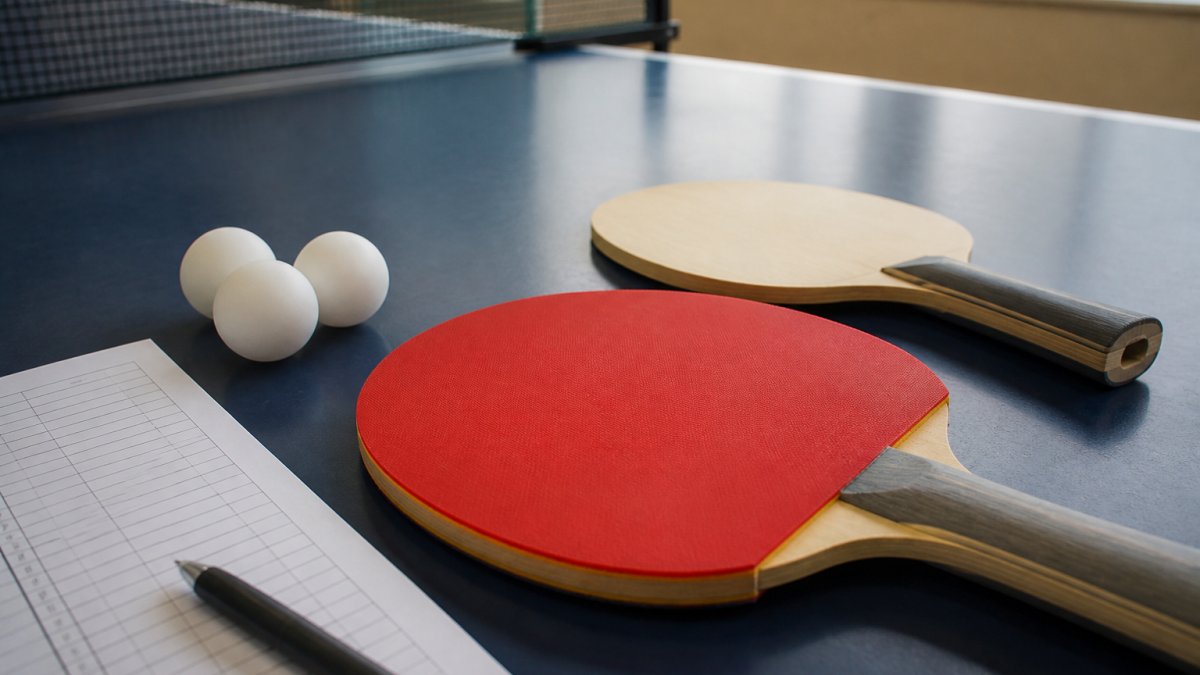
Your paddle is your interface with the ball, not a single tool but a combination of blade, rubber on each side, and how they work together. Understanding these components helps you match choices to your playing style.
Choosing the Right Blade and Rubber
The blade determines your paddle's fundamental characteristics. All-wood blades are the competitive standard, varying in thickness, weight, and wood composition. Offensive blades are thicker and heavier for power and speed; all-round blades balance control and speed; defensive blades are thinner and lighter for control and consistency.
Rubber contacts the ball and is where most players make their biggest mistakes. Thickness ranges from 1.5mm to 2.15mm (the maximum allowed). Thicker rubber gives more spin and speed but demands more skill; thinner rubber offers better control. The sponge underneath determines how much energy the rubber stores and releases.
Grip style significantly affects blade choice. Shakehand (Western) grip is most common worldwide; penhold (Asian) grip requires different blade shapes and rubber placement. Your playing style, aggressive or defensive, close to the table or back, should guide blade selection.
Grip and Playing Style Considerations
How you hold your paddle influences which blade works best. Shakehand players typically prefer balanced weight distribution; penhold players need specific blade shapes to accommodate their grip and stroke mechanics.
Distance from the table matters more than most guides mention. Close-to-table players benefit from faster response times; players farther back need blades that generate power without perfect timing. Your primary stroke should influence whether you prioritize speed or control.
Testing before buying is ideal but not always possible; many competitive players borrow paddles at tournaments to test them. Start with mid-range options matching your current skill level, then upgrade as your technique improves.
Table Tennis Blade and Rubber Guide
Your blade and rubber combination defines your game. Here's how to evaluate different options for your needs.
Rubber Types and Sponge Thickness
Rubber comes in two main categories: inverted and pimpled. Inverted rubber is smooth outside with sponge underneath, what most competitive players use. Pimpled rubber has small surface bumps that change spin and speed. Long pimple rubber is a specialty option creating unusual spin, useful for defensive or unconventional styles.
Sponge thickness is measured in millimeters: 1.5mm is thin with maximum control and minimal power; 2.0mm balances control and speed; 2.15mm (maximum allowed) provides maximum speed and spin but requires excellent technique. Hardness matters too, softer sponges are easier to control, harder sponges generate more speed.
Most competitive players use 1.8-2.0mm rubber on the forehand and slightly thinner on the backhand, giving speed on the attacking side and control on the defensive side. Beginners struggle with thick rubber; intermediate players benefit from 1.8-2.0mm; advanced players can exploit 2.15mm.
Speed, Spin, and Control Trade-offs
Every rubber makes a fundamental trade-off: speed, spin, or control, you cannot maximize all three. Understanding this prevents frustration and poor equipment choices.
Speed-oriented rubber finishes points quickly but requires aggressive technique and good footwork; if you can't attack every ball, it feels unstable. Spin-oriented rubber creates heavy rotation but needs consistent technique and multiple strokes to set up attacks. Control-oriented rubber is forgiving and consistent but won't generate pace against strong opponents.
Most competitive players use different rubbers on forehand and backhand. Your forehand rubber should match your attacking style, if you're aggressive, choose speed. Your backhand rubber should prioritize consistency, slightly thinner or control-focused. This combination gives you an attacking weapon and a reliable defensive option.
Tournament Bag Essentials and Match-Day Gear
Your paddle is just the start. Tournament play requires specific items most casual players overlook, essentials that determine whether you're prepared for anything.
What to Pack Beyond the Paddle
Your bag should contain three paddles: a primary, a backup with identical rubber in case of damage, and a different setup for experimenting or adjusting to opponents. Tournaments allow paddle changes between games, so options give tactical flexibility.
Regulation balls matter more than most players realize. Official tournament balls are 40mm and weigh 2.7 grams, practice with the exact balls your tournament uses, since cheaper practice balls respond differently. Bring extras; tournaments always lose balls, and spares prevent delays.
Clothing affects performance more than you'd expect. A tournament-quality tracksuit or shirt provides freedom of movement and moisture management. Proper footwear with lateral support prevents injuries during extended matches.
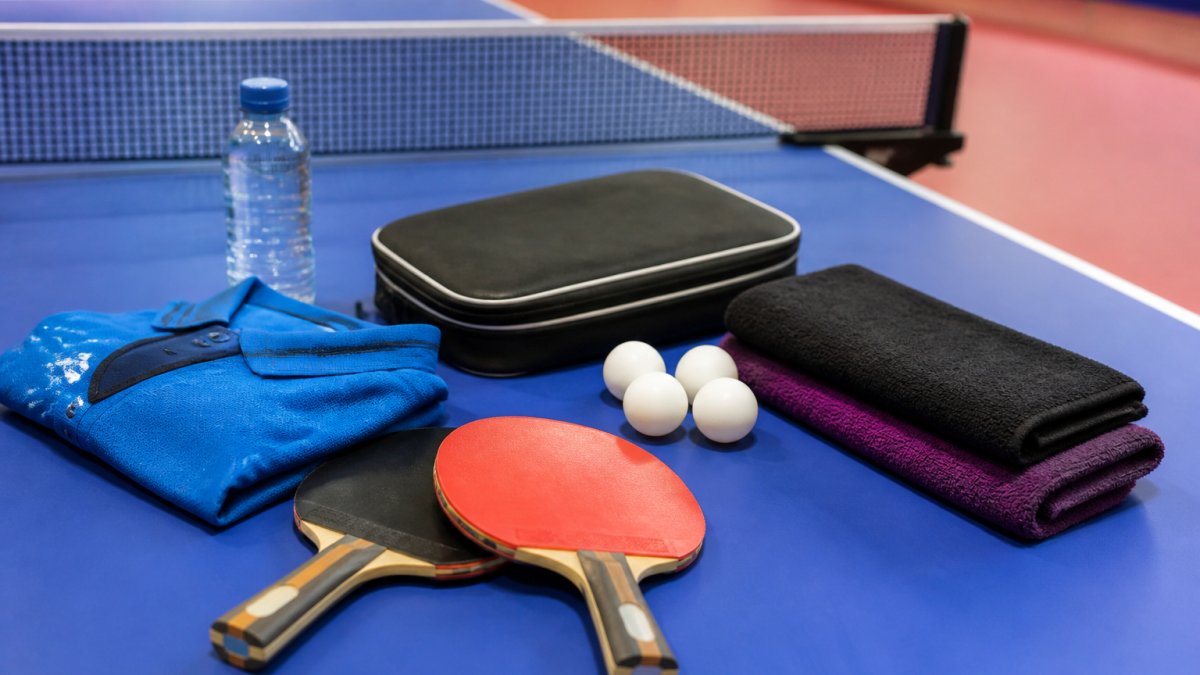
Other essentials: towels for drying your paddle and hands, rubbing alcohol or rubber cleaner, a small toolkit for blade repairs, water or sports drinks, and optionally a foam roller for between-match recovery.
Training Equipment That Matters
Competitive improvement requires deliberate practice. The right training equipment accelerates development and makes sessions more efficient, generic practice rarely reaches competitive levels.
Ball Collection and Cleanup Solutions
Training sessions generate hundreds of balls scattered across the floor, and collecting them manually wastes time you could spend practicing. A ball collection tool that scoops without bending saves significant time.
For players with back pain or mobility issues, this is essential rather than optional, repeated bending aggravates existing conditions. MyPingPongBuddy's ball collection tool is handmade for durability and breaks down in half for easy transport. It lets you scoop up balls with ease, eliminating bending and saving cleanup time. The simple, clever design works with any table tennis setup, and the 90-day full refund policy means you can test it risk-free.
Coaches and facility managers benefit most: with multiple tables or sessions, collection time compounds. A reliable tool reduces that burden, and many clubs report faster cleanup means more training time and a better student experience.
Robots and Multi-Ball Training Tools
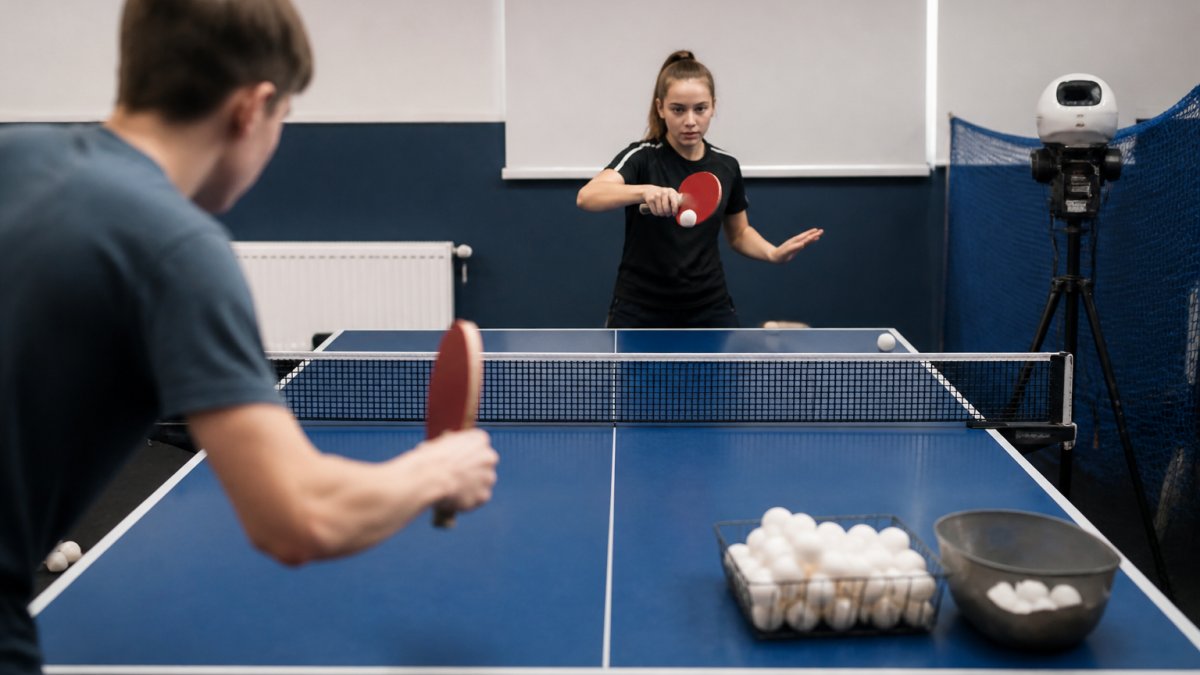
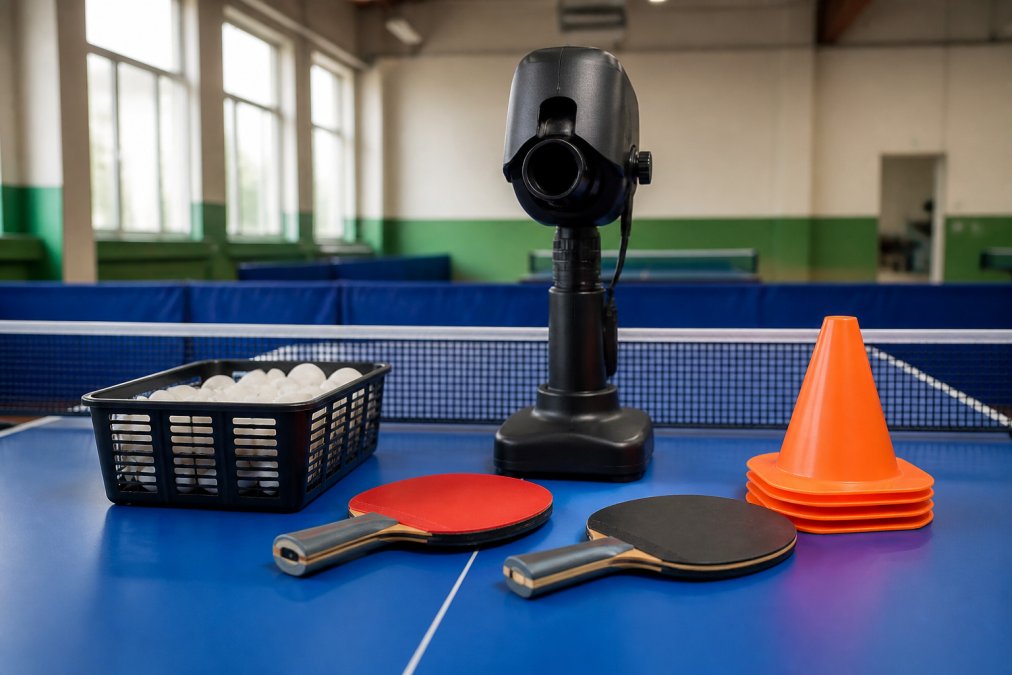
Table tennis robots automate ball delivery so you can repeat specific strokes, invaluable for consistency and muscle memory. Simple models deliver to the same location; advanced models create varied patterns simulating match situations.
Multi-ball training has a coach or partner feeding balls continuously while you hit, developing rhythm and shot selection under pressure. It's more game-like than robot training but needs another person. Most competitive players use both: robots for solo technical work, multi-ball for match simulation.
Training-space efficiency matters: if ball collection takes 10 minutes per session, that's time not spent improving. MyPingPongBuddy's tool fits tight training spaces and breaks down for easy storage alongside your robot setup.
Maintenance and Care: Keeping Your Gear Tournament-Ready
Equipment maintenance determines how long your gear lasts and how consistently it performs. Neglected equipment deteriorates quickly, affecting your game and forcing expensive replacements.
Cleaning and Storage Best Practices
Rubber degrades from dust, sunlight, and environmental contaminants. Clean it after every session with rubber cleaner or rubbing alcohol on a soft cloth to remove debris affecting spin and speed. Store your paddle in a protective case away from direct sunlight and extreme temperatures, since heat and UV light degrade rubber.
Your blade needs minimal maintenance but occasional inspection: check for warping or cracks, which affect performance and can cause tournament disqualification. Store blades flat in a case rather than upright, which causes warping over time.
Balls lose bounce and consistency over time, after 20-30 hours of play they lose elasticity and slow down. Use old balls for casual practice and reserve new ones for serious training and matches. Store balls in a sealed container to maintain pressure and prevent dust.
When to Replace Rubber and Blades
Rubber typically lasts 50-100 hours of competitive play before spin, speed, and control degrade noticeably. Many competitive players replace it every 3-6 months depending on training volume. Blades last longer, most players use the same blade for 2-3 years.
Budget for regular rubber replacement, one of the most common competitive expenses. A replacement schedule prevents being caught without proper equipment during tournament season.
Regulation Compliance and Equipment Rules
Tournament play requires equipment meeting official standards. Non-compliant gear means disqualification, so understanding the rules is essential.
Blades must be entirely wood, no carbon fiber, fiberglass, or composites. Rubber must be ITTF-approved; if it's not on the list, it's illegal for tournament play. Balls must be 40mm, weigh 2.7 grams, and be white or orange. Tables must be 2.74m long, 1.525m wide, and 0.76m high, with a dark surface and white edge line.
Verify ITTF approval before purchasing. Most major brands meet the standards, but some specialty or imported products don't, checking prevents wasted money and tournament disappointment.
Building Your Setup by Skill Level and Budget
Your equipment needs change as your skills develop. Investing in the right gear at each stage accelerates improvement without overspending.
Intermediate to Advanced Player Recommendations
Intermediate players (1-2 years competitive) benefit from mid-range blades and rubbers. You're ready for thicker rubber (1.8-2.0mm) and its control demands. Invest in quality, not premium: a mid-range blade with good rubber beats a cheap blade with expensive rubber.
Advanced players (3+ years competitive) can justify premium equipment, having developed the technique to exploit high-performance rubbers and specialized blades. Match your investment to your tournament schedule, if you play 10+ events annually, premium gear pays for itself through consistency and performance.
| Player Level | Blade Type | Rubber Thickness | Typical Investment | Replacement Frequency |
|---|---|---|---|---|
| Intermediate | All-round or Offensive | 1.8-2.0mm | Mid-range | Rubber: 6-12 months |
| Advanced | Offensive or Specialized | 2.0-2.15mm | Premium | Rubber: 3-6 months |
| Professional | Specialized | 2.15mm | High-end | Rubber: 1-3 months |
Budget-Conscious Choices Without Sacrificing Quality
You don't need premium equipment to play competitively.
Buy used gear carefully. Used rubbers are risky since rubber degrades, but used blades are fine if not warped or damaged.
Focus your budget on rubber first, then blade, then accessories. Rubber affects your game most directly, quality rubber on a mid-range blade beats a premium blade with cheap rubber, and accessories matter less than your primary equipment.
Building your competitive setup requires understanding how each component affects your game: blade and rubber determine your playing characteristics, bag contents ensure readiness, training equipment efficiency determines improvement, and maintenance keeps gear performing consistently.
The most important decision is matching equipment to your skill level and playing style.
When you're ready to simplify training and eliminate time-consuming cleanup, MyPingPongBuddy's ball collection tool transforms your efficiency.
Frequently Asked Questions
What equipment do competitive table tennis players absolutely need?
Competitive players need a high-quality paddle with a blade and rubbers matched to their playing style, regulation 40mm balls, a tournament-approved bag, proper footwear, and maintenance supplies. Beyond basics, training equipment like ball collectors and robots accelerate skill development. Regulatory compliance matters, blades and rubbers must meet International Table Tennis Federation standards for sanctioned play.
How do I choose the right table tennis blade and rubber for my game?
Select a blade based on your playing style: all-wood blades for control, offensive blades for speed and spin, all-round blades for versatility. Match rubber thickness (1.5-2.1mm) to your stroke, thicker sponge gives more spin and speed but reduces control. Test forehand and backhand rubbers separately; many players use different rubbers on each side to balance offense and defense.
Why invest in a table tennis training equipment like a ball collector when I can just pick up balls by hand?
Ball collectors eliminate repetitive bending, which reduces back strain during long training sessions. They speed up cleanup significantly, allowing you to focus more time on actual practice rather than ball retrieval. For coaches running multi-ball drills or facility managers with dozens of tables, collection tools save hours weekly and improve session efficiency.
What should I pack in my tournament bag besides my paddle?
Include extra balls (regulation 40mm), a towel, water bottle, comfortable shoes, replacement rubber sheets, edge tape, rubbing alcohol for blade cleaning, and a small maintenance kit. Pack a change of shirt to manage sweat, and keep your paddle in a protective case. Bring documentation of your equipment's regulatory compliance if playing in sanctioned tournaments.