 how-to
How to Maintain Table Tennis Equipment: 2026 Guide
Table of Contents
- Step 1: Gather Your Cleaning Supplies and Set Up Your Maintenance Station
- Step 2: Clean the Rubber Surface Without Damaging the Topsheet
- Step 3: Protect the Blade, Edge Tape, and Handle from Wear
- Step 4: How to Store Ping Pong Paddles and Balls to Prevent Oxidation
- Step 5: Manage Humidity, Condensation, and Extreme Temperatures
- Step 6: Table Tennis Training Equipment for Small Spaces: Storage and Cleanup
- Step 7: Build a Long-Term Maintenance Routine and Know When to Restore
- Frequently Asked Questions
Last Updated: September 15, 2026
Step 1: Gather Your Cleaning Supplies and Set Up Your Maintenance Station
How you maintain table tennis equipment determines whether your rubber keeps its grip for three months or three weeks.
This MyPingPongBuddy guide covers the full routine, from daily wipe-downs to knowing when a sheet is finished.
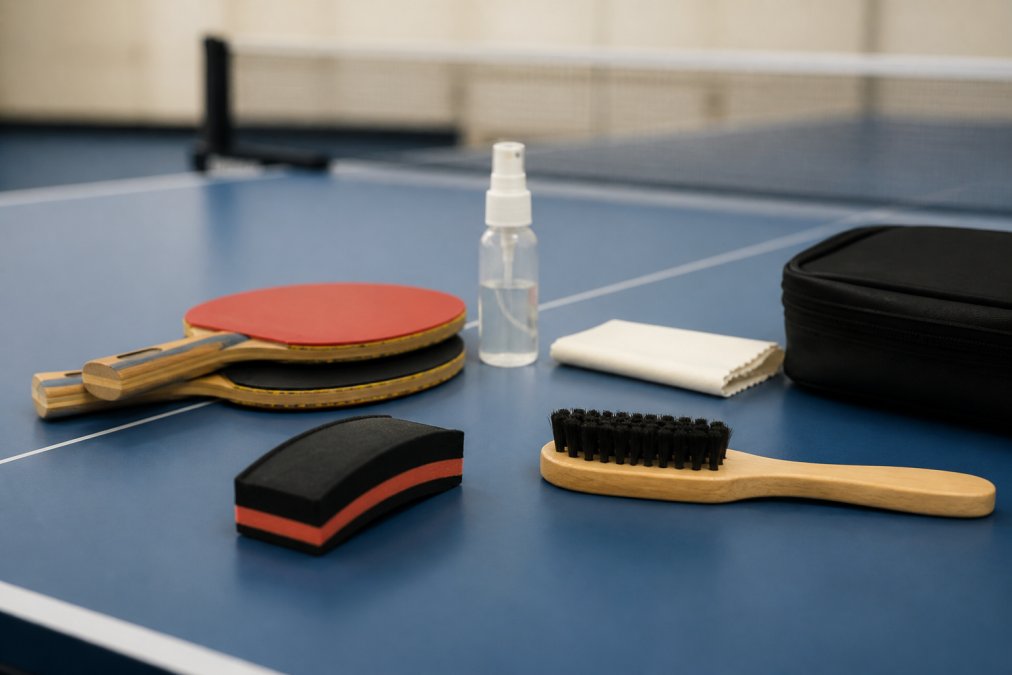
Before you touch a single sheet, gather everything:
- Microfiber cloth (two: one for cleaning, one for drying)
- Rubber cleaner or distilled water
- Cleaning sponge (soft, non-abrasive)
- Protective film or non-stick sheets
- Edge tape and scissors
- Racket case with a hard shell
Set these on a clean, flat surface away from direct sunlight. The ITTF equipment regulations classify racket coverings as regulated equipment, which is why treating the rubber surface with care matters more than most players assume.
Step 2: Clean the Rubber Surface Without Damaging the Topsheet
Cleaning the rubber surface is the step most players rush, and it costs them grip. The topsheet is thin and porous, and abrasive cleaners strip the tackiness that generates spin.
Here's the sequence:
- Breathe lightly on the rubber to create a thin layer of condensation, or apply two to three drops of rubber cleaner.
- Wipe in one direction with a clean microfiber cloth, not in circles.
- Let the surface air-dry for 30 seconds. Never wipe it dry with a paper towel.
- Apply a protective film once the rubber is fully dry.
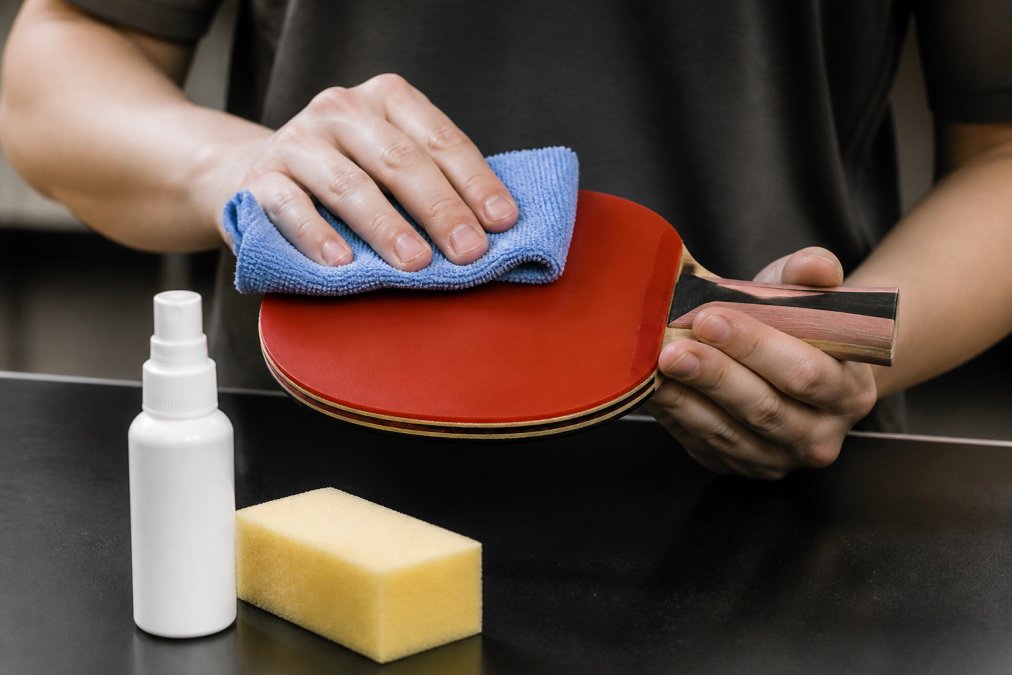
Avoid abrasive cleaners, glass spray, and anything with alcohol, they dull the surface and accelerate oxidation. Scrubbing hard is a common mistake; light pressure is always enough.
Choosing the Best Table Tennis Rubber Cleaner for Your Rubber Type
The best table tennis rubber cleaner depends on whether your sheet is tacky or non-tacky. Tacky Chinese-style rubbers hold dust aggressively and need a mild, water-based cleaner; European and Japanese non-tacky sheets respond to foaming cleaner or distilled water.
A few practical rules:
- Tacky rubber: water-based cleaner, gentle wipe, protective film after every session.
- Non-tacky rubber: foam cleaner or distilled water, buff dry.
- Anti-spin rubber: distilled water only. Cleaners can clog the surface pattern.
A drop of shaving foam or mild liquid soap diluted in distilled water works as a homemade option, but rinse thoroughly with a damp cloth afterward. Residue kills friction faster than dust does.
Step 3: Protect the Blade, Edge Tape, and Handle from Wear
The blade is the part players ignore until it's too late. It takes months to break in and seconds to damage against a table edge. Unlike rubber, the blade is meant to last years, so this maintenance prevents damage rather than restoring it.
Edge Tape: The Cheapest Insurance on the Racket
Edge tape is a thin strip of cloth or PVC-backed tape wrapped around the racket's perimeter. It absorbs impact when the racket clips a table edge, keeps the rubber's cut edge from peeling, and seals the wood plies against moisture and sweat.
Applying it correctly matters more than most players realize:
- Start at the bottom of the handle, not at the top of the blade. This hides the seam where your hand sits.
- Pull the tape taut as you wrap, pressing it down onto the blade face edge, not the rubber, so it sits flush.
- Overlap the start by about half an inch when you close the loop, then press the join flat with a fingernail.
- Trim any excess with sharp scissors rather than tearing it, which leaves a ragged edge that lifts within days.
A daily club player replaces edge tape every two to three months; a casual player can go six months or more. Replace it as soon as you see any of these:
- The tape is frayed, fuzzy, or peeling at the join.
- The adhesive has gone gummy and the strip slides when you grip the racket.
- The rubber edge underneath has started to lift, which means the tape is no longer doing its job.
When you replace it, peel the old strip slowly and at a shallow angle. Ripping it off fast can pull up wood fibers from the outer ply, permanent damage. A lifted splinter can be flattened with wood glue under a flat weight, but the blade will never be perfectly smooth again.
Handle Care
The handle is raw or lightly sealed wood, so it absorbs whatever it touches. Sweat, hand oils, and skin salts soak in over months, causing the wood to swell, darken, or crack.
The routine is short:
- Wipe the handle with a barely damp cloth after play, then dry it immediately with a second cloth. Never let it air-dry wet.
- Once every few months, apply a very thin coat of furniture wax or a dedicated wood sealer. Buff off the excess, a heavy coat makes the handle slippery.
- If the handle feels tacky or smells sour, that's a sign of oil buildup. A light wipe with a cloth dampened with distilled water usually resets it.
Avoid sanding the handle to "refresh" it, you'll remove the factory contour and change how the racket sits in your hand, a bigger problem than a darkened grip.
The Blade Surface Itself
The blade face needs almost nothing, the outer ply is thin, so anything adding moisture or abrasion shortens its life.
- Keep it dry.
Step 4: How to Store Ping Pong Paddles and Balls to Prevent Oxidation
What Actually Happens in Storage
Paddle Storage Rules That Actually Work
Ball Storage
A Note on Long-Term Storage
Step 5: Manage Humidity, Condensation, and Extreme Temperatures
Step 6: Table Tennis Training Equipment for Small Spaces: Storage and Cleanup
Step 7: Build a Long-Term Maintenance Routine and Know When to Restore
| Frequency | Task | Time Needed |
|---|---|---|
| After every session | Wipe rubber, apply protective film, case the racket | 2 minutes |
| Weekly | Clean rubber with cleaner, check edge tape | 5 minutes |
| Monthly | Inspect blade and handle, replace edge tape if frayed | 10 minutes |
| Every 3-6 months | Assess rubber for oxidation and grip loss | 5 minutes |
Frequently Asked Questions
How long do ping pong rubbers last?
Most table tennis rubbers last between three and six months of regular play, depending on how often you train and how well you maintain them. Tacky rubbers lose grip faster if they collect dust, while softer sponge densities degrade more quickly under heat and humidity. Cleaning your rubber after every session with a dedicated cleaner and storing paddles in a case away from direct sunlight can extend usable life by several weeks. Replace rubber when the surface looks dull, feels slick, or you notice a drop in spin.
What is the best rubber cleaner for ping pong paddles?
The best table tennis rubber cleaner is one that is VOC-free and formulated specifically for table tennis topsheets. Avoid abrasive cleaners, household glass sprays, and anything containing alcohol or ammonia, which dry out the rubber and speed up oxidation. Distilled water with a drop of mild liquid soap works in a pinch, but a dedicated cleaner does a better job of restoring tackiness without leaving residue. Apply with a soft sponge or microfiber cloth, wipe gently, and let the rubber air-dry before putting the paddle back in its case.
How to keep ping pong rubber sticky?
To keep ping pong rubber sticky, clean it after every session to remove dust accumulation and skin oils that clog the topsheet. Use a VOC-free rubber cleaner and a microfiber cloth, wiping in one direction rather than scrubbing in circles. Once dry, press a protective film over the rubber surface to block air and light. Store the paddle in a racket case and keep it out of extreme temperatures. If the rubber already looks dull and feels slick, cleaning can restore some grip, but oxidized rubber cannot be fully revived.
Can I use household cleaners on a ping pong table?
No. Household cleaners, especially those with ammonia, bleach, or abrasive particles, can dull the table surface, strip the painted lines, and leave a residue that changes ball bounce. For the table itself, wipe with a soft, slightly damp microfiber cloth and a mild, pH-neutral soap if needed, then dry immediately. Save the dedicated rubber cleaner for your paddle, and never spray cleaner directly onto the table. Keeping the table covered when not in use does more for its longevity than any cleaning product.
Maintaining table tennis equipment comes down to consistency, not effort. A two-minute wipe-down after every session prevents the oxidation, dust accumulation, and edge damage that force premature replacements. MyPingPongBuddy supports that routine with a portable, handmade ball scoop that cuts cleanup time and spares your back, backed by a 90-day full refund return policy. Get started with MyPingPongBuddy and keep your focus on training, not tidying up.