 comparison
BallsBoy Alternative for Home Use: Top Picks for 2026
Table of Contents
- Why a BallsBoy Alternative for Home Use Makes Sense
- Quick Comparison: Best Ball Collector for Table Tennis
- MyPingPongBuddy: The Handmade Scoop That Breaks in Half
- Multi-Ball Training Equipment: Matching the Tool to the Session
- How to Speed Up Ball Cleanup Without Bending Over
- Storage, Durability, and What Competitors Miss
- Common Mistakes When Buying a Home Ball Collector
- Frequently Asked Questions
Last Updated: September 21, 2026
Why a BallsBoy Alternative for Home Use Makes Sense
If you play table tennis at home, you already know the ritual: finish a session, then spend ten minutes bent at the waist, fishing balls out from under furniture. A ballsboy alternative for home use solves that problem by letting you collect balls while standing upright. This guide from MyPingPongBuddy breaks down the realistic options for home tables, from handmade scoops to net-style collectors, so you can pick the tool that matches your space and your back.
Quick Comparison: Best Ball Collector for Table Tennis
Here is how the main home-use options stack up at a glance.
| Option | How It Works | Best For | Bending Required |
|---|---|---|---|
| MyPingPongBuddy scoop | Handheld scoop, breaks in half | Most home players | None |
| Net-style roller collector | Cage rolls over balls | Large flat floors | Minimal |
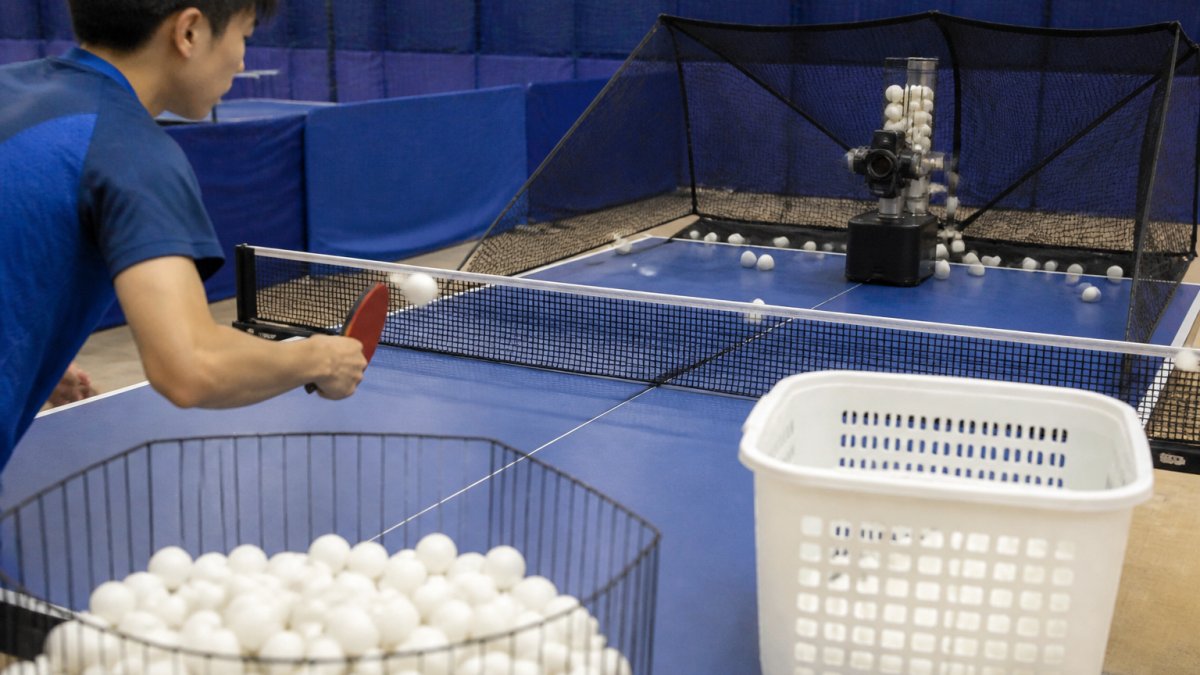
| Robot with collection net | Net catches returned balls | Robot training setups | None |
| DIY tube scoop | Homemade PVC or cardboard | Tight budgets | Minimal |
| Bare-hand pickup | Manual collection | Occasional play | Constant |
MyPingPongBuddy: The Handmade Scoop That Breaks in Half
MyPingPongBuddy is a handmade scoop designed to pick up table tennis balls without bending over, and it breaks in half for storage and transport. For most home players, it is the best ball collector for table tennis because it works on any floor type and stores in a drawer.
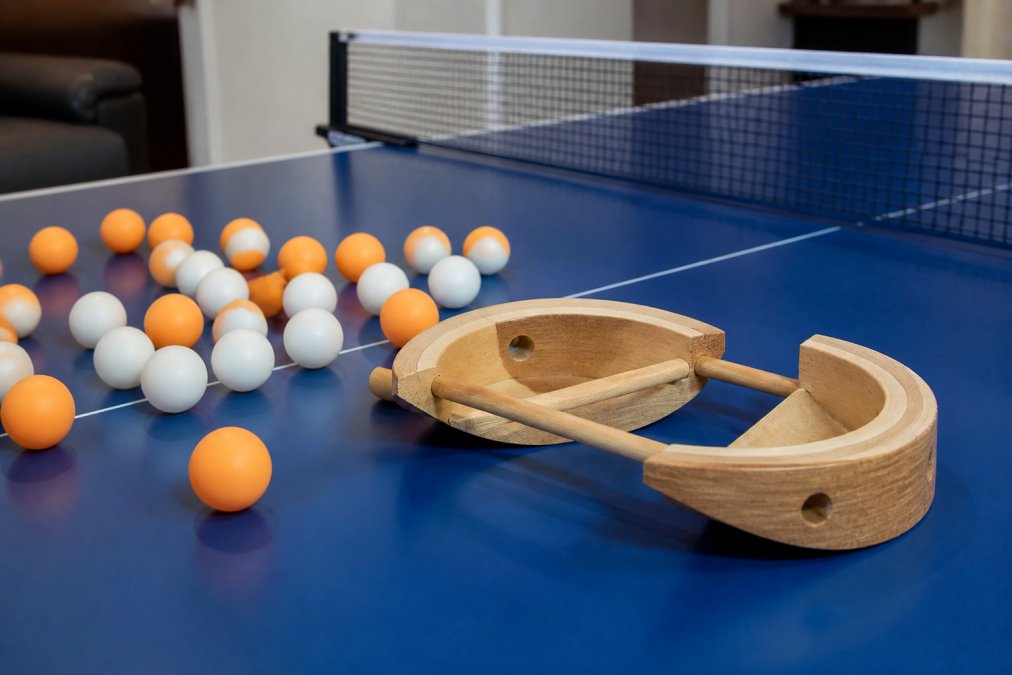
Pros:
- Handmade construction that holds up to daily use
- Breaks down in half, so it fits in a bag or shelf
- Works on carpet, tile, and gym flooring
- Backed by a 90-day return policy with a full refund
Cons:
- Manual operation, so it is not as fast as a robot net over hundreds of balls
- Not designed for outdoor surfaces
Multi-Ball Training Equipment: Matching the Tool to the Session
Multi-ball training equipment should match the drill, not the other way around. A robot with a catch net handles high-volume feeds; a handheld scoop handles everything else. Buying for the wrong session type is the fastest way to waste money.
The Multi-Purpose Utility Matrix
Most buying guides silo tools by niche, pet toys, laundry helpers, sports gear. In practice, a table tennis ball collector is a small, lightweight scoop that picks up any object roughly 40 mm across. That makes it useful well beyond the table.
| Home task | Does a ping pong scoop work? | Why or why not |
|---|---|---|
| Table tennis cleanup | Yes | Designed for 40 mm balls |
| Picking up dog toys | Sometimes | Works for small rubber balls; too shallow for plush toys |
| Laundry dryer balls | Yes | Wool and rubber dryer balls are close to ping pong size |
| Kids' toy blocks | No | Blocks are angular and jam the scoop mouth |
| Golf balls in the yard | No | Golf balls are denser and roll past the lip |
| Marbles or craft beads | Yes, with care | Smaller than 40 mm, so they can slip through gaps |
Matching Tool to Session Type
Think about your three main session types:
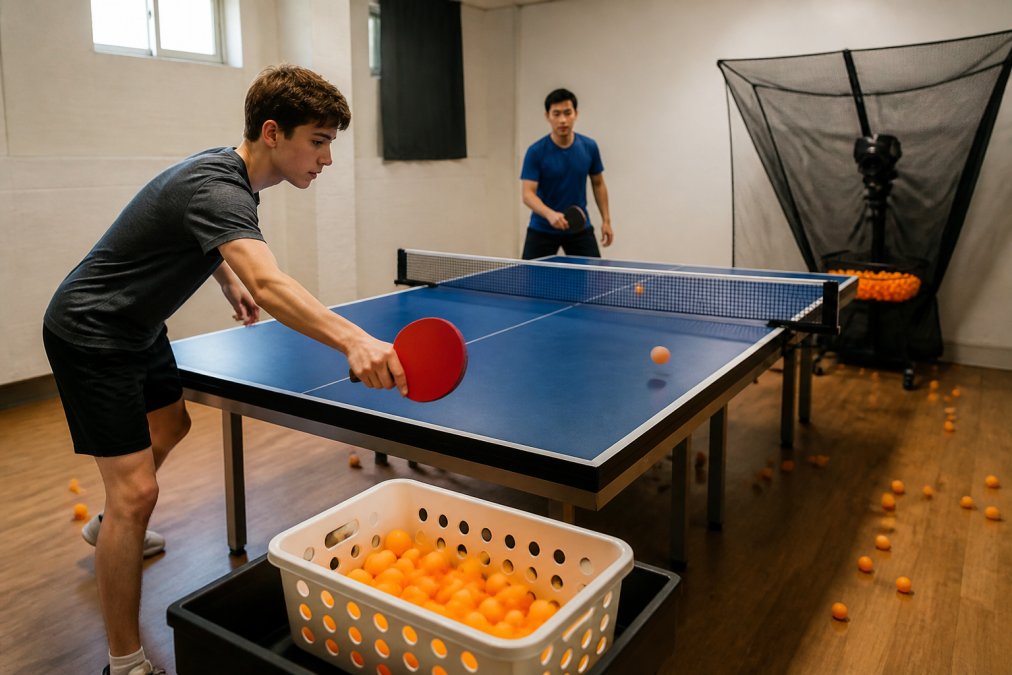
- Robot drills. The robot's own net catches most balls, but strays still roll away. A scoop cleans up the remainder.
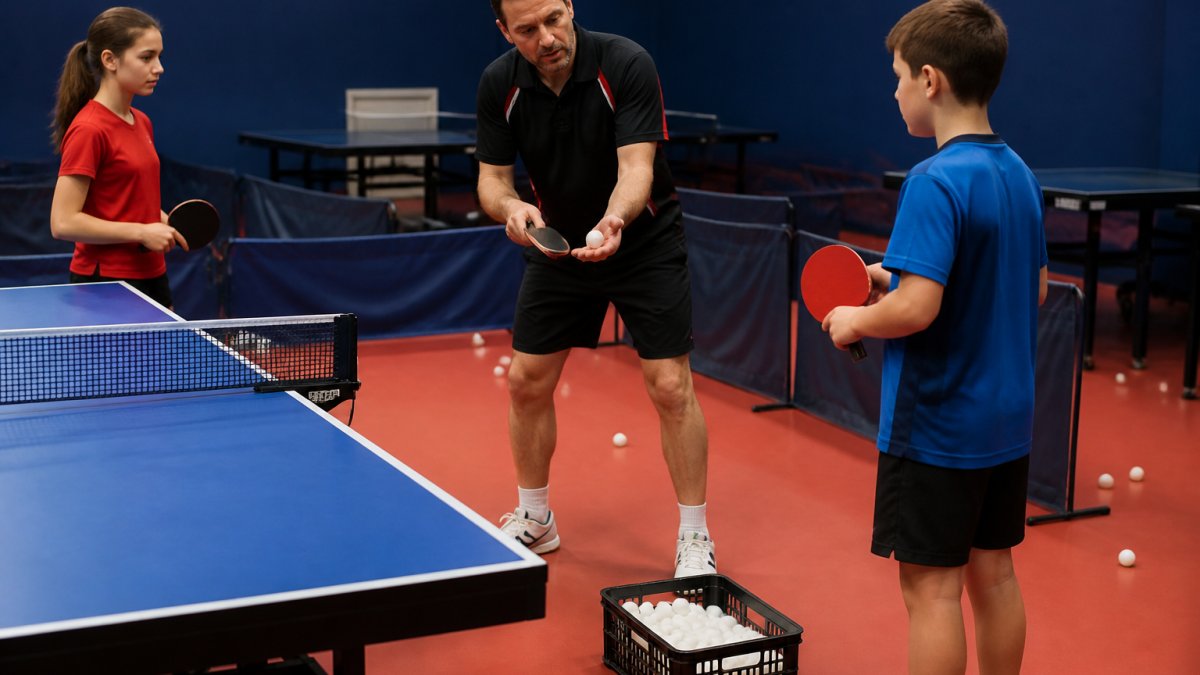
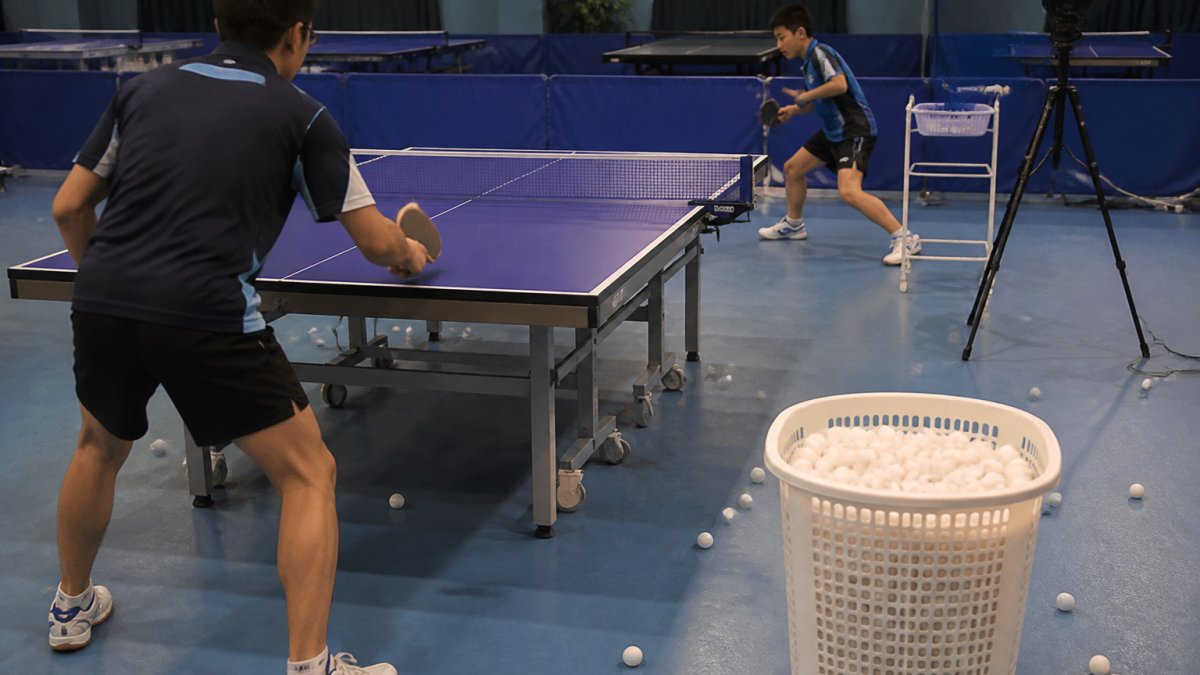
- Coach feeding. Balls scatter across the whole floor. A scoop or roller is essential. A roller covers more floor per pass but only on hard, flat surfaces.
- Solo serve practice. You collect your own balls. A scoop saves the most time here because you can collect between serves without leaving the table.
For robot owners, the robot net does not eliminate cleanup. Balls bounce off the table edge and roll under furniture, and the net itself needs emptying. A scoop complements the robot rather than replacing its net.
A Note on Volume
A home player collecting 50 balls a session does not need club-grade equipment. A club collecting 500 or more balls daily will want several scoops or a combination of scoops and net collectors. The crossover matrix above is the tiebreaker: if you also want to pick up dryer balls or small pet toys, a scoop wins. If you only ever collect table tennis balls on a hard floor, a roller is faster.
How to Speed Up Ball Cleanup Without Bending Over
The fastest way to speed up ball cleanup is to collect during the session, not after it. Scoop balls between drills instead of letting them pile up, and you finish practice with an almost-clean floor.
- Place a bucket at one corner of the table.
- After each drill, scoop the near side while balls are still concentrated.
- Sweep the far side once, at the end of the session.
- Tip the scoop into the bucket and reset for the next drill.
Storage, Durability, and What Competitors Miss
Storage and durability are where most buying guides stop short. A collector that does not fit your closet or wears out in a season is a bad purchase, no matter how well it scoops.
Measure Before You Buy
Start with dimensions. A typical handheld scoop is roughly 12-16 inches long and 3-4 inches wide at the mouth. A full-length net roller is often 30-36 inches wide and does not break down, so it needs a dedicated corner or a wall hook.
Material Durability: What Actually Fails
On durability, material matters more than price. Handmade wooden scoops tend to hold up well because the joints are glued and finished. Plastic scoops can crack at the handle where the stress concentrates.
Sustainability Lifecycle: The Angle Most Guides Skip
Eco-friendly is mentioned in almost every buying guide, but almost none break down the actual environmental impact of materials for home-use longevity. Here is a practical lifecycle view:
- Wood (handmade scoops). Renewable if sourced responsibly, biodegradable at end of life, and repairable, a loose joint can be re-glued. The trade-off is moisture sensitivity. A wooden scoop kept dry can last many years.
- Plastic (mass-market scoops). Often polypropylene or ABS. Durable until the handle cracks, at which point it is usually not repairable and goes to landfill. Recycling depends on local programs and whether the plastic is labeled.
- Rubber (roller bumpers, grips). Long-lived in use but slow to degrade and rarely recycled. Rubber parts are usually the first to fail and the hardest to replace.
- Metal (some scoop frames). Highly recyclable and very durable, but heavier and more expensive. A metal frame with a wooden or plastic scoop body is a common compromise.
The Storage-and-Retrieval Loop
What most guides miss is the storage-and-retrieval loop. The best tool is the one you can grab in five seconds and put away in five seconds. If retrieval is annoying, you will stop using it, and the tool becomes clutter.
A few storage patterns that work in real homes:
- Hang the scoop on a hook next to the table, not in a closet.
- Keep a small bucket or mesh bag with the scoop so balls go straight from scoop to storage.
- For two-piece scoops, store both halves together with a rubber band or in a mesh bag.
Common Mistakes When Buying a Home Ball Collector
The biggest mistake is buying for volume you do not have. A home player collecting fifty balls a session does not need club-grade equipment, and a club buying a single handheld scoop will be under-equipped.
Here are the mistakes that come up most often:
- Ignoring floor type. Net rollers struggle on carpet. Scoops work everywhere.
- Skipping the storage check. Measure first, then buy.
- Assuming the robot net does it all. Stray balls still need collecting.
- Buying the cheapest plastic option. It cracks at the handle within a season.
- Forgetting the second player. Two people practicing means twice the scatter.
Frequently Asked Questions
What makes MyPingPongBuddy a better BallsBoy alternative for home use?
MyPingPongBuddy is handmade for durability and breaks down in half for easy transport, which matters in tight home spaces. Unlike basic net scoopers, it lets you scoop balls without bending over, so players with back pain can clean up faster. It is backed by a 90-day full refund return policy, and customers report students pick up balls faster with it than with net scoopers they used for years.
How do I choose the best ball collector for table tennis in a small home gym?
Measure your storage area first, then check whether the collector breaks down or folds. Look for a handle length that keeps you upright, a scoop depth that holds multiple balls per pass, and materials that resist abrasion from repeated use on a table surface. MyPingPongBuddy breaks in half, which helps in tight spaces, and its handmade construction is built to handle daily sessions.
Can one ball collector handle a club with 15 tables?
One collector works for casual home play, but high-volume clubs collecting hundreds of balls daily usually need several units so multiple tables can be cleared at once. MyPingPongBuddy is used by clubs. For a facility with many tables, buy enough units for each training zone to avoid bottlenecks between drills.
Is a manual scoop or a robot the better multi-ball training equipment for home practice?
A robot feeds balls for drills, but someone still has to collect them afterward. Manual scoops like MyPingPongBuddy pair well with robots because they cut cleanup time after each session, letting you spend more minutes practicing. If your priority is stroke repetition, start with a robot plus a scoop. If your priority is fast cleanup with no bending, the scoop alone solves the main problem.
How can I speed up ball cleanup after a training session?
Sweep balls into a corner or against a wall first, then scoop in long passes instead of picking up one ball at a time. A tool that keeps you standing upright, like MyPingPongBuddy, removes the bend-and-reach cycle that slows cleanup. This shortens the gap between drills and keeps practice moving.
The real challenge with home table tennis is not the game, it is the cleanup that keeps you from practicing as often as you would like. MyPingPongBuddy makes that problem disappear with a handmade scoop that breaks in half, eliminates the need to bend over, and speeds up every session. It is portable, built to last, and backed by a 90-day return policy with a full refund. Get started with MyPingPongBuddy and spend your time playing, not picking up balls.